Category Archives: Sophie is writing

Setting the tone

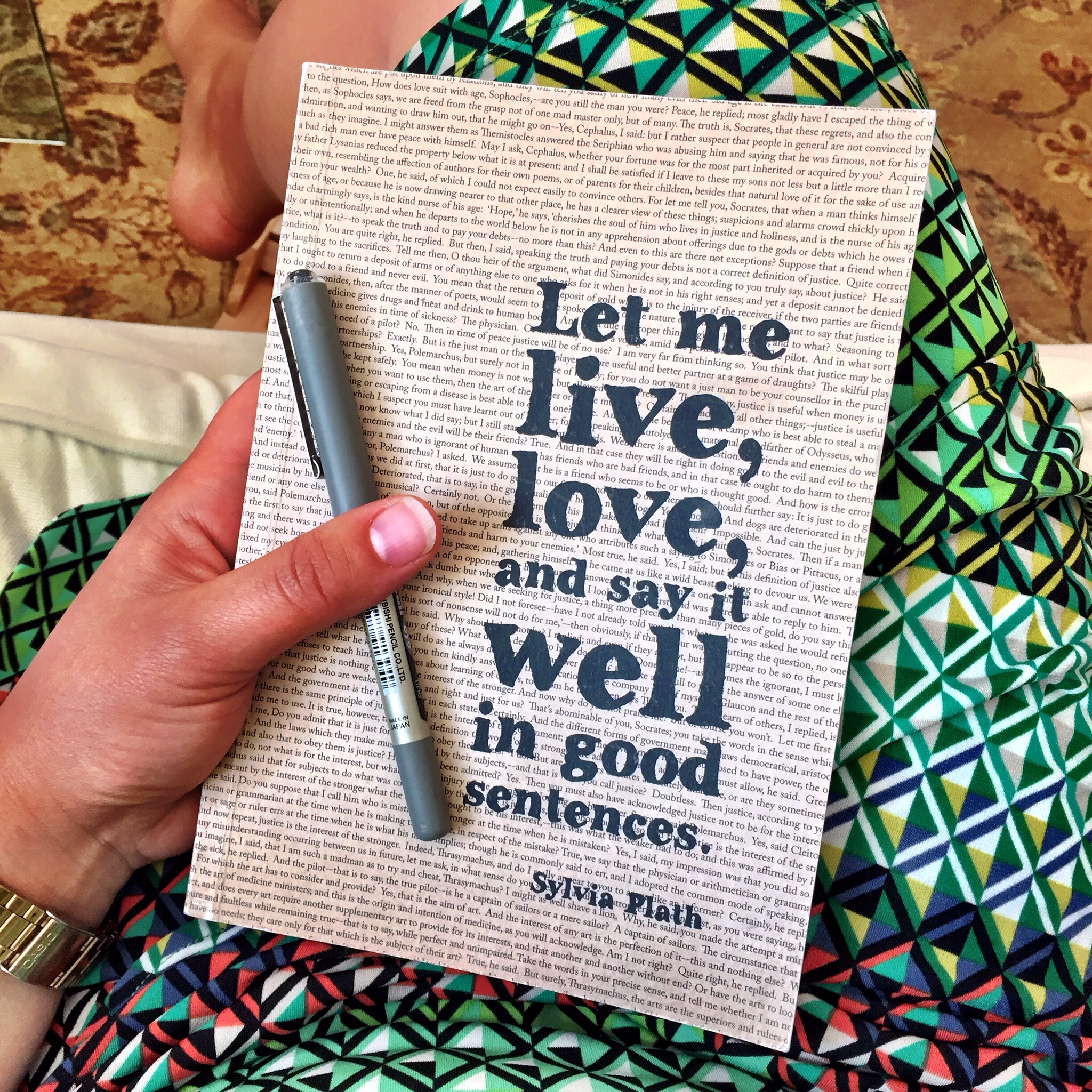
I came across an article this week which really resonated with where I am right now with the novel. It was outlining Zadie Smith’s perception of the two kinds of writers, quoting from a lecture she delivered in 2008. Aside from making me realise that I really should read more of what writers I admire have to say about what it is we do, it got me thinking about the thorny issue of tone.

IMG_1218

I’ve really struggled with the tone of this novel. I’ve known the main characters pretty intimately since they first appeared in my mind, and the plot – though it evolved in the writing of it as they so often do – has remained basically the same since my earliest outlines. I thought I knew what the novel was about too – on a big, important, thematic level – but that has all changed recently. And as it has I’ve started to see the cracks in my manuscript that had somehow remained invisible up until now.

According to Smith’s ideas, I am pretty solidly a Macro Planner. Not entirely – I can’t quite conceive of starting to write anywhere but at the beginning, can’t imagine flitting around my plan and shifting the structure as many writers apparently do. But I do need a roadmap of sorts – I couldn’t plunge into writing without a fairly detailed plan. At least I don’t think I could.

But there were elements of Smith’s description of her process as a Micro Manager which really appealed to me – not least her assertion that when she finished writing a novel she was actually finished, with redrafts being unnecessary. For her, everything begins with setting the tone – making the first twenty pages a crucial and lengthy process:

“Worrying over the first twenty pages is a way of working on the whole novel, a way of finding its structure, its plot, its characters — all of which, for a Micro Manager, are contained in the sensibility of a sentence. Once the tone is there, all else follows.”

This is pretty much the opposite of where I’m at right now. Four drafts in, I have a structure, plot, characters – but the tone which seemed to come so naturally on first writing (so much so that I didn’t really think about it at the time) suddenly doesn’t quite fit.

I think perhaps part of the problem is that I’m only now really beginning to understand what tone is. That might be a bit of a bold admission for an experienced English teacher to make, but for all of my ability to recognise tone, to use it effectively, to explain it through examples, I’m not sure I really got what it is all about. Now though the definition, borrowed here from Wikipedia, suddenly seems to make a whole lot more sense.

“Tone … shows the attitudes toward the subject and toward the audience implied in a literary work.”

It is here, I realise now, that everything starts to come together. My attitude to the subject (my characters, the story I’m trying to tell) meets my attitude to the reader (where I’m positioning myself in relation to them, the genre in which my novel sits). As I type this it seems far too obvious for me even to need to say it at all, but then it is sometimes the simplest lessons that are the most powerful.

So I will hold those things in my head as I make my way once more through my manuscript, creeping forwards through the words and sentences and paragraphs whilst darting back from time to time to tweak details that no longer fit. There are a lot of words to get through, but I believe it will be worth it.

And what of my initial approach, of the type of writer I am? Could I have avoided this quandary by micro managing, by manipulating the tone in the creation of those first twenty pages until everything else fell into place? I’m not sure, to be honest. So much of Grace’s story only became clear when I could see it from the outside – and actually crucial elements of her character were only revealed to me once I had taken her through her journey.

I guess like everything there is no black and white: whilst the two approaches Smith describes seem on one level to be mutually exclusive I suspect that most writers embrace elements of both.

As for me, I think I’m still working out what type of writer I am.

And I think that that’s ok.


Writing Bubble

Tidy house, tidy mind?

I’ve been on something of a mission the past few weeks: a mission to finally bring order to the chaos that we live in. Or at least to tidy up the house a bit and make sure everything has a home…

It’s a job that’s been a long time coming. We first moved into this house just over four years ago. Then we had the builders in to renovate from top to bottom which took about a year and a half, with most of our stuff still in boxes and us shifting from room to room as our plans took shape around us.

During that time I was heading up an English department at a school in Plymouth, where Leigh was also based for the first two years of his med school training. Days were long and life was fast, and then I got pregnant: Arthur arrived approximately ten days after the builders finally left, bringing with him all the joy and craziness that accompanies a newborn.

The upshot of which is that, coming up for three years later, there were still boxes of stuff which had not actually been unpacked since we left London. And on top of those were more boxes delivered by my parents when they sold the family home. And one of the reasons none of them had been unpacked was that too many cupboards and drawers were full of I knew not what stuffed haphazardly in on the days when I snatched ten minutes to attempt to tidy up a bit.

And suddenly, having been saying for months that I needed to get on top if it all, I decided enough was enough: as soon as my feet touched the ground after our summer of adventures I was struck by an overwhelming desire to get organised.

And so I have.

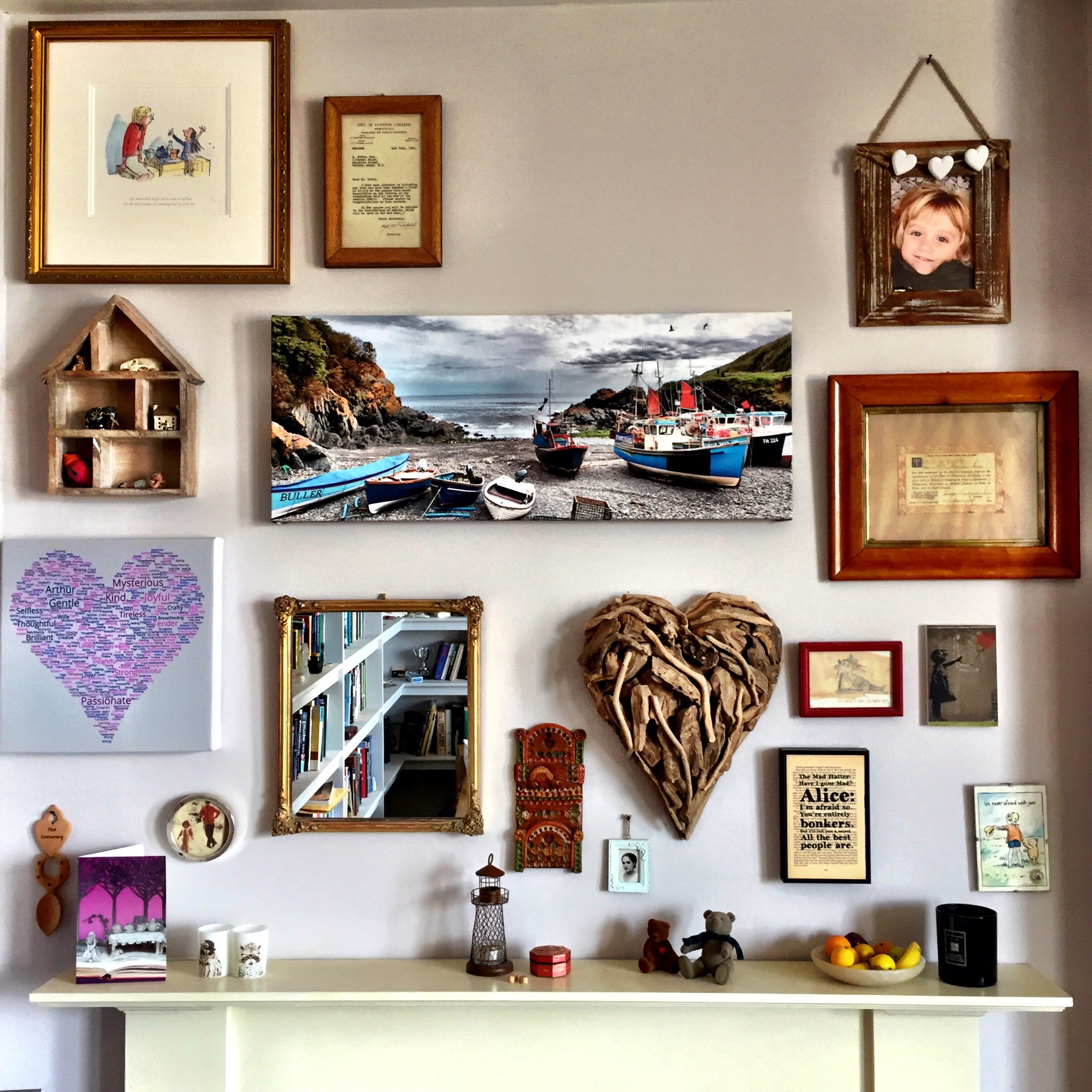
I’m not quite there yet, but things are looking so much better: I’ve sorted Arthur’s toys and clothes and found homes for the many he’s grown out of, I’ve unpacked box after box of artefacts from my past, I’ve moved furniture around to make better use of space, I’ve sourced frames for all the pictures that needed them and have finally created the picture walls I’ve been visualising for years.

IMG_1216

It’s all been a bit manic, and as much as I’ve been feeling a real sense of achievement I’ve been wondering why – why on earth have I decided now to get my house in order, just at the point when I have possibly the most challenging edit yet of my novel to get my head around?

But I think that’s precisely it.

I’ve never been the tidiest of people (don’t laugh, mum), and it’s never especially bothered me before: I’ve always been pretty good at zoning out the detritus surrounding me to focus on the task in hand. But this time feels different. Maybe it’s the new level of clarity I feel I need to achieve in order to do this draft justice, maybe I’m feeling the pressure of trying to simultaneously be a full-time mum and a successful novelist. Whatever the cause, I’m pretty sure this manuscript is going to turn out a whole lot more polished if it – and I – have space to think and breathe.

I’m trying not to use the tidying thing as a procrastination tool – I am already well underway with this fourth draft, and have been fitting in an hour or two of editing every day at nap time. But yesterday I finished working through the notes I’ve been given by other readers, so this final push now needs to come from me alone.

There’s still a way to go on the mission for a truly tidy house, but my writing room is very nearly sorted. And once it is, there will be no more excuses not to get in the zone and get this novel ship shape too.


Muddled Manuscript

On lightbulb moments, and cheese

I have been powering ahead with the edit this week. On balance, this is probably a good thing – but it hasn’t always felt like it.

In reality I have spent my days either hanging my head in shame or getting downright angry with myself. And then pondering, in disbelief, how it has taken me until draft number four to notice these things…

IMG_1205

I’m pretty sure that after the third draft I was feeling pretty confident: convinced I’d done all I could to polish my manuscript, ironed out all the niggles that had persisted up until then. And yet suddenly now so much of what I’ve written makes me cringe.

It’s the cheesiness, mostly. Even before I read my agent’s last set of notes I found myself cutting whole paragraphs I happened to cast my eye over, wondering how they could have lasted quite this long. And as I’ve worked through her (very kind) comments I have been both amused and embarrassed at the turns of phrase that at the time must have seemed appropriate.

There have been other painful moments of realisation too – things that, if nothing else, I need to remember in the hope that I might just avoid them next time round.

So, in no particular order, here are those lightbulb moments…

1) I get really lazy on my off days

There is a definite pattern to the notes I’ve received this time round, and there are certain chapters which have way more highlighted than others. In almost every case the problem is the same: instead of writing dialogue, I have described it, committing the cardinal writing sin of telling rather than showing. I think I thought I was doing this for a legitimate reason – that’s what I told myself anyway – but actually as I’ve tried to draw out the actual words from the description I’ve realised I hadn’t entirely thought through what it was that was being said. I suspect sleep deprivation had a lot to answer for – I was intent on keeping to word counts during the first draft, however depleted my brain cells were on any particular day. As a writing mum I’m not sure there’s any way I can entirely avoid that – but I’ll definitely be looking out for that off-day output next time I begin the editing process.

2) I’m a little bit too good at making excuses

The question remains, of course, why I failed to pick up all those lazy days in earlier redrafts. And I think it’s because I had done such a good job of convincing myself that everything I’d written was there for a reason. I can still hear those excuses in my head as I read the words now, but they don’t wash any more. This has to be progress, right?

3) I have a tendency to waffle…

I’ve always considered myself a fairly concise writer – not someone who’ll use ten words when one will do. But as I work through this edit there are paragraphs glaring out at me that have absolutely no business being in my manuscript at all – they’re not advancing the plot or telling the reader anything particularly interesting about characters or settings, and they’re not even especially well written. It is actually remarkably satisfying to be able to slash these sections right down and realise that I am entirely capable of expressing myself more frugally. It just might be good to lose the padding a little earlier in the process next time round…

4) I need to let my characters speak for themselves

This links in to all of the above, but I am discovering that the best way to get through tricky patches in my narrative is to stop trying to second guess what it is my characters want to say and instead just let them say it. Several scenes have evolved in (I think) way more interesting directions now that I’ve let my characters speak, and it turns out that what they actually wanted to say wasn’t quite what I thought it was after all.

5) I’m way better at writing the dark than the light

This shouldn’t really come as a surprise to me given my usual choice of reading matter, but there is no doubt that the best sections of my writing are the ones which are also the most depressing. Or unsettling, or disturbing, or angst-ridden. Just not the bits where I’m trying to convey sweetness and light. That’s where the cheese comes in.

Now I realise reading this back that it might come across as a very negative post – and it’s not supposed to. I’m over the whole frustrated with myself thing, and actually am just so incredibly relieved that this manuscript had not made its way beyond my trusted circle of beta readers to the big wide world.

I am also realising once again how important the editing process is – not just for this particular novel that I’m working on, but for everything it’s teaching me about writing, and about myself.

Writing Bubble
Mums' Days

Back in the saddle

This week, I am actually editing – and it feels good!

It’s been a summer of ups and downs for the novel, with an awful lot of thinking and talking but close to no doing, and it’s a bit of a relief to discover that my writing brain still seems to function. I’d even go so far as to say that it’s in top top condition  – a fresh eye is proving a tremendous asset to what is now the fourth edit and I might just be making progress.

There was a moment at the weekend, though, when I thought the horse might have thrown me off for good…

IMG_1200

Scrolling through my instagram feed, as you do on a lazy Sunday morning, I was stopped in my tracks by an image of my novel waiting to be read. Of course it wasn’t actually my novel – that would have involved mine being finished and, you know, published – but the title was the very one I’d chosen as I first worked on my manuscript, and the cover design did little to allay my concerns.

A few minutes of googling later and my worst fears were realised – someone had written my novel! And had it published! And sold loads of copies!

I emailed my agent, ready to accept her verdict that there was simply no point in continuing now that someone else had got there first. I’d done my research when I first began to work on the idea, and part of what excited me about it was there was nothing out there that even touched on the concept I’d come up with. But then that was two years ago – and a lot can happen in two years.

It turns out that I might have been over-reacting. Whilst the germ of the idea is the same, the direction this other novelist has taken it in is quite different. Crucially, it is in a different genre to the one I am hoping mine will inhabit – and interestingly reading it has shown into sharp relief the elements of my novel that jar in the genre it aspires to.

So I am beginning this fourth edit with renewed focus – not just where the over-arching direction of the novel is concerned, but also in my scrutiny of the words I’m using to bring my characters to life.

And with that in mind it’s time to get back on with today’s instalment…


Muddled Manuscript

A change of perspective

imageedit_3_3093644134

So. Back to the novel.

I’m trying not to think about quite how long it’s been since I’ve done any proper work on it, and am consoling myself instead with the fact that, in the midst of all the not-writing I’ve been doing this summer, I might just have had a teensy bit of a breakthrough.

There’s been something niggling away at me ever since I wrote the first draft – ever since, even, I came up with the concept. It’s the thing that, I think, has led to the inability of my agent to be entirely enthusiastic through all the various rewrites in the months and months that followed, and has led to me clamming up when asked to explain exactly what my novel is about.

Because it turns out that it might not be about what I thought it was at all.

The lightbulb began to flicker into life on a sunny afternoon in my garden when I was sat with a writer friend who had come to visit, discussing what she thought of my manuscript. She was effusively positive, loved the concept, was won over by its uniqueness and its potential for adaptation for the screen. I basked in the glow of her admiration until suddenly it became very apparent that she just hadn’t ‘got’ it. She had totally misinterpreted my main character, and as a result had completely missed the point of the novel I had written.

Or so I thought.

Over the course of the few days we spent together, as I reluctantly let go of the message I’d been trying to communicate and my friend convinced me that actually her reading had way more potential from both a literary and commercial standpoint, I realised that I had inadvertently told a completely different story from the one I thought I had. And actually the one I was left with might just have been what I was looking for all along.

I apologise if this is all coming across as excessively cryptic. I’d love to be able to fill you in on exactly what it is that’s been turned on its head to make me suddenly see the way forward. Unfortunately, though, it would completely spoil the story for you. And I very much hope that you will get to read it, one day.

I have been desperate to get on with editing since this little revelation, but things have been way too hectic. Even now I have a couple more weeks of adventuring before I can properly hunker down and set my story straight – but I do have a plan about what I’m going to do in the meantime.

Firstly, I am writing a synopsis. I started yesterday, and I am really, really hating the process, but it’s pretty essential that I get it done. I need to be able to express, confidently, what the novel I’m working on is all about – to myself, and anyone else who might be interested.

Secondly, I have a pile of inspirational reading that I need to make a bit of a dent in. The final phase of this summer’s adventures involves pootling around in a campervan, and I’m hoping that might go rather well with making my way through a book or five.

Then when we’re back I am diving straight on in to (yet) another edit. This time, though, I’m feeling much more confident about where it’s all going.

Just remember to remind me of that in a month or so!


Writing Bubble

Words in print

It is safe to say that this summer didn’t quite end up to be the hotbed of productivity I had hoped it might. I began with grand plans, a vision of being able to juggle family time, a multitude of adventures, refocusing my blog, working on short story ideas and getting stuck in to major edits of both my novels.

I’m not sure who I was kidding, but it didn’t quite work out that way…

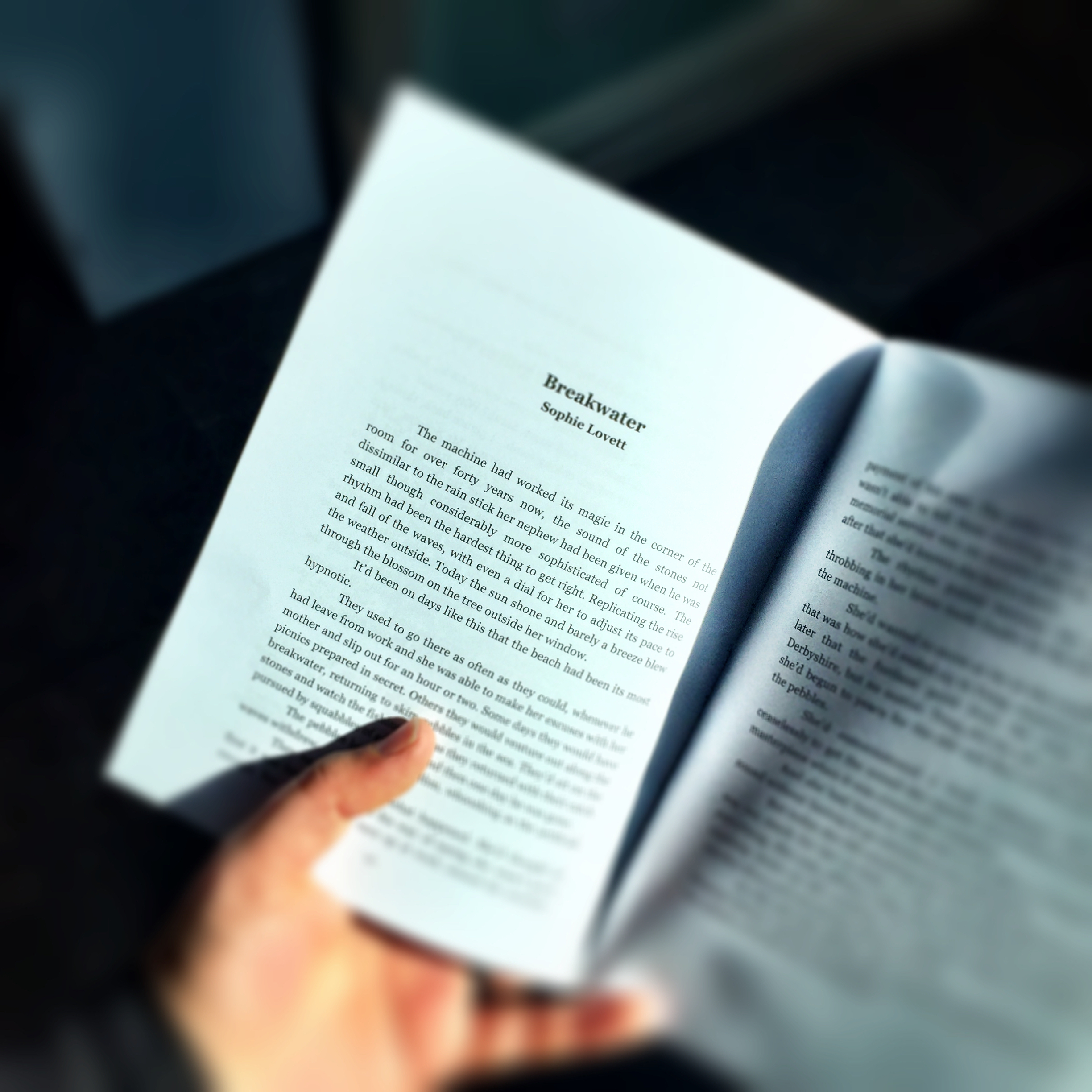
There has been lots of thinking, dreaming, talking, planning but very few actual words have made it onto the page, virtual or otherwise. However in the midst of all this there was one tiny writing milestone which should not go unnoticed: I became a published author.

IMG_9574

It feels like forever ago that I entered the Cloudcuckooland Flash Fiction competition. I was very excited at the time to be shortlisted, especially as there was the promise of an anthology being released. But days turned into months and nothing seemed to come of it – and after a while I put that pride and anticipation back into the box of unrealised ambition along with the rejection emails and unpublished manuscripts. Such is the life of the aspiring novelist.

And then one day in August a package came through the door. In it were five slim volumes of short stories, pre-ordered enthusiastically when I had initially heard the news. And in each of those volumes were five hundred words written by me.

It is a very small step, but it is very much in the right direction.

And now that autumn’s here there are no more excuses not to get on with all those plans to get (many) more of my words into the world. Because that’s what writer’s do, right? They write.


Muddled Manuscript

The power of the narcissist

I’ve been grappling with a bit of a dilemma in the last few weeks. A figure from my past, who I worked hard to forget, has reappeared in a very public forum. He has been tasked by the government with a position of great responsibility, and that rankles with me. Because the person I knew ten years ago was far from deserving of such acclaim.

On several occasions I have come close to outing him – to sharing the details of his betrayal and asking, publicly, whether such a man should be trusted in this role. My decision not to was not an easy one to make: it does not come from a desire to protect him, or the feeling that he should be given the benefit of the doubt. It comes instead out of fear.

IMG_1158

Even as I type this I can feel my pulse quicken and a sour taste rise in my mouth. I am furious that, after all this time, he can have this hold over me: but such is the power of the narcissist.

This man did not abuse me, physically. What he did was way more insidious: undermined my self-esteem and worldview to the extent that I did not know which way was up any more, then pulled the rug from underneath me to reveal depths of deception that I had not even begun to imagine. He was an expert manipulator – to paraphrase his brother he was ‘a pathological liar who I would not trust with my own children’. And this is why, after much deliberation, I cannot bring myself to take him on. He has too much to lose, and I am sure he would have no qualms about destroying me in his quest to protect it.

Even at the time, it was hard to communicate to an outsider (or even to myself) what it was that was so toxic about our relationship. On the surface, I was holding it all together – a burgeoning teaching career, an active social life, the ability to turn on a smile whenever it was needed. But underneath it all I was slowly crumbling away. It took me many years to recover fully, and it’s just not a place I want to go back to.

It has got me thinking, though, about how strong women get taken down by manipulative men. I have met several women in the time that has passed who have escaped from similar situations, and each time my response has been similar: “But you’re so clever/pretty/funny/brilliant. How on earth could you let yourself get taken in by such a loser?”

And that’s from someone who’s been there. So how anyone who has not been subject to such skilled manipulation is expected to understand it is anyone’s guess.

This is in the forefront of my mind now as I begin to work on the latest draft of my second novel. Whilst it is not autobiographical, the dynamic of the central relationship definitely plays out along these lines. And the conversation I had with my agent about it last week mirrors my fears about trying to resurrect the injustices of the past. To her, it’s just not believable. The predicament my protagonist wanders haplessly into makes her look impossibly naive. It is the behaviour, she suggested, of a teenage girl rather than a confident woman in her twenties.

I wish I could go back and tell myself the same.

Of course, in the context of my novel, my agent is entirely right. Often events that are pulled directly from real life are incredibly difficult to translate into fiction. Without the anchor of incontrovertible fact the challenge of making someone buy into a story is all the harder. So I know I need to go back to the manuscript and work out how to do that, how to tweak and tease the details of my protagonist’s life and the way I tell her story to convince the reader that she really could be so vulnerable.

And against the backdrop of this ghost from my past being put on such a pedestal, my motivation to get it right is all the stronger.

I may not be brave (or stupid) enough to take this man to task on a public stage, but I can do my damnedest to expose the complex dance of mental disorder that unfolds in a narcissistic relationship. And maybe even, by holding a mirror sharpened by fiction up to the nightmare suffered by its victims, I can open up a dialogue which will enable others to be a little less afraid of confronting the demons in their past.


Muddled Manuscript


A new chapter

I never meant to be a mummy blogger. I stumbled into it by accident when I set up this blog, which if I’m honest I only did to give myself something to tweet about. Before that point I’d never really even read blogs, apart from the odd post a friend might link to, and I was blown away by how many people were out there, so many windows into so many worlds.

Before long I found myself getting caught up in it. Joining in with endless linkies, modelling posts on ones I read elsewhere, feeling elated when the words I wrote seemed to strike a chord, feeling frustrated when I began to focus on the stats that lurked in the background betraying how relatively few readers I actually had.

So many people were doing it better – funnier, cleverer, prettier. They were making a living from pouring their hearts onto the screens, whilst I was just taking up time that in my mind I should have been dedicating to ‘proper’ writing, or at the very least hanging out with my son.

image

Of course that’s only part of the picture. Blogging has given me so much else: a voice when I felt I had no-one to talk to, the confidence to just write rather than panicking about having nothing to say, a community to keep me company as I made sense of my new, often lonely, existence as a stay-at-home mum.

I was reminded of this when I went to Brit Mums Live last weekend. In the run up to it I had wondered numerous times why I was going at all. I worried that in the real world I’d have nothing to say to these people I only knew online – that when it came to it I wouldn’t really know them at all. I worried that I would feel like a fraud – not ready to buy into so much of the blogging world, just hovering on the periphery whilst everyone else got on with the serious business of carving out their new careers.

There was a bit of that, admittedly. But it was actually wonderful to meet these women in the flesh – people I knew from the blogosphere and many others besides. I realised that everyone there was doing this for their own reasons, that none of those reasons were better or more legitimate than others, and that any attempt to directly compare our many different goals and aspirations, let alone the many different ways we’re choosing to reach them, is fraught with difficulty.

I realised that rather than looking out at the journeys others are on it is high time I focused on my own.

image

My blog is only a small part of what I write. I cannot let it take over – not unless I decide that I want it to be an enterprise in and of itself. I need to refocus on how I can make this space one I am truly proud of, one which reflects my goals and aspirations rather than just the humdrum of the everyday. I need to refocus on my writing, on perfecting my craft. I need to refocus on my ‘brand’, however unmarketable that might be.

Because this is where I have that privilege – to write what’s right for me.

It’s the other words I need to be taking more seriously: honing my novels until they find a home with a publisher, seeking out opportunities through magazines and competitions to share my short stories with a wider audience. The time and energy and headspace that has been taken up by this blog needs to be invested there.

I’m not disappearing from here completely, but a shift in focus is long overdue. I have no idea exactly what that’s going to look like yet!

If you bear with me, hopefully we’ll both like what we find.

Writing Bubble

The lure of the dark side

What is it we find so irresistible about dark and twisted fiction?

I’ve wondered sometimes whether it’s just me: often when I relay to my husband the plot of one of my favourite books, or try to convince him to watch a film that’s caught my eye, he can’t quite understand why I would want to immerse myself in such torment.

It’s not so much horror I like, and certainly not gore, but rather the depths and depravity of human emotion at its worst.

image

Since I first read it when I was about seventeen, my favourite book has been Ian McEwan’s ‘A Child in Time’ – a harrowing account of the impact losing a child has on her parents. He is still the person I come back to as my favourite author, the person whose body of work I most aspire to, and it is the strong element of macabre I think that lures me in most effectively.

More generally I find myself drawn to tales of loss, of death, of suffering and abandonment. Stories which explore the evil that humanity is capable of, and expose parts of the soul that you would never wish to encounter in real life. And I find them fascinating rather than depressing. There is definitely something cathartic about them – a place to play out my deepest fears which I can put to bed again simply by closing the book.

My most recent novel definitely strays into this territory. An examination of the horrible ways people can treat each other, with an antagonist who brings together some of the worst traits I have come across in my experiences and those of others. It was a little harder to switch off from that – there were days (and nights) when his consciousness seeped into my own and left me feeling distinctly unsettled. But still I found myself compelled to tell his story.

The short stories that I have written are even more twisted. I’m sort of playing around with the idea of putting together a collection, and in trying to identify the common thread which binds them together there is no escaping the darkness at their core. Obsession, murder, man-eating hermit crabs, psychosis, self-amputation: putting them all side by side is making me wonder a little exactly what it is that’s going on in my head!

But it seems that I am not alone in feeling the pull of the dark side. When I alluded recently to a short story I was working that was possibly too dark to share I wasn’t intentionally building up intrigue, but it seems that just that thought was enough to make people want to read it. It’s still sat on my hard drive, waiting for an appropriate outing, but it’s kind of good to know that I’m not the only one who likes to immerse myself in these shadowy worlds.

I’ve been working on another story this week, one inspired by the awesome story of a woman in Exminster placing a Gumtree ad for someone to help her test her home-made time machine. I was struggling for a hook at first, and of course when it did begin to emerge it was from those shadows.

I guess there is just a part of me that is fascinated by the more sinister workings of the human mind, and how they play out in interactions with other people. The seeds of those workings must be lying somewhere in the recesses of my mind, but by germinating them in the realm of fiction I am satisfying that desire for darkness whilst being able to focus my real life on altogether more pleasant pursuits.

And I suppose that is one of the many reasons why fiction is so important! Who knows what would happen to the world if our imaginations did not have that safe place to explore their darkest fears…


Muddled Manuscript

Bird by bird

This week, I finally got round to writing some fiction. I’ve been in something of an involuntary hiatus recently, talking myself into a bit of a corner where I was not writing, not very happy about it, and seemingly incapable of wrestling back control.

And then something caught my eye, a book I’d bought back in September which from its title alone had given me the nudge I’d needed to get on with the edit of While I’m Alone. I’d been generally trying to resist reading, thinking that might be one of the things stopping me from getting any words of my own down on paper, but seeing as it didn’t seem to be working I thought I might as well dip in and see what else it had to offer.

IMG_4155

I reminded me of a couple of things that I think I’d forgotten. How not every piece of fiction I write needs to (nor should be) part of some bigger purpose – be it working on a novel, or producing something for the blog, or moving closer to publication. How it’s ok (even important) just to let the words flow at first, without worrying that they seem a bit rubbish. How planning (which I have tended to rely on so far) is not the be all and end all, and actually starting to write something without any detailed ideas about where it’s headed has the potential to be even more powerful.

On one level this got me thinking again about the novel that’s been waiting patiently for months for me to get on and write it. One of the things that’s been holding me back is feeling the need to have a concrete idea of plot and structure before I begin to write, rather than just the key scenes and characters that have set up home in my mind so far. But actually I think just getting started might be a better option.

Having said that, with my world still full to bursting at the moment I’m not quite feeling in the right headspace to immerse myself in a whole new novel. So instead I turned to another idea I had scribbled down in the middle of a night some months ago…

I initially thought that too might have had pretensions to be a novel. But actually I realised, for now at least, it would make a much better short story. And so I wrote it as that.

I’m not going to share it here – it’s too long, and quite possibly a bit too dark… But I’ve written it, felt once again the pleasure of words rushing through my fingertips to create characters and emotions and tension, and that’s what’s important.


Writing Bubble