Tag Archives: novel

The web of research

Have you ever stopped to wonder what the internet search history of a writer looks like?

As I was pootling along with my draft this week I couldn’t help but smile at the diverse directions my ongoing research is taking me in.

IMG_1234

It’s not quite as extreme as my last novel, where the bulk of my online explorations were delving into the psychology of narcissism, manic depression and schizophrenia, not forgetting the murky world of electronic surveillance. Still, though, when writing a novel which (at least for the thirty thousand words I’ve written so far) is set in the 1970s and early 80s, it turns out there are an awful lot of gaps in my knowledge that need filling.

Most of them come from the fact that, having only been born in 1978, I have no personal experience of the little details of everyday life. Like, what were people called? What did they wear? Teenagers specifically? How did they do their make-up? Did they smoke? What did they drink at parties? What did they study for A-levels? When did they take their exams? When was the Walkman invented? What music did people listen to?

It’s all well and good talking to people who were around at the time, but I’m not just talking about general trends here – I’m talking about the specific aspects of fashion and popular culture that would have appealed to the blossoming characters I have been developing over the past few months, my two protagonists especially but the supporting cast as well.

Then there are the other details that anchor the world of my novel in time and place. The coordinates of my key locations, and the relation between them and the rise and setting of the sun (and the moon). The times of sunrise and sunset in summer, and any notable weather in between. Impossible to begin a novel in 1976 after all and not acknowledge the heatwave and the impact it had on peoples’ lives.

There was the politics too of course, and what it meant for peoples’ working days, as well as things like the prevalence of streetlights in a small seaside town.

Time and place aside, there are other things too I’ve found myself investigating to get up to speed with my characters’ interests and areas of expertise. The mechanics of butterfly stroke, for example. And the names of the different parts of a fishing boat. Not forgetting how to kill a mackerel.

It is all quite fascinating, and much as I’m trying to make sure I don’t get so completely sucked into the research that I fail to do any actual writing I can’t deny that I’m enjoying all the little bits of learning along the way. I know it doesn’t matter if not every little detail matches the facts, but if I’m having to make decisions anyway it’s nice to be helped along by the wealth of information that’s out there.

Remind me what people did before the internet again?


Writing Bubble

Writing awkwardness

Over the last few days I’ve been writing about a burgeoning teenage relationship. The first, for my protagonist. I’d been wondering why there was so much to-ing and fro-ing on my keyboard, so much doubt about the right way to express things, so much angst as I painfully tapped out the scenes word by awkward word.

And then I realised this morning, just as I was about to give up, that maybe, actually my writing was just mirroring what was going on with my characters. That my inability to find the right thing to say, the painstaking cautiousness with which I was placing the words on the page, was just a living metaphor for the relationship that was unfolding.

IMG_1324.jpg

It made a lot of sense. Because when I stopped to think about it, it wasn’t all awkward. Those excruciating moments where I just wanted to hide under a rock were sandwiched more often than not by others where the words flowed freely, where I just let myself be carried along by the excitement of it all.

It’s been surprisingly tricky transporting myself back to the mind of a teenager. I say surprising, because if I’m honest with myself I was stuck in the realms of teenage angst for way longer than I should have been. But it has been the innocence that has been hard to capture: an internal monologue unsullied by experience. In the scenes I’ve been writing this week, my protagonist has been twelve and thirteen. She’s clever, and she knows things, but she hasn’t lived them yet.

I’ve had to really hold onto that, because my main conceptualisation of this character has been as an older girl and woman. Thoughts and phrases have come into my head that seem to fit the situation she’s in, but actually she’s not quite there yet: I’ve stored them away for the scenes yet to come where they will be far more relevant.

And it’s in these coming scenes that my tolerance for awkwardness will really be tested. This first relationship, over before it had really begun, was just the warm-up to the main event, where adolescent awkwardness is just a sideline to the many layers of crazy we are about to find ourselves embroiled in.

I think it’s going to be rather fun.


Writing Bubble

In praise of tired

Early morning writing vibes have been strong this week. The word count is creeping up (13, 423 at last count) and I actually quite like most of those words. My characters are continuing to lead me through their story, opening my eyes to new aspects of their world and the people that they are becoming as they embrace their teenage years.

IMG_1313.jpg

Admittedly I have not exactly been leaping out of bed at 6am: it’s been more like 6.30 by the time I’ve got to my desk. But I’m beginning to realise that there are definite advantages to writing whilst I’m still not quite awake, and I’m hoping that embracing that might make the task I’ve set myself ever more achievable.

I remember when I was working on my first two novels, both written (the first drafts at least) before Arthur was 18 months old, I had a sense that the sleep deprivation was actually working in my favour. As long as I had a vague idea of where I was headed in each writing session, the constraints put on my brainpower by being utterly exhausted were more useful than you’d think. It meant I kinda had to focus on the task in hand: my brain did not have the energy to wander, nor to get caught up in battles of will between creative confidence and the demons of self-doubt. I just wrote, and worried about whether it was any good or not later.

I think I’m getting to a similar place by writing first thing in the morning now. I’m tired, but it’s not the (much less helpful) end of the day tired, where all the things I’ve done (and haven’t) have secreted themselves amongst my brain cells thus stripping them of any useful function. At 6am (or 6.30) my head is emptier. There is space for my narrative to spread itself out, for my characters to wander round and find their paths. But still not quite enough spare energy for my psyche to put up its niggling barriers against that story being told – that my ideas and/or my words are not worth spending precious time on.

In fact when it comes down to time, the only other thing I would be doing in that time is sleeping. And whilst I do (really, really) love my sleep, I reckon this is worth the sacrifice.


Writing Bubble


Peaks and troughs

After a positive start, I’ve been feeling a little less optimistic this week about the beginnings of this new novel. It’s not that I’m not enjoying the writing – I really am once I get into the flow. But between me struggling to get myself going in the mornings and Arthur deciding that maybe 7.30am is a bit late to start the day after all it’s been trickier and trickier to concentrate.

Instead of the 1500-ish words I’ve been aiming for, I’ve been managing about 800. And there’s been one morning again when I just couldn’t face getting up to write at all, partly because that target suddenly seemed just so completely out of my reach.

The business of target setting is a funny one, and one that (for me) is so important to get right. I am fully aware that there is an awful lot more to this novel-writing business than just getting the words out. But if you’re not even getting the words out then the likelihood of ever writing a novel is, well, slim at best. And I find that the words are much likely to be forthcoming if I have a sensible, achievable target to aim for each and every day that I sit down to write. It can’t be too low, because otherwise this first draft would drag on forever: I’ll lose momentum and consistency and probably never get it finished at all. But it can’t be too high either because otherwise (as I’ve proven to myself this week) I’ll get all defeatist about it and begin, little by little, to give up.

I had to have a serious chat with myself this morning to avoid the situation spiralling out of control. And in doing so I decided I should probably cut myself some slack.

There was no way I was going to be able to magic any more time out of the ether – not in the immediate future anyway. And with the way I’m working with this particular novel – feeling my way through it rather than sticking to a rigidly worked out plan – there was little chance that I was going to manage to squeeze many more words out of my mornings. The only solution was to aim to write less – to put back my self-imposed deadline just a little.

This means my daily word count target is just a little less daunting, and hopefully therefore will be able to do it’s job as a motivational tool rather than scaring me off. It worked this morning: in fact so much so that I wrote more than I was aiming for, building up a buffer for days when things don’t go quite as well.

IMG_1305.jpg

My new deadline has the added advantage of coinciding with an extended weekend trip we are taking to Florida to celebrate the wedding of one of my bestest friends: I’m hoping that in itself will be enough to motivate myself not to push things back any further.

We shall see…

But however things unfold, I think an important part of keeping going when the going gets tough is knowing when to keep on pushing forward and when to ease off a little, to allow yourself to ride the waves and find solace in the troughs as much as you revel in the peaks.

I think I’ve got the balance right now – and if not, well, I guess I’ll just need to keep tweaking until I do.


Writing Bubble

Setting sail

So the whole getting up at 6am to write thing is… getting there. I’m only aiming for weekdays, and out of those I managed to get to my desk by 6.30am four out of five days in the past week.

I’m actually (whisper it) quite enjoying it once I prise myself away from under the duvet, but I still have some work to do on managing to get to bed at a reasonable hour so my brain’s in tip top writing nick: no mean feat with meetings till 9pm at least a couple of times a week and thirty-odd years of conditioning against early nights to contend with!

I certainly think it is the way to go, for lots of reasons.

But rather than dwell on those right now I’m just going to take a few moments to savour the deliciousness of embarking on the voyage of discovery that is the writing of a brand new novel.

IMG_1293

It’s not all plain sailing of course. The fear of the blank page can be overwhelming at times, as can the doubt that the words you’re forcing down to get rid of it are ever going to be the start of anything worth reading. But if you can quieten those niggling demons then the rewards are well worth the effort.

The leap from a few bullet pointed notes to a thousand words of prose is satisfying in itself, but it’s how it happens that delights me most. When you give yourself the time and space to listen to your characters, to let them take you by the hand and lead you through their story. I’d sort of forgotten how much fun it is.

There was a moment one morning this week when I was struggling a little to transport myself from a dark February morning with wind and rain hammering at the windows to the height of a hazy summer, and struggling even more to work out what my protagonist was up to as she meandered aimlessly into town. But then I tried to see her journey through her eyes and realised where she was headed. And with that realisation I suddenly made a lot more sense of her summer and in fact several important aspects of the person she becomes in her adult life.

Phew.

This whole novel writing adventure is, when it works, just a succession of those delicious little moments of clarity. And when it doesn’t? Well, then it’s just a matter of getting the words down, one after another, until it all starts to make sense again.

And, of course, making sure I’m awake to write them…


Writing Bubble

Bringing order to the chaos

After months of not quite managing to get focused for one reason or another, I finally sat down last night with a pile of index cards to make sense of my latest novel idea. The length of its gestation so far meant that my thoughts were somewhat scattered: some had made it into Scrivener, others were caught up in ramblings in this blog, most were in a scribbled stream of consciousness in the notebook I bought for this project many moons ago (and took TWO DAYS trying to find this week, finally discovering it beneath a pile of clothes under my dressing table just as I was about to give up hope).

Part of me felt like I was being a little unfaithful to my second novel. It is, after all, not yet finished. I mean – it is finished, but it still has a way to go to complete its journey. Grace and I have spent so much time together that I feel I owe her that sense of closure; but it is, for the moment at least, out of my hands.

And actually mostly it felt fantastic to be pulling together all the strands of this next project. Terrifying too – an idea that seems strongly formed when it exists only in your mind can dissolve into smoke and mirrors when you try to hold it up to scrutiny. But there was plenty there to work with, so work with it I did.

IMG_1272

I knew from the start that the narrative for this project was going to be more ambitious than anything I’ve attempted before: different voices, different times, all telling the same story from different directions. And before I work out exactly what those directions are going to be I want to make sure I’m clear on what the story is – the bare bones of it at least.

And that’s where the index cards come in. The pink ones are for the past, the blue ones for the present. Yellow for characters, green for settings, and white (a late addition to the mix) for questions. There are quite a lot of those.

I think I have collated most of what’s written down elsewhere. It ranges from really specific scenes to more general periods in time, as well as the people and places I think are going to be important. I want to spend a bit more time with my cards this week – noting down the thoughts that haven’t yet made it out of my head, filling in some gaps. And I guess I’ll see where that takes me.

I haven’t planned like this before – but then I haven’t attempted anything so non-linear. I think it’s going to really help, having those physical cards, when I come to the next stage of working out how it all fits together – both in terms of how the story happened, and how I want to tell it.

The final decision is going to be how I want to write it. In the past I’ve always written things ‘in order’ – but that could mean so many things this time round it’s not so clear cut.

So there’s still, if I’m honest, quite a lot of chaos.

But at least I’ve made a start.


Writing Bubble

Broken beginnings

broken beginnings

I have been trying to get started on my third novel for what feels like forever.

The idea began to germinate almost two years ago, inspired by a dedication on a local bench. Since then I’ve written various scenes and character studies, carried out a fair amount of research, and even began to think about how the novel might be structured.

But it seems that every time I’ve been close to actually starting to WRITE something else has got in the way. Novel number two, mainly: I hadn’t anticipated quite how many redrafts that would need, and I’m pretty sure I’m still not done on that front. I don’t begrudge that, though. I’m not writing these novels for them to sit on my hard drive after all – and I know it is getting better and better with each wave of work I do.

I’d thought I might be able to get stuck in to this new idea in the gaps between rewrites. I don’t think I could manage to juggle both concurrently, but I could probably have managed to get a fair amount of writing under my belt whilst waiting for feedback and allowing it to sink in. Naturally, though, life had other ideas.

Like successfully standing for election to my local council. Something which has satisfied a lifelong urge to become more actively engaged in my community, but hasn’t left much time in the day (or in my head) to birth a new novel.

I’ve found it impossible not to worry about what this all means in relation to my ambition to be a successful novelist. Surely I need to be able to knuckle down and focus, to actually write rather than just think about it, to move between projects in different stages of development? But then, as a new window of writing opportunity opens up in front of me, I wonder whether this novel might actually benefit from being so long in gestation.

My first novel was swimming around in my mind for several years before I was finally able to thrash out a first draft, and by that point I knew the characters so well that everything fell into place pretty seamlessly. There were a few niggles, of course, that needed ironing out – but so much of the novel had essentially written itself in my head that often it was just a matter of sitting down at the computer and the words would flow through the keyboard and onto the screen.

There is, after all, so much about writing that happens when you’re not actually writing. I’ve found myself in idle moments mulling over certain turns of phrase, deciding which is most apt for the voices of my two main characters. And there’s the plot too – the story I’ve been telling and retelling myself as I’ve been yearning for the time to write it down. Each time it has got a little more detailed, a little more interesting. And hopefully that will be borne out in the draft to come.

Despite all this, I do need to get writing soon. My plan this week is to use the index cards I bought months ago to note down all my different ideas for scenes, characters and settings and begin to map out how the story unfolds. I know its structure isn’t straightforward, and whilst I haven’t decided yet exactly what order I’m going to write it in it would be nice to have some sense of how it will all hang together in the end.


Writing Bubble


Letting go

Yesterday I got to the end of my manuscript for the third time this draft. I’ve been trying to be systematic about it, giving myself plenty of opportunities to pick things up that need work: the first time I went through looking at my agent’s notes, then with those of my most recent beta reader, then back through again interrogating every single word trying to make sure the ones I’ve picked say exactly what I want them to.

IMG_1225

I know that I’m coming up to the point where I will have to let it go, to send it back off into the ether with everything crossed that it might this time contain the magic it needs to take it to the next stage. But I can’t, not yet. And I’m not sure how I’m going to know when it’s ready.

I’m feeling pretty positive about all the changes I’ve made. Overall it’s ended up 89 words longer than it was before, but given that I’ve written loads more in – bringing conversations to life, taking the reader a little deeper into my protagonist’s mind – that’s meant a lot of cutting too. The opening has changed, bringing in a darker tone from the beginning – one which I think I’ve managed to weave through the novel as a whole, making it much more in keeping with the story I’m trying to tell.

And I think I know what that is now. I’m much clearer on what’s going on than I was, anyway. But I’m still having trouble with my elevator pitch – fumbling around for a concise explanation whenever anyone asks me what the book’s about. I need to work on that.

But whether I can do any more work on the story itself I’m not so sure…

The fact that this is draft number four is not helping my resolve. I thought it was ready last time I sent it in, but it so wasn’t. That took me months to realise. And whilst I’ve sorted out the problems that held it back then – I hope – who knows whether there are new ones that are evading me?

I do still have time on my side. I’d set myself the deadline of the end of November to get this draft completed and sent off, so I still have twelve days. I might just let it rest for a little bit, mull it over in my head, dip back in every now and then to make sure it really is the best that it can be.

It’s almost tempting not to go past this stage – there’s a warm fuzzy feeling that comes with finishing a novel (even for the fourth time), and right now I like what I’ve written. I know that once I send it out into the world again there will inevitably be things I’ve missed, and I’m quite enjoying the blissful ignorance that comes from it just sitting on my hard drive.

But novels are meant to be read, right? And not just by the person who wrote them…

So if you catch me procrastinating for too much longer then I might need a little push – it might just be time to let it go.


Writing Bubble


Wanted: a cave, no wifi

IMG_1221

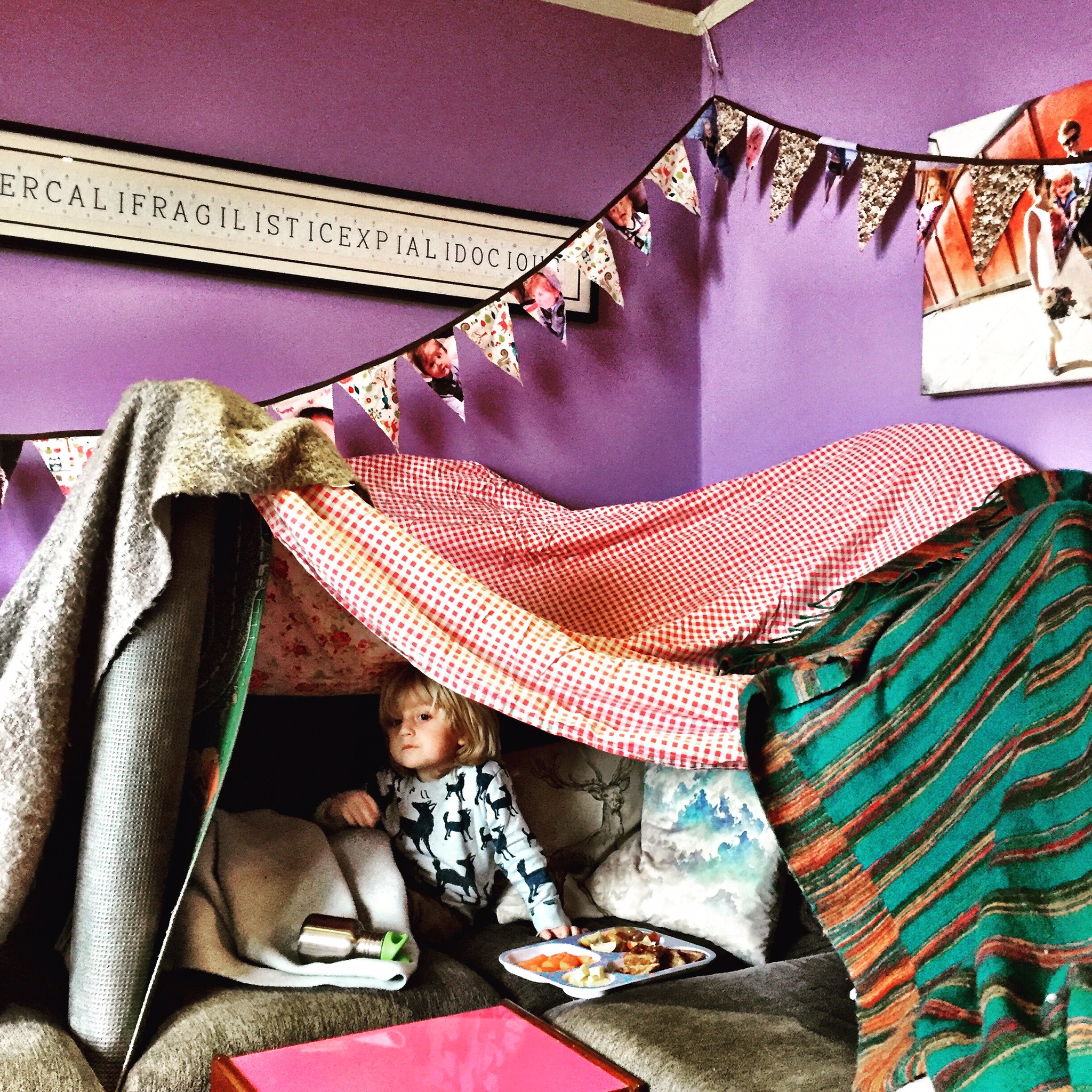
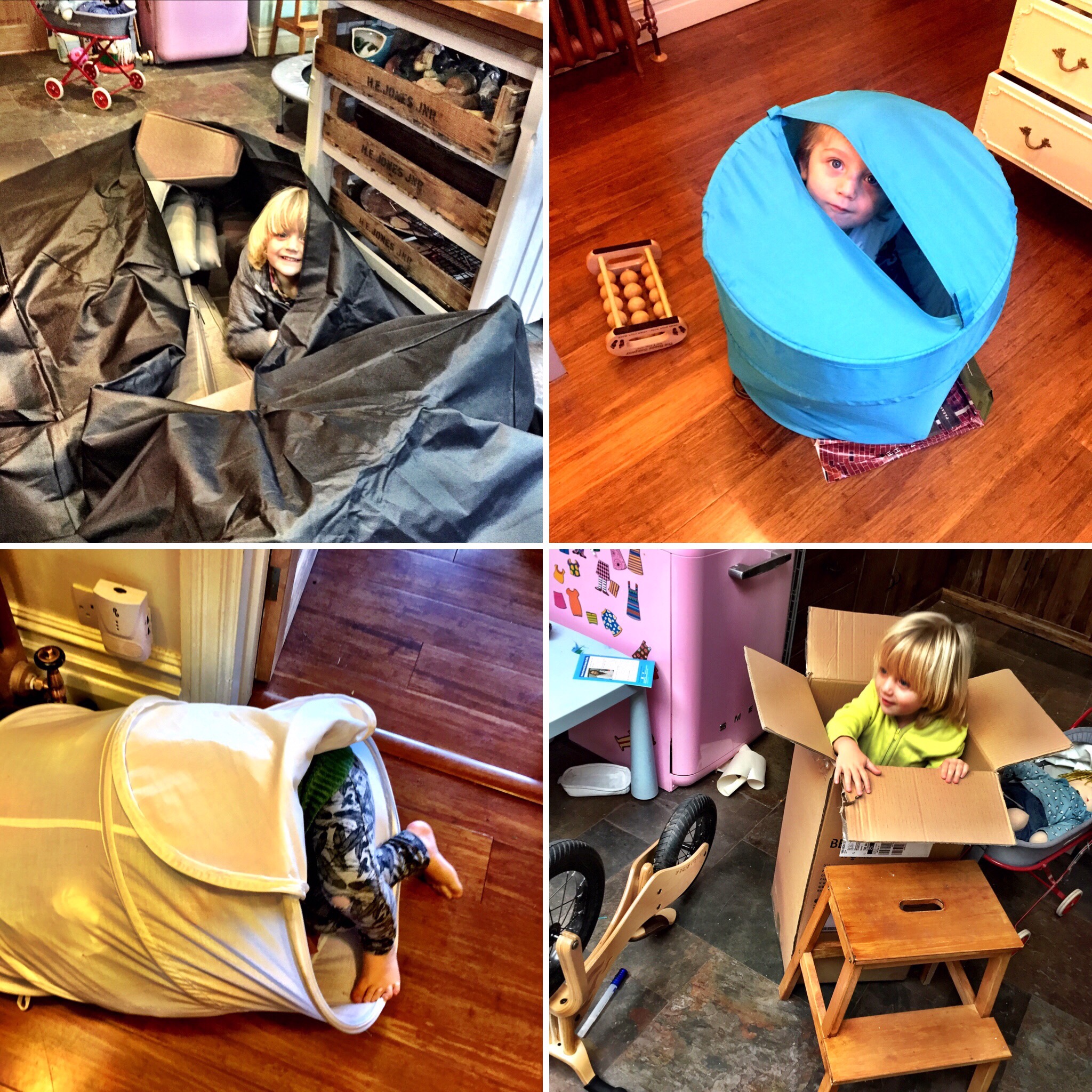
You out can tell that winter’s setting in because it’s all about hibernating in our house: hiding away from the world, feeling the comfort of a small space to cosy up in. We made a sofa fort one particularly rainy day last week, but Arthur’s just as happy with simpler residences: cardboard boxes, suitcases, laundry bags… Especially laundry bags.

IMG_1222

I can totally see where he’s coming from. And it’s not just the chill in the air, or the increasing amounts of rain, or the fact it seems to get dark soon after lunchtime. As I watch Arthur taking such pleasure in climbing or crawling into tiny spaces, I find myself longing for a cave. Preferably one far away from anywhere with no phone line, and most definitely no wifi. Somewhere I could block out the world, work on my novel uninterrupted, and get this redraft finished.

I’m still managing to snatch an hour a day – sometimes two. And it’s going pretty well. Very well, even. So much so that it’s an an almighty wrench to tear myself away when my time is up. I find myself clinging to the keyboard as Arthur tugs on my jumper after his nap, desperate to finish my train of though, or at least one more sentence, one more word…

It’s not really Arthur though, if I’m honest. He is so much fun at the moment, and it’s hard to begrudge time spent with him. But all the other demands on my time seem to be piling up, just as I want to hunker down and write!

Council meetings, securing the future of our local lido, researching education provision for the Neighbourhood Plan, deciphering the impact of the mayoral budget, Governor meetings, presenting certificates at prize giving, helping to raise funds for refugees. Then there’s all the normal household stuff. And December, with Christmas and Arthur’s birthday, rearing up over the horizon.

All that has to be dealt with too, but as I try to focus on it I have the niggling voices of my characters in my head, imploring me to decide their fate, to put them out of their misery, to free them from the conflicting prose that I am in the midst of untangling.

I’m not complaining, not really.

I know that I’m privileged to have so much going on – so much that is stretching me and challenging me and (hopefully) making a difference in my community.

But still sometimes, selfishly, I just want to shut it all out. To lose myself completely in the world of my novel. To write.

And it is then that I hanker after that cave – with no wifi.


Muddled Manuscript


Setting the tone

I came across an article this week which really resonated with where I am right now with the novel. It was outlining Zadie Smith’s perception of the two kinds of writers, quoting from a lecture she delivered in 2008. Aside from making me realise that I really should read more of what writers I admire have to say about what it is we do, it got me thinking about the thorny issue of tone.

IMG_1218

I’ve really struggled with the tone of this novel. I’ve known the main characters pretty intimately since they first appeared in my mind, and the plot – though it evolved in the writing of it as they so often do – has remained basically the same since my earliest outlines. I thought I knew what the novel was about too – on a big, important, thematic level – but that has all changed recently. And as it has I’ve started to see the cracks in my manuscript that had somehow remained invisible up until now.

According to Smith’s ideas, I am pretty solidly a Macro Planner. Not entirely – I can’t quite conceive of starting to write anywhere but at the beginning, can’t imagine flitting around my plan and shifting the structure as many writers apparently do. But I do need a roadmap of sorts – I couldn’t plunge into writing without a fairly detailed plan. At least I don’t think I could.

But there were elements of Smith’s description of her process as a Micro Manager which really appealed to me – not least her assertion that when she finished writing a novel she was actually finished, with redrafts being unnecessary. For her, everything begins with setting the tone – making the first twenty pages a crucial and lengthy process:

“Worrying over the first twenty pages is a way of working on the whole novel, a way of finding its structure, its plot, its characters — all of which, for a Micro Manager, are contained in the sensibility of a sentence. Once the tone is there, all else follows.”

This is pretty much the opposite of where I’m at right now. Four drafts in, I have a structure, plot, characters – but the tone which seemed to come so naturally on first writing (so much so that I didn’t really think about it at the time) suddenly doesn’t quite fit.

I think perhaps part of the problem is that I’m only now really beginning to understand what tone is. That might be a bit of a bold admission for an experienced English teacher to make, but for all of my ability to recognise tone, to use it effectively, to explain it through examples, I’m not sure I really got what it is all about. Now though the definition, borrowed here from Wikipedia, suddenly seems to make a whole lot more sense.

“Tone … shows the attitudes toward the subject and toward the audience implied in a literary work.”

It is here, I realise now, that everything starts to come together. My attitude to the subject (my characters, the story I’m trying to tell) meets my attitude to the reader (where I’m positioning myself in relation to them, the genre in which my novel sits). As I type this it seems far too obvious for me even to need to say it at all, but then it is sometimes the simplest lessons that are the most powerful.

So I will hold those things in my head as I make my way once more through my manuscript, creeping forwards through the words and sentences and paragraphs whilst darting back from time to time to tweak details that no longer fit. There are a lot of words to get through, but I believe it will be worth it.

And what of my initial approach, of the type of writer I am? Could I have avoided this quandary by micro managing, by manipulating the tone in the creation of those first twenty pages until everything else fell into place? I’m not sure, to be honest. So much of Grace’s story only became clear when I could see it from the outside – and actually crucial elements of her character were only revealed to me once I had taken her through her journey.

I guess like everything there is no black and white: whilst the two approaches Smith describes seem on one level to be mutually exclusive I suspect that most writers embrace elements of both.

As for me, I think I’m still working out what type of writer I am.

And I think that that’s ok.


Writing Bubble