Tag Archives: writing

On the edge

I am so nearly ready to take the plunge into this first draft.

I’m teetering on the edge at the moment, peering tentatively into the deep, pulling gently on the multiple strands of the safety harness I’ve constructed with my plan just to test their firmness and wondering whether it’s safe to dive in.

IMG_3557.jpg

My plot and characters are so much stronger now than they were a week ago. Every time I sit down to add to my notes I find new links, new dimensions to shore things up just that little bit further.

I’ve made a decision, I think, about how I’m going to approach the writing of this story (if not the telling): a chronological approach is making more and more sense. Even though I envisage the final structure to be considerably less linear, I think I need to let the characters grow as organically as possible. I don’t have reams and reams of notes about them, only pointers – and as their futures will inevitably depend on their pasts it seems logical that I should start somewhere near the beginning.

Even as I write that though I’m having doubts… There are some moments later in my characters’ lives that are so vivid to me, maybe by writing those I will get a clearer idea of the journey that brought them there?

Hmmm… Not quite ready yet, it seems.

Then there are the questions: the little white index cards that are rapidly getting filled up with things I feel I need to know. At least half of the story takes place in the seven years around the year of my birth. I have a bank of research and cultural references that I’ve built up from my own and others’ experiences, but I’ve found myself doubting this week whether I’ve got enough to draw on.

It’s in those moments that I’ve stepped back from the edge and retreated into something that will enrich my sense of the time I need to immerse myself in – movies and music, mainly. Only snapshots of course but something still that will anchor my prose when I finally dare to jump.

It’s a familiar sensation, this excitement and anticipation. But each time it’s new, too – a bit like how I imagine it might feel to have another child.

I’ve been here before, I know I can do this. As much as I can plan and research it will never be quite enough to fully prepare me for what’s ahead – and besides, its the new things I will discover that will make the journey most worthwhile.

I just need to work out where to start writing.

Or maybe I just need to start writing.

Maybe I just need to write.

And there it is again, that little piece of advice I keep finding myself coming back to:

Just write.


Writing Bubble

Bringing order to the chaos

After months of not quite managing to get focused for one reason or another, I finally sat down last night with a pile of index cards to make sense of my latest novel idea. The length of its gestation so far meant that my thoughts were somewhat scattered: some had made it into Scrivener, others were caught up in ramblings in this blog, most were in a scribbled stream of consciousness in the notebook I bought for this project many moons ago (and took TWO DAYS trying to find this week, finally discovering it beneath a pile of clothes under my dressing table just as I was about to give up hope).

Part of me felt like I was being a little unfaithful to my second novel. It is, after all, not yet finished. I mean – it is finished, but it still has a way to go to complete its journey. Grace and I have spent so much time together that I feel I owe her that sense of closure; but it is, for the moment at least, out of my hands.

And actually mostly it felt fantastic to be pulling together all the strands of this next project. Terrifying too – an idea that seems strongly formed when it exists only in your mind can dissolve into smoke and mirrors when you try to hold it up to scrutiny. But there was plenty there to work with, so work with it I did.

IMG_1272

I knew from the start that the narrative for this project was going to be more ambitious than anything I’ve attempted before: different voices, different times, all telling the same story from different directions. And before I work out exactly what those directions are going to be I want to make sure I’m clear on what the story is – the bare bones of it at least.

And that’s where the index cards come in. The pink ones are for the past, the blue ones for the present. Yellow for characters, green for settings, and white (a late addition to the mix) for questions. There are quite a lot of those.

I think I have collated most of what’s written down elsewhere. It ranges from really specific scenes to more general periods in time, as well as the people and places I think are going to be important. I want to spend a bit more time with my cards this week – noting down the thoughts that haven’t yet made it out of my head, filling in some gaps. And I guess I’ll see where that takes me.

I haven’t planned like this before – but then I haven’t attempted anything so non-linear. I think it’s going to really help, having those physical cards, when I come to the next stage of working out how it all fits together – both in terms of how the story happened, and how I want to tell it.

The final decision is going to be how I want to write it. In the past I’ve always written things ‘in order’ – but that could mean so many things this time round it’s not so clear cut.

So there’s still, if I’m honest, quite a lot of chaos.

But at least I’ve made a start.


Writing Bubble

Broken beginnings

broken beginnings

I have been trying to get started on my third novel for what feels like forever.

The idea began to germinate almost two years ago, inspired by a dedication on a local bench. Since then I’ve written various scenes and character studies, carried out a fair amount of research, and even began to think about how the novel might be structured.

But it seems that every time I’ve been close to actually starting to WRITE something else has got in the way. Novel number two, mainly: I hadn’t anticipated quite how many redrafts that would need, and I’m pretty sure I’m still not done on that front. I don’t begrudge that, though. I’m not writing these novels for them to sit on my hard drive after all – and I know it is getting better and better with each wave of work I do.

I’d thought I might be able to get stuck in to this new idea in the gaps between rewrites. I don’t think I could manage to juggle both concurrently, but I could probably have managed to get a fair amount of writing under my belt whilst waiting for feedback and allowing it to sink in. Naturally, though, life had other ideas.

Like successfully standing for election to my local council. Something which has satisfied a lifelong urge to become more actively engaged in my community, but hasn’t left much time in the day (or in my head) to birth a new novel.

I’ve found it impossible not to worry about what this all means in relation to my ambition to be a successful novelist. Surely I need to be able to knuckle down and focus, to actually write rather than just think about it, to move between projects in different stages of development? But then, as a new window of writing opportunity opens up in front of me, I wonder whether this novel might actually benefit from being so long in gestation.

My first novel was swimming around in my mind for several years before I was finally able to thrash out a first draft, and by that point I knew the characters so well that everything fell into place pretty seamlessly. There were a few niggles, of course, that needed ironing out – but so much of the novel had essentially written itself in my head that often it was just a matter of sitting down at the computer and the words would flow through the keyboard and onto the screen.

There is, after all, so much about writing that happens when you’re not actually writing. I’ve found myself in idle moments mulling over certain turns of phrase, deciding which is most apt for the voices of my two main characters. And there’s the plot too – the story I’ve been telling and retelling myself as I’ve been yearning for the time to write it down. Each time it has got a little more detailed, a little more interesting. And hopefully that will be borne out in the draft to come.

Despite all this, I do need to get writing soon. My plan this week is to use the index cards I bought months ago to note down all my different ideas for scenes, characters and settings and begin to map out how the story unfolds. I know its structure isn’t straightforward, and whilst I haven’t decided yet exactly what order I’m going to write it in it would be nice to have some sense of how it will all hang together in the end.


Writing Bubble


Where memories go when they’re forgotten

December is never a good writing month for me. I find the excessive amounts of darkness pretty wearing, and what surplus creative energy I do have seems nowadays to get sucked into preparing for the the double whammy of Christmas and Arthur’s birthday three days later.

It really stressed me out last year, but this year I’ve accepted my limitations and (other than external demands on my time which I have less control over), I’m finding things all a lot easier to handle.

The timing of my self-imposed deadline for getting the latest draft of my WIP to my agent was not accidental. Having submitted that before the end of November I don’t feel too guilty about being a non-writing writer for a bit. That’s not to say all thoughts of novels have been banished completely: as I’ve let myself get caught up once more in the day to day, I have felt my next project tapping away at the corners of my mind, just waiting for its turn in the spotlight.

I find it very curious how a story develops.

IMG_1234

The flash of inspiration that comes first – a person, an event, a conceit that needs exploring. Those can seem to come from almost nowhere: they may have their origins somewhere in real life, but the way that concrete experience gets twisted and turned into the beginnings of a work of fiction renders it almost unrecognisable.

But it’s what comes next that really blows my mind. The way the characters start talking to you, offering up little titbits when you least expect it. The way that reading or hearing something completely unrelated seems to jog your memory and fill in an aspect of the plot that hitherto had not quite made sense. The way that you can lay an idea to rest for a while, and when you return you find it is embellished with so many more details that it is hard to believe weren’t always there.

Sometimes it’s hard to believe that I’m making a story up at all, that the events that are unfolding didn’t really happen. Sometimes it feels like the story is there, waiting to be discovered, and I’m just a conduit for a tale that needs to be told.

There was something Capaldi’s Doctor said that provided an explanation for it all that’s pretty hard to argue with:

“Every story ever told really happened. Stories are where memories go when they’re forgotten”

There are so many stories after all. So many things that happen to people, that people think or do, that get lost in that moment. But what if they’re not lost? What if our job as writers – as storytellers – is to seek them out, to share them? We may not get every detail quite right, but perhaps our goal – through the planning, the drafting and the editing – is to get as close to the truth as possible.

And once all of that falls into place, perhaps that’s when we’ve got our story.


Writing Bubble

Inspiring teachers, inspiring change

When I was teaching, one of my favourite parts of the job was writing resources: designing activities, constructing lessons, developing whole schemes of learning. In a profession that regularly came under fire from different angles, it was a way of maintaining some semblance of control. And I enjoyed the creativity it required – the challenge of fitting all of the different external requirements into activities that I felt were genuinely a good use of my – and my students’ – time. Above all it was a way of ensuring that I could be the teacher I wanted to be – both in the content I taught, and how it was delivered.

As well as offering plenty of opportunities for developing different skills, the subjects I taught – English, Media and Drama – lent themselves well to exploring ‘issues’. I felt that a vital part of my role was engaging students in the world around them; opening their eyes to things they might not otherwise know about, and challenging the status quo. There was something very political about it, though not in the sense of trying to impose my views on others. What I strove to do was to get young people asking questions, to present them with a range of resources but equip them also with the tools they needed to find things out for themselves.

Though I’m extremely busy not teaching at the moment, the burgeoning refugee crisis we are currently facing has made me long to be back in the classroom. It really bothers me that the mainstream media presents such a narrow (often heavily biased) range of views, and that depending on the online circles people move in the (mis)information on social media can be even worse. And it bothers me too that with the avalanche of new demands teachers have faced in recent years they might struggle to find time to tackle these issues with young people.

So, as the most recent draft of my novel neared completion, I found my mind wandering to a scheme of learning I’d been involved in writing some years back. We called it ‘Refugees and the Media‘, and the focus was on trying to uncover the truth behind the headlines which were – at the time – often extremely biased against refugees and asylum seekers.

IMG_1226

It needed updating, and reining back in after various evolutions, but I thought it might be one thing I could do to attempt to make just a small difference in the lives of the people who are affected by our misconceptions.

The title of this blog post might be ambitious, but it is this that I am attempting to do: to inspire teachers to use some of their time in the classroom to open up discussion around the way in which meaning is constructed in the media, particularly around refugee issues, so that they might inspire their students to think differently, and that through them we might begin to inspire change in our world.

I’ve decided to share the resources here on my blog. They’re not especially groundbreaking, and they borrow from a range of different sources, but they are comprehensively researched and tried and tested in the classroom. So if you are a teacher and you think you might be able to use them, then please do. And if you know anyone else that might find them useful, then please pass them on.

It’s hard to know how to make a difference these days – sat here at my keyboard rather than stood at the front of a classroom – but I’m hoping that this might just be one small way I can.


Writing Bubble

Letting go

Yesterday I got to the end of my manuscript for the third time this draft. I’ve been trying to be systematic about it, giving myself plenty of opportunities to pick things up that need work: the first time I went through looking at my agent’s notes, then with those of my most recent beta reader, then back through again interrogating every single word trying to make sure the ones I’ve picked say exactly what I want them to.

IMG_1225

I know that I’m coming up to the point where I will have to let it go, to send it back off into the ether with everything crossed that it might this time contain the magic it needs to take it to the next stage. But I can’t, not yet. And I’m not sure how I’m going to know when it’s ready.

I’m feeling pretty positive about all the changes I’ve made. Overall it’s ended up 89 words longer than it was before, but given that I’ve written loads more in – bringing conversations to life, taking the reader a little deeper into my protagonist’s mind – that’s meant a lot of cutting too. The opening has changed, bringing in a darker tone from the beginning – one which I think I’ve managed to weave through the novel as a whole, making it much more in keeping with the story I’m trying to tell.

And I think I know what that is now. I’m much clearer on what’s going on than I was, anyway. But I’m still having trouble with my elevator pitch – fumbling around for a concise explanation whenever anyone asks me what the book’s about. I need to work on that.

But whether I can do any more work on the story itself I’m not so sure…

The fact that this is draft number four is not helping my resolve. I thought it was ready last time I sent it in, but it so wasn’t. That took me months to realise. And whilst I’ve sorted out the problems that held it back then – I hope – who knows whether there are new ones that are evading me?

I do still have time on my side. I’d set myself the deadline of the end of November to get this draft completed and sent off, so I still have twelve days. I might just let it rest for a little bit, mull it over in my head, dip back in every now and then to make sure it really is the best that it can be.

It’s almost tempting not to go past this stage – there’s a warm fuzzy feeling that comes with finishing a novel (even for the fourth time), and right now I like what I’ve written. I know that once I send it out into the world again there will inevitably be things I’ve missed, and I’m quite enjoying the blissful ignorance that comes from it just sitting on my hard drive.

But novels are meant to be read, right? And not just by the person who wrote them…

So if you catch me procrastinating for too much longer then I might need a little push – it might just be time to let it go.


Writing Bubble


Wanted: a cave, no wifi

IMG_1221

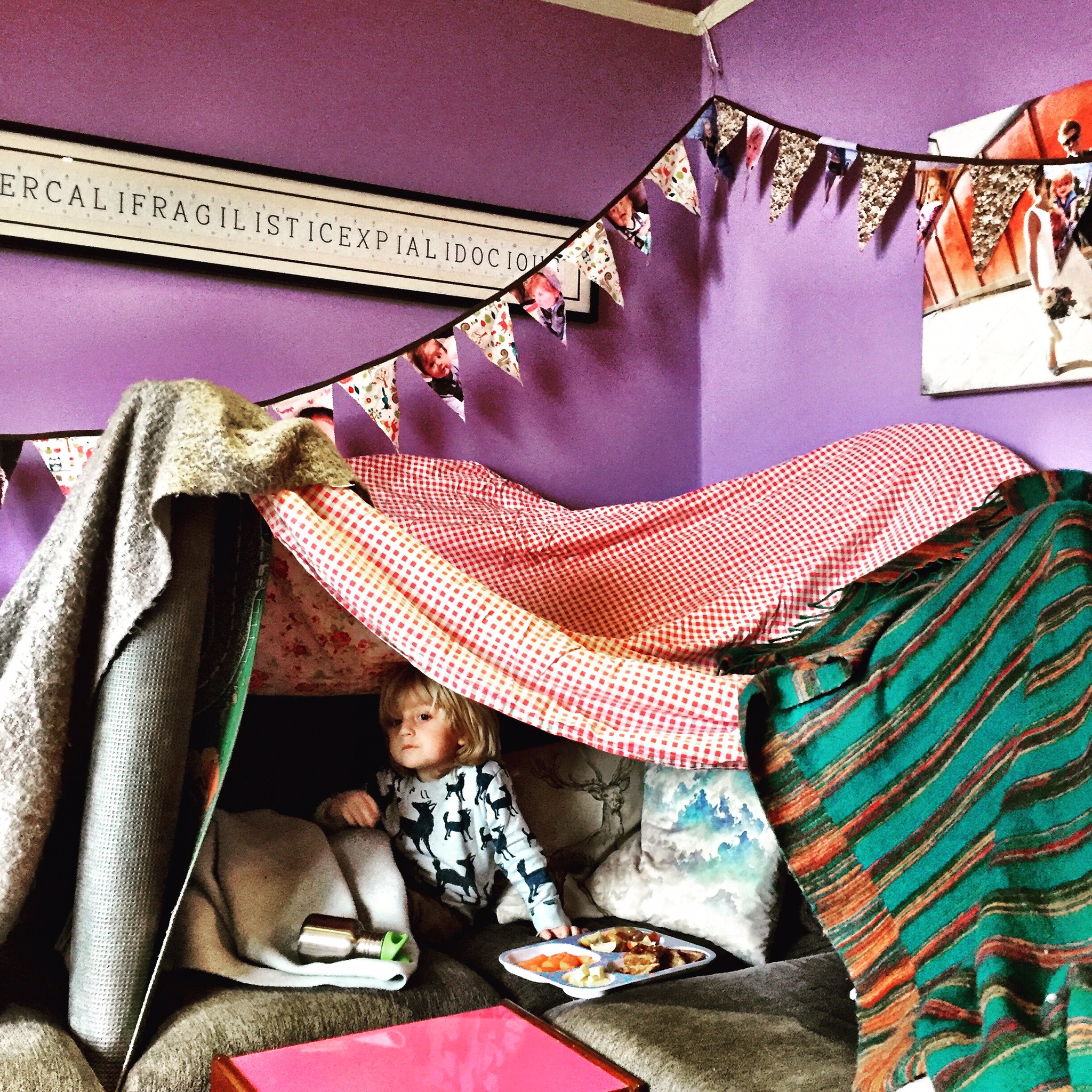
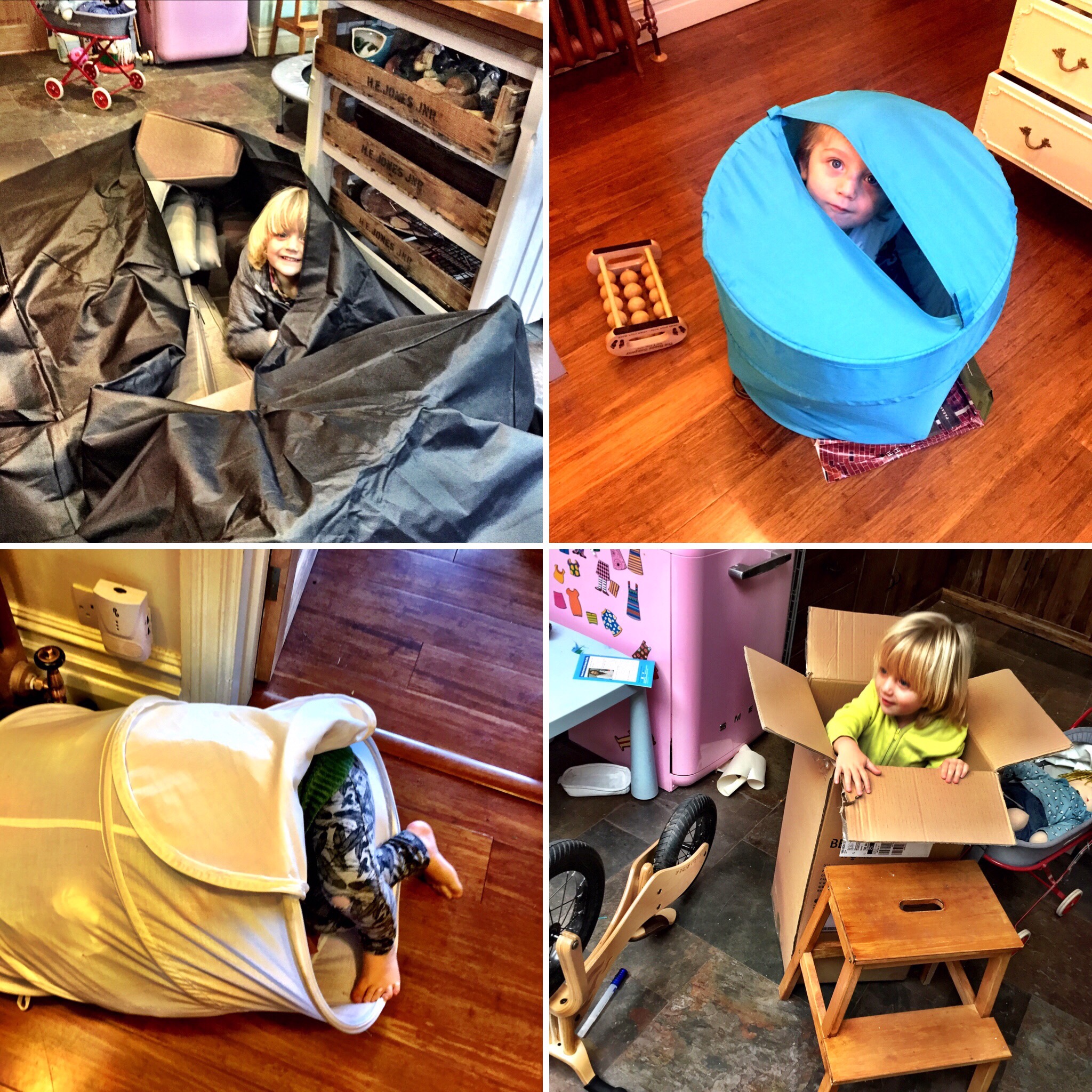
You out can tell that winter’s setting in because it’s all about hibernating in our house: hiding away from the world, feeling the comfort of a small space to cosy up in. We made a sofa fort one particularly rainy day last week, but Arthur’s just as happy with simpler residences: cardboard boxes, suitcases, laundry bags… Especially laundry bags.

IMG_1222

I can totally see where he’s coming from. And it’s not just the chill in the air, or the increasing amounts of rain, or the fact it seems to get dark soon after lunchtime. As I watch Arthur taking such pleasure in climbing or crawling into tiny spaces, I find myself longing for a cave. Preferably one far away from anywhere with no phone line, and most definitely no wifi. Somewhere I could block out the world, work on my novel uninterrupted, and get this redraft finished.

I’m still managing to snatch an hour a day – sometimes two. And it’s going pretty well. Very well, even. So much so that it’s an an almighty wrench to tear myself away when my time is up. I find myself clinging to the keyboard as Arthur tugs on my jumper after his nap, desperate to finish my train of though, or at least one more sentence, one more word…

It’s not really Arthur though, if I’m honest. He is so much fun at the moment, and it’s hard to begrudge time spent with him. But all the other demands on my time seem to be piling up, just as I want to hunker down and write!

Council meetings, securing the future of our local lido, researching education provision for the Neighbourhood Plan, deciphering the impact of the mayoral budget, Governor meetings, presenting certificates at prize giving, helping to raise funds for refugees. Then there’s all the normal household stuff. And December, with Christmas and Arthur’s birthday, rearing up over the horizon.

All that has to be dealt with too, but as I try to focus on it I have the niggling voices of my characters in my head, imploring me to decide their fate, to put them out of their misery, to free them from the conflicting prose that I am in the midst of untangling.

I’m not complaining, not really.

I know that I’m privileged to have so much going on – so much that is stretching me and challenging me and (hopefully) making a difference in my community.

But still sometimes, selfishly, I just want to shut it all out. To lose myself completely in the world of my novel. To write.

And it is then that I hanker after that cave – with no wifi.


Muddled Manuscript


Setting the tone

I came across an article this week which really resonated with where I am right now with the novel. It was outlining Zadie Smith’s perception of the two kinds of writers, quoting from a lecture she delivered in 2008. Aside from making me realise that I really should read more of what writers I admire have to say about what it is we do, it got me thinking about the thorny issue of tone.

IMG_1218

I’ve really struggled with the tone of this novel. I’ve known the main characters pretty intimately since they first appeared in my mind, and the plot – though it evolved in the writing of it as they so often do – has remained basically the same since my earliest outlines. I thought I knew what the novel was about too – on a big, important, thematic level – but that has all changed recently. And as it has I’ve started to see the cracks in my manuscript that had somehow remained invisible up until now.

According to Smith’s ideas, I am pretty solidly a Macro Planner. Not entirely – I can’t quite conceive of starting to write anywhere but at the beginning, can’t imagine flitting around my plan and shifting the structure as many writers apparently do. But I do need a roadmap of sorts – I couldn’t plunge into writing without a fairly detailed plan. At least I don’t think I could.

But there were elements of Smith’s description of her process as a Micro Manager which really appealed to me – not least her assertion that when she finished writing a novel she was actually finished, with redrafts being unnecessary. For her, everything begins with setting the tone – making the first twenty pages a crucial and lengthy process:

“Worrying over the first twenty pages is a way of working on the whole novel, a way of finding its structure, its plot, its characters — all of which, for a Micro Manager, are contained in the sensibility of a sentence. Once the tone is there, all else follows.”

This is pretty much the opposite of where I’m at right now. Four drafts in, I have a structure, plot, characters – but the tone which seemed to come so naturally on first writing (so much so that I didn’t really think about it at the time) suddenly doesn’t quite fit.

I think perhaps part of the problem is that I’m only now really beginning to understand what tone is. That might be a bit of a bold admission for an experienced English teacher to make, but for all of my ability to recognise tone, to use it effectively, to explain it through examples, I’m not sure I really got what it is all about. Now though the definition, borrowed here from Wikipedia, suddenly seems to make a whole lot more sense.

“Tone … shows the attitudes toward the subject and toward the audience implied in a literary work.”

It is here, I realise now, that everything starts to come together. My attitude to the subject (my characters, the story I’m trying to tell) meets my attitude to the reader (where I’m positioning myself in relation to them, the genre in which my novel sits). As I type this it seems far too obvious for me even to need to say it at all, but then it is sometimes the simplest lessons that are the most powerful.

So I will hold those things in my head as I make my way once more through my manuscript, creeping forwards through the words and sentences and paragraphs whilst darting back from time to time to tweak details that no longer fit. There are a lot of words to get through, but I believe it will be worth it.

And what of my initial approach, of the type of writer I am? Could I have avoided this quandary by micro managing, by manipulating the tone in the creation of those first twenty pages until everything else fell into place? I’m not sure, to be honest. So much of Grace’s story only became clear when I could see it from the outside – and actually crucial elements of her character were only revealed to me once I had taken her through her journey.

I guess like everything there is no black and white: whilst the two approaches Smith describes seem on one level to be mutually exclusive I suspect that most writers embrace elements of both.

As for me, I think I’m still working out what type of writer I am.

And I think that that’s ok.


Writing Bubble

Tidy house, tidy mind?

I’ve been on something of a mission the past few weeks: a mission to finally bring order to the chaos that we live in. Or at least to tidy up the house a bit and make sure everything has a home…

It’s a job that’s been a long time coming. We first moved into this house just over four years ago. Then we had the builders in to renovate from top to bottom which took about a year and a half, with most of our stuff still in boxes and us shifting from room to room as our plans took shape around us.

During that time I was heading up an English department at a school in Plymouth, where Leigh was also based for the first two years of his med school training. Days were long and life was fast, and then I got pregnant: Arthur arrived approximately ten days after the builders finally left, bringing with him all the joy and craziness that accompanies a newborn.

The upshot of which is that, coming up for three years later, there were still boxes of stuff which had not actually been unpacked since we left London. And on top of those were more boxes delivered by my parents when they sold the family home. And one of the reasons none of them had been unpacked was that too many cupboards and drawers were full of I knew not what stuffed haphazardly in on the days when I snatched ten minutes to attempt to tidy up a bit.

And suddenly, having been saying for months that I needed to get on top if it all, I decided enough was enough: as soon as my feet touched the ground after our summer of adventures I was struck by an overwhelming desire to get organised.

And so I have.

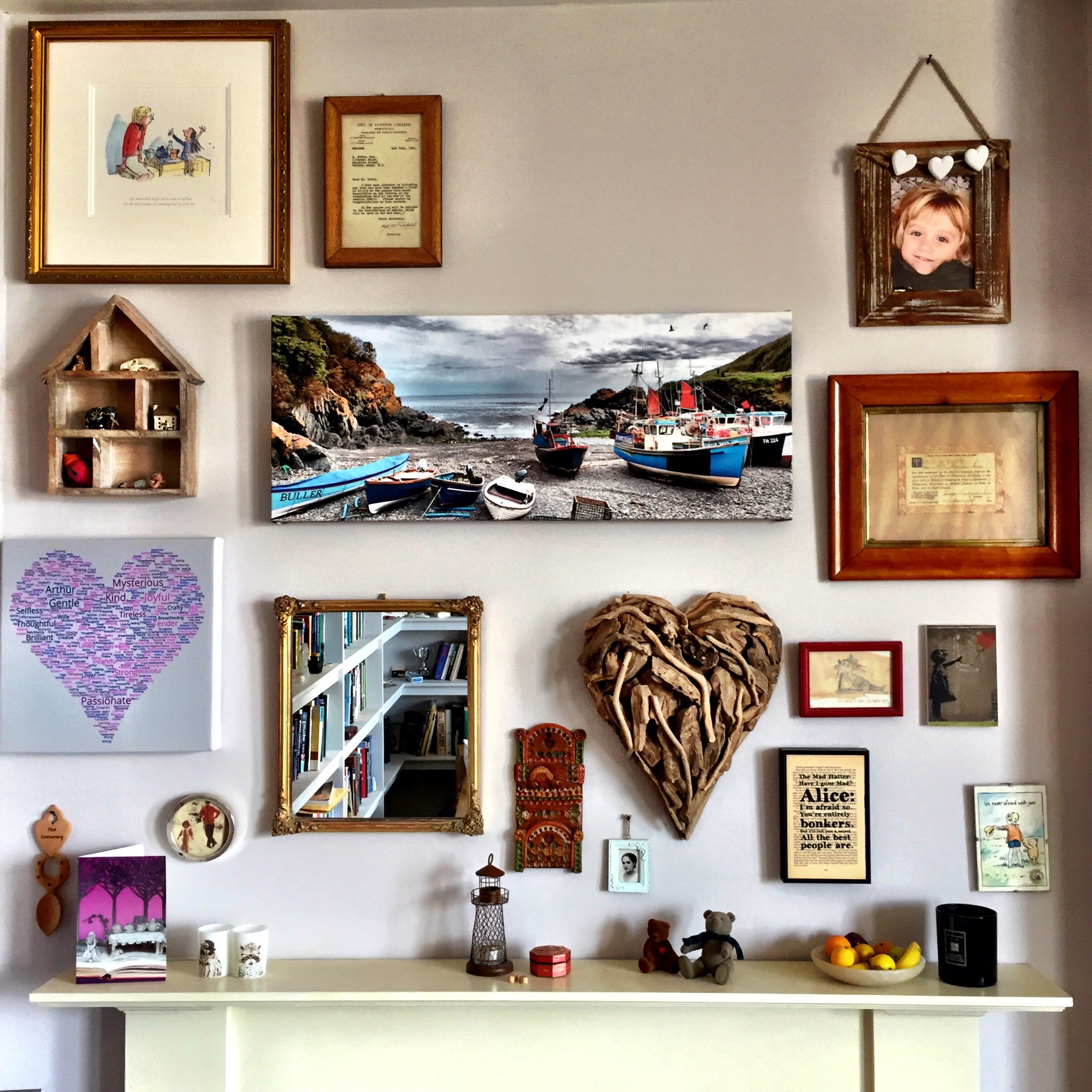
I’m not quite there yet, but things are looking so much better: I’ve sorted Arthur’s toys and clothes and found homes for the many he’s grown out of, I’ve unpacked box after box of artefacts from my past, I’ve moved furniture around to make better use of space, I’ve sourced frames for all the pictures that needed them and have finally created the picture walls I’ve been visualising for years.

IMG_1216

It’s all been a bit manic, and as much as I’ve been feeling a real sense of achievement I’ve been wondering why – why on earth have I decided now to get my house in order, just at the point when I have possibly the most challenging edit yet of my novel to get my head around?

But I think that’s precisely it.

I’ve never been the tidiest of people (don’t laugh, mum), and it’s never especially bothered me before: I’ve always been pretty good at zoning out the detritus surrounding me to focus on the task in hand. But this time feels different. Maybe it’s the new level of clarity I feel I need to achieve in order to do this draft justice, maybe I’m feeling the pressure of trying to simultaneously be a full-time mum and a successful novelist. Whatever the cause, I’m pretty sure this manuscript is going to turn out a whole lot more polished if it – and I – have space to think and breathe.

I’m trying not to use the tidying thing as a procrastination tool – I am already well underway with this fourth draft, and have been fitting in an hour or two of editing every day at nap time. But yesterday I finished working through the notes I’ve been given by other readers, so this final push now needs to come from me alone.

There’s still a way to go on the mission for a truly tidy house, but my writing room is very nearly sorted. And once it is, there will be no more excuses not to get in the zone and get this novel ship shape too.


Muddled Manuscript

On lightbulb moments, and cheese

I have been powering ahead with the edit this week. On balance, this is probably a good thing – but it hasn’t always felt like it.

In reality I have spent my days either hanging my head in shame or getting downright angry with myself. And then pondering, in disbelief, how it has taken me until draft number four to notice these things…

IMG_1205

I’m pretty sure that after the third draft I was feeling pretty confident: convinced I’d done all I could to polish my manuscript, ironed out all the niggles that had persisted up until then. And yet suddenly now so much of what I’ve written makes me cringe.

It’s the cheesiness, mostly. Even before I read my agent’s last set of notes I found myself cutting whole paragraphs I happened to cast my eye over, wondering how they could have lasted quite this long. And as I’ve worked through her (very kind) comments I have been both amused and embarrassed at the turns of phrase that at the time must have seemed appropriate.

There have been other painful moments of realisation too – things that, if nothing else, I need to remember in the hope that I might just avoid them next time round.

So, in no particular order, here are those lightbulb moments…

1) I get really lazy on my off days

There is a definite pattern to the notes I’ve received this time round, and there are certain chapters which have way more highlighted than others. In almost every case the problem is the same: instead of writing dialogue, I have described it, committing the cardinal writing sin of telling rather than showing. I think I thought I was doing this for a legitimate reason – that’s what I told myself anyway – but actually as I’ve tried to draw out the actual words from the description I’ve realised I hadn’t entirely thought through what it was that was being said. I suspect sleep deprivation had a lot to answer for – I was intent on keeping to word counts during the first draft, however depleted my brain cells were on any particular day. As a writing mum I’m not sure there’s any way I can entirely avoid that – but I’ll definitely be looking out for that off-day output next time I begin the editing process.

2) I’m a little bit too good at making excuses

The question remains, of course, why I failed to pick up all those lazy days in earlier redrafts. And I think it’s because I had done such a good job of convincing myself that everything I’d written was there for a reason. I can still hear those excuses in my head as I read the words now, but they don’t wash any more. This has to be progress, right?

3) I have a tendency to waffle…

I’ve always considered myself a fairly concise writer – not someone who’ll use ten words when one will do. But as I work through this edit there are paragraphs glaring out at me that have absolutely no business being in my manuscript at all – they’re not advancing the plot or telling the reader anything particularly interesting about characters or settings, and they’re not even especially well written. It is actually remarkably satisfying to be able to slash these sections right down and realise that I am entirely capable of expressing myself more frugally. It just might be good to lose the padding a little earlier in the process next time round…

4) I need to let my characters speak for themselves

This links in to all of the above, but I am discovering that the best way to get through tricky patches in my narrative is to stop trying to second guess what it is my characters want to say and instead just let them say it. Several scenes have evolved in (I think) way more interesting directions now that I’ve let my characters speak, and it turns out that what they actually wanted to say wasn’t quite what I thought it was after all.

5) I’m way better at writing the dark than the light

This shouldn’t really come as a surprise to me given my usual choice of reading matter, but there is no doubt that the best sections of my writing are the ones which are also the most depressing. Or unsettling, or disturbing, or angst-ridden. Just not the bits where I’m trying to convey sweetness and light. That’s where the cheese comes in.

Now I realise reading this back that it might come across as a very negative post – and it’s not supposed to. I’m over the whole frustrated with myself thing, and actually am just so incredibly relieved that this manuscript had not made its way beyond my trusted circle of beta readers to the big wide world.

I am also realising once again how important the editing process is – not just for this particular novel that I’m working on, but for everything it’s teaching me about writing, and about myself.

Writing Bubble
Mums' Days