Monthly Archives: February 2014

Why more time at school is not the answer

The proposal that educational achievement should be improved by increasing the amount of time young people spend in school is not a new one, and is by no means restricted to the UK. It’s been on Gove’s agenda since he came to power, and has recently raised its head again after Paul Kirby decided it would be the perfect promise to get the Tories re-elected. I’m not sure how, since I have yet to come across anyone who thinks it’s a good idea. Apart from Gove of course, who in ‘that‘ speech last week confirmed that ‘a future Conservative Government would help state schools … to offer a school day 9 or 10 hours long’. So much about his reasoning indicates a complete lack of understanding of what is currently going on in schools and the fundamental business of how children learn that I just couldn’t leave this one alone.

A review of the evidence indicates that extending the school day might just help to increase educational achievement. But not by much, not if the changes are unsupported by parents and staff and not if school time increases significantly – i.e. above nine hours a day. The financial cost is considerable, and the other potential costs to the wellbeing of all involved form a veritable minefield.

The initial reaction of most parents and teachers to the idea that school days should be longer and holidays should be shorter seems to be how on earth children are going to cope. Learning is an exhausting business, particularly when that learning is spread across a wealth of different subject areas and is continuously monitored and assessed. By the end of the school day, and as each holiday approaches, young people are genuinely in need of a break. Kirby’s argument is that the longer school day would allow for a slower pace, for a greater range of activities to balance out the school experience. I’ll come to my scepticism about that in a moment.

But first we cannot forget the teachers. They, too, would struggle to cope with a school day which saw them have any increased contact time with young people. When I was teaching my average working day was already at least ten hours – more often closer to twelve once work at home was factored in. Add in a few hours work on at least one day at the weekend and my working week was over 60 hours – despite a payslip which listed my hours as 32.5. I’m not detailing all this for your sympathy, but rather to point out one of the many ways in which Gove’s proposal is unworkable. My experience was by no means unusual – if fact I think in my ten years as a teacher I learnt every trick in the book as to how to cut the amount of hours I spent on the job. As a profession I loved it, but it consumed me. I needed every day of the holidays to keep on top of the workload and to rebuild relationships with friends and family that had to be put on hold during term time. And whilst I have total respect for those who manage to juggle teaching with having children of their own it is not something I can see myself doing until my son is considerably older – if at all.

Mr Kirby says that his ideas would actually improve the teacher’s lot rather than making things more difficult by providing time in the school day for all the additional work that fills the gap between the 20-odd hours of teaching time and the 60 hours spent working each week but I can’t quite see how he’d make that add up. He talks of all the non-academic activities that could be provided to enrich students’ experiences of school, but this is where my aforementioned scepticism comes in.

I mean, this is the Tories we’re talking about. What in anything Gove has done so far could make us believe that he would not slowly chip away at any ‘enrichment’ time in order to cram as many facts and exams and world-beating literacy and numeracy skills into an extended day as he possibly could? You only have to look at everything he believes to be important to know that the range of arts and sports activities he alludes to would never really be very high up his list of priorities.

Though ironically of course all of the enrichment activities he and Kirby purport to praise are very high up the list of priorities for most of the teachers I know. And this is one of the things that frustrates me most about the proposals: as with so much Gove says it indicates totally misplaced assumptions about what already goes on in schools. At the two schools I worked in for the majority of my teaching career – one in East London, one in Plymouth, both with ‘challenging’ intakes and neither ‘Outstanding’ as far as the government’s concerned – young people were already in school from 8am with breakfast clubs and study groups in place before the official start of the school day, and there were a wealth of activities on offer after school which would see kids in the corridors until 4, 5 even 6pm. I spent hours working with young people on a school newspaper – which they devised, secured funding for and ran in their own time – and a range of film projects, both as part of exam subjects and as extra-curricular projects. The schools ran mentoring schemes, drama groups, debating clubs and a full range of sporting activities – I know I’m only scratching the surface here but you get my point. And whilst most of these groups were voluntary, there were also compulsory study sessions for students to catch up on coursework or prepare for exams, or just to bring students in lower years up to their target levels. Other students might indeed head home at 3.15pm, but would be involved in all sorts of activities in the community, or they might just like to read, or, god forbid, hang out with their friends or family.

There are of course a minority of students who would use the time to make trouble, who would never do anything constructive with the hours that weren’t specifically mapped out for them, whose parents were unsupportive of their learning and who might just benefit from a heavy handed approach which would see ten hours of their day committed to whatever their school saw fit. But all of the work I have done over the years on raising expectations and achievement has taught me that very rarely can you do it by focusing on the lowest common denominator – and that if you do you very often lose the attention and the enthusiasm of the people you think are doing ok. More often than not there are pretty significant reasons why the minority are not able to focus on activities that will benefit them, are forever making the ‘wrong’ choices, will find themselves in trouble at school and in their community. Longer hours at school would not make their problems go away, and it would take a complete shift in focus on how those hours were spent to be able to begin to address the multitude of issues they face.

Time and time again the issues of troubled young people I worked with were found to be rooted in dysfunctional family units – I’m not talking about bad parenting, but a whole range of difficulties families were facing as they tried to bring up their children in a world often hostile to their needs. And one of the biggest things that worries me about these proposals for longer school days and shorter holidays is that they effectively normalise not spending time as a family. Kirby has a go at some sums in his piece, but he’s missing some figures. Even if we take the lower end of Gove’s intention, for nine hour school days, by the time you factor in getting to and from school you’re looking at more like ten. Add to that the actual recommended amounts of sleep for school age children rather than Kirby’s skimpy eight hours, and again you’re looking at an average of ten. Which leaves only four hours a day for everything else – not very much I think you’ll agree. Particularly if you combine this with proposals for children to start school from the age of two you’re looking at a population who become almost entirely institutionalised, have no idea how to fill their time for themselves, and have no time to even begin to work out who they might be.

Rather than focusing on ways of getting those pesky children out from under the feet of their parents so they can focus on the far more important business of work, we should instead be looking at ways to increase the amount of time families can spend together. When I was discussing all this with my Dad, a recently retired business leader, he found it bizarre that Gove’s emphasis should be on increasing the amount of hours parents can work when the business community is looking at ways to decrease everyone’s working hours. Even the Daily Mail acknowledges that spending too much time at work away from young children is the thing parents regret most, and studies show that the mutual benefit of spending time together as a family continues well into the teenage years. This definitely seems to be born out by the experience of most parents I know – opportunities for flexible hours, working from home and job shares are few and far between and mean that many people see much less of their children than they would like. The scary thing about Gove’s proposals is that by making these extended school hours a legal requirement then even the people who had managed to find a balance would suffer – short of home educating their kids, something which is not a realistic or desirable proposition for everyone, parents would be restricted to only those four hours a day that they could spend with their children as they pleased.

I am not disagreeing with the fact that a range of enrichment activities can be extremely beneficial for young people, helping them to find their passions and learn all sorts of skills that there is limited space for within the curriculum. But I strongly believe that enrichment opportunities for young people should be provided by the community, not just by schools in isolation. Looking at Gove’s preferred list of extra-curricular pursuits it seems strikingly narrow in comparison to all that is on offer from youth clubs and arts organisations and sports centres all over the UK. Or at least what used to be on offer before so many of these fantastic groups had their funding cut. By focusing on community provision young people would be able to mix with a range of people of all ages and backgrounds, and specialist centres could offer equipment and expertise that most schools could only dream of. Families could participate in activities together, and young people would have the satisfaction of seeking out the things that they want to fill their time with rather than just being told what to do.

Of course all of this still hasn’t addressed the very real need for individual time, for boredom, for unstructured play which would be the first casualty of longer school days and shorter holidays. So much research has shown that so much learning happens where it was least intended. Children need time and space for learning begun in school to embed itself, and if they are going to become genuine life-long learners then young people need space to develop their own passions and interests rather than the ones that others, however well-meaning, choose for them.

That brings me to my final point, the reason why these proposals are so insidious. Both Kirby and Gove and others who have spoken out in favour of extending the time that young people spend in school justify their ideas with a raft of rhetoric which makes it seem like they’re acting in the best interests of society. And so many of the people making the decisions about what happens to our communities are so detached from reality that they may be taken in by their promises of raised achievement, lower crime and a flourishing economy, and even be able to convince themselves that they really are acting in peoples’ best interests. That is why, though these proposals are not new, I think we should continue to beware them – and continue to listen to the very real concerns of the people they would really affect.

mumturnedmom

http://bit.ly/1khvxJm

The magic of storytelling: part two

So as well as thinking about how magical storytelling is for the reader as I watch Arthur discover how much he loves stories, it’s also been on my mind how incredibly magical it is for the writer.

Stories have always been a hugely important part of my life. From those early days devouring them as they were read to me and soon after, as a reader, staying up long into the night, hiding under the duvet with a torch and a pile of Enid Blyton. Later as a teacher I watched astounded as a class of challenging teenagers was silenced by the simple pleasure of listening to someone read aloud; I relished in the power of stories as entertainment and as vehicles for so much more. And now as a writer I feel enormously privileged to be consumed by stories and (almost) be able to call it work.

The magic of stories and of storytelling is something I explored thematically in Lili Badger. The folk tales Lili was told by her grandmother as a child return with renewed vigour in her teenage years, their metaphors seeping into her burgeoning understanding of what’s happening around her, helping her make sense of an otherwise opaque and unfriendly world.

What I didn’t realise then, though, what’s only really beginning to dawn on me now as I move deeper into my second novel, is that as a writer I’m not really here to tell stories. I mean, that’s part of it of course. Relaying a story in a form and a style that captures peoples’ imagination and makes them want to read on. But ultimately I’m beginning to see myself a bit more as a vehicle for a story that wants to be told.

When it comes to writing anything I’m definitely a planner. I’m not very good at just sitting down with a blank piece of paper and waiting for inspiration to strike, though I know that’s the way lots of novelists work. Before I started writing this novel, as with the first, I’d basically mapped out each chapter with a little summary to work from – something to inspire me, and something to keep me on track through the brain melt of motherhood. That bit of the process really isn’t very magical – it can feel like a bit of a slog just mapping everything out, and what seemed like great ideas in theory start to feel insubstantial and incoherent. But once I’ve worked through that, once the overall story arc is there and it’s time to actually get on with the writing – that’s where the real magic comes in.

Moving from those little summaries to the actual written chapters has been an amazing process this time round. I don’t know if with the first novel I was just too tired or too excited to notice it, but as I write the second I’m struck by it almost every day.

How I think I know what’s going to happen, and then as the words flow from my mind to the page events subtly change. How I think I know a character, and then they do or say something that surprises me but ultimately fits much better overall.

There have been some very specific incidences of this recently. Like my main character opening a drawer to get something out, but finding something else entirely different. She’d forgotten it was there, and I had no idea at all. But actually it explained a lot, and suddenly made the plot a lot less clunky.

Then yesterday lunch time I was sat describing a scene I was about to write to my husband, explaining how in control Grace was and how she absolutely definitely wasn’t going to cry. And then I sat down to write, and as the scene unfolded she felt tears pricking behind her eyes and ended up sobbing. Again it actually made a lot more sense than what I’d thought was going to happen – and I suspect the writing rang truer for me being taken aback by it as much as she was.

It’s taken me a while to write this post as I wasn’t quite sure how to put it without seeming entirely bonkers. Even reading it back now it all seems a bit improbable. Those ideas are coming from somewhere, and I guess that somewhere must be hiding in my subconscious. But it’s strange and exhilarating how they won’t reveal themselves to me when I think but only when I write. It makes the mantra I began this project with even more important, and it makes me really very excited about the story I might discover over the weeks to come.

Word of the Week: Bear

The word that sums up this week for me is:

20140207-095136.jpg

It’s Arthur’s word really – the latest he’s added to his ever-growing vocabulary. It began, as most words do, with copying. Then yesterday morning he rolled over and woke up in the cot which is still attached to the side of our bed, picked up one of his teddies, smiled at me and said ‘bear’.

20140207-095746.jpg

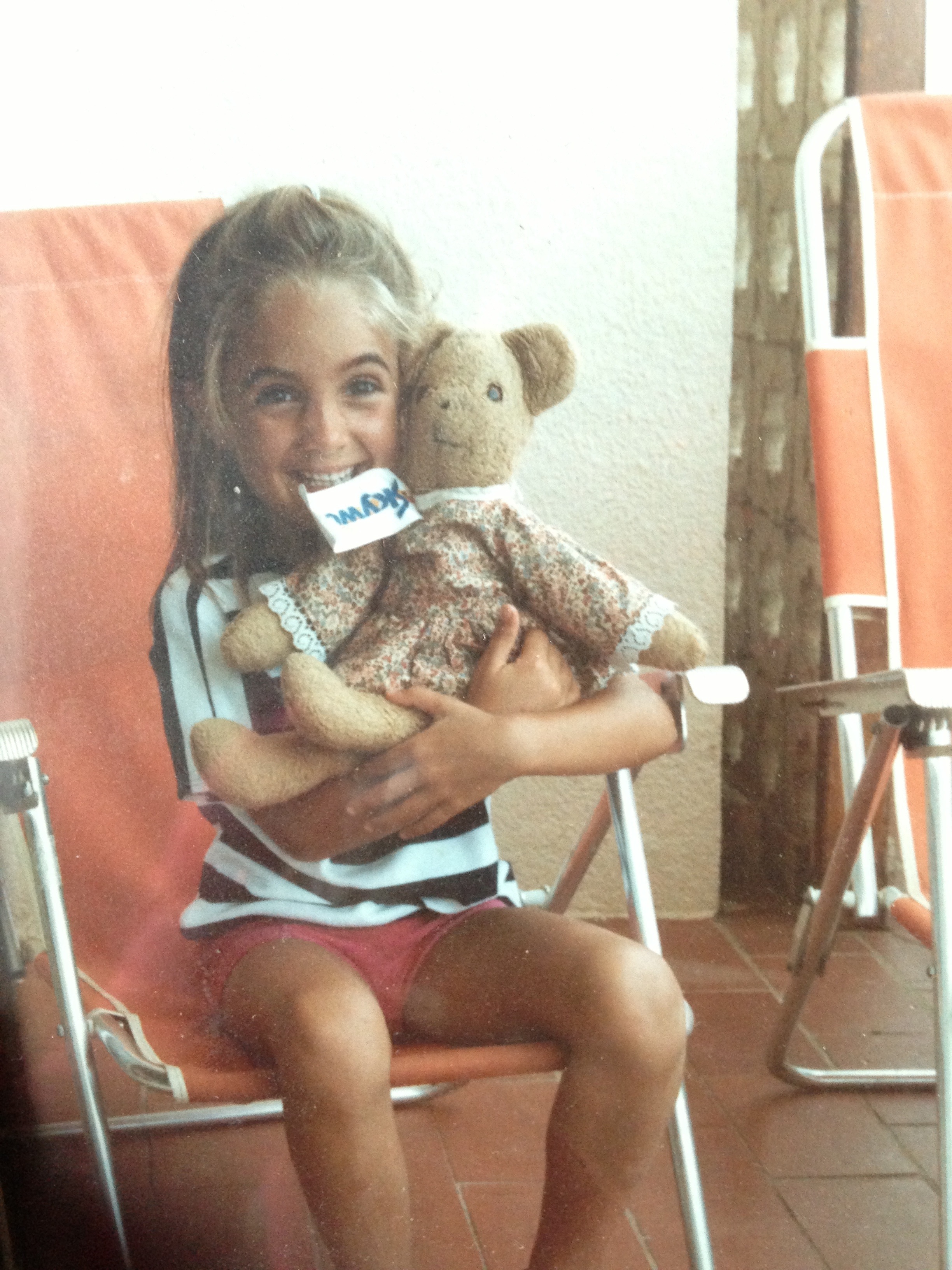
It’s not the word itself though that makes it so significant, but rather the thing he’s attaching it to. Teggy (as I creatively named him as a child) has been my bear since I was a tiny baby. He went everywhere with me, well into my teens. Even when I moved out of home Teggy came with me. I knew I was far too old for such things but to have him there was strangely comforting.

Having a baby finally ousted my childhood companion from my bed, and he’s sat forlornly on the radiator for most of the past year. Until one day Arthur noticed him, and held up his arms for a cuddle.

I love the idea that Teggy might become Arthur’s bear: though he’s definitely showing the wear and tear you’d expect from his 35 years he’ll always hold a special place in my heart.

20140207-101005.jpg

(Oh, and before anyone says anything, I realise ‘he’s’ wearing a dress in this last pic. I always did have a rather fluid sense of gender as a child…)

The Reading Residence

The magic of storytelling: part one

Arthur with books

Storytelling is magic. No really, it is.

I’m being reminded of this on a daily basis at the moment as Arthur’s understanding of language progresses in leaps and bounds. He increasingly comes crawling or knee-walking over to me with a picture book in his hands, sitting expectantly in my lap as I prepare to read the story to him. I’m not sure how much of the detail he picks up, but he responds to the rhythm and rhyme of the text, the intonation in my voice, points at pictures with me as I name the things they show, turns the pages with anticipation as the tale progresses.

As a child I loved being read to – my mum recounts how dad would come home after a long days work and disappear for hours as I demanded book after book before I would eventually fall asleep. Now that it’s my turn I’m reveling in the chance to sit and read books out loud to my son, so it’s very handy that he enjoys it too.

What with it being National Storytelling Week, and what with the weather being so shocking that curling up with a good book is really the only thing to do, I thought it might be the perfect time for a round-up of mine and Arthur’s favourite books to read together.

Now there are plenty of popular classics that he loves – The Gruffalo, The Snail and the Whale, Peepo, Guess How Much I Love You and Goodnight Moon would top that list. But the stories I want to explore here are the ones which maybe aren’t quite so popular but in our opinion definitely should be. And so, in no particular order, here are Arthur’s five favourite stories to read aloud.

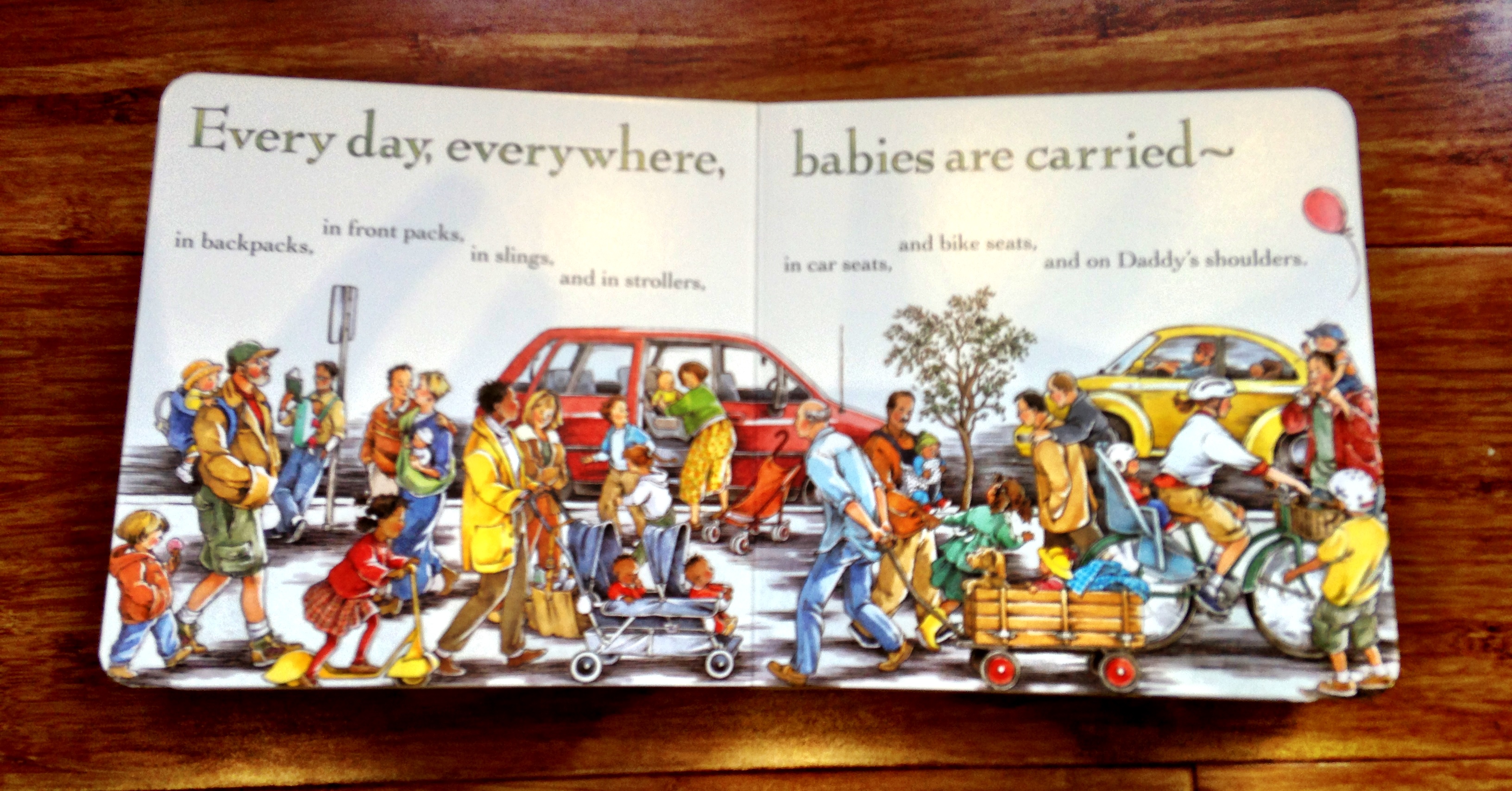
Everywhere Babies by Susan Meyers, illustrated by Marla Frazee

We picked up this book in Toronto last summer, and what I love about it most is its global outlook on the very important business of being a baby. It celebrates difference – of background, race and experience – through its cute illustrations of babies and families of all shapes and sizes.

everywhere babies

It is one of the only books I’ve found that includes breastfeeding and babywearing as part of the normal range of choices parents make, and I think it’s important for Arthur to see his experience reflected back at him.

The language is simple but lyrical with great use of repetition, and there is so much going on in the images on each page that there’s plenty to pause over and discuss.

All in all a heartwarming book that reminds me just how much our baby, like babies all over the world, is learning and growing every day.

Barnyard Dance by Sandra Boynton

This is a riot of a book, the energy of the words and the illustrations never failing to infect us when we read it aloud together.

barnyard dance

The simple illustrations of farm animals are brilliantly expressive and there is endless potential for sound effects and actions as they strut and promenade and skitter around the yard.

This book accidentally found its way into the bedroom for a while, and it was invariably the one Arthur would go for just as we were trying to wind him down for the night. Needless to say that whilst those evenings were lots of fun this is not the most calming of books. But it was just so hard for either of us to resist!

Barnyard Dance was a gift from Arthur’s Canadian Oddmother, and she has since added to his collection with several more wonderful books by Sandra Boynton. Irreverent and quirky and full of fun they’re definitely worth checking out.

Wow said the Owl by Tim Hopgood

I was initially drawn to this book by my general owl obsession and it has come to be a firm favourite for both of us. It was the first book that Arthur recognised by name, and it’s often the one he’ll independently pick up and bring to me to read.

Reading it aloud, the assonance is really powerful – the word ‘wow’ is so much fun to say and is at the heart of the story here. The book captures the wonder of a little owl at the everyday world that we take for granted, and as such perfectly mirrors the experience of a baby seeing everything through fresh eyes.

wow said the owl

Its a beautiful book for learning colours, and whilst Arthur might not quite be there yet he certainly appreciates the vibrant illustrations which are also satisfyingly unique so I can enjoy them time and time again.

A Bit Lost by Chris Haughton

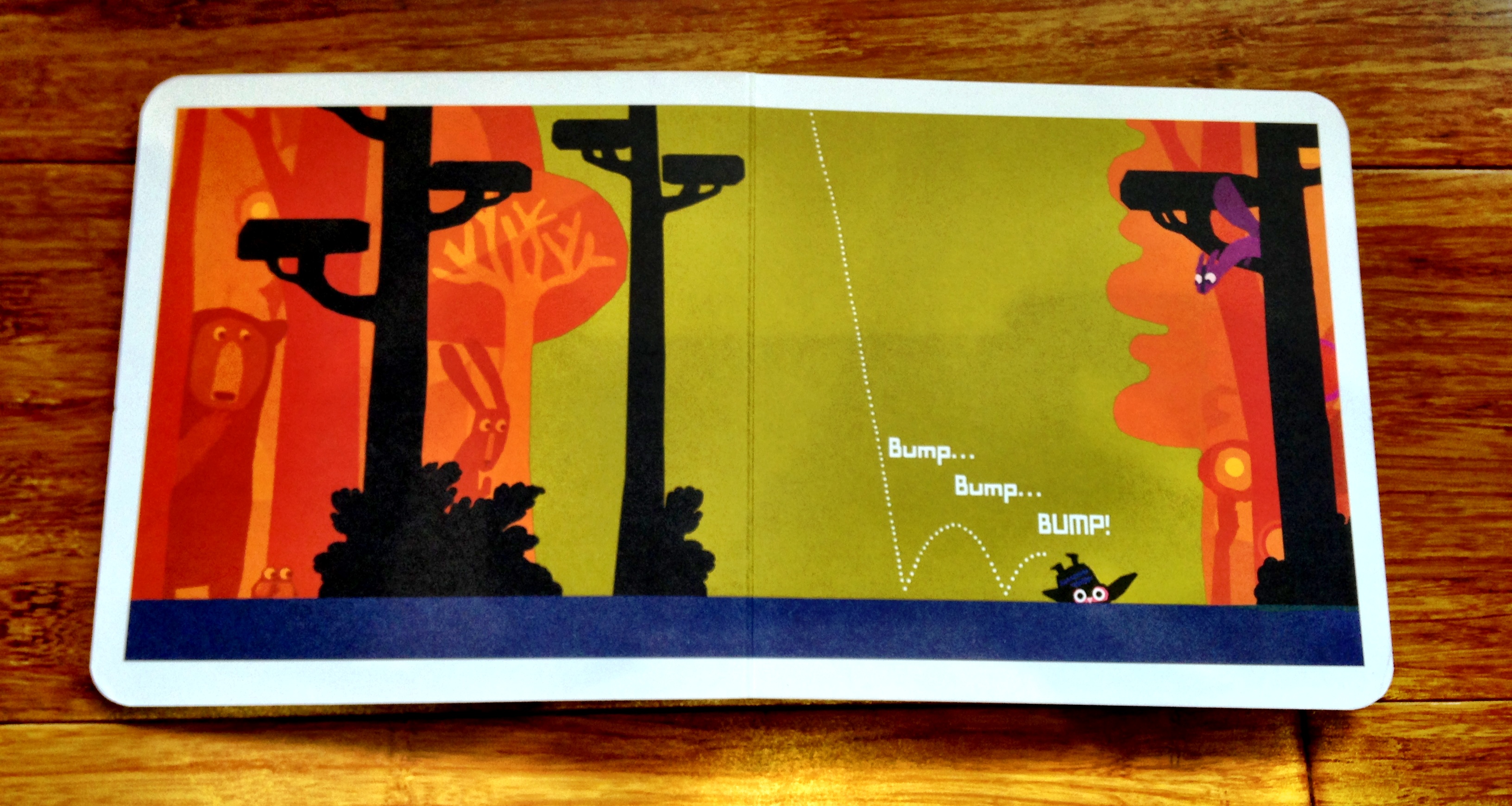
Another find born of my owl obsession, this is the sweet and touching story of a little owl who falls out of his tree and his ensuing search for his mummy.

a bit lost

The language is simple but engaging, focusing in on physical characteristics that Arthur is just beginning to be able to understand. It’s easy to empathise with the little owl and his growing frustration at the well-intentioned but misguided helper who leads him through the forest.

The illustrations are gorgeously stylish and retro, the subtle palate a refreshing change from some of the more garish offerings for babies. Though simple they communicate the story and emotions in the text perfectly giving lots of opportunity to explore the interplay between words and image.

This is a book for reading and re-reading: though we both know what happens in the end it’s impossible not to get sucked into the little owl’s journey.

It’s Time to Sleep, My Love by Eric Metaxas, illustrated by Nancy Tillman

Arthur was given another Nancy Tillman book by my parents, Wherever You Are, My Love Will Find You, and we enjoyed the sumptuous illustrations and heartfelt emotion so much we had to go in search of more of her work.

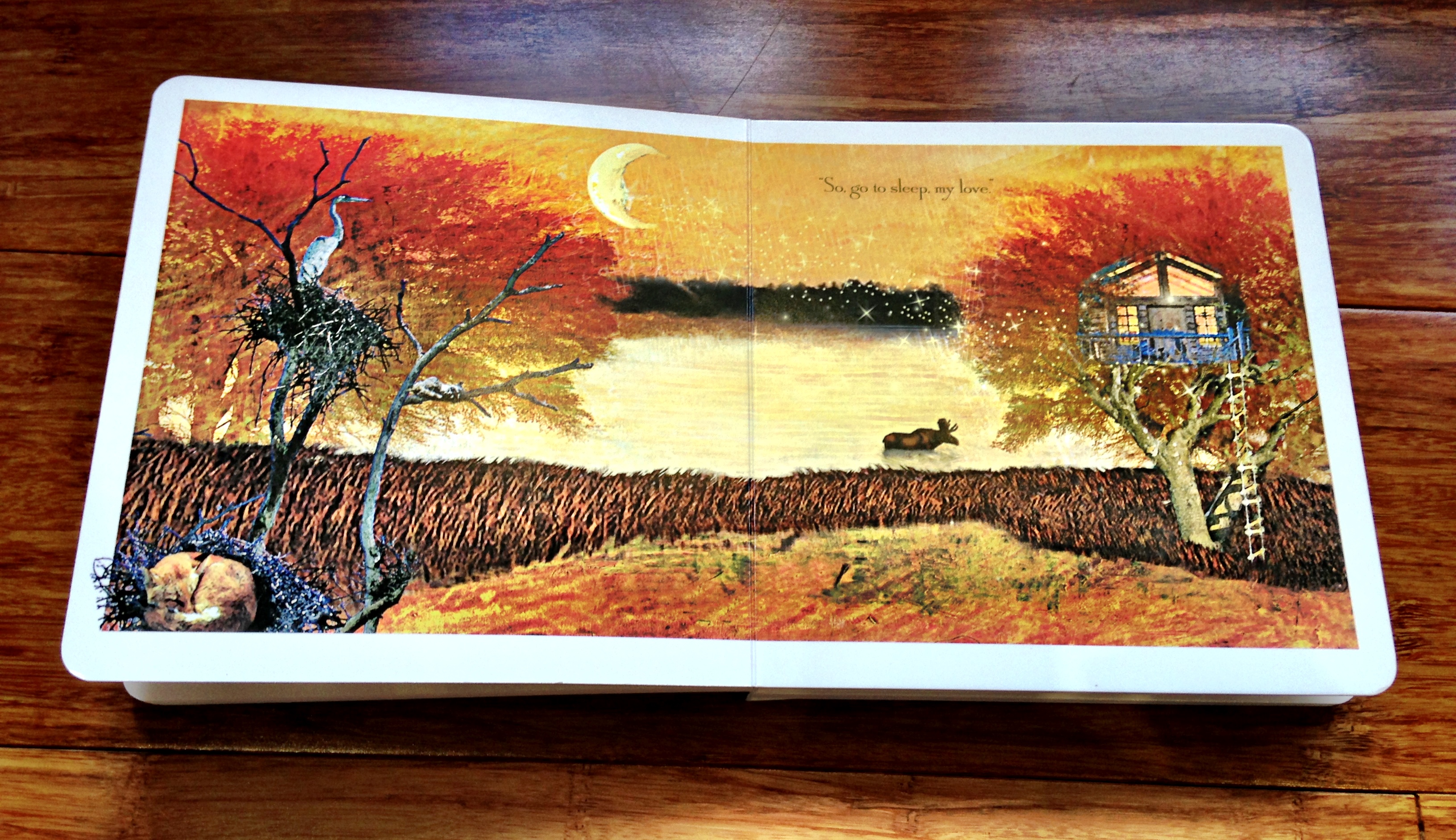
It’s Time to Sleep, My Love has become our go-to bedtime book, the perfect book for snuggling with and calmly packaging up the day before drifting into sleep. It’s never an easy transition for Arthur – like me he’s a bit of a night owl – but he’s come to love the gentle alliteration and hypnotic repetition of this simple story of a world preparing to rest.

so go to sleep my love

Whilst the words of this book work together to form a potent lullaby, it’s the images that are particularly striking. They are drawn in such exquisite detail, are so rich and textured, that oftentimes I find Arthur prompting me to turn the page as I have got lost inside the illustrations again.

It is this that makes this book so special, and so lovely to share before bed: it calms us both, and no doubt enriches our dreams.

So there you have it! Our top five magical stories for sharing and reading aloud. Please feel free to add your favourites in the comments – we’re always on the look out for new ideas! But in the meantime I think we might just go and have a read…

Actually Mummy

Why private school’s not all it’s cracked up to be

Every time I think I’ve drifted far away enough from teaching that Gove’s latest directives won’t have quite such a visceral effect on me he comes up with something else to punch me in the stomach. Today’s blow was this article in The Telegraph, its impact not lessened now I’ve read the actual text of the speech Gove made this morning.

There’s lots in what he says that I could pick apart, but the thing that really winds me up – that’s been winding me up for a while actually – is his misplaced assertion that private schools are categorically better than state schools.

Some of the things Gove aspires to in this speech are downright nonsense. The statement that stands out for me is the desire to see a society ‘where a state pupil being accepted to Oxbridge is not a cause for celebration, but a matter of course’. There were more than half a million applicants to university last year in the UK, and there are up to 7,000 places available to undergraduates each year in Oxford and Cambridge universities combined. That makes, approximately, 1% of all applicants that will be able to be accepted by Oxbridge unless Gove’s planning on a mass expansion: hardly a ‘matter of course’ by any stretch. Fortunately there are plenty of other great universities to take them on, but whilst Gove’s cavalier approach to figures – such as his assertion that he wants all schools to be above average, a clear mathematical impossibility – might make for good soundbites it indicates an unwillingness or inability to engage with the real issues at hand.

Private schools, like Oxford and Cambridge, are by their very nature elite organisations. 7% of British children are currently educated in the private system, and these are children whose parents are, on the whole, very well off and highly committed to their education as well as having a host of contacts in the world of work and beyond. Spending per pupil in the private sector is almost double that in state schools – as has been highlighted in the ongoing debate on twitter today:

So it’s hardly surprising that for that small, wealthy group of people facilities and opportunities are better than for the rest of the population. What I would argue is that this doesn’t always make for a better education.

The majority of my education was in the private sector. It didn’t start like that – my first schools were small village primaries in Wales, the second one being particularly amazing. I remember genuinely interested teachers and a personalised approach to how I spent my days at school – from taking some lessons with older children to being allowed to spend a week writing and illustrating a sequel to The Iron Man after I’d been inspired by reading Ted Hughes’ book in class.

And then, when I was seven, we moved from the Welsh countryside to the city of Birmingham, and I joined a well-respected all-girls private school. I found it all a bit odd – the size of it, the old-fashioned uniform, the competitive nature of the girls even in the prep school, the fact that there were no boys and generally such a narrow mix of people. And so despite not entirely disliking the experience I asked my parents if I could move to a local state school as the transition to secondary approached. For reasons we’ve thrashed out many times over the years but which were grounded entirely in what they believed were my best interests, they refused.

Over the next few years I went from being a happy, creative, sociable girl to suffering from various forms of depression and a fairly significant eating disorder – something which was far from uncommon amongst my peers. I was academically able, but to use a well-worn cliche felt like a square peg being tapped persistently into an unwaveringly round hole. I didn’t respond well to the pressure, and there was little support available to help me. By the time I left at fifteen I had no sense of direction and no real enthusiasm for learning.

We moved to London then, and I went to a sixth form in a local school which was part of the same private girls school trust. The damage had very much already begun by this point, and I was far from a model student – I spent my weekends clubbing, was late to school pretty much every day, bunked off lessons I didn’t like to go and smoke in the local cafe and regularly fell asleep in class. And the school did nothing to stop it. I guess because my grades didn’t suffer.

I credit my early years education with giving me the resilience and ability to learn that got me through all those exams – that amazing village primary, a mum who filled every waking hour with exciting, creative projects and a dad who’d read book after book to me when he got home from work in the evening. And the education I got in those two private schools was… fine. It clearly covered what I needed to get the grades, but I can’t imagine I met my potential – in fact I had no idea what my potential might be. I knew I didn’t fancy the narrow future the school had in mind for me, but I had no idea what else might be out there.

And I’m not alone in this. I have plenty of friends who have certainly not got value for money from their expensive private schools – friends whose parents spent yet more money putting them through crammer colleges to get the grades out of them that their private schools could not; friends who are still deciding now, in their thirties, what they want to do with their lives. Friends whose mental health, like mine, did not survive the pressures of the private system. There is a strong body of thought that sees the championing of public boarding schools in the UK as a state sanctioned form of child abuse – and in many ways I am inclined to agree.

It took me a long time to rediscover myself and my love of learning after I left private school. In fact it took me training to be a teacher. I went into teaching after a randomly chosen degree and several years of drifting between various low paid jobs and half-hearted attempts to do something creative. I was drawn to it in the end by an unashamed desire to make a difference, to make up in some way for all the privilege I felt I’d wasted.

And in ten years working in the state education system I found so much more than that. Personally, I found something that stimulated me creatively and academically. I found teams of colleagues who were committed and hardworking, always willing to go the extra mile for their pupils. I found incredible young people overcoming unbelievable personal challenges every day in their pursuit of an education. And I found amazing opportunities that I could channel their energies into, building up CVs to help them achieve their goals – the goals we sat down and worked out together. Lateness, truancy, falling asleep in class – none of these things were tolerated. Pupils who were achieving the grades but still had energy to spare? New challenges were found for them, within and beyond the classroom. And mental health issues were identified and guarded against as best we could with our limited resources – but never ignored.

So with all this incredible work going on in the state sector, what is it that holds it back from the private school elite? Well, all the things that make the private schools elite – the money for starters, but also the contacts, the lack of equal opportunities in the wider world for people from different social backgrounds. The facilities, not just within the schools but in the wider community – all of those fantastic arts organisations that have had their funding slashed since the Tories came into power. And the sense of entitlement that makes it a given that your average private school pupil will go on to a top university and into a high-flying career whilst many state school pupils are fighting against the expectations and ambitions of their community.

I know that the majority of private school alumni are unlikely to have such bleak memories as mine – and the disproportionate percentages who end up in top universities and influential careers does indicate a certain type of success. But quite frankly with all of the advantages the private school sector has then that success should be a given. And in contrast to the beliefs of Gove and his cronies I think it is those who work in our state schools, with all the additional challenges they overcome on a daily basis, that have much to teach their private colleagues.

If we really want to remove the barriers between them, to create a system of excellence for all, then it is the private schools that have to go. The state system is achieving so much already: just imagine what it could do for those who are less fortunate with the backing of the wealthiest and most influential citizens. And imagine what it in turn could do for their children to create a new generation of empathetic, balanced, open-minded and happy individuals at all levels of society.