Category Archives: Uncategorized

The unschooling diaries: week one

The past week or so has been somewhat dominated by potty training. I say ‘training’… My approach to this has been as much led by Arthur as anything else – hence why perhaps it has taken so long! I think it was about a year ago that we last broached the idea – let him sit on the potty from time to time, hung around naked if he felt like it (which wasn’t very often). We had sort of decided that last summer was going to be when we cracked it, but he had other ideas. And if there’s one bit of advice that seems to crop up again and again when it comes to potty training it’s don’t rush it. So we waited.

And suddenly he seems to be up for it. Which is great. But a little all consuming too… We haven’t quite worked out the logistics of wearing trousers, or leaving the house. And I need to make sure I’m paying attention as things are all pretty time dependent at the moment. But, you know, we’re getting there.

IMG_1270.jpg

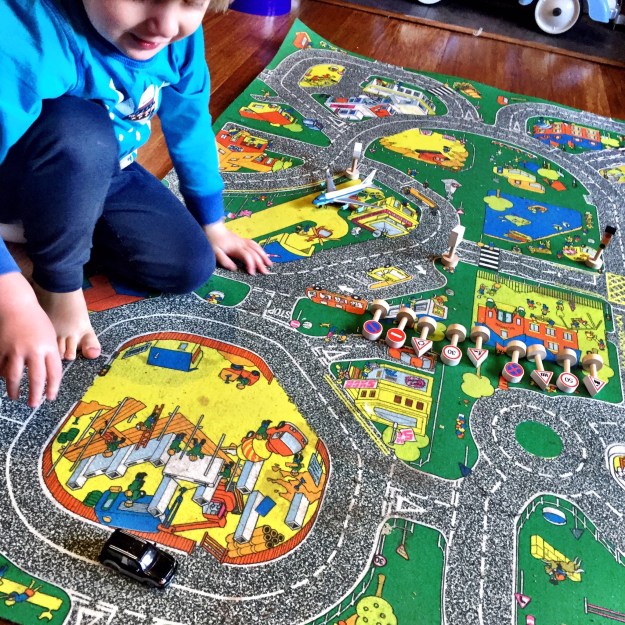
As well as learning to use the potty, Arthur is really enjoying creating worlds with his cars at the moment. And trucks, and nee naws, and planes. He’ll start them on his road mat but their adventures often take them all over the house. We’ve been experimenting with road signs, too. He always wants to know what different signs mean when we’re out and about, and having these little toy signs is adding another dimension to his play.
IMG_1260.jpg

It’s not just signs he’s interested in – he wants to know what letters and numbers mean too. He likes the challenge of his alphabet puzzle, and loves the song that we’ve decided goes with it. It’s going to be a while before he really understands what it’s all about, but we’re having lots of fun with it in the mean time.

IMG_1259.jpg

He’s been interested in another puzzle too, one we’ve had for ages but hasn’t kept his focus until now. I like it because it isn’t exactly clear how you’re ‘meant’ to organise it – so there’s plenty of opportunity for interesting chat whilst we’re thinking about how its pieces might group together.

IMG_1263.jpg

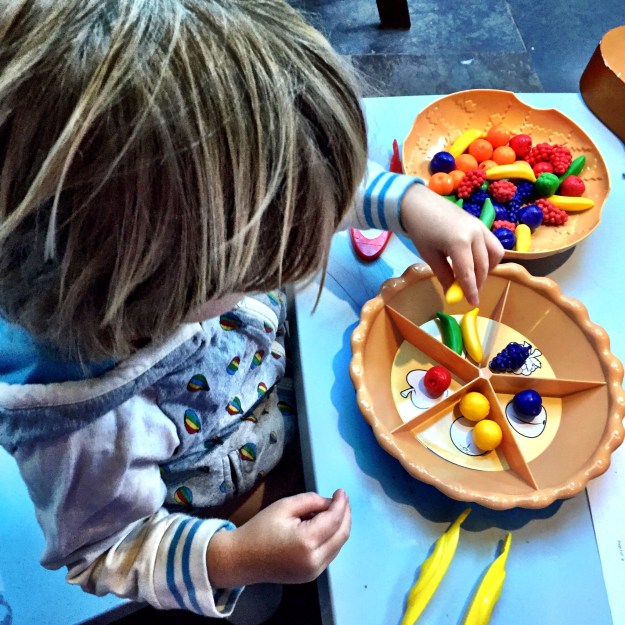
Exploring options for grouping things has been fun with the sorting pie too. Up until now we’ve mainly done it by colour, but now that Arthur’s mastered that he’s been trying it by different types of fruit instead. It was clear at first that he really didn’t like putting the green bananas with the yellow ones but he’s been getting the hang of it…
IMG_1268.jpg

We’ve had the playdoh out this week too – just for playing, really, rather than making anything in particular. Though Arthur did fashion a rather fetching moustache!

IMG_1265.jpg

IMG_1271.jpg

And for more mushy creative fun there was SUSHI! One of this household’s hands down favourite foods, and one we will definitely be making more of in the future.

IMG_1269.jpg

We haven’t managed to get out and about that much (potty training and WEATHER), but when we have it has mainly involved Arthur’s new scooter. He’s definitely getting the hang of it, but I’ve been very grateful for his helmet!

IMG_1267.jpg

IMG_1266.jpg

We’ve been out to Arthur’s various groups too, drama and singing at Project Performers, and his gymnastics class where he has really impressed me by holding his own in a new group without me by his side. Last weekend he went to his first Rugby Cub’s session too – I’m not entirely convinced about rugby as he gets older, but whilst it’s just ball play I reckon we might as well make the most of it!

And today we went for a family swim – our first in ages. Arthur loved it so much I think we’re going to need to make that a regular thing too. I’m still toying with the idea of lessons, but he’s getting on so well in his float suit we might just keep having fun with it for now.

Finally there are of course the drums. There’s a strong sense of rhythm there, that’s for sure. And I’ve invested in some practice pads, so hopefully it’s not proving too unbearable for the neighbours…

IMG_9542.jpg

3/52

IMG_1262

“A portrait of my child, once a week, every week, in 2016.”

The box started out as a robot costume, and soon became a spaceship.

Arthur loves all things space at the moment: he dreams of flying to the moon and floating amongst the stars.

And on his way he loves to listen to his stories.

Linking up with Jodi at Practising Simplicity for The 52 Project. 

Broken beginnings

broken beginnings

I have been trying to get started on my third novel for what feels like forever.

The idea began to germinate almost two years ago, inspired by a dedication on a local bench. Since then I’ve written various scenes and character studies, carried out a fair amount of research, and even began to think about how the novel might be structured.

But it seems that every time I’ve been close to actually starting to WRITE something else has got in the way. Novel number two, mainly: I hadn’t anticipated quite how many redrafts that would need, and I’m pretty sure I’m still not done on that front. I don’t begrudge that, though. I’m not writing these novels for them to sit on my hard drive after all – and I know it is getting better and better with each wave of work I do.

I’d thought I might be able to get stuck in to this new idea in the gaps between rewrites. I don’t think I could manage to juggle both concurrently, but I could probably have managed to get a fair amount of writing under my belt whilst waiting for feedback and allowing it to sink in. Naturally, though, life had other ideas.

Like successfully standing for election to my local council. Something which has satisfied a lifelong urge to become more actively engaged in my community, but hasn’t left much time in the day (or in my head) to birth a new novel.

I’ve found it impossible not to worry about what this all means in relation to my ambition to be a successful novelist. Surely I need to be able to knuckle down and focus, to actually write rather than just think about it, to move between projects in different stages of development? But then, as a new window of writing opportunity opens up in front of me, I wonder whether this novel might actually benefit from being so long in gestation.

My first novel was swimming around in my mind for several years before I was finally able to thrash out a first draft, and by that point I knew the characters so well that everything fell into place pretty seamlessly. There were a few niggles, of course, that needed ironing out – but so much of the novel had essentially written itself in my head that often it was just a matter of sitting down at the computer and the words would flow through the keyboard and onto the screen.

There is, after all, so much about writing that happens when you’re not actually writing. I’ve found myself in idle moments mulling over certain turns of phrase, deciding which is most apt for the voices of my two main characters. And there’s the plot too – the story I’ve been telling and retelling myself as I’ve been yearning for the time to write it down. Each time it has got a little more detailed, a little more interesting. And hopefully that will be borne out in the draft to come.

Despite all this, I do need to get writing soon. My plan this week is to use the index cards I bought months ago to note down all my different ideas for scenes, characters and settings and begin to map out how the story unfolds. I know its structure isn’t straightforward, and whilst I haven’t decided yet exactly what order I’m going to write it in it would be nice to have some sense of how it will all hang together in the end.


Writing Bubble


Unschooling a preschooler

I am fascinated by learning. What ignites the first spark, how knowledge and understanding become embedded, the directions these can take people in as their lives unfold. As a teacher, this informed my whole pedagogy. I didn’t want to stand at the front of a silent classroom and speak, filling supposed empty vessels with the fruits of my superior intellect. I wanted to inspire, to start the young people in my charge on a journey of discovery which would hopefully take them way beyond the walls of the school. So much of education, it seemed to me, was about fitting square pegs into round holes – and I just didn’t want to be part of that.

If as a teacher, though, the constraints of our education system were frustrating, as a parent I find them positively frightening.

I look at my unique, bright, inquisitive boy and I can’t quite comprehend how he will benefit from being subjected to rigorous standardised tests. Whilst I have every faith in the intentions of the vast majority of teachers to bring out the best in each of their students, I worry about how their resolve will hold in the face of ever-increasing external pressures. Fundamentally, my fear is that the government do not want to foster a populace driven by individual thought and opinion. And I do not want to do my son the disservice of reducing him to being merely a cog in the machine.

IMG_1246

It is for these reasons that, after years of being a passionate supporter of state education, I find myself reluctant to begin the process of enrolling him in one of our local schools. He is a while off compulsory education, but at three years old he is already unusual amongst his peers in that he does not attend nursery or pre-school. He will be more unusual still if I follow through on my instinct, bubbling just below the surface, to keep him out of formal education until he is at least seven. By this age, I would hope, he would be resilient enough to navigate school as an informed and engaged individual. Many educational experts believe that this is the age at which children are best suited to enter formal schooling – a theory born out by successful education systems all over the world.

I am mindful, though, that there is an awful lot I am trying to do with my days: writing novels, representing my community on my town council and as a school governor, acting as a subject consultant for Ofqual. The question of how I am going to find time to provide meaningful learning experiences for my preschooler has not passed me by.

Except… My experience as a teacher has taught me that much of the school day is spent managing a large volume of children rather than focusing on individual learning – I can only imagine that this is even more pronounced in early years than it is in Secondary. And my aspiration with my son, just as much as with the pupils I have taught in a school environment, is to be a facilitator rather than a font of all knowledge. I want his learning to be driven by his natural inquisitiveness, not constrained by what I feel he needs to know and understand.

And it is this that has led me to unschooling. As an advocate of child-led parenting in the baby and toddler years, and student-centred learning in the secondary school, it seems the logical path for me to follow as I look to foster a love of learning in my son.

With this in the back of my mind, I am beginning to see the play that unfolds in our everyday lives – both self-directed by Arthur and shaped (loosely) by me – in a new light. It is my intention to begin to document this, for my own reflection and maybe to inspire others too. I will never be able to capture every aspect of his learning, but what I can do is focus in on some little key moments from our weeks and reflect on them as a sort of learning journal: an unschooling journal, if you like.

It was that I had intended to do when I sat down to write this post, but thought I should maybe take a little time to explain my approach – something which took a little longer than I’d thought it might. As with many things, though, I’m much more convinced about what it is I am actually doing having taken the time to write about it: so the first instalment should be coming up very soon!

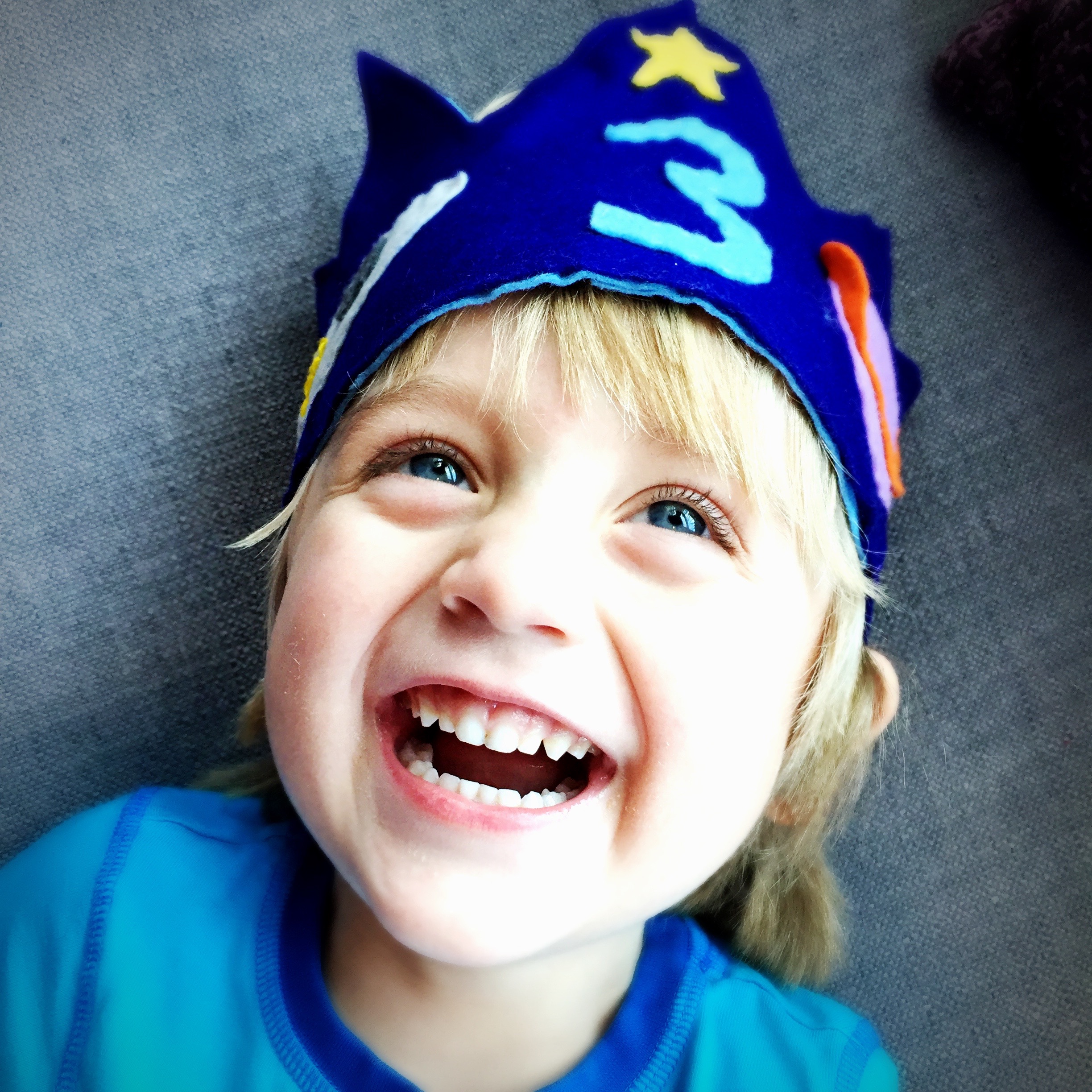
Now you are three

IMG_9159

Dear Arthur,

So now you are three.

How did that happen?

I remember when you were tiny, in those first magical, mystical days, I used to stare at you through the fog of sleep deprivation and try to imagine what you would be like when you were this age. How you would look, how you would sound, what you would do.

I never could have imagined you.

The way you draw in your breath and clap your hands in glee when something exciting happens: from the suggestion of a train ride to your first sight of snow to me making it home from an evening meeting in time to kiss you goodnight. You are excited by life, and I love that.

I love how you quickly make your way to the dance floor when a song you like comes on, throw your hands in the air and shake your booty with a huge smile on your face. I love that the dance floor is whatever you decide it is in that moment, from a clearing in your toys in the lounge to the rug in your bedroom to a select few tiles in the kitchen marked out by something only you can see.

Your imagination is spectacular. Inspired by story books and movies you create all sorts of people and scenarios to take you through your day. Wherever we are you can conjure up your own entertainment – and as your vocabulary increases you can share it with others too, making up stories for us just like we do for you.

And what a vocabulary. There was a moment recently, when you were once again telling me the story of The Polar Express, when you described the train arriving outside the window with its ‘hissing steam and screeching brakes’. Several times a day I am astounded by the words that have found a home inside your head.

You absorb everything around you, and if I stop and pause for a moment I can watch you do it. Almost hear the cogs in your brain turning as you focus in on new little details you haven’t noticed before. You ask about things of course – ‘why?’ is an increasingly common refrain, and I always try to answer you the best I can, even if the level of understanding you are seeking is beyond me.

You don’t just rely on other people for answers though. You are fascinated by how the world works, and are constantly experimenting, trying it all out. Sometimes your methods are a little frustrating – the throwing, the tasting, the taking things apart. But I know why you’re doing it, so it’s ok.

Don’t ever stop exploring, my little bear. Don’t ever stop seeking out the truth and trying to make sense of the world, even when it seems completely unintelligible. Especially then.

There is so much about your emerging personality that I hope you hold on to as you grow.

I hope you will continue to try to understand your emotions, and those of other people. When you look up at me with your big blue eyes and say ‘I’m sad’, and together we try to work out why, a part of my heart aches for my inability to protect you from the darker feelings that will inevitably engulf you from time to time. But I’m glad you want to talk about it. Know that I will always be here when you are sad or angry or afraid: my love does not need you always to be happy.

Though of course when you are my heart sings. Your laughter is, hands down, the best sound I have ever heard. I think you like it too. If there’s a lull in conversation you’ve started saying “Let’s laugh! Will you laugh with me?” It is impossible not to agree, and usually I’m giggling before I’ve even had time to answer.

You bring so much joy to my world.

There is nothing sweeter than hearing you say, “Can I give you a toy, mama?”

You say it when we’re in the midst of playing, when I’m distracted by my work, when we’re talking about something you’ve done that’s made me cross. And when I say yes, which I try to always do, you go and pick out one of your favourite cars or creatures or maybe even a train and carefully hand it over with a smile.

I think what you’re saying is “I love you, mama.”

And I love you too. Very much.

All my love for always, Mummy xxx

Sunday photo: 13th December 2015

IMG_1236

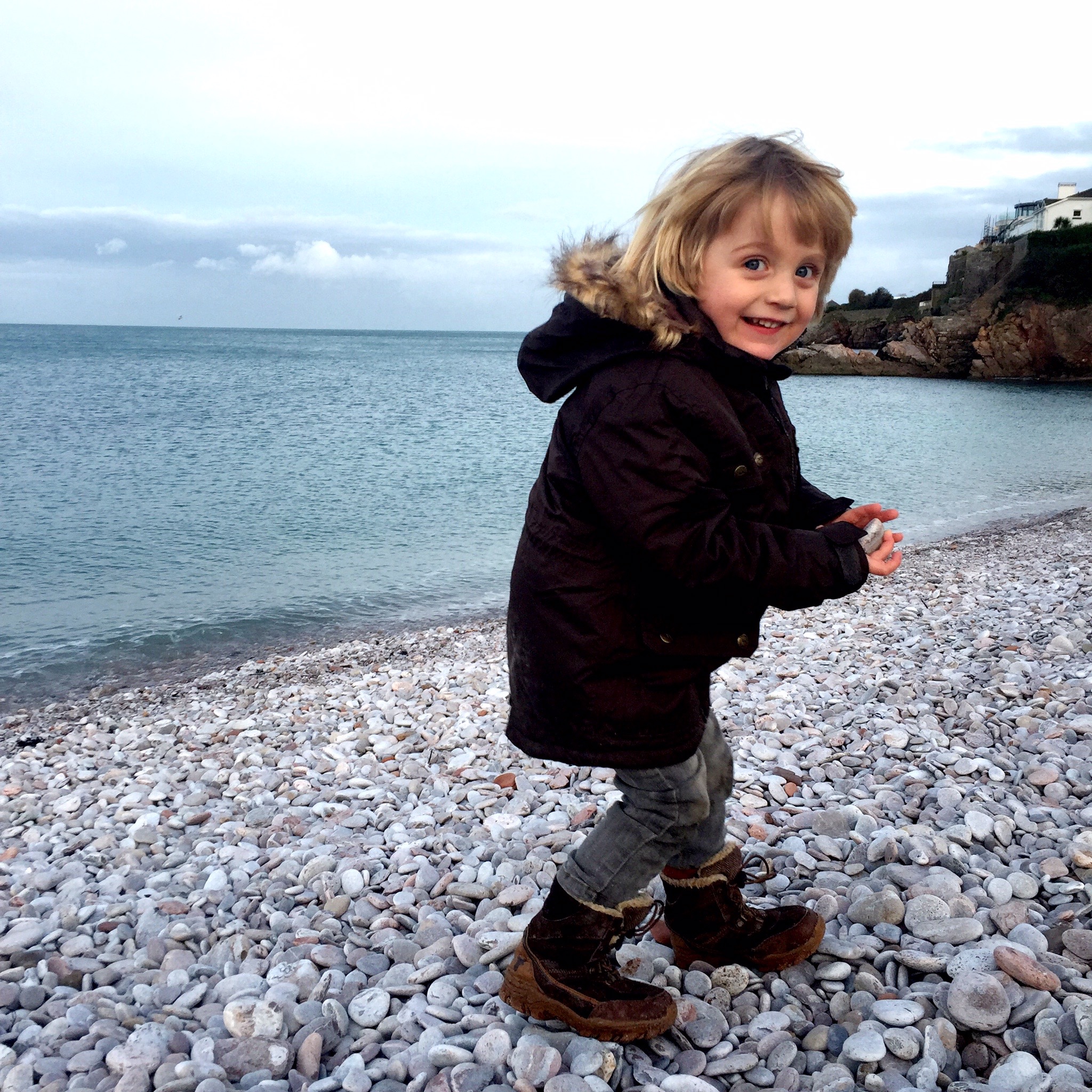
Arthur in his happy place.

Throwing stones into the sea is still one of his very favourite things to do, but he loves to explore the beach now too: clambering over the rocks at the end whilst I watch, heart in my mouth and muscles poised to leap to his rescue if he needs me.

I sometimes lament the lack of manufactured play areas near our house, but really of course  this natural playground has so much more scope. And whilst Arthur plays I get to breathe in the sea, listen to it tumble the pebbles at its shore and lose myself in its bigness for a few precious moments before we continue with our day.


Linking up today’s post with Darren at One Dad 3 Girls for My Sunday Photo and Jodi at Practising Simplicity for The 52 Project. 

Where memories go when they’re forgotten

December is never a good writing month for me. I find the excessive amounts of darkness pretty wearing, and what surplus creative energy I do have seems nowadays to get sucked into preparing for the the double whammy of Christmas and Arthur’s birthday three days later.

It really stressed me out last year, but this year I’ve accepted my limitations and (other than external demands on my time which I have less control over), I’m finding things all a lot easier to handle.

The timing of my self-imposed deadline for getting the latest draft of my WIP to my agent was not accidental. Having submitted that before the end of November I don’t feel too guilty about being a non-writing writer for a bit. That’s not to say all thoughts of novels have been banished completely: as I’ve let myself get caught up once more in the day to day, I have felt my next project tapping away at the corners of my mind, just waiting for its turn in the spotlight.

I find it very curious how a story develops.

IMG_1234

The flash of inspiration that comes first – a person, an event, a conceit that needs exploring. Those can seem to come from almost nowhere: they may have their origins somewhere in real life, but the way that concrete experience gets twisted and turned into the beginnings of a work of fiction renders it almost unrecognisable.

But it’s what comes next that really blows my mind. The way the characters start talking to you, offering up little titbits when you least expect it. The way that reading or hearing something completely unrelated seems to jog your memory and fill in an aspect of the plot that hitherto had not quite made sense. The way that you can lay an idea to rest for a while, and when you return you find it is embellished with so many more details that it is hard to believe weren’t always there.

Sometimes it’s hard to believe that I’m making a story up at all, that the events that are unfolding didn’t really happen. Sometimes it feels like the story is there, waiting to be discovered, and I’m just a conduit for a tale that needs to be told.

There was something Capaldi’s Doctor said that provided an explanation for it all that’s pretty hard to argue with:

“Every story ever told really happened. Stories are where memories go when they’re forgotten”

There are so many stories after all. So many things that happen to people, that people think or do, that get lost in that moment. But what if they’re not lost? What if our job as writers – as storytellers – is to seek them out, to share them? We may not get every detail quite right, but perhaps our goal – through the planning, the drafting and the editing – is to get as close to the truth as possible.

And once all of that falls into place, perhaps that’s when we’ve got our story.


Writing Bubble

Sunday photo: 6th December 2015

IMG_6464

We’ve spent a lot of time indoors this week. I’ve had loads of work to do, and between the weather and still not feeling 100%, Arthur has been more than happy to focus his energies on play.

He’s really been stepping things up in that department: his imagination has shot up again to a whole other level, and he is finding an independence, a freedom, that is quite exhilarating to watch. Along with this independence has come a new cacophony of playmates.

The taps in the bath have become a chicken who he will happily chat away to as he splashes about.

At night we hear him recounting his dreams to the bears who share his bed.

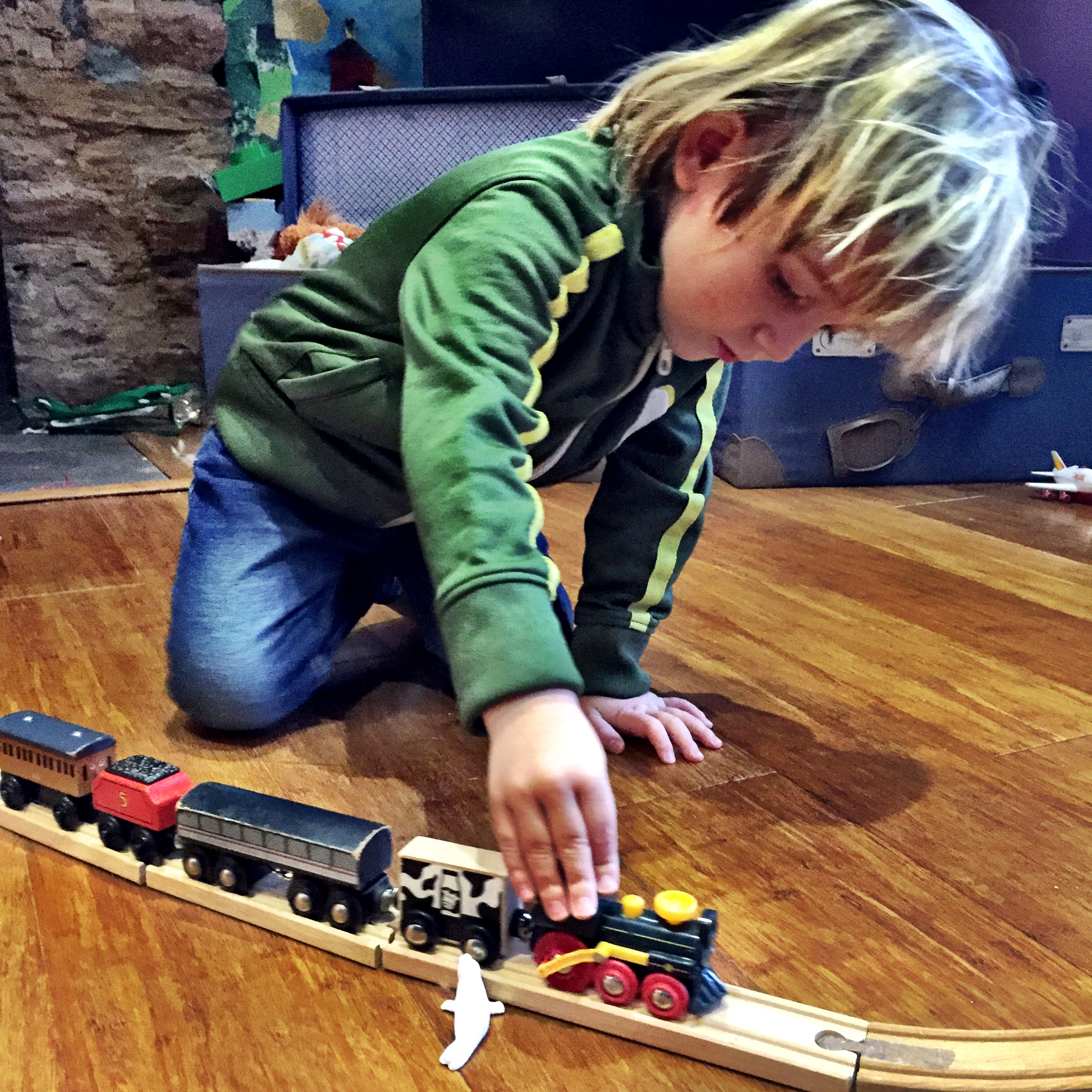
And here he’s initiating a new companion, the Arctic seal who appeared on the first day of advent, by teaching her all about his train tracks.

With all this has come a new role he’s developing for himself. There was one day this week when conversation turned on a few occasions to the things adults do with their time, how they define themselves – who they are. We discussed how Daddy is a doctor (almost). And I asked him what I was – a genuine question on my part. He instantly replied that Mummy is ‘a writer’. Which, you know, was pretty cool.

But back to our boy and how he sees himself.

The three of us were sat that evening, chatting and making plans, and I noticed a particularly clever contraption that Arthur had created from a digger, a torch, and a shoelace. Leigh commented that he could be a doctor with intricate skills like that. And Arthur’s reply?

“I’m not a doctor, I’m a… Playing teacher.”

It could not have been a more accurate reflection of where he’s at right now. And I cannot wait to discover all the things I have yet to learn.


Linking up today’s post with Darren at One Dad 3 Girls for My Sunday Photo and Jodi at Practising Simplicity for The 52 Project. 

Words of hope

Tonight I set myself one of the hardest writing tasks I’ve ever faced. And even just writing that makes me wince at my misconception of hardship.

I like to think I’m pretty good with words. I’d go so far as to say they’re my ‘thing’. But there are times when they are so woefully inadequate that they may as well not even exist.

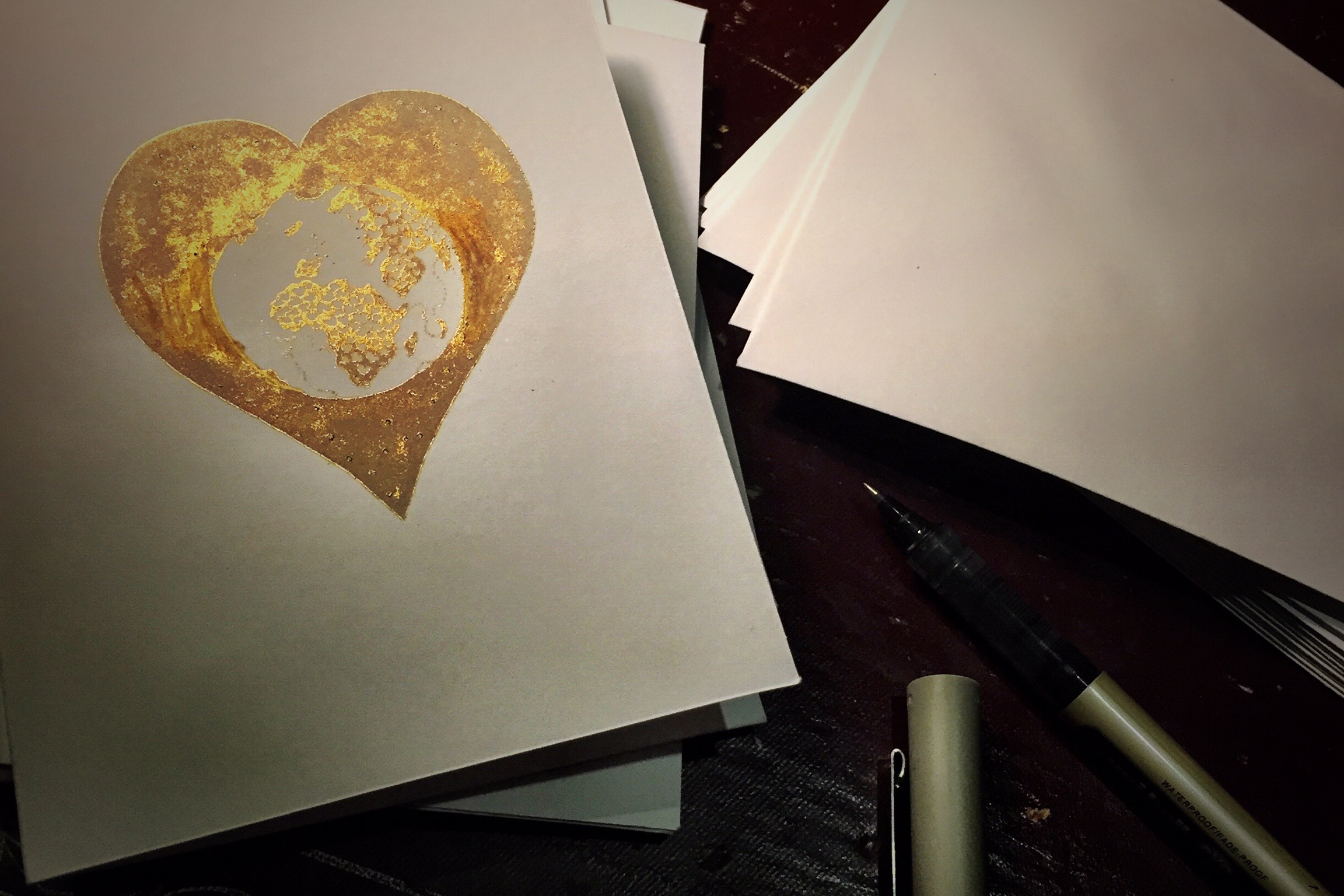
IMG_1229

Tonight I have been writing letters to refugees. Cards, actually. I thought that if I could maybe encapsulate my words in a whole package of hope and solidarity then maybe their inherent flimsiness would be less noticeable.

Because, honestly, what do you say?

What do you say to someone whose roof has been ripped from over them whilst you sit in the warmth and the comfort of your own four walls?

What do you say to someone whose children are struggling to survive when you have spent the evening delighting in filling an advent calendar for your own precious one?

What do you say to give someone hope when you cringe at the state of the world every time you look at the news?

In the end it was only hope that made any sense. Despite the odds stacked against humanity by fear and greed and mistrust, hope is the only thing we have to hang on to.

I fumbled through my words, and then – as I so often do – borrowed those of someone else to say what I really wanted to.

Emily Dickinson always stops me in my tracks, and this stanza is one of my very favourites.

“Hope” is the thing with feathers –

That perches in the soul –

And sings the tune without the words –

And never stops – at all – “

Tomorrow I will take my cards, and my words, down to the sorting centre in Brixham where volunteers are making sense of the bags and bags of donations ready to send them to Lesvos, where hopefully they might provide some respite for refugees. The plan is that each box on the palette we send will contain a message from someone here, someone who is living in safety and in disbelief that our world can treat other humans as badly as we do.

Each palette, each box, each card, will hardly make a dent in the ocean of need: I wrote ten messages tonight; approximately 400,000 asylum seekers have arrived in Lesvos so far this year.

But they might just bring some hope. And whilst we’re busy working out what else to do, there are worse things to leave in our stead.


I’ve put together some resources to help teachers tackle the refugee crisis in the classroom. Please help yourself if you think you can use them!

If you would like to find out more about how you can help, please visit the Humanity Has No Borders website. Thank you. 


Writing Bubble

Inspiring teachers, inspiring change

When I was teaching, one of my favourite parts of the job was writing resources: designing activities, constructing lessons, developing whole schemes of learning. In a profession that regularly came under fire from different angles, it was a way of maintaining some semblance of control. And I enjoyed the creativity it required – the challenge of fitting all of the different external requirements into activities that I felt were genuinely a good use of my – and my students’ – time. Above all it was a way of ensuring that I could be the teacher I wanted to be – both in the content I taught, and how it was delivered.

As well as offering plenty of opportunities for developing different skills, the subjects I taught – English, Media and Drama – lent themselves well to exploring ‘issues’. I felt that a vital part of my role was engaging students in the world around them; opening their eyes to things they might not otherwise know about, and challenging the status quo. There was something very political about it, though not in the sense of trying to impose my views on others. What I strove to do was to get young people asking questions, to present them with a range of resources but equip them also with the tools they needed to find things out for themselves.

Though I’m extremely busy not teaching at the moment, the burgeoning refugee crisis we are currently facing has made me long to be back in the classroom. It really bothers me that the mainstream media presents such a narrow (often heavily biased) range of views, and that depending on the online circles people move in the (mis)information on social media can be even worse. And it bothers me too that with the avalanche of new demands teachers have faced in recent years they might struggle to find time to tackle these issues with young people.

So, as the most recent draft of my novel neared completion, I found my mind wandering to a scheme of learning I’d been involved in writing some years back. We called it ‘Refugees and the Media‘, and the focus was on trying to uncover the truth behind the headlines which were – at the time – often extremely biased against refugees and asylum seekers.

IMG_1226

It needed updating, and reining back in after various evolutions, but I thought it might be one thing I could do to attempt to make just a small difference in the lives of the people who are affected by our misconceptions.

The title of this blog post might be ambitious, but it is this that I am attempting to do: to inspire teachers to use some of their time in the classroom to open up discussion around the way in which meaning is constructed in the media, particularly around refugee issues, so that they might inspire their students to think differently, and that through them we might begin to inspire change in our world.

I’ve decided to share the resources here on my blog. They’re not especially groundbreaking, and they borrow from a range of different sources, but they are comprehensively researched and tried and tested in the classroom. So if you are a teacher and you think you might be able to use them, then please do. And if you know anyone else that might find them useful, then please pass them on.

It’s hard to know how to make a difference these days – sat here at my keyboard rather than stood at the front of a classroom – but I’m hoping that this might just be one small way I can.


Writing Bubble