Category Archives: Sophie is pondering

Why doing nothing is not an option

Like many people I know, my sense of reality was jolted when the image of three year old Aylan Kurdi, dead on a Turkish beach, began to wash across my social media feeds.

I have not been oblivious to the growing refugee crisis, nor the politics which has caused it, but it was that image that really made me sit up and take notice. The innocence, the helplessness, the sense of vanquished hope. And, more than a little bit, the way in which that poor boy’s lifeless body resembled that of my son as he sleeps.

IMG_1227

There has been scepticism of course: why should this image suddenly trigger such an outpouring of emotion when 10,000 Syrian children have died in this conflict so far? Why should the sinking of this boat be any different to the hundreds of others that have met the same fate? But for whatever reason, it touched a chord – as powerful images so often do. And the real galvanising moment for me – more than the image itself – was our government’s response to it. That Cameron could stand his ground and insist that we, as a country, would not be offering asylum to any more refugees was the thing that made me realise that we, as a country, needed to take a stand.

I’ve been thinking about it, and it’s only really the second time in my life that I have been moved to really engage with politics on a grassroots level. The first was with the Stop the War Coalition back in the early 2000s. It feels like a lifetime ago, but of course the atrocities we were campaigning against then have directly influenced the state the world finds itself in now.

It feels like there is a similar sense of camaraderie emerging, a belief that we as individuals can have some influence on the power of the state. And this time we have an incredible bank of ammunition at our fingertips that we didn’t have before: that of social media.

Thanks to Facebook and Twitter, I have found a home for a collection of musical instruments I’d been tasked with distributing in the wonderful Music Against Borders group. I have discovered that there are numerous people in my little town who care just as much as I do, and am working to put together relief packages to give to those of them who are willing to coordinate the delivery of goods to Calais and further afield. And I am preparing to take my two year old son on his first political March in London on the 12th of September, linking up with like-minded friends who I otherwise may not have even known were planning on going too.

And then there’s my blog. It’s been languishing for a little while whilst I work out what to do with it. The blogosphere can, at times, feel so filled with flim flam that adding your own contribution to the mix really doesn’t seem so worthwhile. But then I was asked to be involved in the Save Syria’s Children campaign and everything began to fall into place.

Whatever the politics, whatever the fears of the Western world for their own comforts and security, there are hundreds of thousands of people who are simply desperate to find a better life – no, scratch that, a LIFE for their children.

I thought about those children, about Aylan and Galip and the thousands more like them, as I tried to persuade Arthur to sit still for long enough for me to take his picture for this campaign. As his little spirit fought against everything I asked of him, I tried to imagine what it could possibly be like to cajole a toddler to sit calmly through an endless ocean crossing, crammed into a tiny boat and surrounded by terror. I can only imagine that the terror must be contagious, that those tiny children are just paralysed by the fear emanating from all of the brave and wonderful adults around them who are doing everything they can to find a place of safety.

I think we need to help those adults, those parents and uncles and aunts and grandparents. We need to help them keep their children safe.

This campaign is just a tiny part of the colossal efforts being undertaken by Save the Children to find some way of compensating for the despicable hand the world has dealt the children of Syria.

You can help in so many different ways, but here are just two of them:

  • Share an image of a child who is important to you to bring home the message that those 10,000 dead Syrian children, and the millions more at risk, are first and foremost children, and human beings.
  • Text 70008 and the word SYRIA to donate £5 to the Save the Children campaign.

Do something to help.

Anything.

Whatever you decide, don’t choose apathy.
Who am I?

IMG_8559

When I started this blog, I had absolutely no idea what I was doing. Not just with the blog itself, though that was definitely uncharted territory, but more generally too: over the previous couple of years everything I thought I knew about my life had changed. I liked where I was, most days, but I couldn’t help being curious about where I was headed.

The name of my little corner of the internet, ‘Sophie is…’, was the beginning of a sentence that I hoped I might be able to complete some time soon. With actions at first, and then, as time went on, with a label – something to replace the title of ‘teacher’ which I had worn with pride for the preceding decade.

There were obvious contenders – ‘a mum’ being the strongest one. I remember having a conversation with one of my oldest friends a few weeks after I’d entered the weird and wonderful world of blogging. Like me, she had recently celebrated the first birthday of her first child. Like me, she was struggling to come to terms with putting to one side the career she had worked so hard for. And also like me any regret or guilt she felt at that was still superseded by a strong sense of relief at being allowed, if she so chose, to be ‘just’ a mum.

We spoke about the power of that little qualifier, how hard it was for us – and for society – to accept that nurturing a child was a worthwhile use of our time. We discussed how there were days when being a mum felt more than we were capable of, even with all the time in the world, and others when we longed to be filling our time with something that reflected more of who we used to be, not just this new person we had become.

I think about this a lot, still.

I have not yet been able to relinquish my son to nursery or any other form of regular childcare. I worry that we would both miss too much. But at the same time I have not been able to entirely throw myself into being a mum.

I have needed something more.

And so, as well as ‘a mum’, Sophie is… ‘a writer’, ‘a school governor’, ‘a local councillor’, ‘an education consultant’. All of these things are exciting and fulfilling, and take an increasing amount of my time. Only the last is guaranteed to bring in any income, though I’m still holding out for those novels finding a publisher.

I know I am incredibly lucky to have the choices that I do.

But now I worry that I am spreading myself too thin. I still have not found a satisfying way to complete the unfinished sentence that began this blog.

And the blogging itself is confusing me recently – not the act of doing it, but what it’s all for. I found myself in a heated discussion about this a few weeks ago with someone who shall remain anonymous but whose opinion means an awful lot. The nature of the argument is too complicated and personal to go into here but it left me feeling a bit empty, a bit pointless.

Except I love this blog. I love how it jumps from one topic to another, piquing the interest of a wide range of people even though it never lures them in as deeply as it might if my writing was more focused. I know I don’t play by the rules, I know my target audience isn’t clearly enough defined to attract advertisers, I know that I’m not interested in making the blog in itself a commercial enterprise. I know I could channel my efforts much more effectively if I picked an area and stuck to it, but I don’t want to – not yet at least. And that is where this blog, still, is a mirror of my life.

It hasn’t yet decided where its priorities lie, it’s enjoying making the most of all the new opportunities that are presented to it, being able to say ‘yes’ to all the ones that look like they might be interesting or fun.

It’s hard, though, going from an existence where you think you have it all figured out into one where you’re not even sure what your goals are any more, let alone how to reach them. It’s particularly hard for a validation-seeking, confidence-lacking, perfectionist like me.

But I’ve never been one to shy away from a challenge.

And so I think I’m going to have to put to one side this desire to figure out who I am and what I’m doing with my life. It may be hard to get my head round, but I think I’m going to have to accept that, for now, Sophie just is.

mumturnedmom

What I’ve learnt from standing for election

On a national level, this feels like the most important election we have participated in for a long time. Recent weeks have been filled with optimistic anticipation, a sense that things might really have been about to change for the better. I have been buoyed along by a surge in interest and engagement from people whose views sit firmly on the left. Now that the results of the parliamentary election are in, I have been brought sharply down to earth. But I still have the little corner of hope carved out by my last minute leap into local politics.

IMG_0514

For the first time, I will be able to say that I have not just talked the talk about the importance of engaging in politics. I may only be standing for our little town council, but suddenly, in the face of a national picture which is so far removed from my political values, that feels like the first step in a journey which may have considerably wider scope than I’d previously imagined.

I will not know until tomorrow whether I have been elected. But whatever the outcome there are some important things that I have learnt along the way.

1) There are a lot of people out there just waiting for a reason to get involved 

Politics, on every level, is pretty intimidating. I’ve toyed with the idea of being a councillor for years, but (aside from the difficulty of finding time for it alongside a teaching career) I never really knew how to take the first step – or even if I really wanted to.

For me, it took an encouraging nudge from a community figure I admire against the backdrop of a group wanting to abolish our town council to make me realise that I needed to stand up and be counted. A couple of my fellow candidates fall into this category too, and we have brought with us a swathe of people who, were it not for knowing people standing for election, might not have taken much interest in what was going on locally – or indeed nationally. And others who were always interested, but who (like me) had been seeking an outlet for that political drive.

IMG_0320

There’s definitely a need for more people to get their voices heard. It’s been a while since I did anything where I was categorised as young, but suddenly – despite the fact that I am closer to my fortieth birthday than any other milestone – I find myself representing the youth voice. There’s clearly some work to be done there. Not to mention the one third of people eligible to vote in the UK who once again failed, for whatever reason, to exercise their democratic right in this election.

But overall it’s actually been quite inspiring – the thought that, for all the uncertainty we’re now facing as a country, there might just be hope for the future in people who have previously felt disenfranchised and are ready now to stand up and make their mark.

2) Campaigning requires seriously comfy shoes (and a decent sling)

This may have been naive of me, but I honestly had no idea quite how much legwork was involved in an election campaign. Our town council elections are admittedly unusual this time round in that there has been some stiff competition for the available seats. And as a result, in the four weeks since I came on board as a council candidate, I have walked about 100km delivering leaflets.

IMG_0898

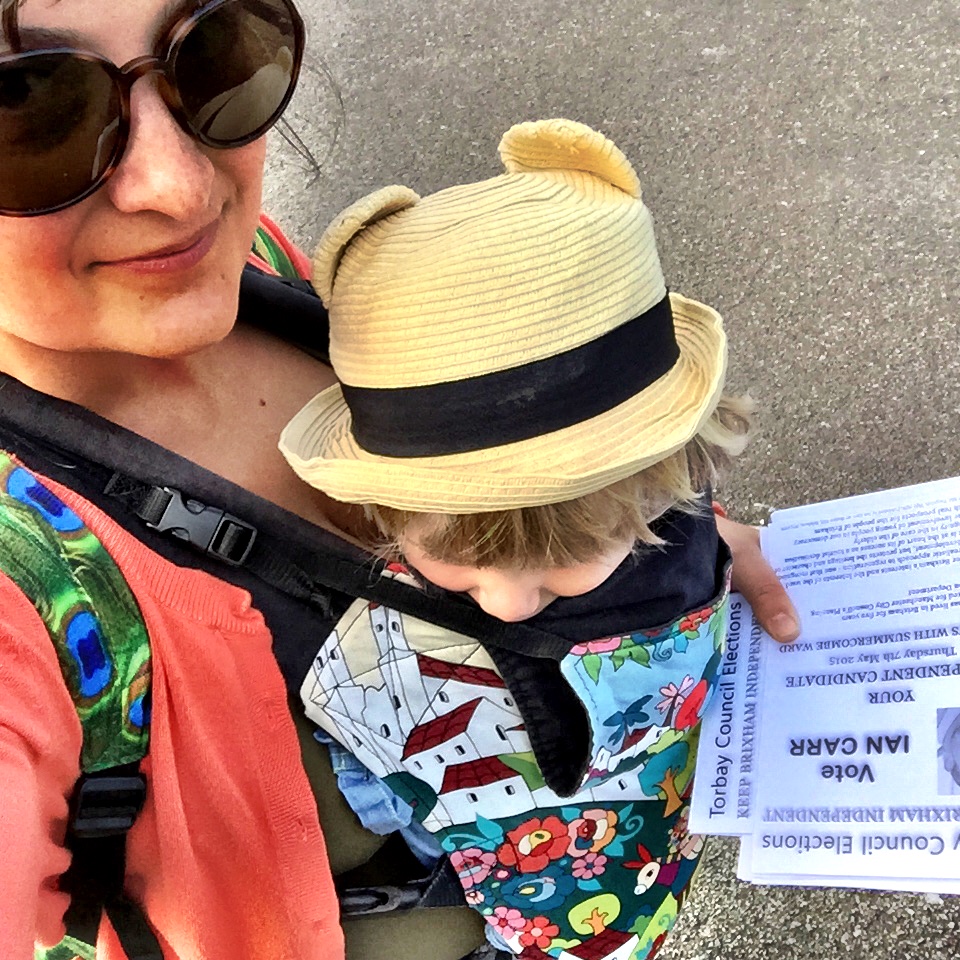
Up and down hills and endless flights of steps, dodging traffic and dogs, all whilst wearing my toddler. I didn’t have much time to think about the wisdom of it all this time round, but if I do this again I’m certainly going to look into how much influence this trekking actually has. I would like to think there is more scope in social media – I certainly had some great interactions on twitter and Facebook.

But there is, admittedly, nothing quite like actual face to face conversation – and with the turnout at local meetings being so low there is still much to be said for the power of turning up on people’s’ doorsteps.

3) Sticking your neck out really attracts the trolls

I don’t know if this is a general thing or whether we have an unusual number of resident trolls in Brixham, but I was bemused to see the onslaught of online abuse I received within days of standing for election. Both on twitter and in the comments section of our local paper I found myself targeted with some quite unpleasant – and borderline libellous – attacks.

I’m not one to bow to bullying, and fortunately once I’d lodged complaints with the police, with twitter and with the local newspaper editor the nastiness seemed to die down.

It did all make me wonder though why people would want to put themselves through it. I never even said anything controversial – just the mere act of standing for election was enough.

IMG_0972

I had an interesting chat with Sarah Wollaston, my (now re-elected) local MP. She is no stranger to online attacks herself, but said that from her experience it’s often a lot worse – and definitely a lot more personal – the lower down the political food chain you get. The problem with that is it could genuinely cut peoples’ political ambitions off at the knees before they even have time to get started – it’s one thing to say that people just need to develop thicker skins, but it’s clearly a massive block to engagement for anyone who would rather not be subject to abuse.

4) The system is not easy to navigate with kids in tow – but it’s not impossible either

My first meeting in the course of this campaign I attended with my two-year old. It was in the evening, and his dad was working late. With no-one else around to look after him it was a case of take him with me or not go at all. I’m really glad I took the decision to go – and that he slept in the sling for the majority of the meeting – but I definitely got some strange looks.

If I am elected, then I think I’m just going to have to get used to those. As someone who has chosen not to go back to work outside the home but rather combine full time motherhood with writing and other endeavours I don’t have easily accessible childcare. I can’t afford to be paying someone to look after my son so I can attend council meetings or voluntary engagements, so unless it would be noticeably disruptive for him to be there he will be coming along for the ride.

And there is of course the precedent set by Licia Ronzulli, the Italian MEP who has challenged people’s perceptions of the place of children in the world of politics.

5) Finding the right words counts for an awful lot

Having come into the campaign to stand up for Brixham council so late on I have repeatedly felt a long way out of my depth. My teaching experience, and prior to that many years of drama and debating, has left me with the skills to stand up and say my piece in front of a crowd, but that did not stop my palms from sweating and my voice shaking when I actually did it.

I certainly don’t think I’ve said anything particularly extraordinary – talk of working together, of giving people a voice, of looking to the future rather than being stuck in the past – but when I have spoken it has seemed to strike a chord. From the vitriol of the online haters to the people stopping me in the street to say how glad they are that I am speaking out it is strange to realise that my words have had an impact.

I suppose it’s like the blog too really – whether spoken or written it is always satisfying to hit on just the right way of putting something to draw people in. I just need to make sure now that I have the knowledge, understanding and integrity underneath it all to deserve people’s trust.


Suffice to say I have been surprised by how tough but also how exciting the last few weeks have been. I shall find out tomorrow whether it has all been enough to save the town council – and indeed to get me a seat on it – but whether it has or not a political spark has definitely been ignited within me. And I am intrigued to see where that may lead.


My word of the week this week is democracy.

The Reading Residence
You Baby Me Mummy

Brixham: the next big thing?

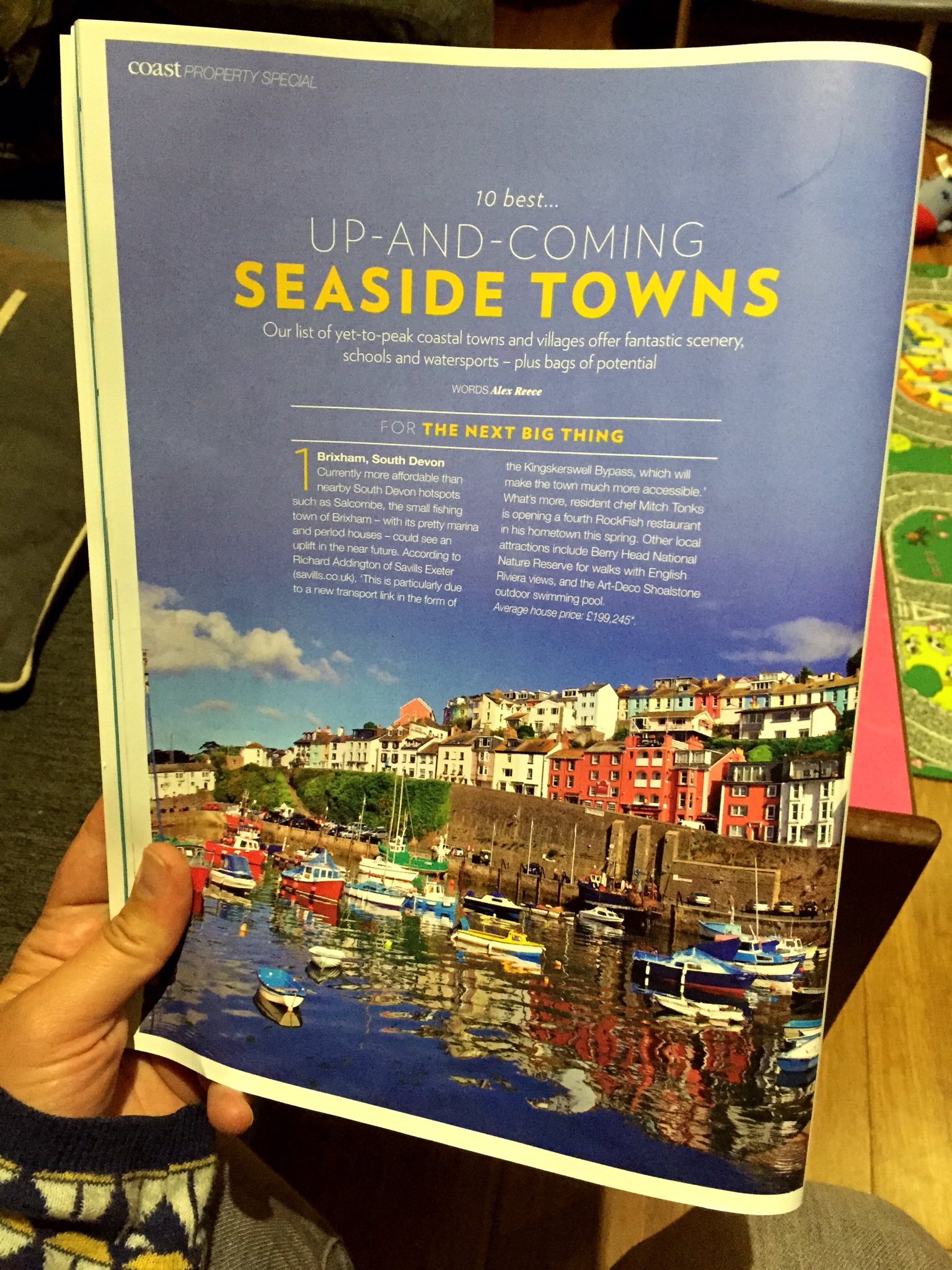
When we first chose to move to Brixham, almost four years ago now, it struck us as a place with so much potential. That has only been confirmed by the people that we’ve met since, and the exciting businesses and events that we have watched grow out of the community. I’m only just beginning to work out ways in which I can contribute to this, but I still felt a swell of pride when I read the feature on the ten best up-and-coming seaside towns in this month’s Coast magazine which put Brixham at number one.

IMG_0970

As part of Leigh’s birthday celebrations last weekend we were able to treat ourselves with meals at not one but two of the brilliant new restaurants that have opened up in the town.

IMG_0943

First, Bistro 1909. Up until the end of last year this was Brixham Deli – it was the only place to get a decent coffee when we first moved here, and a real sign that there was maybe more to this sleepy little seaside town than met the eye. When its owners, Roy and Gill, decided it was time for a change it was hard to hide my disappointment at first… But the restaurant they’ve created in its place makes it more than worth it.

IMG_0944

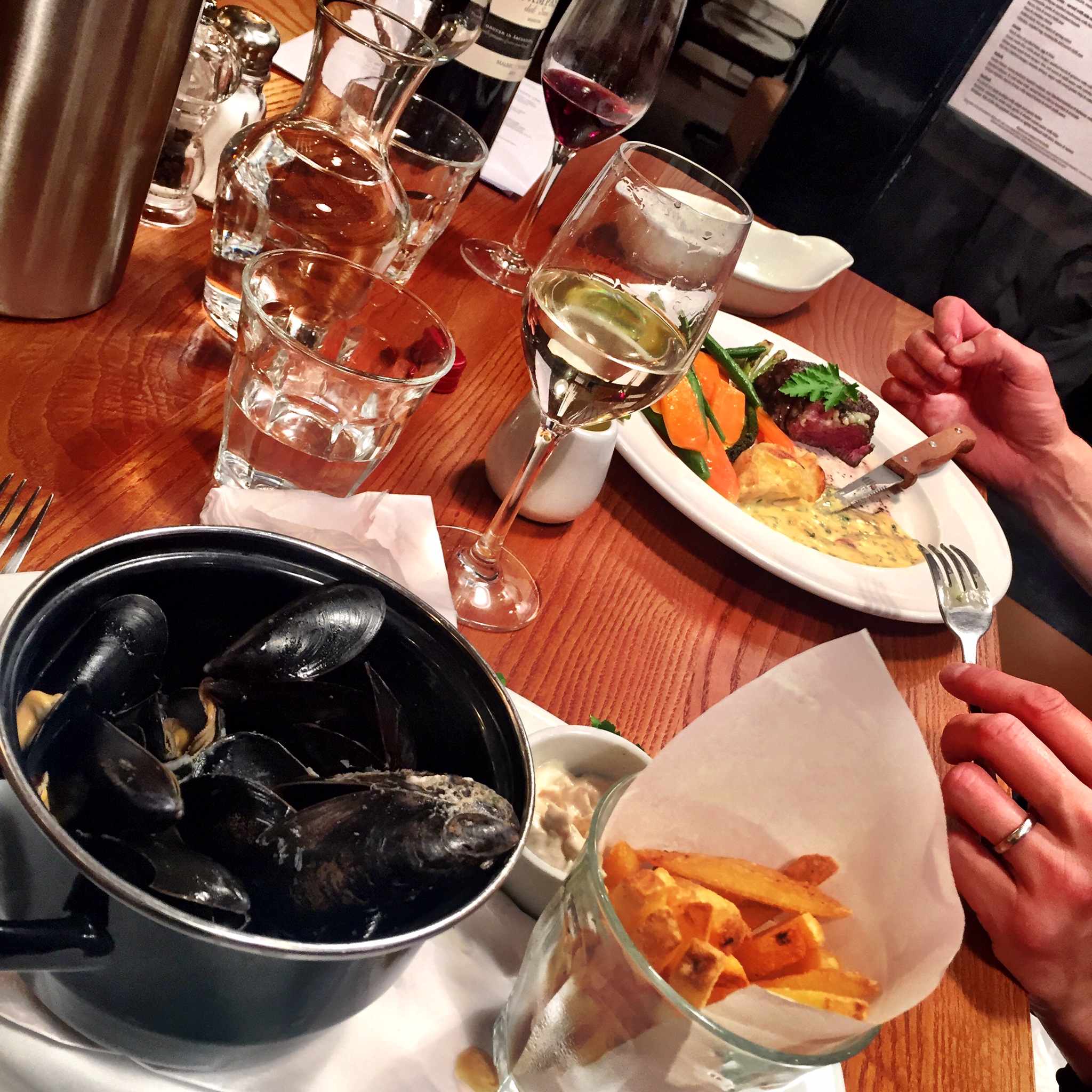
Delicious locally sourced food cooked to perfection – Leigh declared the pate the best he’d ever had, the steak and mussels were seriously good, and the chips are, I have decided, the best in Brixham. The setting is classic and cosy: custom made leather banquettes, industrial chic lighting and old Brixham photographs. With their own twist on a traditional formula they have hit upon something that works very well indeed. We’re already trying to work out when we can go back…

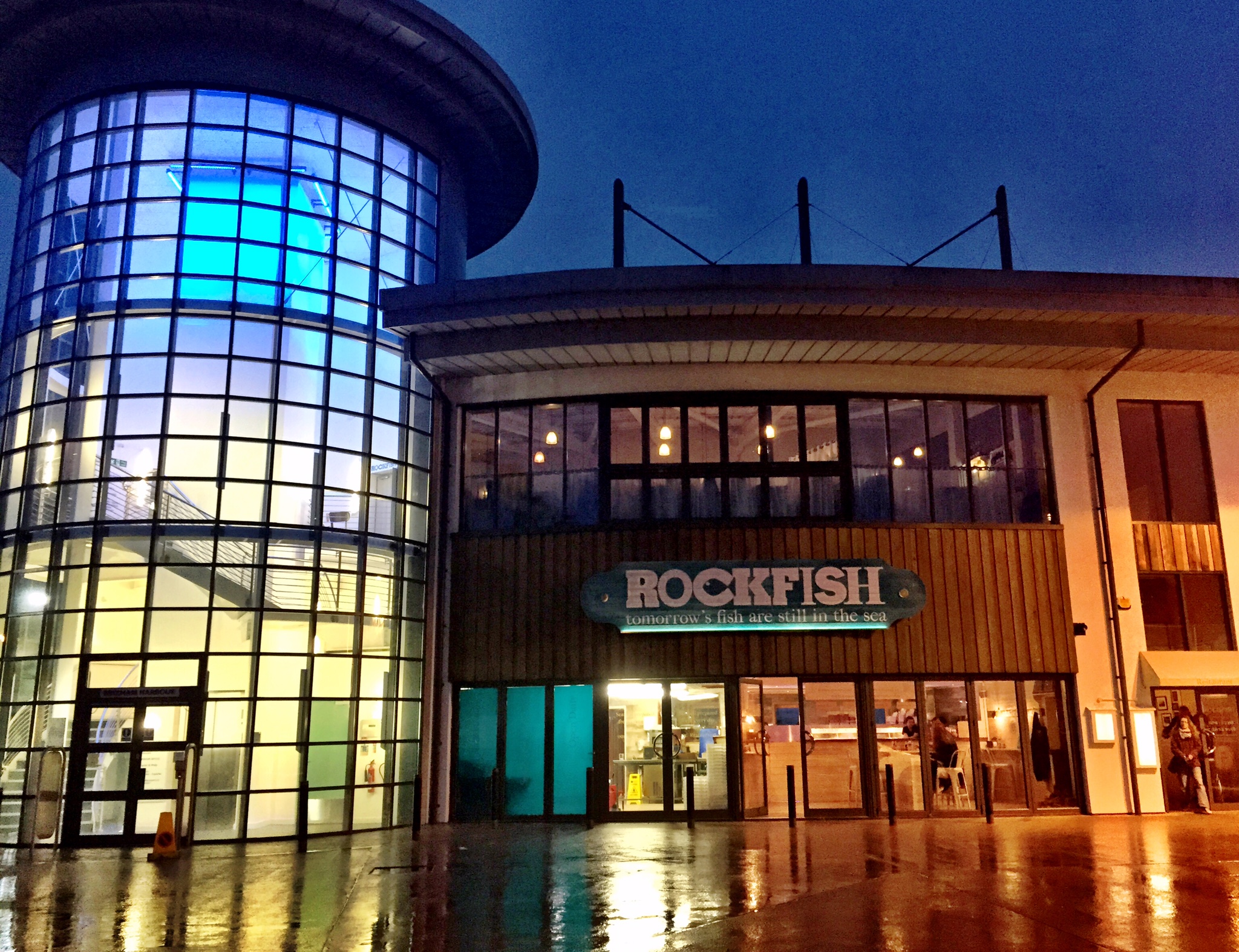
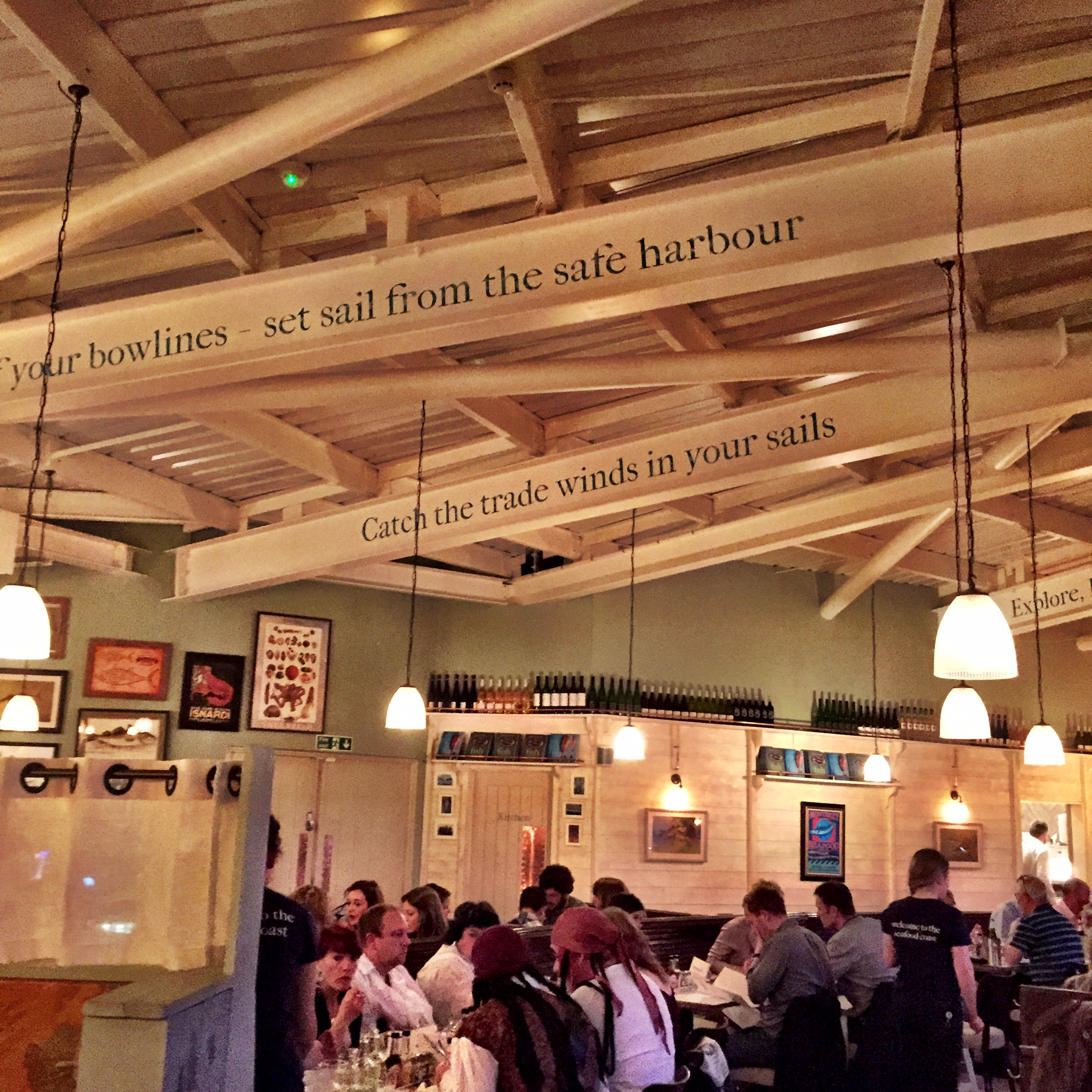
The other place we had to try – this time with Arthur in tow – was the latest addition to Mitch Tonks’ Rockfish chain, right above Brixham fish market.

IMG_0971

There’s been an understandable buzz about this place – it has after all been a long time coming. Mitch Tonks lives in Brixham, and has had his eye on this site since it first went out to tender. Unfortunately Torbay Council had other ideas, and we ended up with a really disappointing restaurant in there for a while – all style over substance, with no attempt to make the most of its unique location. Every time I looked at it across the harbour I grumbled with a sense of missed opportunity, so it was brilliant to see the site finally occupied by a restaurant that does it justice.

IMG_0942

It looked great, the fish was (of course) supremely fresh, and the atmosphere was buzzing. We shared a fruits de mer starter which was a real treat (it was Leigh’s birthday after all) and then went for classic fish and chips to follow. I’m very glad they offer the option of replacing batter and chips with grilled fish and salad as again this is somewhere I imagine we will revisit often!

IMG_0969

In conversation over both of these meals the subject of how our town is changing was never far away. It is one that is naturally taking on increasing significance with the possibility that I will soon have a role on the local council and actually be able to play an active part in the decisions that shape Brixham’s ongoing regeneration.

There will definitely be some difficult decisions to be made.

Brixham is regularly compared to nearby Devon towns like Dartmouth and Salcombe. In a lot of ways it has much more in common with them than it does with the other two towns in Torbay. But when we chose to move here, it was precisely because it wasn’t like them: it has a thriving, year-round community, fed to a large extent by its fishing industry. It attracts a diverse range of tourists, not only those with huge amounts of money to spend. And it is still reasonably affordable as a place for young families to bring up their kids.

Lots of the changes that we’ve already seen have been incredibly positive: the new selection of local eateries, the coffee shops like The Bay Coffee & Cake Company and Millie & Me that mean I no longer need to wait until I’m in London for my flat white fix, tired drinking establishments transformed into inviting pubs like New Quay Inn and The Manor. Shoalstone Pool is going from strength to strength, our theatre is full of ambition and ideas for the future, and Brixham YES is doing increasingly impressive work with young people and their families.

But there have been conflicts too, particularly around proposed developments which appear to meet the needs of some but for others cut right through what they perceive as the heart of our community.

As Brixham rises to the challenge of becoming the next big thing, we must remember that it’s not just its physical heritage and charm that needs to be protected. It is the local community that gives our town its soul, and as we continue to move forward we can only do so together.

The campaign continues

This week, I have mostly been writing tweets. Facebook posts too. I have been working on how to convey my message as clearly and succinctly as possible to support and promote the #StandUp4Brixham campaign – and generally it’s working pretty well.

IMG_0909

There’s been lots of work on the ground as well – since my leaflets were completed last Wednesday  afternoon my iPhone estimates I’ve covered about 30km going door to door with Arthur in the sling. There was a meeting last Tuesday evening that Arthur also had to come to, and on Saturday we had a hustings event to talk to members of the public. It’s been nerve-wracking getting out there and speaking up, but I’ve enjoyed it too.

The social media side of things is an attempt to engage with people who might not normally be interested in local politics. The campaign has a growing Facebook page and twitter account with nearly 200 local followers between them. I’ve appreciated the support of local businesses with more established accounts sharing and retweeting my posts. And one of my tweets attracted the attention of my local MP and ended up in the paper. So far so good as far as profile-raising goes.

But there has, perhaps predictably, been a less pleasant side to putting myself out there.

It started with the comments at the end of articles on the local paper’s website, where amongst other things I was labelled a ‘rather sad individual who spends all of her waking hours gratuitously criticising [the leader of the Abolish Brixham Council group]’. Other commenters leapt to my defence, but it was a strange feeling to be insulted and accused of something I haven’t done by a total stranger.

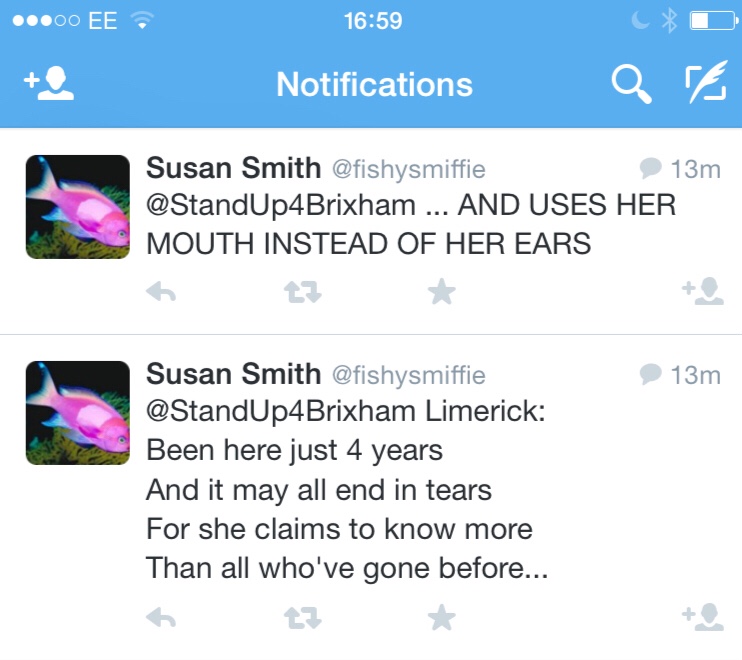
Twitter has been even more intimidating. There are four accounts that have repeatedly targeted me through replies to my tweets, with exchanges like this one:

twitter screengrab copy

(BRATS, incidentally, is a group of local residents who campaigned against a Tesco development in the town centre. I have had no involvement with them despite numerous suggestions to the contrary.)

The tweet which sparked all this off  – and more besides – was a link to a letter which had been published on a local news website. I really wasn’t expecting it to be so controversial.

There’s a lot that is strange about the accounts in question – the similarity between their names and the lack of followers for example. Were these exchanges happening on my personal account then I would not hesitate to block and report them. But I’m not sure exactly how I’m supposed to respond in my current role as council candidate – I am obviously very keen to engage with interested Brixham residents, but I have to admit that these communications are beginning to make me feel uncomfortable.

I realise as well though that, on the grand scale of things, there’s not really anything desperately offensive going on here. Twitter does seem to be a place where some people hide behind a mask of anonymity to behave in a way that they never would face to face.

So I will soldier on, draw on my years of experience working with challenging teenagers, and try not to take it too personally. One of the things it is clear could be improved about our local council is the quality of its communications and its transparency in working with people in its community. And I refuse to be intimidated out of my attempts to do just that.


Muddled Manuscript

Nuts on airplanes: what’s the big deal?

As our flight back to the UK prepared for take off on Tuesday, I was reassured by the now-familiar (to me) announcement that as there was a passenger on board with a severe nut allergy they would not be serving food containing nuts during the flight, and would appreciate it if other passengers refrained from opening any nut products they might have brought on board.

It’s the best I can possibly hope for when I have to fly, but I’m pretty sure most of my fellow passengers would have had no idea how important it was for me to hear those words. I can always sense a wave of incredulity pass over the cabin – sometimes people are vocal about it, calling the whole affair nonsense, but even when they stay silent I’m not convinced they really understand.

And why would they? If you (or someone you love) do not suffer from a severe food allergy then there is no reason for you to see why the prospect of being exposed to the allergen is quite so scary, or why that risk is amplified quite so much when flying. Making an announcement that impinges on the freedoms of other passengers might seem over the top, just health and safety gone mad. And that is why I have written this post.

IMG_0642

For me, there is nothing much more terrifying than the prospect of being trapped in a sealed metal box 40,000 feet in the air surrounded by several hundred people simultaneously opening packets of nuts. Because, like hundreds of thousands of other people in the UK, nuts are my Kryptonite: contact with just the smallest amount would put me at risk of becoming seriously ill or even dying as a result of anaphylactic shock.

Fortunately in the UK and Europe it is rare now for an airline to hand out free nuts to everyone on board. But nuts are still sold on most flights, and nuts are an increasingly popular snack option for health-conscious people to bring along themselves, so I don’t feel I can relax entirely.

Anaphylactic reactions to airborne nut particles are rare, but certainly not unheard of. There was a high profile case last summer where a four year old girl collapsed when a nearby passenger began eating a bag of nuts on their flight, and I have heard several similar anecdotes from people with nut allergies.

For my part, I have been in situations where I have been surrounded by nuts in a confined space and have begun to feel the tell-tale signs of the onset of a serious reaction: several times at bars or parties where bowls of peanuts sat on every table, and once on a ferry from Dar es Salaam to Zanzibar where the snack of choice for seemingly everyone on board was roasted cashews. On each of these occasions I have had a choice – to stand on the deck of the ferry, or to go to another bar – but if the tingling mouth and tightening throat began to set in on an aircraft there really wouldn’t be anywhere I could go.

So for me flying is about minimising risk. I try to only travel with airlines who will make the concessions that EasyJet did when we flew from the UK to Crete. For EasyJet, it is part of their policy, as it is for Flybe, WestJet and Icelandair, all people I have enjoyed flying with over the past couple of years. With many other airlines you are at the whim of the cabin crew as to whether they are prepared to take steps to make the flight safe. And with some, such as British Airways, their policy is the complete opposite: they categorically refuse to inform other passengers that there is someone with a severe allergy on board.

I had a particularly difficult experience four years ago, returning from honeymoon in Vietnam. We were travelling with Qatar Airways, and prior to our trip had gone through all the proper channels to ensure that I would not find myself in the nightmare situation I described above. Our outbound flight was perfect – a polite announcement was made, alternative snacks were served, and I filled in a glowing feedback form before leaving the plane. But in the two weeks we were away they changed their policy. On arriving at the airport in Ho Chi Minh we were told that it was now the decision of the crew whether or not to make concessions for my allergy, and that before I was allowed to board I would have to sign a disclaimer absolving them of any responsibility if I were to get ill or die on the flight. We didn’t have much choice at this point, so I figured I’d just have to hope the crew were understanding. As we boarded the plane I had the conversation, and they reassured me that they would not be serving nuts as snacks and would make the announcement to fellow passengers. Something was niggling at me, though, as we went to take our seats, and I asked what meal they were going to serve. Turns out it was Chicken Satay – so I would have to deal with the fragrance of warm, minced peanuts wafting through the cabin as everyone took the lid off their meal tray.

Needless to say we didn’t get that flight. There was of course no way they could have changed the meal at such late notice – though I had informed the airline of my allergy months before. So we booked into a hotel for another night, and tried to figure out some other way to get home. It was Eid, making getting hold of anyone at the Qatar head office almost impossible, but we eventually got reassurance that they would be able to fly us home the next day under the initial conditions we had agreed. Except when we were at the gate, just after the head of the cabin crew had sought me out and reassured me that he would be doing everything to make the flight safe, the pilot came over and told me that he wasn’t prepared to take the risk of transporting someone with a nut allergy and I was not allowed to board the plane.

We got home eventually, two days late for my new job, with another airline and at great expense. In the weeks that followed I tried to pursue compensation from Qatar, but they were unflinching in their conviction that they had done nothing wrong. I even looked into legal action, but was advised that any lawsuit would be very costly and due to the might of the airline’s legal team had little chance of success.

I was left feeling like I had been mistreated and ill-informed, and ultimately discriminated against because of my allergy. Recent rulings have decided that nut allergy can in fact be considered a disability, and thus discrimination against those who suffer from allergies should be treated as seriously as you would any disability discrimination. Yet a surprising number of airlines (and passengers) seem to feel that it is those who are asked if they could temporarily refrain from eating nuts that are being discriminated against – an attitude that the many similar stories from those with nut allergies attest to.

I don’t really understand why an airline would knowingly want to take the risk of someone going into anaphylactic shock on board one of their planes, or why they would want to make life more difficult for someone with a long-standing medical condition. In the States, where many airlines do still hand out free nuts to everyone on board, it is hard not to link the brick wall faced by passengers with allergies to the powerful lobbying groups attached to the multi-million dollar peanut industry.

I could never consider flying with an airline which still has nuts as an intrinsic part of its meal service. But even on airlines where my nightmare is less likely I have to be careful – after all, there is nothing to stop all of the passengers surrounding me deciding that they want to snack on nuts if there is nothing to indicate to them that this might be a bad idea. It is this situation that makes EasyJet’s approach so invaluable to me – I know they cannot guarantee me a completely nut-free flight, but I really appreciate the fact that they try their best to keep me safe.

I suppose ultimately for someone with a severe nut allergy, I really do have some cheek. Not only do I like to eat out from time to time, but I like to be able to travel to places that can only easily be reached by air. There are those who would say that, given my health condition, I should just avoid these experiences, but I beg to differ.

What do you reckon? Am I being unreasonable? Or do commercial airlines and their passengers have a responsibility to create an environment for travel that is safe for those with allergies? I’d love to hear your thoughts!

Why chefs need to take responsibility for what is in their food

Two weeks ago, a group of ‘chefs, restaurateurs, hoteliers and caterers’ put their names to an open letter published in The Telegraph. In this letter, they rallied against the recent regulations introduced by the EU designed to make eating away from home an easier option for the many people, like myself, who suffer from a serious allergy.

IMG_0830

It was on my radar at the time, but it has taken me a little while to fully digest the implications between the lines of their sparsely worded letter and to formulate a response which is not merely an outpouring of fury at the ignorance and arrogance which underpins their declarations.

On one level, actually, they’ve done me a favour: I now have a clear and categorical list of the establishments and proprietors I need to ensure I avoid whenever I fancy a meal out. I enjoy good food, and I love eating in restaurants when the occasion arises, but it simply isn’t worth risking a life-threatening allergic reaction if the person preparing my food isn’t willing, or able, to tell me whether it might contain nuts.

It is for this reason that the publication of the letter strikes me as an extraordinarily bad business move – ironic, really, when its signatories are aligned behind an organisation called ‘Business for Britain‘. Clearly it is more important for them to take a swipe at the EU than to consider the needs of a significant portion of their customer base. Conservative estimations of people suffering from acute, severe food allergies in the UK put the number at around 500,000. Other studies indicate that 6-8% of children in the UK – that’s over 1 million – have a proven food allergy. Whichever way you look at it, there are an awful lot of people whose health – and life – relies on knowing what is in the food they eat. They all have families and friends whose dining habits will be influenced by the allergy sufferer. So why exclude so many potential customers from your business?

This issue of exclusion is at the heart of my anger towards the signatories of this letter. Allergy is not a lifestyle choice. It is not something that causes mild irritation to its sufferers. It can – and does – cause death if the allergen is inadvertently consumed: there are between five and fifteen fatalities each year directly caused by food allergy in the UK. Many of these are due to meals eaten outside the home – and, as with the 18 year old who tragically died in Manchester earlier this year after eating a burger, allergy sufferers tend to be very clear with restaurant staff about the food they need to avoid. I mean, you would be, wouldn’t you, if you knew that eating the wrong thing could kill you?

Far too many times when I have asked the necessary questions with regards to my allergy the response of the waiting staff is that they cannot guarantee that any of their food is nut free. This warning is so ubiquitous now on packaged food that at first glance it might not seem so extraordinary, but in the types of establishments I favour – ones which serve freshly made food cooked from scratch – I really do find it quite odd. If it were true, then what else that is lying around in the kitchen might have made it into the food? Bleach, perhaps? Or maybe rat poison? The implied lack of caution about cleanliness and cross-contamination astounds me. In the vast majority of cases, when I push further for a response from the chef, they are happy to reassure me that they can prepare me a meal that is safe. If they don’t, then I can’t eat there. Simple, really.

Putting the issue of cross-contamination to one side, the signatories of the letter decrying the improved regulations seem to take things one step further. In complaining that the rules will destroy ‘spontaneity, creativity and innovation’ they seem to be implying that, as chefs, they have a right to add ingredients on a whim without the irritating distraction of the consumer taking away from their art. They seem to have forgotten that they have a responsibility to the people who are paying them to prepare their meal – and that responsibility includes providing food that is not going to cause illness or death to someone suffering from an allergy.

They complain of the ‘bureaucratic nightmare’ these new regulations have caused, but in reality businesses can comply with the new regulations simply by being able to verbally communicate, if asked, whether dishes contain any of the top 14 allergens. Having taught in the state system for ten years I fully appreciate the frustration that comes with seemingly unnecessary paperwork, but is that really too much to ask?

After recent high-profile scandals around the food we eat not being quite what we thought it was (horsemeat, anyone?), I think we would all like to know what it is we are putting in our bodies. If you have an allergy, this concern becomes even more important.

If you are a chef, I do not believe you have the right to exclude someone from accessing the services at your establishment because they suffer from a chronic medical condition. In fact I would argue that to do so flies in the face of legislation surrounding equality and access – particularly as recent rulings have declared that severe allergy is capable of being a disability.

Of course it would be lovely if we did not need to worry about the needs of others as we went about our personal and professional lives, if we could all act as we wished without concerning ourselves with the repercussions our actions might have on others, but the fact is we cannot. And in fact the world would be a far sorrier place if we did.

We all have responsibilities to others – and that is something these ‘top chefs‘ would do well to bear in mind.

On words, and perceptions of reality

words

I have been thinking a lot lately about how words shape reality.

It is true of course in my writing. As I immerse myself in the third draft of my novel I am increasingly aware of being engaged in a complex choreography of choosing just the right words to draw the reader along with the story I want them to believe.

I can also see it in Arthur’s emerging language – the distinctions and categorisations he is now able to make with his expanding vocabulary. It’s hard to be sure, but it feels like his world is expanding as his words do. There are not just birds any more, but seagulls and pigeons, peacocks and penguins. He is starting to recognise and label emotions too. To articulate happiness, fear and love. And – through those emotions perhaps – he is beginning to make judgements.

As adults, our judgements are inherent in so much of the language we use everyday, from ‘pretty’ girls to ‘naughty’ boys, from well meaning labels that can inadvertently limit someone’s concept of what they might be capable of to jokey insults laden with prejudice that can exclude whole groups of people on a whim.

That really bothers me, that labelling. But that’s a post for another time.

I think what’s unnerving me most at the moment is how words can be used to twist an otherwise secure reality into something else. I have realised that the protagonist in my novel is the victim of narcissistic abuse. Her experience is rooted to an extent in my own, and that of some of my closest friends. If you haven’t (and I hope you haven’t) fallen under the spell of a narcissist, their modus operandus is to make themselves invaluable to a person and then gradually undermine them and chip away at their self-esteem until their victim has no idea what is right or true any more. Almost all of this they do with words.

It is incredible how mere words, used judiciously, can plant seeds of doubt that cause the things you thought you knew to be true to collapse before your eyes. I don’t know if you’ve been watching Broadchurch, but watching Joe Miller’s defence lawyer rewrite history – to the extent that even viewers who had seen what had actually happened began to doubt whether it had – was one of the most terrifying things I’ve ever seen on TV.

An old friend, one of the loveliest people I’ve ever known, is going through something akin to this currently. He is at risk of losing access to his children entirely unless he can convince the courts that his words are worth more than those of his estranged wife, that his truth is more valid than hers.

Most of us, I hope, will not be so calculated in the way we use words to manipulate reality. Not unless the reality we are weaving is accepted to be fictional by all concerned. But I wonder how conscious we are about the need to speak the truth – and if we’re not, to be honest about how what we say is clouded by opinion.

It is easy to forget sometimes, whilst simply recounting an event or expressing a point of view, that every single word we choose – consciously or otherwise – will alter the message we are communicating.

As a writer the limitless possibilities are undeniably exciting. But as a human being – and especially as a parent – I find it just a teensy bit scary. The potential for getting it wrong is sometimes almost enough to make me not want to say anything at all.

Almost.

But we most definitely need to choose our words carefully, in what we write and what we say. Who knows whose perception of reality might be depending on it?


mumturnedmom

Why I will not be staying at home to breastfeed my baby

image

Dear Natali,

I read your article in The Independent today, and to say it made me angry is an understatement. I’ve watched the responses unfold on Twitter, both in support of and against your view that breastfeeding mothers should stay at home with their babies, and have found myself quivering with rage.

I imagine you thought, with public breastfeeding a hot topic in recent weeks, that it might be a handy way to garner publicity for your forthcoming novel.

And I’m sure you’d tell me to lighten up, to not take your words so seriously. You tweeted after all that your intention was to be ‘tongue in cheek’, to be funny.

The problem I have though is not only that your words contain only the barest hint of humour, but that also the issue of breastfeeding – public or otherwise – really is no laughing matter in this country.

I wonder if you stopped to think for a moment about the realities we are facing. That despite the NHS recommending exclusive breastfeeding for six months, only 1% of British babies are exclusively breastfed for that long (with only 34% still breastfed at all at that stage). Not forgetting the WHO recommendation that babies are breastfed for at least two years. I can count on one hand the amount of mothers I know who fall into this category, and I have no doubt many eyebrows would have been raised if I had been breastfeeding my (very well behaved) 23-month-old over afternoon tea at Claridges.

But I would have done, because I know my rights and I know what’s best for me and my son. I have, to date, breastfed him in a number of establishments you would I’m sure have denied us access to – backstage at gigs, fancy restaurants and yes, swanky hotels. I have yet to be challenged, and I hope if I was I would have the courage to stand my ground.

The thing is though that there are many, many mothers who would not feel the same way. Numerous women who would read your article and nod sadly, convinced that their desire to breastfeed their child is not compatible with any kind of social life, concerned that they would be subjected to the judgemental gaze and comments of people like you. I have come across many cases where it is precisely this that leads women to choose bottle over breast, leading them in turn to miss out on the myriad of physical and emotional benefits breastfeeding offers them and their baby.

You say that you are qualified to pass your judgement – indeed are an ‘expert’ – by dint of having once breastfed yourself, but that doesn’t wash I’m afraid. Much as homophobia is still unacceptable when it comes from the mouth of someone whose ‘best friends are gay’, you don’t get to tell breastfeeding mothers to stay at home just because that is where you felt most comfortable.

You refer derisively to the fact that the breastfeeding mother whose mistreatment you were responding to burst into tears when told to cover up by staff at Claridges. This surprised me, as surely being a mother of two yourself you remember the cauldron of hormones of the early months? Or maybe you don’t. Having read this and some of your other articles it’s clear that you practise detachment parenting almost religiously.

It’s sad, really. Almost a reason to feel sorry for you. Apart from the fact you’ve chosen to express your views so publicly in a supposedly respectable newspaper.

The Independent of course has a case to answer here too. In a society where bare breasts are fine as long as they’re being used to sell something and yet establishments from local cafes to world-class hotels openly discriminate against breastfeeding mothers despite this being against the law, it is a travesty that a newspaper that prides itself on its liberal views can give yours air.

But it is you whose words made me so very angry. On the blog you contribute to you proudly refer to yourself as a Selfish Mother. And sure, there are times when us mums need to put ourselves first. But to be so selfish as to advocate denying mothers the right to leave the house and to contribute to the incredibly damaging dialogue that denies women the freedom to choose the best start for their babies? That, I’m afraid, is a step too far.

Yours sincerely,

Sophie

Linking up with Sara at Mum Turned Mom for her prompt: ‘I read the news today…’

mumturnedmom

Why we cannot afford to get complacent about our right to breastfeed our babies

IMG_0371

A storm erupted on social media yesterday which reminded me that we still have a long way to go before society fully accepts that it is perfectly normal and natural for babies to be fed from a woman’s breasts.

As I’m writing this, my toddler is nursing in the sling. It’s easy to get complacent in my own little corner of the universe – to forget that there are still many people who would look on what I’m doing as disgusting. Sure there are reminders now and again. The woman called a ‘slut’ by an elderly couple for breastfeeding her child in a coffee shop in London. The nursing mother subjected to abuse by teenagers on a local bus route. But it’s relatively easy to dismiss these as little pockets of ignorance – important to stand up against, yes, but situations that arose in the heat of the moment.

And then yesterday it emerged that a popular ‘family friendly’ cafe in leafy Surrey had decided it was appropriate to display this sign on their front door:

Tillings breastfeeding notice

I, like many others, was gobsmacked. I mean – what were they thinking? A woman’s right to breastfeed her child – and indeed that child’s right to be nourished and nurtured – is entrenched in law. It is illegal in this country to tell a woman she cannot breastfeed her child, or indeed to discriminate against her in any way for that reason.

But here is an established business telling its clientele, openly and publicly, that they have the right to tell breastfeeding mothers to feed in the toilet.

This is wrong on so many levels. There is the fundamental idiocy of suggesting that it is in any way appropriate for a baby to eat in the place where people defecate. I have yet to find anyone who has expressed this as well as the poet Hollie McNish, so I’m just going to leave this here:

There is the thinly veiled implication that well-behaved dogs are more welcome than breastfeeding mothers and their babies, the mind-bending logistics of a group of mums taking it in turns to leave their friends and their coffee and cake at the table and take their baby and the thoughtfully provided chair into the disabled toilet. Or perhaps the whole group is expected to relocate, coffee and cake and all.

All of this aside though, there is a psychology at play here which is insidious and dangerous, and that is where for me the biggest problem lies.

I’m not too worried about me. I hope I’d have the guts to tell the cafe where to stick their sign. I know my rights, and I’m confident enough in the many benefits to me and my child of continuing our breastfeeding relationship that I wouldn’t be put off by such an impolite notice.

But what of those who are less confident? What of the mum in the early stages of breastfeeding her child who is self-conscious and embarrassed? What if she decides that this precious social time with her friends is so important that maybe she’ll just take a bottle to feed her baby when she goes out? What of her dwindling supply, her feelings of failure and resignation to not being able to follow through on her desire to breastfeed? What of her child, missing out on the many benefits that nursing can bring?

Not forgetting the rest of the cafe’s clientele. Like with many forms of discrimination, there are the people whose discomfort at being in the company of a breastfeeding mother simmers just below the surface. Seeing an official sign like this normalises their attitude, perhaps increasing their confidence in expressing their inappropriate views in another situation.

The cafe has claimed that there was a misunderstanding. Using the oldest excuse for bigotry in the book, the cafe owner has claimed that having breastfed her own children how could she possibly be discriminating against breastfeeding mothers. But there is nothing I can find in that sign that is ambiguous: she claims she has the right to ask breastfeeding mothers to feed in the toilet. And that is unequivocally wrong.

The cafe’s ratings on various online sites have plummeted after people expressed their disgust at their gall. The prospect of a nurse-in protest was clearly not one the owner wanted to face, and I understand the sign has now been taken down.

This is ultimately a good thing. But it took five weeks for this story to be picked up by social media – that’s a long time for something so damaging to be in the public sphere.

So whilst this particular tale of discrimination might have something approaching a happy ending, it is clear to me that this is not a time for us to be complacent. Not at all.