Category Archives: Sophie is writing

Who am I?

IMG_8559

When I started this blog, I had absolutely no idea what I was doing. Not just with the blog itself, though that was definitely uncharted territory, but more generally too: over the previous couple of years everything I thought I knew about my life had changed. I liked where I was, most days, but I couldn’t help being curious about where I was headed.

The name of my little corner of the internet, ‘Sophie is…’, was the beginning of a sentence that I hoped I might be able to complete some time soon. With actions at first, and then, as time went on, with a label – something to replace the title of ‘teacher’ which I had worn with pride for the preceding decade.

There were obvious contenders – ‘a mum’ being the strongest one. I remember having a conversation with one of my oldest friends a few weeks after I’d entered the weird and wonderful world of blogging. Like me, she had recently celebrated the first birthday of her first child. Like me, she was struggling to come to terms with putting to one side the career she had worked so hard for. And also like me any regret or guilt she felt at that was still superseded by a strong sense of relief at being allowed, if she so chose, to be ‘just’ a mum.

We spoke about the power of that little qualifier, how hard it was for us – and for society – to accept that nurturing a child was a worthwhile use of our time. We discussed how there were days when being a mum felt more than we were capable of, even with all the time in the world, and others when we longed to be filling our time with something that reflected more of who we used to be, not just this new person we had become.

I think about this a lot, still.

I have not yet been able to relinquish my son to nursery or any other form of regular childcare. I worry that we would both miss too much. But at the same time I have not been able to entirely throw myself into being a mum.

I have needed something more.

And so, as well as ‘a mum’, Sophie is… ‘a writer’, ‘a school governor’, ‘a local councillor’, ‘an education consultant’. All of these things are exciting and fulfilling, and take an increasing amount of my time. Only the last is guaranteed to bring in any income, though I’m still holding out for those novels finding a publisher.

I know I am incredibly lucky to have the choices that I do.

But now I worry that I am spreading myself too thin. I still have not found a satisfying way to complete the unfinished sentence that began this blog.

And the blogging itself is confusing me recently – not the act of doing it, but what it’s all for. I found myself in a heated discussion about this a few weeks ago with someone who shall remain anonymous but whose opinion means an awful lot. The nature of the argument is too complicated and personal to go into here but it left me feeling a bit empty, a bit pointless.

Except I love this blog. I love how it jumps from one topic to another, piquing the interest of a wide range of people even though it never lures them in as deeply as it might if my writing was more focused. I know I don’t play by the rules, I know my target audience isn’t clearly enough defined to attract advertisers, I know that I’m not interested in making the blog in itself a commercial enterprise. I know I could channel my efforts much more effectively if I picked an area and stuck to it, but I don’t want to – not yet at least. And that is where this blog, still, is a mirror of my life.

It hasn’t yet decided where its priorities lie, it’s enjoying making the most of all the new opportunities that are presented to it, being able to say ‘yes’ to all the ones that look like they might be interesting or fun.

It’s hard, though, going from an existence where you think you have it all figured out into one where you’re not even sure what your goals are any more, let alone how to reach them. It’s particularly hard for a validation-seeking, confidence-lacking, perfectionist like me.

But I’ve never been one to shy away from a challenge.

And so I think I’m going to have to put to one side this desire to figure out who I am and what I’m doing with my life. It may be hard to get my head round, but I think I’m going to have to accept that, for now, Sophie just is.

mumturnedmom

Amazing words: amazing women

I was sat on the sofa last night, wanting to write but lacking the words, too tired to drag myself upstairs though I knew I should, when my eye was drawn to a programme on BBC iPlayer: Women Who Spit.

IMG_0976

I’d noticed it before, had idly thought I should check it out to feed my neglected love of performance poetry, but something else had always seemed more important. Yesterday though I clicked the link. And I’m very glad I did.

I hadn’t known what to expect, but here were five stand alone short films, each capturing a spoken word performance from a supremely talented female poet. From the first few bars of the very first poem I knew I’d have to watch them all: it was a bolt of pure inspiring awesomeness.

The words and the rhythm and the spirit and the sass pulled me out from underneath the detritus of the everyday.

I had become buried beneath the very real mess that is piling up on the surfaces of my life, my thinking blurred by the metaphorical steam rising from the watched pots of my first two novels as I wait for feedback from my agent. My notebooks are taunting me with their scrawls of unexplored ideas which keep moving just out of reach as I fail to battle through the seemingly endless tasks that have ranked themselves as more important.

These women reminded me that I need to carve myself some space to wrestle back control.

The first voice which made me sit up and take notice and realise that it was going to be a late night after all was Megan Beech, with her searing analysis of the sexism still ingrained in the BBC and right across our media institutions. I felt recognition, even pride, at her words: ‘I leave the house, get out of bed, because some things need to be said, and somebody needs to be the one to say them‘. I found myself nodding too as she proclaimed ‘we need to stop the laddish, loutish laughter at women displaying their intelligence; their eloquence and elegance and excellence‘. We need to aim high, be role models, get our voices heard.

This was reinforced by Vanessa Kisuule, with her insistence that we, as women, should ‘take up space‘. This resonated with me particularly at the moment because anxiety has been rearing its head again, making me shrink apologetically from the me I know I am deep down. I needed to be told: ‘don’t wait for approval‘, ‘give yourself the space to be fickle … to fluff your lines and make things up‘ and especially ‘don’t doubt the benefit of being the brightest you on the spectrum‘. Because it’s easy to forget.

Cecilia Knapp‘s approach was quieter, gentler, but no less powerful. She spoke of articulately of emotion and memory and the guarded face we show the world because ‘it’s fine, we’re fine, we’re getting on with it‘. Her words wove a tapestry of reasons for why she writes, and I found one of her concluding statements particularly resonant: ‘I write to find a version of myself I’m not at odds with‘.

After this quiet introspection Deanna Rodger‘s poem turned the focus out onto an unfriendly world: a fascinating précis of how the architecture of our cities is undermining our sense of community and duty of care to those who have nowhere to go. Spikes on the edge of pavements, bus shelters that provide no shelter at all, and awkwardly un-ergonomic benches that underline the transient nature of the comfort provided by the urban environment: ‘Sit here for a second it says… Slide here. Don’t stay’.

Finally I smiled and gently hugged myself as I watched Jemima Foxtrot battle it out with her inner demons in front of the mirror, a strong, confident woman longing for the day that we can ‘stop battling the haters on our mission to be free‘ and ‘look in that fucking looking glass and smile‘. Her words captured the ongoing fight that so many of us have to find peace with ourselves and the voices in our heads as ‘we hope together that all of this might be over one day‘.

I have loved performance poetry since I first discovered its power as a newly qualified English teacher trying to get inside the heads of teenagers in East London. There’s something about the lyrical wizardry that comes from a perfect combination of vocabulary and flow that finds its way right to my very core. These films had all of that, and it was reinforced by the visual poetry of beautifully framed shots and synchronistic edits to lend the words and the people who spoke them even more power.

I’m now working on internalising that power to get my writing mojo back. I’m particularly keen to revisit my own spoken word artist, Lili Badger, the heroine of my first novel. She hasn’t found a publisher yet but suddenly it seems even more important that I get her story out there. I just need to make sure I’m telling it right…

If you haven’t seen these films, I recommend you find half an hour somewhere, somehow to watch them. They’re available on iPlayer for two more weeks. I promise you will not be disappointed.


Muddled Manuscript
mumturnedmom

Taking stock

I’m in a bit of a ‘non-writing writer’ phase at the moment, and I’m not sure I like it very much. There is only so much time and energy left over from parenting a toddler, and at the moment most of mine is being spent on campaigning in the run up to election day. I’ve been grateful for my way with words as I’ve developed the campaign on social media and in local meetings, but it is giving me a little bit of an identity crisis.

The two manuscripts I have written are still out there in the ether, and I’m feeling guilty for not giving them enough attention. They are to some extent in the hands of my agent, but I’m getting the niggling feeling that I really should be doing something more…

I am a writer. A novelist. But my novels have not yet been published. And at the moment I’m not actually writing anything.

Not exactly confidence-inspiring is it?

Hmmm…

On the upside, this impasse I have found myself in has prompted me to find the time to read more. When my days are filled with writing or editing I find it hard to shift my brain into the different world of someone else’s novel. So whilst the last few weeks have been ridiculously hectic, leaving no time at all to write, I’ve been grateful for the snatched moments where I have been able to lose myself in prose.

IMG_0927

I loved the twists and turns of I Let You Go by Clare Mackintosh. The first half of the story is powerful enough, a woman rebuilding her life after a tragic accident. But then revelations are shared which cut through everything you thought to be true. And then it turns out that even that new understanding of the character is deeply flawed. There was much in the central theme of a woman being undone by a manipulative man that resonates with me and the novel I’m (hopefully) close to submitting to publishers, and it definitely gave me food for thought where that’s concerned.

Then there was The Shock of the Fall by Nathan Filer. A devastating exploration of mental health and how our society deals with it, told through the layers of grief which follow the death of the protagonist’s brother. The protagonist himself is utterly compelling, despite (or maybe because of) his tenuous grip on reality, and whilst his journey as a psychiatric patient is central to the novel you cannot help but reflect on the arbitrary definitions of ‘normal’ that so much of our world rests on.

This theme was strong too in The Girl with all the Gifts, a zombie story with a difference by M.R.Carey. An increasingly small cast of characters takes us deep into a post-apocalyptic world which, like most good science fiction, questions many of the facts we take for granted.

And now I am onto The Children Act, the latest novel by Ian McEwan, the arrival in paperback of which I have been eagerly awaiting. I’m close to finishing it actually – and as much as I was tempted to do precisely that (instead of writing this) during Arthur’s nap I am just as happy to draw out the pleasure of reading it for a little while longer. I love McEwan’s prose, casual and yet important in its tone, easy to read and yet dense with emotional truth and careful observation.

It is his body of work that I aspire to most, though I know that is setting my bar absurdly high.

There are baby steps to be taken first. The steps that will let me discover if the two novels I have written so far can find a home in the publishing world, and through that home the readers I long for. I have been thinking about those novels a lot this week – both the latest one and my first, Lili Badger. I still think they have an awful lot going for them, but this period of inaction is making me doubt their potential in the marketplace. I’m beginning to wish that, as a writer, I was drawn more clearly to a particular genre. Although really that’s absurd – I never have been as a reader so to attempt to create something for the sake of marketability alone would surely be doomed to failure.

So I will keep on going on with the words and ideas that are mine, and together I’m sure we’ll get there sooner or later. In the meantime I really should carve out a little bit of space to write something new this week I think, if only to satisfy that part of my identity that knows, deep down, I am a writer.


Writing Bubble

Standing up for my community

With the London Book Fair this week the latest draft of my novel is, I imagine, languishing somewhere near the bottom of my agent’s to do list. Which is fine by me – having been so deeply embroiled in the edit since the beginning of this year I’m happy to allow my brain to wander elsewhere.

It has been dancing around the edges of my next project, one which I’m really excited about but can’t quite face throwing myself into when I don’t know where I’m at with the current one. It has also enjoyed a bit of a break, getting lost in other peoples’ novels with the gentle sound of waves lapping against a Cretan beach. But it is now time for some action – and what better than the adventure of standing as a candidate in my local town council elections?

IMG_0527

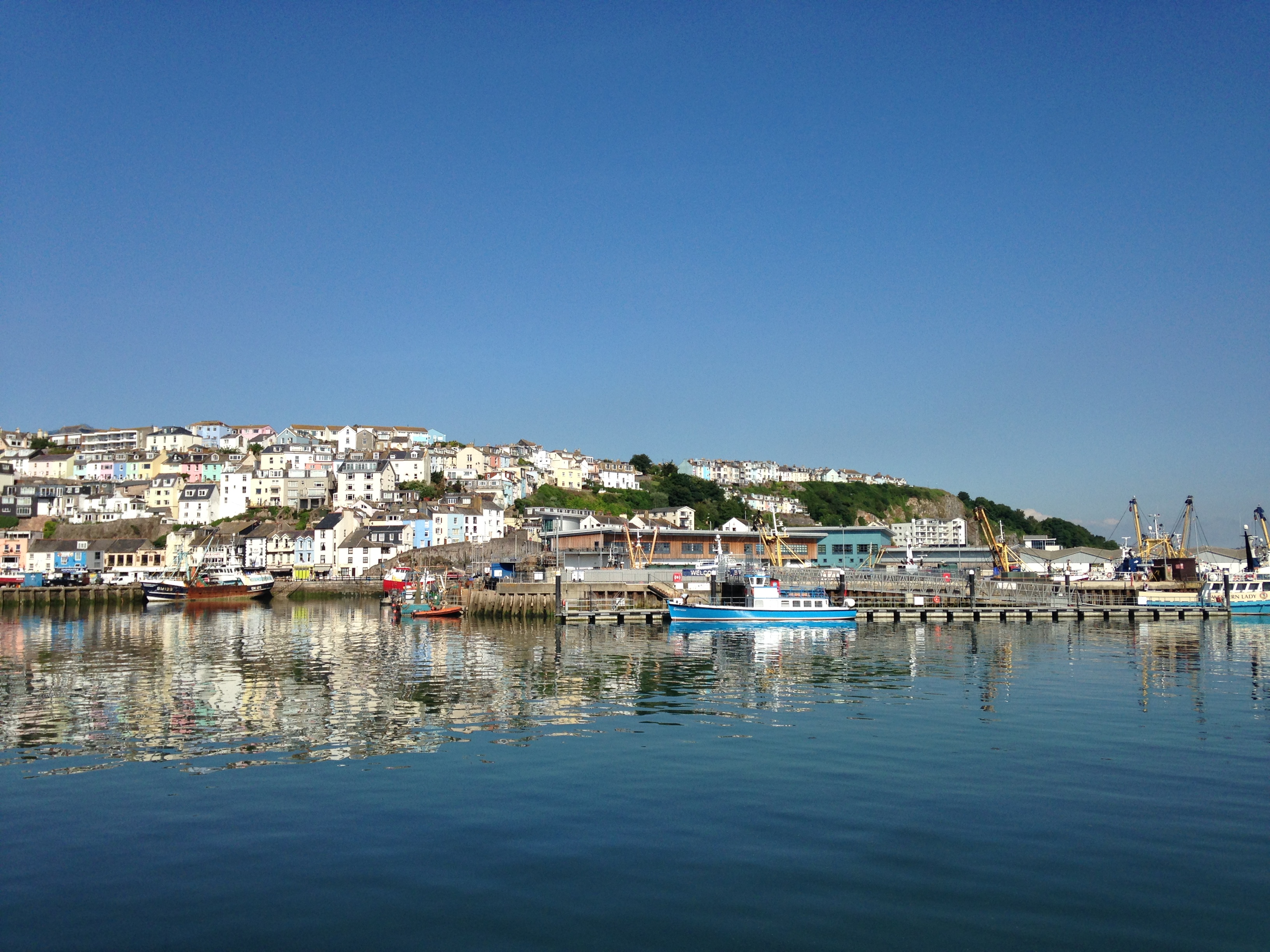
Regular readers of this blog will know that I love my town. Brixham has been my home for the past four years, the culmination of a lifelong dream to live by the sea. It is a vibrant, creative, complex and inspiring place to live, and the more people I get to know here the more happy I am that this is where we ended up.

There is a huge swathe of positivity at the moment, lots of people keen to make the most of the town with independent shops and new restaurants opening up and a real buzz from locals and tourists alike. But beneath this there is something more sinister simmering – a spat between longstanding members of the town council that threatens to undermine the sense of community and the growth that Brixham has enjoyed in the past few years.

A group has been set up with the sole purpose of abolishing Brixham Council. They claim it is a waste of money, that it doesn’t get anything done. But my experience of living in this town says different. I don’t believe that we can rely on Torbay Council to stand up for Brixham. We are smaller than Paignton and Torquay, and very different in character. Historically there have been issues with withheld funding and a lack of understanding of the needs of our town. I believe we need our own voice.

It is against this background that I have decided to stand with a group of independents as a candidate in the upcoming council elections. And with that decision has come a new type of writing for me – my election campaign leaflet.

IMG_0002

It is hard to convey on a single side of A5 everything that I would like to achieve for Brixham, let alone knowing how to present myself in a way that will persuade people I have never met that I am worth voting for. I am not an expert in local politics. I have had a keen interest for years in what it is that makes a community great, but I do not pretend to know the ins and outs of exactly what has gone on in the Brixham Council chambers that has led to such disgruntlement.

What I do know is that people find it tough to engage with democracy, and with every layer of that democracy that is stripped away they will find it even tougher. I would love the opportunity to speak up for the people of Brixham, to give them a voice within the town council and further afield, and to work to grow and celebrate everything that is great about our town.

So I may be a little preoccupied between now and May 7th. No doubt there will be updates here, and if you’re interested you can follow the Stand Up For Brixham election campaign on Twitter too. Wish me luck!


Writing Bubble


Him

IMG_0831

Now that I’ve submitted the third draft of my second novel, I have once again found my mind meandering to novel number three.

The scene that follows flashed into my mind when I read Sara’s prompt this week. It’s really not very cheery, I apologise. But, as these things often do, just writing it has helped me tease out some more details of the story…

It’s rough and ready and might not even make it into the manuscript itself, but I thought I’d share it anyway.

***

This was always the night of the year that she sensed his presence most strongly, and it was almost too much for her to bear.

She thought of their son, of course. Of the pain he had caused her as he had fought his way into existence. They had all said that it would be easier for her to handle, being so young. Her mother had refused to even begin to discuss it with her, and that had suited her just fine, but she’d never quite understood why the midwives hadn’t told her the truth.

The contractions had coursed through her body again this afternoon as she’d struggled to engage Year 10 with the themes of Henry V. More than once she’d had to grip her desk as she’d watched the minutes tick closer to the time when he’d been found.

She knew that it was not the memory of childbirth that had overwhelmed her.

Her colleagues knew nothing of her pain: knew nothing of him. She preferred it that way. She was certain of that, even if something in the deepest reaches of her soul sometimes called out for recognition, for acknowledgement.

She had no idea how they would react if she told them the truth.

So instead she bowed her head and complained of a headache. Of the time of the month. No-one questioned her – they tried to distract her from her agony with stories of their own, pushed paracetamol into her palm as if it might actually do some good. She took it gratefully before secreting it into the bin when no-one was looking.

Even now, alone in her flat with her cat nestled at her feet, she would do nothing that might push him away. There was a bottle of wine in the kitchen. That might have helped. She could have even scored some weed if she’d wanted to, sat with her back against the wall, knees raised and feet flat on the floor as she rolled a joint between them. Her downstairs neighbours had offered often enough.

But she owed it to him to be here, to be present as he was. She owed it to him to feel every molecule of her being shrink, raisin-like. She owed it to him to fully inhabit the gaping holes between those molecules as she searched for him, again and again.

Tears ran freely down her cheeks as she carefully undressed, folding her clothes neatly on the chair by the window. Her pyjamas were waiting cautiously underneath the pillow and she slipped into those now, trying to ignore the silent dripping of saltwater against the wooden floor.

After plunging the room into darkness she scurried beneath the duvet, making herself as small as she could to disguise the shuddering sadness that consumed her.

***

If you’d like to read more about this story you will find further glimpses here:

Smoke

Thirty

Gratitude

mumturnedmom
Nikki Young Writes

Seven top tips to help you edit your novel

Since I submitted the third draft of my novel last week, I’ve been pondering a lot about how I finally got there. It wasn’t easy, that’s for sure.

I was optimistic when I first got started on the whole redrafting process back in September, but it wasn’t long before I started to flounder. I got things back on track, and completed the second draft almost within my self-imposed deadline.

I knew there was still work to be done at that stage, so it was no surprise when I had to start work on draft number three in January. I had some great feedback to work with, and slowly but surely a third draft began to take shape.

I’m not saying that’s perfect either, but in getting to that stage I’ve learnt a lot about how to go about editing and redrafting a novel: and that is what I want to share with you here.

Tip One: Don’t rush it

It’s easy to get impatient when writing a novel. After the first flush of excitement even getting to the end of the first draft can feel like a slog at times, and that is absolutely nothing in comparison to the arduous process of getting your head round the edit.

Having said that I found that it all came much easier when I was ready. I think you have to trust that if it just doesn’t seem to be working when you’re explicitly focusing on it then maybe your brain just needs a bit more mulling time.

But having said THAT…

Tip Two: Set yourself deadlines – and stick to them

This might not be the way you work, but for me my procrastination skills are so finely tuned that unless I have some sense of urgency I could just drag a task out forever… Especially one as tricksy as this.

Editing deadlines

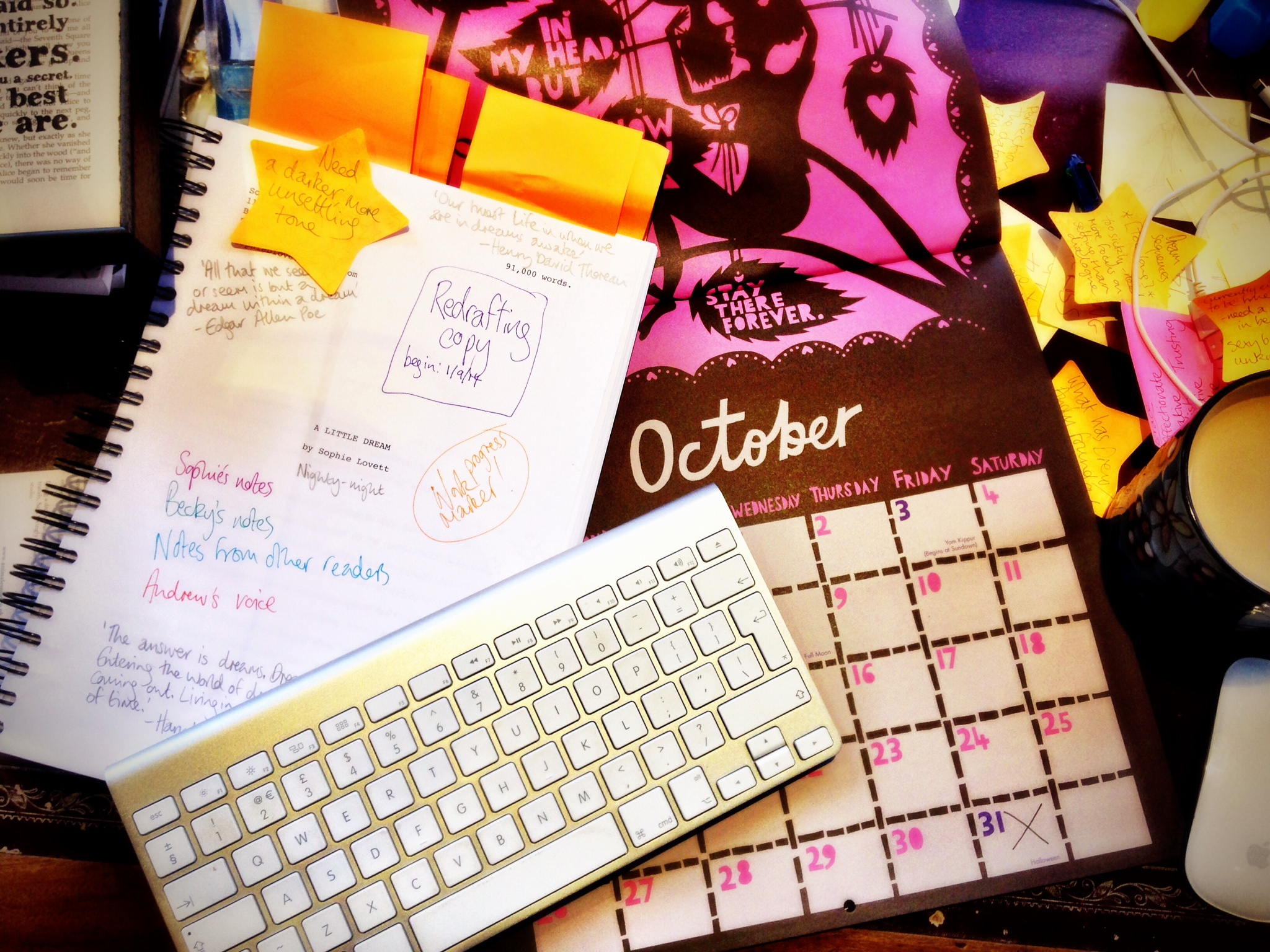
I found it really helpful to decide on an overall deadline (both times round I gave myself around two months to get the edit done), and then to break it down into daily goals. Those were a bit more flexible. I aimed for a chapter a day, and sometimes I did more, sometimes less. Sometimes I redid what I’d done the day before. Sometimes my brain had been whirring so effectively in between editing sessions that I whizzed through several chapters. But I generally had a sense of where I was at and could therefore balance things out to make sure I got to the end pretty when I wanted to.

And along the way, remember…

Tip Three: Listen to your characters

In my first draft, I think a lot of the details in the story were driven by what I thought the characters might think, or say, or do. But really I was just getting to know them – I had to make presumptions and fill in the gaps because there just wasn’t time to stop and focus and listen.

The bits where I’d just swanned on through were blatantly obvious when I came to look at them later – what was not so obvious was what to do about them. But then I remembered that I wasn’t actually doing this alone. In the process of writing the first draft I’d created several companions to my task – and now they were there, ready and waiting for me to breathe fresh life into their story, I really needed to listen more acutely to them and where they wanted to take things. Even if it wasn’t strictly where I’d thought I wanted to go.

Which brings me to…

Tip Four: Listen to your readers

It goes without saying that you need to find someone you trust to give you feedback at each step of the writing and redrafting process. Preferably more than one person, and preferably people who are avid readers – even better if they enjoy the particular genre that you’re writing in.

But once you’ve found those all-important beta-readers, it can be incredibly tempting to pick and choose what bits of feedback to listen to. It’s your novel after all, right? And if you don’t agree with what they say then it’s your prerogative to ignore it, right?

Except they are in a much better position than you to measure how your novel will be received. Because they are readers – and readers are what it is all about.

There is a big gulf from the novel in your head and the novel that people will read, and that gulf can only be crossed by getting the right words on the page. If you think you’re communicating something, but your readers are telling you that you’re not, then you need to ask yourself why.

Though you mustn’t forget the most important thing…

Tip Five: Trust yourself

This might seem to fly in the face of everything I’ve just said, but it really doesn’t. You may well receive conflicting feedback, or feedback that really doesn’t sit comfortably with what it is you’re trying to achieve. And if you do the you need to remind yourself that, ultimately, you are the author of this work.

As long as you don’t dismiss things out of hand, as long as you really consider how you might be able to make the changes people are proposing, then it’s ok to stick to your guns and find a way to make your way work.

Just remember…

Tip Six: It’s ok to get rid of stuff you like

Writing a good novel is not just about good writing. It’s about how all of your words and sentences and paragraphs and chapters sit together to create people and worlds that are meaningful to your reader.

Some of the bits you end up cutting might be pieces of writing you love. Keep them! Just don’t be afraid to recognise that they might not work in this manuscript, here and now.

Editing a novel

And whilst we’re on the subject of fear…

Tip Seven: Don’t be afraid to experiment

Once you’re past the relatively liberating stage of writing the first draft, you might find a desire for perfection creeping in around the edges. You might feel like you have to get your next draft just right – perfect, in fact. And that – I speak from experience here – can be pretty paralysing.

The only way I was able to move forwards was by freeing myself up to experiment. To try things out, even if I wasn’t entirely sure they worked. To take things in a different direction. For me this was especially true of the second draft. I got rid of lots of those experiments by the time I got to draft number three, but the residue they left behind had undoubtedly made the manuscript stronger.

And that’s it!

There are other things, too. I’ve already written about the more prosaic things that kept me going when the going got tough. But for me the thing that really helped me bring these edits to a conclusion was getting myself into the right mental state. And it is that I hope these tips will help with.


Writing Bubble


The List

Coming up for air

I’ve been increasingly single-minded over the past few weeks. At the beginning of January, I started work on the third draft of my second novel. This was a pretty intimidating prospect – with every new draft the stakes get higher – and I struggled at first to pick up momentum. But as I got deeper and deeper back into it, helped by some great feedback and a couple of lightbulb moments, I became increasingly confident in my ability to make the changes I needed to. And as I got closer and closer to the end, working on the edit was pretty much all I wanted to do.

And then, this Tuesday, I submitted it to my agent. A huge weight was lifted off my shoulders – now all I have to do is wait and see what she thinks!

Well, I say all I have to do. My single-mindedness has definitely impacted on everything else: my blogging activity has slowed to a trickle, the laundry has piled up, and all my good intentions to do more exercise have come to not very much at all. I have also not been giving Arthur quite as much attention as perhaps I should have been. I mean, I’ve been here. Physically. But my mind has not been entirely present…

IMG_0813

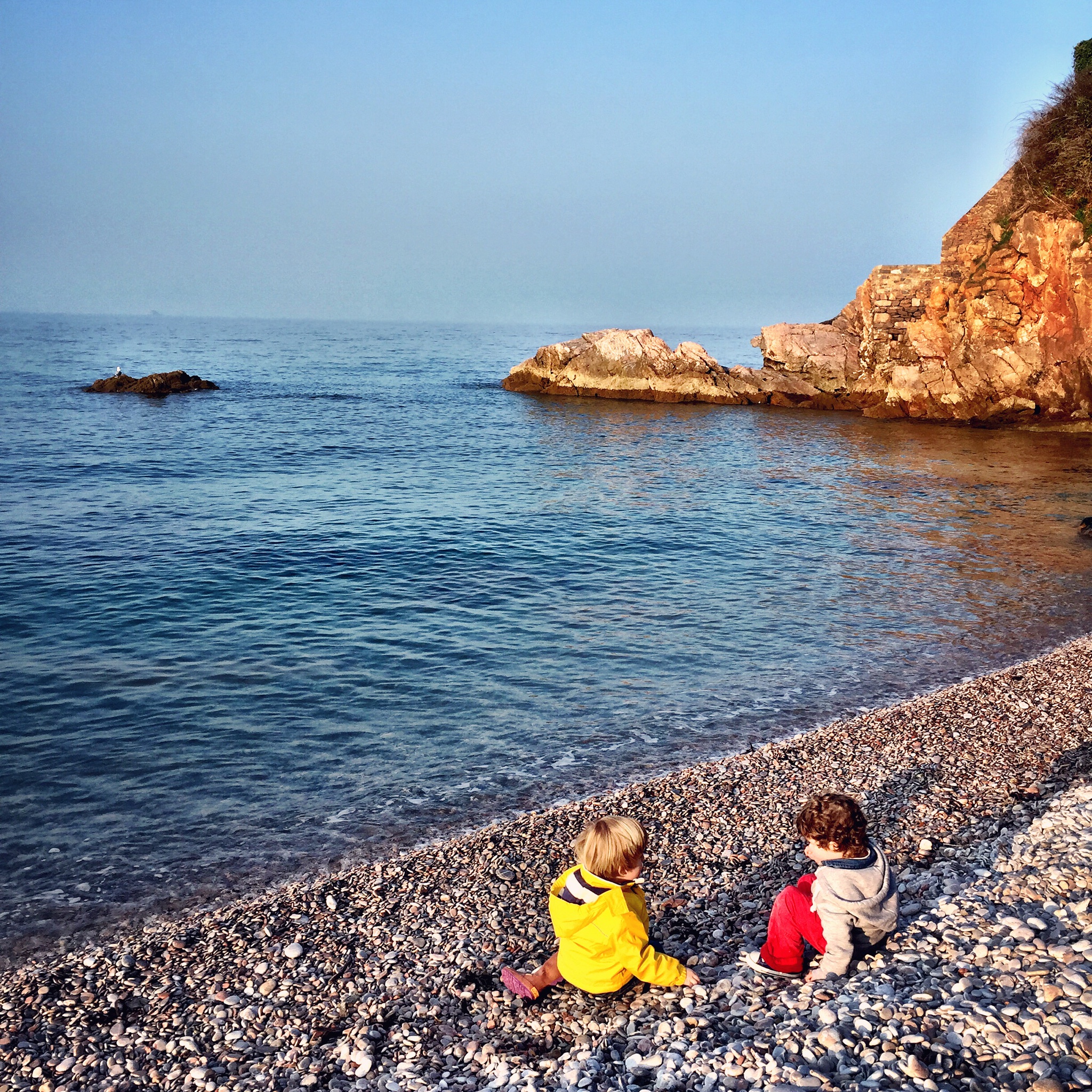
So that was my main aim this week – to begin to re-enter the real world and enjoy hanging out with my awesome son. We’ve spent lots of time at the beach, hanging out with friends and just throwing stones.

IMG_0815

IMG_0814

I finally put together the rebounder that’s been cluttering up Leigh’s study and is a key part of my ‘get fit for summer’ exercise plan. That was foiled slightly by Arthur’s insatiable appetite for bouncing… But I’ve had lots of fun getting reacquainted with my hula hoop whilst watching him bounce up and down.

IMG_0817

He’s been asking after yoga lots too, so getting back into that is my next goal – we were doing so well with our morning yoga sessions but those too have suffered in the quest to get this novel finished (again).

My brain is still feeling a bit fuzzy after all its hard work, but fresh air and exercise are definitely helping. I have a growing list of ideas for blog posts, and hopefully soon I’ll find the time to actually write them!

There’s nothing quite like the buzz of adrenalin and sense of achievement that comes from bringing a major project to a close. But there’s something pretty special about the peace and space to breathe that comes in its wake as well – and that’s what I have been enjoying most of all about this week.

IMG_0816


My word of the week this week is breathe.

The Reading Residence

Fingers crossed…

IMG_0811

Having run out of patience with myself last night and stayed up till past midnight to get the last bits done, the third draft of my novel is now winging its way to my agent. Yay!

I hope…

It’s hard to be entirely sure, you see, when these words and worlds and characters you have created have been seeping into every inch of your consciousness as you get deeper and deeper into the manuscript. But I definitely have less reservations about this draft than I did about the others.

I’ve reread the entire thing twice over the past week, each time changing less and less. By last night I was mainly mulling over the effectiveness of a handful of individual words, which is as good a sign as any that it’s time to let it go.

It feels more nerve-wracking this time round. I mean, everyone knows a first draft is meant to be rubbish, right? And with the second one I was experimenting with various things that I knew wouldn’t necessarily work out. But the stakes seem higher now. Which is why my fingers are tightly crossed that this draft reads as well as I think it does.

We shall see.

And in the meantime I have plenty to keep me occupied.

I might even let my mind wander back to that third novel I was getting so excited about before Christmas…

Though I should probably do some laundry first.


Muddled Manuscript

The gift

Pencils

She sat on the sofa, knees drawn up to her chest and arms stretched out in front of them holding her masterpiece proudly. It looked so much like him. It wasn’t just the physical features, although her graphite lines perfectly moulded the contours of his stately nose, those deep, dancing eyes, the lips turned tantalisingly upwards at their ends in a constant almost-smile.

More than that, she’d captured something of his very essence. It would be easy to sympathise with those who were afraid that a photograph might steal something of their soul if you saw just how uncanny the resemblance of this drawing was to her love.

She sighed and placed it carefully down on the coffee table. He would be home soon, and she couldn’t wait to give him his present.

She padded through to the kitchen to pour herself a glass of wine, hearing the insistent buzz of her phone as she returned.

Birthday drinks with Rob. Back by eight I promise. Love you. 

A cloud of irritation enveloped her, and she immediately chastised herself for being so unreasonable. It was his birthday, right? If he wanted to go for drinks she could hardly stop him. Besides, it would be eight in just over an hour.

She settled back down on the sofa and flicked on the TV.

An hour passed, and then another. The wine had definitely begun to go to her head, dulling her senses though it did nothing to dampen her annoyance. She’d texted him twice now, but of course she’d had no reply.

He stared up at her from the heavy sheet of cartridge paper that held his likeness. It had been the most expensive she could find, a dream to work with. As she stared back at him she realised that something was not quite right. It was hard to put her finger on exactly what: a shadow on his cheekbone, or maybe the angle of the underlying structure itself.

She stood and retrieved her tin of pencils from the bookcase by the window, pausing for a moment to check that he was not about to surprise her. The street below was busy as it always was on a Thursday night, but of him there was no sign.

Even as she made the very first line on the paper she knew it was a mistake. She was way too drunk for this. Yet once she’d started she had no choice but to continue.

She began gently, evening out the opposite side of his face to conceal her error, then adding weight to the lines around his mouth and eyes. Her anger seeped through her fingers, into the lead of the pencil and onto the page. She was angry with him, both the real him and this edifice that would not stop looking at her. But more than that she was angry at herself – for being an idiot once again, for having too much trust in him and none at all in her own judgement.

The solidity of the paper was satisfying as she scrawled deeper and deeper into it. He became monstrous, a parody of himself on his darkest days. His almost-smile became a leer, his nose a beak, the inviting pools of his eyes turning into terrifying caverns of infinite darkness.

She stopped before she had obliterated his features completely, investing the last of her rage into a tightly cross-hatched canvas to amplify the horror of what she had done.

The lead of her pencil snapped, finally giving in, and it brought her back to herself, to their flat and his imminent arrival home. Her hands were shaking as she stood, and as a final gesture she toppled her half-empty wine glass, spilling its blood-red contents across the remains of his gift.

It was then that she heard his key in the lock. He staggered slightly as he opened the door, taking three deliberate steps into the room before closing it behind him.

“Sorry I’m late.”

She didn’t know what she could possibly say, so instead she said nothing.

He didn’t seem to notice, pausing to kiss her clumsily as he stumbled to the sofa. He picked up the ruined drawing that lay in front of him, squinted at it slightly, and broke into a smile.

“This is really good!”

“Are you taking the piss?”

She couldn’t be doing with this now. A row she could handle, but she didn’t have the patience for his insidious sarcasm.

“Seriously, I mean it. Can I take it to the gallery tomorrow?”

Her mouth twisted in on itself, the only outward sign of the scream that was threatening to explode her chest.

“Goodnight. Oh, and happy birthday.”

He was gone by the time she woke up the next day. She figured he must’ve slept on the sofa. The portrait was gone too, and in its place was a note.

Really sorry about last night. I’ll make it up to you I promise. Love you.

She was too hungover to be angry, and just felt really stupid. All that hard work, those hours and hours of meticulous draughtmanship, and for what?

She fired up the computer before heading into the kitchen to make a coffee. There were too many deadlines to be met today for her to be able to afford another minute mired in regret.

It was just after three when the email came in.

It was from the gallery where he worked, but not from him. She recognised the email address as one which had borne news of many a rejection when she’d submitted her drawings in the past. This time though the mood was rather different.

Original, they said. So fresh and exciting. A total departure from her previous work. They were sorry not to have identified it before but she clearly had a real talent, a gift. They would be honoured if she would consider selling this piece for inclusion in their collection.

She had to read it four or five times before the words began to make sense.

Maybe she could forgive him after all.


mumturnedmom
Nikki Young Writes


The final chapter?

How long is a piece of string?

Despite a busy week of non-writing related things, including a trip to Brighton and some well-overdue catch-up time with old friends, the edit is continuing apace.

After getting to the end of the novel last week, I have now swept through it again – getting rid of continuity errors and unnecessary repetition, tightening up description and dialogue, adding in a few little layers of intrigue to the plot. Overall it is maturing nicely.

But as with so many of these things this ‘final’ sweep has thrown up more questions. Most significantly, have I organised it as effectively as I could?

I’m talking chapters here – how long, how many, where they begin and end. I thought I had that all figured out. I began the whole writing process with chapters after all – once I’d done my initial planning and a story had begun to take shape I neatly split it into 30-odd sections to structure the first draft. They weren’t all individual scenes, but they seemed to be the natural chapters – or so I thought. I gave all of these an identical word count target. I didn’t stick to it religiously, but they all turned out pretty uniform.

And I figured that was fine, until the bird’s eye view the latest read through afforded me made me doubt that.

I started to see chapter breaks elsewhere, and to link scenes in my mind that I’d previously separated. Some events seemed to warrant being surrounded by white space all of their own. And in general I found myself wanting to make the chapters shorter.

Ever the researcher, I did have a bit of a sniff around the internet to see what advice I could find. But the most common response to the question ‘how long is a chapter?’ seems to be ‘how long is a piece of string?’. There were a couple of sites that suggested readers prefer uniform chapter lengths so they can pace themselves more effectively and are more aware of what’s coming next. But then others that said a variety of chapter lengths was preferable, and these artificial divisions in the story should be governed only by the story itself.

The latter opinion definitely resonated more strongly with me. Everything I know about good writing from my years spent teaching it tells me that variety – as long as it’s not purely for the sake of it – is the way to go. This is borne out in the books I enjoy to read too, especially the ones that get me totally hooked. Thinking about it, I realised I like short chapters too. I hate the feeling of having pages and pages to go until I can easily take a break, and if I get to the end of a chapter then I’m more inclined to read on if it’s not going to be too epic.

I think this possibly makes me a bit of a lazy reader, but I figure I can’t be alone in that.

So there are considerably more chapters in my novel now. Most of them are shorter, some significantly so. And their length, and where they begin and end, is dictated by what the story and the characters need – and by default the things that are going to make the reader want to know what happens next.

There is one last thing I’m mulling over (well, for now anyway). And that is – how do I label these chapters? In the very beginning they had titles, but I ditched them fairly early on. Since then they’ve had numbers, but those are starting to feel a bit stilted as I navigate through the manuscript. I’m wondering if there is an alternative, or if in fact the chapters need any label at all. And then I’m wondering if I want to divide the novel into parts, to demarcate the different phases the story goes through.

What do you think? How do you like the novels you read to be organised? Or indeed what techniques have you used in your own writing?

I realise I’m possibly over-thinking things, and this is exactly the sort of detail that a publisher might decide to change if they ever get their hands on my novel, but in the meantime I may as well get things as close to perfect as I can, right?


Writing Bubble