Category Archives: Sophie is writing

When Only Paper Will Do

image

I almost forgot to mention that I’ve been musing on the novel writing process over at The Reading Residence today as part of Jocelyn’s #bringbackpaper campaign. However much I love my computer, there are times when only paper will do… Pop over and find out more – there’s lots of papery goodness to ogle at in the Papery Peep linky too!


image

Writing diversity

When I come to the section about ethnicity in a diversity monitoring form I tick the box ‘White British’. I’m not that white, especially in the summer. My olive skin has had me mistaken for many different nationalities – even Turkish and Nepalese when travelling in those countries. But my ethnic origins are not nearly so interesting: I am half Welsh, half English, and as far as the box tickers are concerned, well and truly white.

So you may think it strange that the protagonist in my first novel, Lili Badger, has a strong Bengali heritage, that though her father is White British like me much of the fabric of the novel is woven from a culture to which I am an outsider.

My awareness of and interest in the multicultural world we live in began when I was very young, even though the villages I grew up in were about as monocultural as you could get. My Welsh grandparents had lived in East Africa for over twenty years, and my dad spent a good portion of his childhood there. It was not until I was in my late twenties that I was to finally find myself in Tanzania, and when I did there was something strangely familiar about it – something that had seeped into my bones from the stories I’d heard and the artefacts that adorned my grandparents’ house.

For my own part, even though being born in Wales hardly made me an ethnic minority, I was made starkly aware of my otherness when we moved from there to Birmingham when I was eight years old. My accent was so alien that to my new schoolmates I might as well have been speaking another language at first. I did my best to disguise it, though always felt relief sweep over me when I returned to see my extended family in Cardiff and could relax back into my natural voice. I never did learn the language – it was not a part of the curriculum in Wales during my early primary years. When I moved from Birmingham to London aged sixteen I began to more openly reclaim my Welshness as part of my identity, much to the amusement of my new friends there. I investigated Welsh language courses I could do in the city but never committed – something I still regret.

I vividly remember a conversation I had in a run down classroom at the top of the first school I worked at in Tower Hamlets. I was a teaching assistant, and had been assigned to support a group of boys who had recently come to the country from Bangladesh. As we muddled through the beginnings of a conversation they asked me where I came from. When I named a place that was not England, they excitedly asked if I could speak to them in my language. The surprise and disappointment on their faces when I had to admit that I did not speak the language of my country has stayed with me.

It’s something I have in common with Lili, or rather I suppose she has in common with me. Being in the second generation of her family to have been born in England it is perhaps more understandable that she does not speak Bengali, but it bothers her sometimes – and is even more of an issue for some of the people she crosses paths with, Bengali and White British alike.

Lili is not defined by her ethnicity. It is a part of her of course, but her driving force is her creativity, her love of stories and her search for a voice of her own. There are other characters in the novel who have been shaped by their background quite differently – Lili’s brother Arun for one, who in his search for his own identity is drawn to the world of radical Islam – and I drew on the diversity I saw in the communities I lived and worked in for nearly ten years to develop those characters.

I was nervous at first. When the idea for the novel first came to me, several years ago when I was way too busy teaching to actually write it, I had no doubt that Lili’s family had their origins in Bangladesh. Over the time I had to think about it before I began to write I almost lost my nerve. Would people not think I was a fraud, writing about a culture different from my own? Could I really accurately represent the hopes and dreams, let alone the day to day life, of a British Bengali family living in the East End?

But then I decided I was being ridiculous. My research had been wide and deep. I had worked with many children and families during my time as a teacher, all of them different, all of them unique. I was not trying to write the ultimate story of the British Bengali experience, only one story. And to bring it to life, to enrich it, I had a wealth of material to draw on.

And though on one level Lili Badger is the story of a girl whose mother is Bengali and whose father is White British, on another more important level it is the story of a girl. A girl whose hopes and dreams and day to day experiences echo those of many other teenagers, whatever their ethnicity.

Because if those ten years working in Tower Hamlets and Newham taught me anything, it is that people of different backgrounds have more things in common than the things that tell them apart. It took working in a multicultural environment for me to really realise that, for me to become frustrated by rash generalisations about people from a particular culture and to become even more incensed by the people who aim to divide our multicultural Britain and to pitch people like me against everyone else.

You would have thought I might have realised this as a reader. I have devoured books all my life, though it is only really since having the privilege of working amongst people from so many different cultures that I have actively sought out books from different cultures myself. Previous to that, whilst I might have described my tastes as diverse, what was easily available was resolutely monocultural. It is this which is one of the many reasons why I believe writing diversity is so important – whatever the background of the author, there is a whole world of inspiration out there and we should not be afraid to use it.


Unknown

Brilliant blog posts on HonestMum.com


Why the DfE is wrong to dismiss OCR’s new English A-Level as ‘rubbish’

IMG_6588

In a response to Gove’s demands for more rigorous A-Levels the exam board OCR seem to have thrown him a bit of a curve ball. They’ve worked closely with the brilliant English and Media Centre to create an English Language and Literature course which celebrates diversity in the texts it has chosen to examine – from Emily Dickinson to Dizzee Rascal, from William Blake to Russell Brand. Turns out this is not what Gove had in mind when he said he wanted to increase the potential for pupils’ ‘thinking skills and creative ability’ – at least not if we are to believe a DfE source who has dismissed the course, carefully constructed by education professionals, as ‘rubbish’.

This is yet another example of the narrow-minded approach that typifies all that is wrong with the people running our education system at the moment. They are stuck in the past, and have no understanding of how people learn or what constitutes good teaching. Worse, they appear to be afraid of innovation and change for how it might upset the status quo which they have relied on so heavily to gain – and keep – the power they enjoy.

Having taught English and Media in secondary schools for ten years, I know that there is nothing intrinsically dumbed down about the study of contemporary texts, whether they are literary fiction such as the work of Jhumpa Lahiri (also on the new OCR course) or come from the wide range of multi-modal communications that surround us in our daily lives. In fact I would argue that it can be more intellectually challenging to dissect a text that we are less culturally removed from – to unpick the assumptions that our media is laden with and see how language is being manipulated to create effects that we are usually just passive consumers of.

This is particularly important for young people, and gives them power in a world where they are surrounded by overt and hidden propaganda, where the written word has celebrated a resurgence in social media and where everyone now has a myriad of public platforms to choose from if they want to be heard. The ability to know how to use that voice and to interpret the cacophony around them has arguably never been more urgent than it is for our young people today.

There is, too, the question of diversity. Whilst the DfE dismisses it as ‘patronising’ to presume that young people can only be engaged in Literature through culturally relevant texts, I would argue that they have again missed the point. They have latched on to the headline grabbing names which are sure to make every self-respecting Daily Mail reader weep into their bran flakes and decided to ignore the fact that these texts are only part of a varied patchwork compiled to enable young people to see the power of language across boundaries of time and place. The OCR course in question has not done away with the canon – it still finds space for Shakespeare’s plays, for the works of Charlotte Bronte for example – but it tells students that language does not stop there, that other voices are just as relevant and worthy of discussion.

The urgent need for increased diversity in the books available to our young people has recently been highlighted by the We Need Diverse Books campaign. But until they are written, perhaps it is by exploring a range of different types of texts that the diversity that enriches our society can form part of an English education that truly reflects where we are – not just where we’ve come from.

Of course there’s nothing really new about what OCR are doing – for years teachers have used a range of texts in the classroom, and this has been reflected in source material provided by exam boards. So what is it about this new course that has sparked such derision from the DfE?

It all comes back to that lack of understanding, really. They don’t understand how an education different from their own could be as good – or better – for the young people of today. They don’t understand how contemporary texts they’ve never really engaged with could possibly stand up to a linguistic analysis worthy of A-Level study. They don’t understand how young people might learn from the words of people with similar origins to themselves, rather than by being indoctrinated by the status quo of white, male supremacy that has held such disproportionate power up until now.

And perhaps there’s another lack of understanding too, one of which people like Gove and Cameron are even more afraid. Perhaps they do not understand the world that people like Russell Brand and Dizzee Rascal speak of, perhaps they do not understand the new cultural norms which are sweeping the globe – perhaps they do not want to, but perhaps they are even more terrified by the thought of being surrounded by people that do.

Perhaps this is why their spokesperson resorted to such an immature and unsophisticated rebuke. To dismiss this new course as ‘rubbish’ is insulting on so many levels – and such a dismissal can only have come from someone who really doesn’t understand, and is afraid that in their lack of understanding the world is just going to start to pass them by.

We owe our young people more than that. We owe them an education which prepares them for the world they live in – this includes the opportunity to study the canon, but also to get their teeth into the complexities of multi-modal communication that surround them on a daily basis. OCR should be proud that they have used Gove’s cries for increased rigour to produce a course which is more rather than less innovative than what has come before, and Ofqual would be very wrong to miss the opportunity to add this level of diversity to the range of qualifications on offer.


Brilliant blog posts on HonestMum.com

Bacon: A Short Story

image

She wasn’t sure how she’d cope, after he was gone. It wasn’t just that he was gone after all, but the circumstances! They’d joked for years about the apocalypse – everyone had, hadn’t they? And now it was here.

No-one else seemed nearly as concerned as she was, least of all their sons. They were teenagers now of course, so agreeing wasn’t exactly in their psyche. Still she’d hoped the headlines would have drawn them in – convinced them she wasn’t just going crazy.

When they hadn’t she’d had to take matters into her own hands. She found it hard to predict the hunger of two teenage boys. It was challenge enough to feed them when Tesco was there to help, but what about when even that didn’t exist any more? It sent a shiver down her spine, the thought that such a bastion of capitalism might just cease to exist.

Beans, sweetcorn, peaches. There were many things that came in cans, and it was these she began to collect. But something niggled at her, something that just wouldn’t disappear. Her boys needed meat. Every boy did, let’s be honest. But there was nothing in cans that even came close. Once upon a time, during that other war, people had made do. But she really didn’t think they were those people.

She looked it up on the internet. She could have asked someone, perhaps. But no-one else seemed to be taking it at all seriously, and the last thing she wanted was to draw attention to herself.

So she just began her collection: piles and piles of bacon, as dry as possible, because that was the way it would last.

It was Justin who questioned her first. He’d come home with a bottle of lucozade which he’d wanted to put in the fridge, but there was no space. He left it on the counter for a couple of hours, but when Lucas came home they’d confronted her.

“There really is no apocalypse, Mum.”

She’d acquiesced almost immediately. Of course she didn’t want to believe it, not unless she really had to. They’d looked together at the stacks of supplies she’d acquired, wondered simultaneously at the lack of menus the store cupboards suggested. It was the meat she felt most guilty about – if she’d hoarded it unnecessarily then she really should do something about the waste.

There was an evening when this came up in conversation, but the older son was well prepared.

“It’s ok, Mum. Everything tastes better with bacon.”

He was right, of course.

By the time a state of emergency was declared the cities were already burning. The smell wafting over their suburb was strangely familiar, making them salivate with the memory of the supplies they had so carelessly squandered. She couldn’t help but feel a smug satisfaction even as the tanks rolled closer. If nothing else, at least she wasn’t mad.

Thank you to Sara at ‘Mum turned Mom’ for inspiring this post with her prompt: ‘everything tastes better with bacon’. It seemed the perfect excuse for a short story, which in turn seems the perfect excuse to celebrate being shortlisted for the Cloudcuckooland Flash Fiction prize 2014. You can see the rest of the shortlist here

mumturnedmom


Perfect Days

Since we moved down to Devon, life has never strayed too far from perfect. There are times when it’s been hard: even before Arthur came along the challenge of juggling renovating the house with a stressful job an hour’s commute away and a husband tackling medical school as a mature student was pretty exhausting, and motherhood hasn’t exactly left me feeling any more rested. But all of that has just been part of realising our dreams, so it’s impossible to sit back and reflect without seeing it as all part of the perfection.

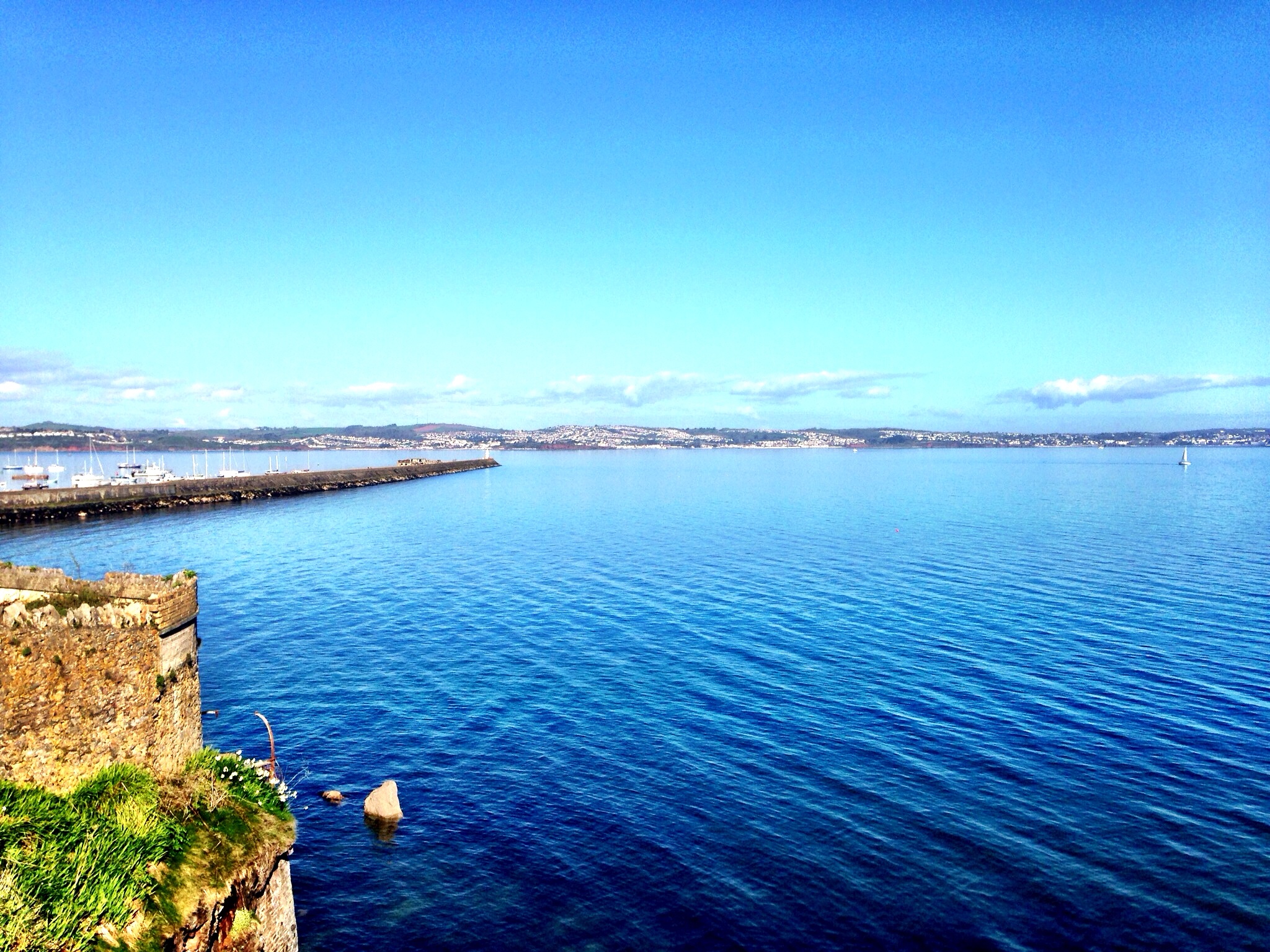
For as long as I can remember I’ve always dreamt of living by the sea. I never thought it would actually happen, but now it has. Whenever I walk outside my front door I feel like I’m on holiday: views like this never fail to nourish my soul, making anything seem possible even if I’ve been up all night with a teething baby.

image

That teething baby is of course part of the dream too. My maternal instincts kicked in way before I was old enough to have kids, but after a string of bad relationships in my twenties I thought that perhaps it wasn’t meant to be. Then along came Leigh, and together we’ve made the most perfect creature I could ever have imagined. Even if sleeping through the night is not his strong point and he has instead an incredible talent for making a mess.

image

The third part of the master plan was the writing. I loved to write as a child, dabbled tentatively for years even after the self-doubt of adolescence kicked in, but never dared to dream I’d actually get to spend my days (or parts of them at least) writing novels whilst looking at the sea.

For the last three months my perfect days have definitely involved a good chunk of writing: whatever else me and Arthur got up to, if I could spend an hour or two losing myself in the world of my novel and chipping away at the word count goal I’d set myself then I’d be happy. If Arthur and I managed to get out into the fresh air, even better if we managed to combine that with meeting up with friends, then things were pretty damned good.

Despite all this, in our day to day lives something (or someone) has been missing. More for Arthur than me, though of course I’ve missed him too: on days when Leigh has been up and out of the house before seven Arthur has called his name excitedly as we’ve come down the stairs for breakfast an hour or two later. One day last week he started doing it in his sleep: murmuring ‘dada’ as he cosied up to me in the sling, then waking up and shouting it as if he expected to see him standing there. I know he’ll be home by dinner time, but for Arthur I think those days must seem like an eternity. And even in the evenings, although we manage to eat together most nights, Leigh is exhausted and often still has work to do.

But now it’s the holidays! And we have two whole weeks of Daddy time. I’ve finished the novel – the first draft at least – so have a little while to adjust to the different rhythms of the editing process. We have some time in London to look forward to, as well as a week by a different sea in Cyprus for our first family beach holiday. After several months of busyness and achieving, I cannot wait for some very different kinds of perfect days, ones filled with doing not very much at all apart from hanging out and enjoying each other’s company as a family.

image

Thank you to Sara at ‘Mum turned Mom’ for inspiring this post with her prompt ‘A Perfect Day’.


mumturnedmom

Brilliant blog posts on HonestMum.com

Word of the Week: Out

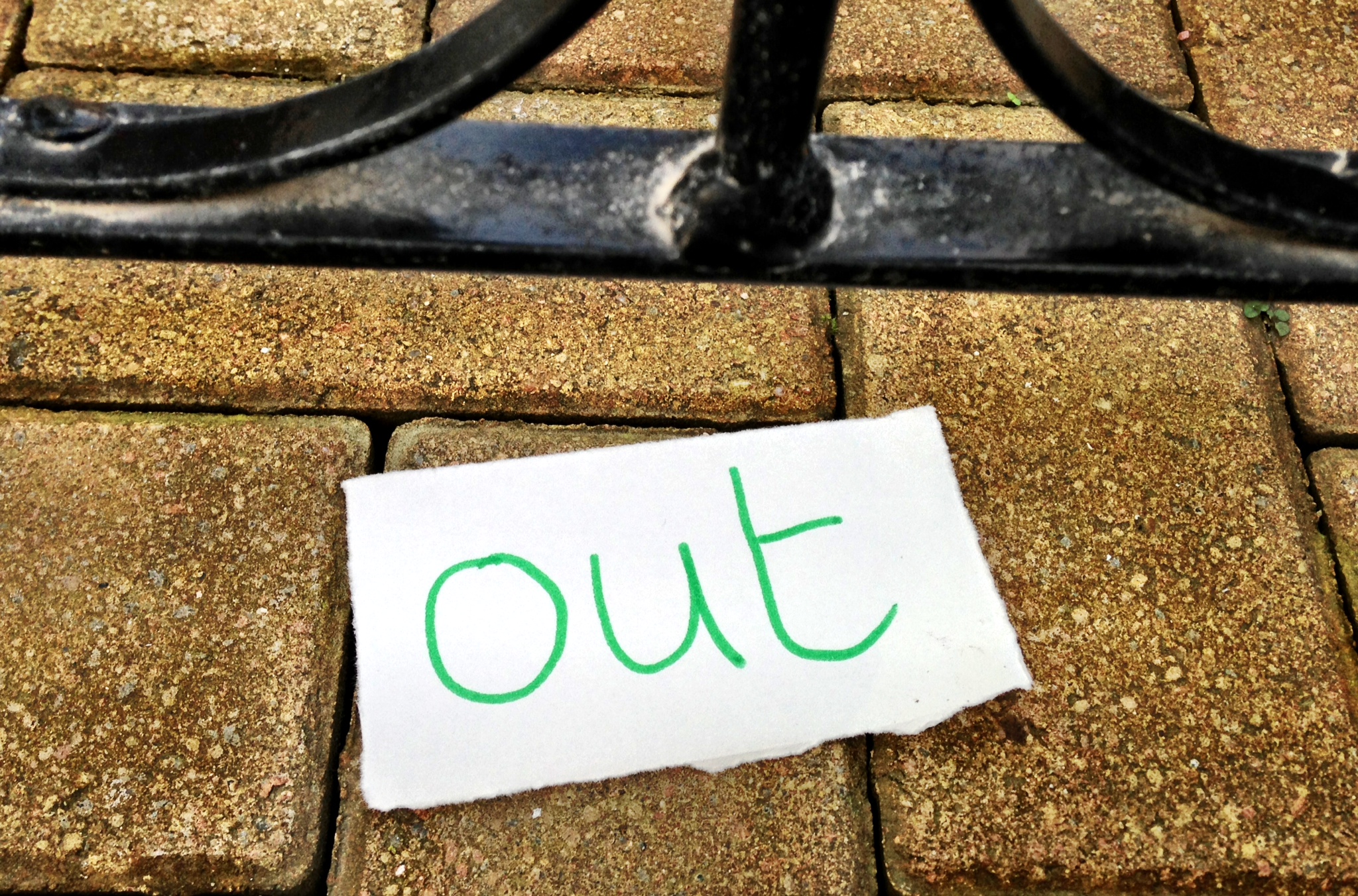
Today the word that sums up the week that was is:

IMG_4935 copy

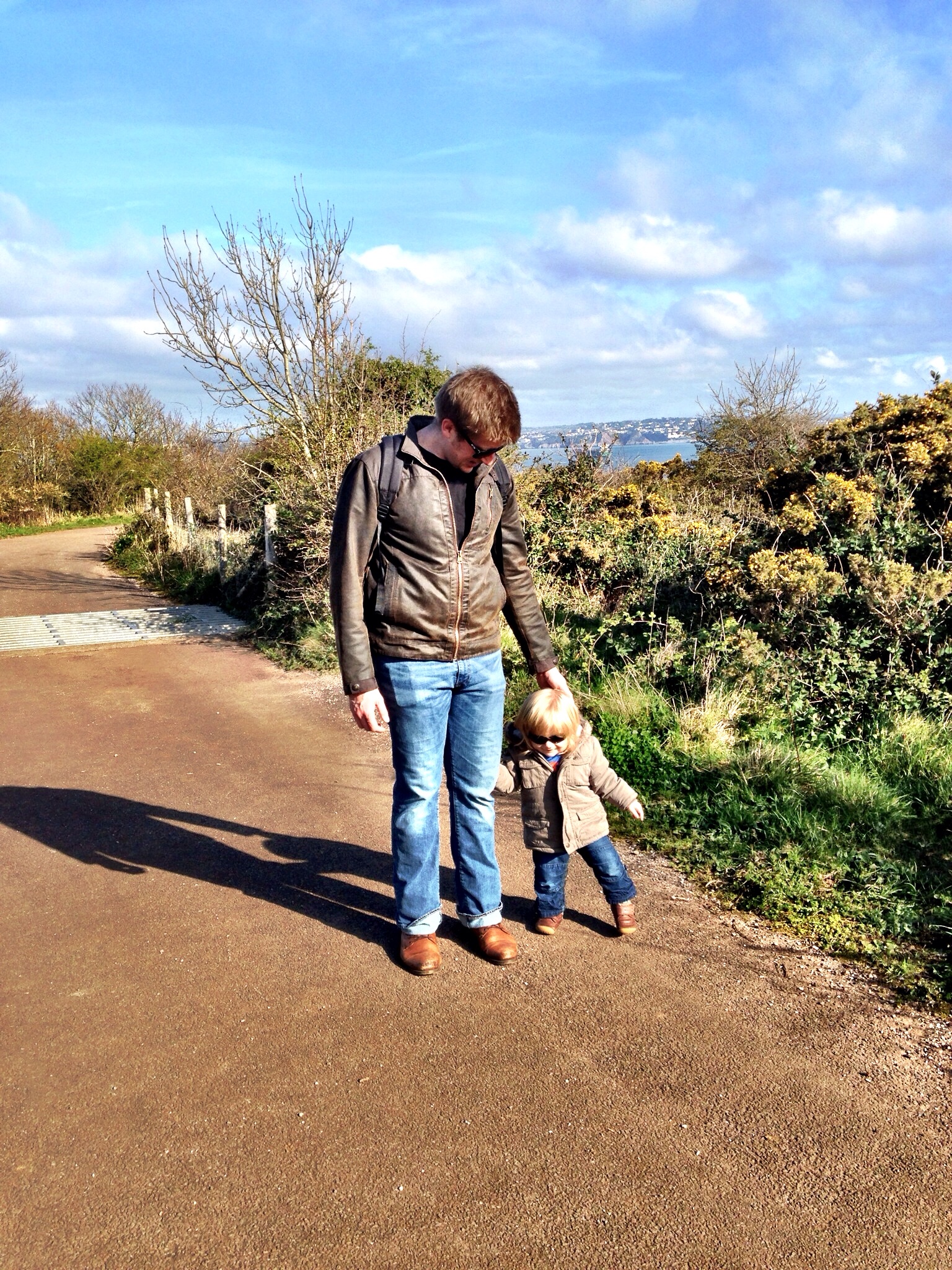
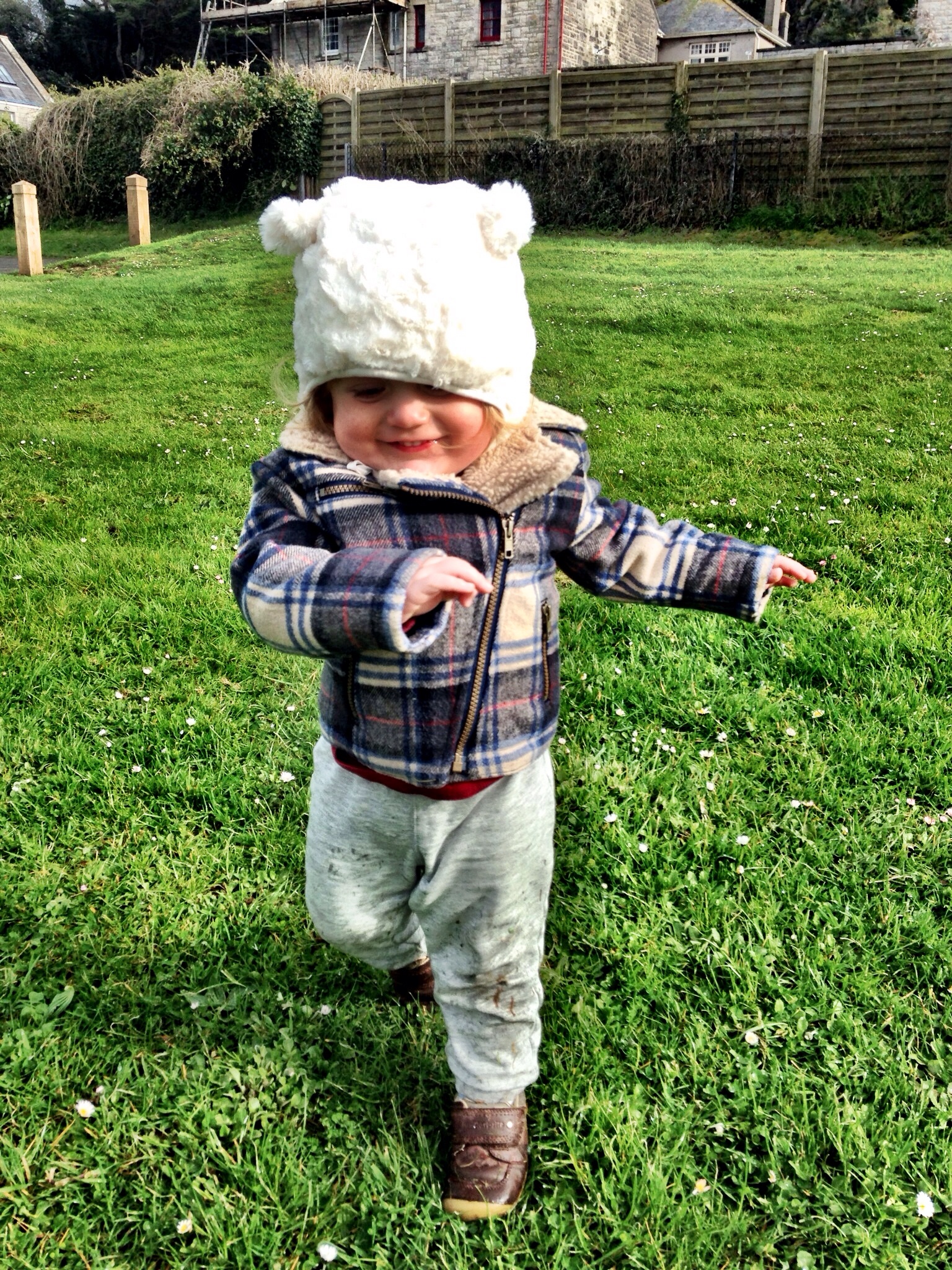
It could just as easily have been ‘door’ – both words in Arthur’s burgeoning vocabulary that he’s using to let me know he wants to be outdoors. Permanently, I reckon, if he got his way. Which definitely bodes well for all the camping trips we have planned for this summer!

This week, though, his need for fresh air and open space has definitely saved my sanity. I’ve been in the final throes of the novel: I started the week with about six thousand words left to write, and part of me just wanted to get it done. I was impatient, and excited to see how the details would pan out. I mean, I vaguely knew what was going to happen in the end, but not until it was written would I know for sure.

But combining writing with motherhood means I’m not entirely in charge of my schedule. Writing happens when Arthur naps, and in between – well, I have no doubt it did me good to get out and about.

On Monday the grey drizzle of the weekend lingered, yet still at lunchtime Arthur had his face up against the glass doors, longing to escape. I managed to distract him till after the post lunch writing session when miraculously the cloud began to clear and we went to let off some steam around Shoalstone pool.

image    image

On Tuesday it was glorious out, and it was all I could do to force myself to sit down at my computer. The story quickly captured me of course, but once Arthur had woken up I was very glad of the lunchtime picnic we’d planned with friends at Breakwater beach.

image    image

On Wednesday I woke up knowing that today was the day: I was on the final chapter, and as I’d been drifting off to sleep the night before the closing paragraph had come to me, so all I had to do was fill in the gaps. The words flowed as soon as Arthur drifted off for his morning nap, and I finished just as he was waking up so we could both enjoy a celebratory stroll to Berry Head in the afternoon.

image    image

Yesterday the celebrations continued when we spent pretty much the whole day outdoors with some friends at Paignton Zoo. Arthur was in his element – especially when we found an area we’d not discovered before where he could get up close and personal with some friendly goats.

image    image

All in all this week’s been a bit of a whirlwind really. My brain has been on overdrive – first with the challenge of pulling the ninety thousand words of novel I’ve been writing to a satisfying close, then with the realisation that this thing that’s been giving me purpose for the last three months has ended. Having Arthur to shift my focus away from myself has been, as it always is, fantastic. And the fact that he’s wanted that focus to be on going OUT has been even better.

The Reading Residence

Country Kids from Coombe Mill Family Farm Holidays Cornwall

Truth and modesty and self-publishing

lili badger first draft

Whenever I mention I’ve written a novel and am in the process of looking for a publisher people ask whether I’ve thought about doing it myself. My response is usually that I have – briefly – but I’m pretty sure it’s not for me.

I don’t mean to be disparaging of people who have chosen to go down the self-publishing route. I know that for many it has proven to be a great way of getting their work out there: for some it has even been extremely lucrative, or has opened the doors to traditional publishing houses. On one level, if I’m honest, I think I need the validation of a publisher in order to truly be able to consider myself an author. And I definitely don’t think I’m cut out for the ruthless self-promotion it would take to do it alone.

It’s not like Lili Badger has even been out there for that long. I’ve had some brilliant feedback, and although she hasn’t found a home quite yet I’m quietly confident that when the time is right she will. Until then I would rather focusing on writing than shift over to the role of publisher. It’s an area I know little about, and I’m busy enough right now not to need that extra dimension.

I’m not naive enough to think that there will be no self-promotion involved in getting published through a traditional route. Even just the business of establishing myself as someone who writes has pushed the boundaries of my comfort zone in my attempts to get an awareness of myself and my work out there through the incredible networks that exist in social media. But I think that, for now at least, it’s gone far enough.

I believe in my work, but that doesn’t mean I would have the barefaced confidence to sell it in the way I could something written by somebody else. However much I might quietly love Lili Badger and her world, however much I might quietly believe that it is a book that should be read by teenagers and adults alike, it’s not something I’d feel confident standing alone and shouting from the rooftops. But modesty has no place in marketing. And where self-promotion can come across as vanity or arrogance, it’s a completely different matter if your work is being praised and promoted by people who have built their careers around just that.

So for now I will focus on immersing myself in the world of my second novel – I’m so looking forward to reading it in its entirety once the first draft is finished, on moving into the next phase of editing and rewriting and honing those raw words into something polished and complete. I will also continue to enjoy building my blog, a place which is satisfying any urgent desire for readers I may have whilst at the same time mapping the new world I find myself in as a writer and a mother. And hopefully before too long all these worlds will start to come together and I will be writing of my explorations in the uncharted territory of being a newly published author.

I am not so modest that I believe that day will never come, but I am modest enough to know that I need the truth of my words to be validated before I am happy to release them. And that is why – for now at least – I know that self-publishing is not the road for me.

Thank you to Sara from Mum turned Mom for inspiring this post with this week’s prompt (‘Truth is more important than modesty’ Roald Dahl).


mumturnedmom

Brilliant blog posts on HonestMum.com
 

The end is in sight

At the beginning of January, I set myself a challenge. It was one I’d been building up to for a couple of months – researching, outlining characters, padding out the plot – and just like last time there were lots of people ready to warn me that I might be setting the bar too high.

My plan was to write my second novel before Easter. I’d set out to write my first around the same time last year: I got started a little later, as January was spent just coming to terms with being a mum, but I’d actually been writing Lili Badger in my head for ages. And being aimed at the young adult market, my initial word count goal was only sixty thousand.

This time round I was mother to an almost-toddler rather than a newborn and I was aiming for ninety thousand words in my first draft. I wasn’t sure quite how long Arthur was going to keep up his very convenient twice daily feeding and napping in the sling routine. Oh, and on top of all that I’d also decided to start a blog.

Still, once I’d ironed out a few issues with motivation, characters and research, I actually really enjoyed throwing myself into the world of a new novel. As the story progressed, scenes I’d loosely mapped out almost seemed to write themselves, and I was getting a real buzz from watching the progress bar moving in the right direction in the brilliant Scrivener app. There were days when I didn’t write as much as I hoped, and even some when I didn’t manage to get in front of the computer at all, but the deadline was still far enough away that it didn’t make a discernible difference to my overall word count – I really didn’t need to worry about it too much.

And then suddenly we were in March. Arthur was ill – again – and the sleepless nights and constant breastfeeding were really beginning to take their toll. On top of that we had a trip to London planned to promote my first novel which ended up taking out almost a whole week of writing time. It was with trepidation that I looked at Scrivener’s project targets on the Monday after we got back from London: and, as I feared, my daily word count goal had gone way over the fifteen hundred words that I knew I could manage.

But actually it’s been ok. Well, better than ok to be honest. Things in the story have reached a climax, so sitting down to write has got even more exciting. Several times over the last couple of weeks I’ve had to drag myself away after crossing the two thousand words mark because Arthur’s patience has worn thin. He’s generally been pretty fantastic though – still napping well, and enjoying playing independently at my feet (and maybe trashing my study just a little) – so that not only have I been able to get back on track with the novel but I’ve even kept the blog up too.

The first draft isn’t finished yet – still 16,682 words to write, as those of you on Twitter might have noticed from my daily Scrivener updates – and of course the first draft is only the beginning of the journey towards the completed novel. But to have less than 20,000 words left, with 12 writing days to go until my self-imposed deadline, feels pretty damned amazing.

challenge-yourself1

Brilliant blog posts on HonestMum.com

Seeds of Creativity

Ever since I can remember I have loved the coming of spring. I don’t suit winter. I quite enjoy  snow, in moderation, and find the rare cold, crisp, sunny days as exhilarating as the next person, but it’s the interminable darkness that really gets to me. The darkness that sets in before you get a chance to get outside at the end of a hard day’s work and hangs around for way longer than it’s welcome after you’ve dragged yourself out of bed in the morning, fighting your body’s desire to hibernate.

For years I thought I suffered from Seasonal Affective Disorder – I didn’t just dislike those months of darkness, they consumed me like the fog that rolls in over the sea. Even the anticipation of the shorter days that set in as early as the summer solstice was enough to instil that sense of dread that would just get worse and worse as the seasons closed in.

Now that I’m not operating on someone else’s timetable I’m not so sure. There’s no doubt that living by the sea helps too, and spending most of my time with a little person who sees the world without a trace of my weariness. Despite not having slept for more than two hours at a stretch for the past fifteen months, despite the challenge of juggling nearly-new motherhood with writing a second novel and trying to find a publisher for the first, despite the fact that this winter it has rained for days and days on end, I don’t need spring anywhere near as badly as I have before.

That’s not to say it’s not exciting. The snowdrops pushing through the sodden ground, the bare branches beginning to burst with buds, the daffodils that have suddenly taken over our neglected garden in an explosion of yellow. And alongside all these things the seeds of new ideas that are taking root inside my writer’s brain.

I seem to be settling into a pattern with my writing, one which I hope is sustainable and suits my rhythms. In the autumn, as the days begin to close in, I lose myself in researching and planning a new novel. By January, typically my lowest point, I’m ready to bring the plan to life, spending long chunks of time writing, letting my characters take the story where it needs to go. This year, as with last, I’ve set myself the deadline of Easter to complete the first draft. I’m on track to achieve that: I’m about two thirds of the way through with another month to go, and as the story gathers pace and urgency it’s all I can do to pull myself away from the keyboard when motherhood calls. Once that first draft’s done I’ll let it sit for a while before going back to it with fresh eyes, handing it over at the same time to a trusted few initial readers. With their ideas and mine I’ll then attempt the redraft in the height of summery optimism, hopefully having something I’m happy with as summer draws to a close.

Alongside all that redrafting, though, the seeds of the next project need to be germinating, shooting up into the light so that I can work out how to help them grow in the next phase of their development. And with that in mind I had begun to panic a couple of weeks ago: the end of the current novel was in sight, but I had no idea what I was going to work on next. I have several ideas for new novels in the Lili Badger series, a couple of distinct directions in which things could go. But I don’t want to start working on those until I know whether the original has legs. I love it, and would enjoy nothing more than to lose myself in Lili’s world again, but however much I try I can’t justify it to myself. I need something new.

In the midst of my panic, I went for a walk. Just the usual walk into town, taking the long way round by the pool, allowing myself to tread more slowly than I normally would so Arthur could soak up his surroundings. I began to notice the dedications on the benches, stopped to read them. And without me even noticing the seeds began to embed themselves.

By the time I got home I had two reasonably formed ideas for new novels. Both with their heart in Brixham, and both with stories which spread out across place and time in their mapping of life and love and death. Both have strong female characters at their core – something which I am beginning to realise is emerging as a pattern in my work. I haven’t decided which one I’ll run with yet. I hope I’ll write them both, in time. But now the seeds have been sown I’ll leave them for a while, trusting that they will germinate in my mind as I bring my current project to its conclusion, ready for me to nurture when I can shift my attention to them more closely as spring turns into summer.

Thank you to Sara at ‘Mum Turned Mom’ for inspiring this post with her prompt: “Spring is the time of plans and projects” (Leo Tolstoy, Anna Karenina).

mumturnedmom
Post Comment Love

Word of the Week: Separation

Today the word that sums up the week that was is:

Separation.JPG

I took quite an important step this week in my journey as a mum. It’s taken fourteen and a half months, but this week I had an evening out on my own. No Arthur, no Leigh. It was the first solo night out I’ve had since I was about eight months pregnant: even then Arthur was with me really. I haven’t really felt any inclination to go out on my own since, but on Tuesday I’d been invited to read from my first novel at a writer’s salon in London. You can read about my evening as an author here, but it was also a very important evening for me as a mum. My instinct on first hearing about the night was that I’d just take Arthur along in the sling: I soon realised that this was something I had to do on my own.

I can almost count the number of times I’ve been separated from Arthur on one hand. Leigh and I have been on two dates: one last summer when my brother’s girlfriend babysat for us in our hotel in New York whilst we went to the restaurant for our wedding anniversary dinner, the second time only a fortnight ago when my parents looked after Arthur whilst we went for dinner again, this time to celebrate the anniversary of our first date. Both times we were gone for only a couple of hours. Then there have been a few governors meetings where Leigh or my mum have looked after him. And that’s about it!

Neither Leigh or I would have predicted that this was how things would work out. And it’s not like we haven’t been out at all – we’ve done plenty of things as a family, including restaurant meals, gigs, festivals, parties. We have just always wanted to keep Arthur close. I guess breastfeeding’s been a major factor – with everything being so challenging in the early days we never taught Arthur to take a bottle so it’s been hard for me to be too far away. But to be honest we haven’t wanted to leave him either – we have all, as a family, become decidedly attached.

But this time I really couldn’t take Arthur with me. I am intent on building a successful career as a writer, one which in the long term will hopefully be much more conducive to spending time with my son than teaching could ever be, and I needed people to take me seriously. I needed me to take me seriously.

Leigh couldn’t join us in London – another first, being separated from Daddy for so long – so on Tuesday evening Arthur was looked after by my parents. I filled him up on breast milk before I left, knowing that he was unlikely to take much water let alone milk from his cup, and made sure they were preparing a dinner he would like (mild Thai curry with lots of veg and rice seems to be his current favourite). He sat with my mum as she began to make the dinner and I made myself presentable, and then trying not to turn it into too much of a drama I slipped out into the streets, alone.

Sophie_Lovett_Author.JPG

It was a bit odd. I felt very light on my feet without my usual accessory strapped to my front, and I noticed rather more of the world around me. I read over my chosen extract from my novel on the tube journey – I hadn’t had much time to practise, and my run through the previous evening had been punctuated by Arthur’s cries. Any pangs of missing him were soon overcome by nervousness and excitement, and when I got there the pleasure of catching up with friends over a drink and being just myself for a change. The evening went brilliantly, and though thoughts of whether Arthur was hungry or thirsty or had been able to go to sleep occasionally intruded I had an awesome time.

I made it back to the flat soon after eleven, about five hours after I’d left, and despite all my trepidation Arthur was of course fine. He was asleep, in fact – my mum snuggled up to him in bed. He hadn’t drunk much, but he’d eaten. And he was fine. There’d been a bit of a whimper apparently, and at one point he’d toddled purposefully towards the door, but all in all they’d had a lovely evening too. I swapped places with my mum, Arthur had a sleepy feed without even really waking up, then rolled away and slept better than he has done in ages.

He was most definitely pleased to see me in the morning, snuggling up and being even more super cute than usual. But we had both survived our first proper separation.

Snuggly_Arthur.JPG

I’d genuinely been worried that with our very attached approach to parenting it was going to be a real wrench for Arthur to be without us, even just for one evening. So I was definitely relieved to find that in fact he is secure enough to cope. I’m not in any massive rush to make a habit of going out on my own, but it’s strangely liberating to know I can if I want to. I expected a part of me to be sad – sad that my baby is taking little steps towards independence, that he doesn’t need me quite as intensely as he once did. But I suppose by waiting I was finally ready for that separation too – to take my own steps towards the new person I am becoming since he made me a mum.

Thanks to Jocelyn at The Reading Residence for the brilliant Word of the Week linky.

The Reading Residence