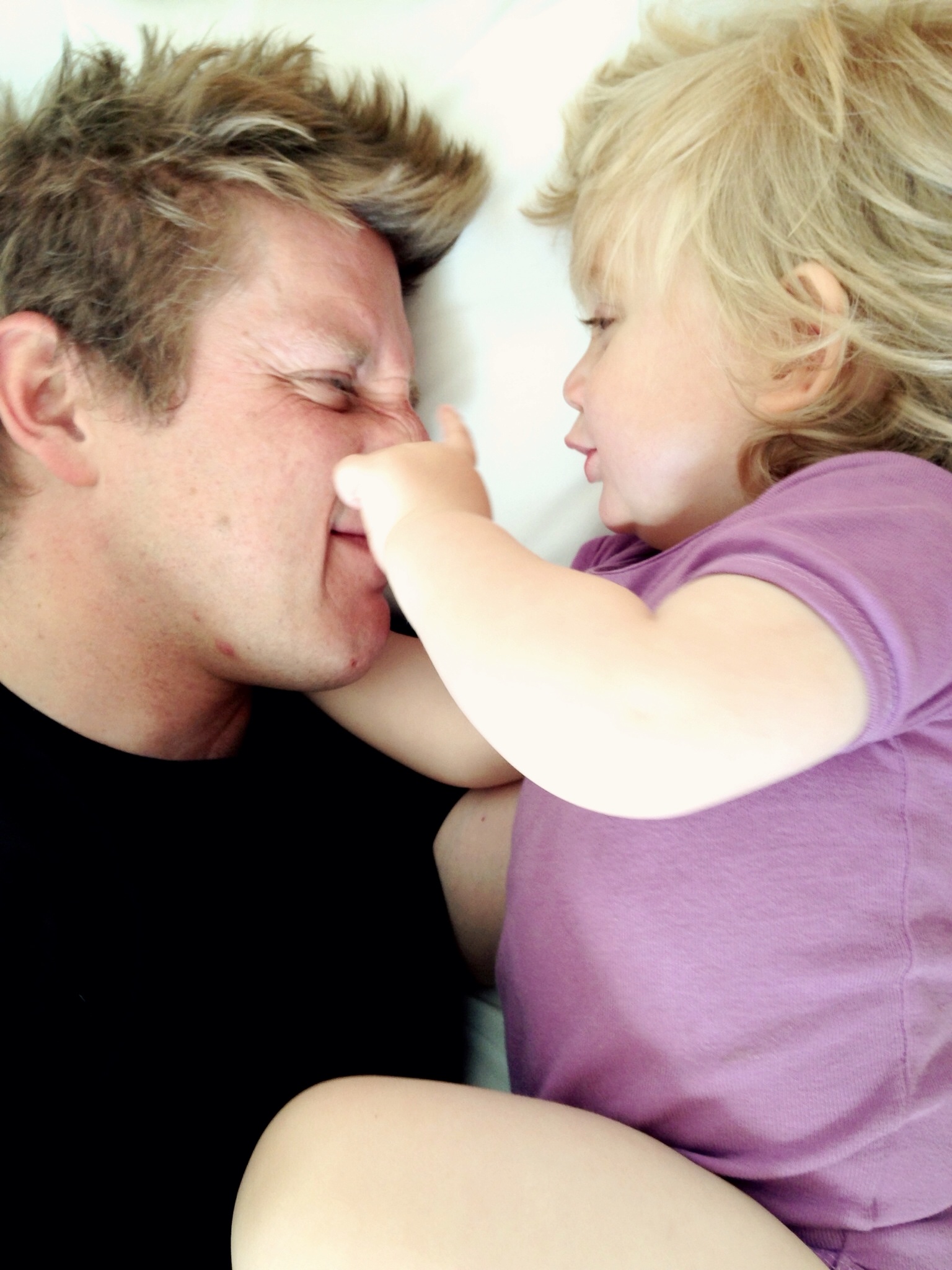


Today the word that sums up the week that was is:
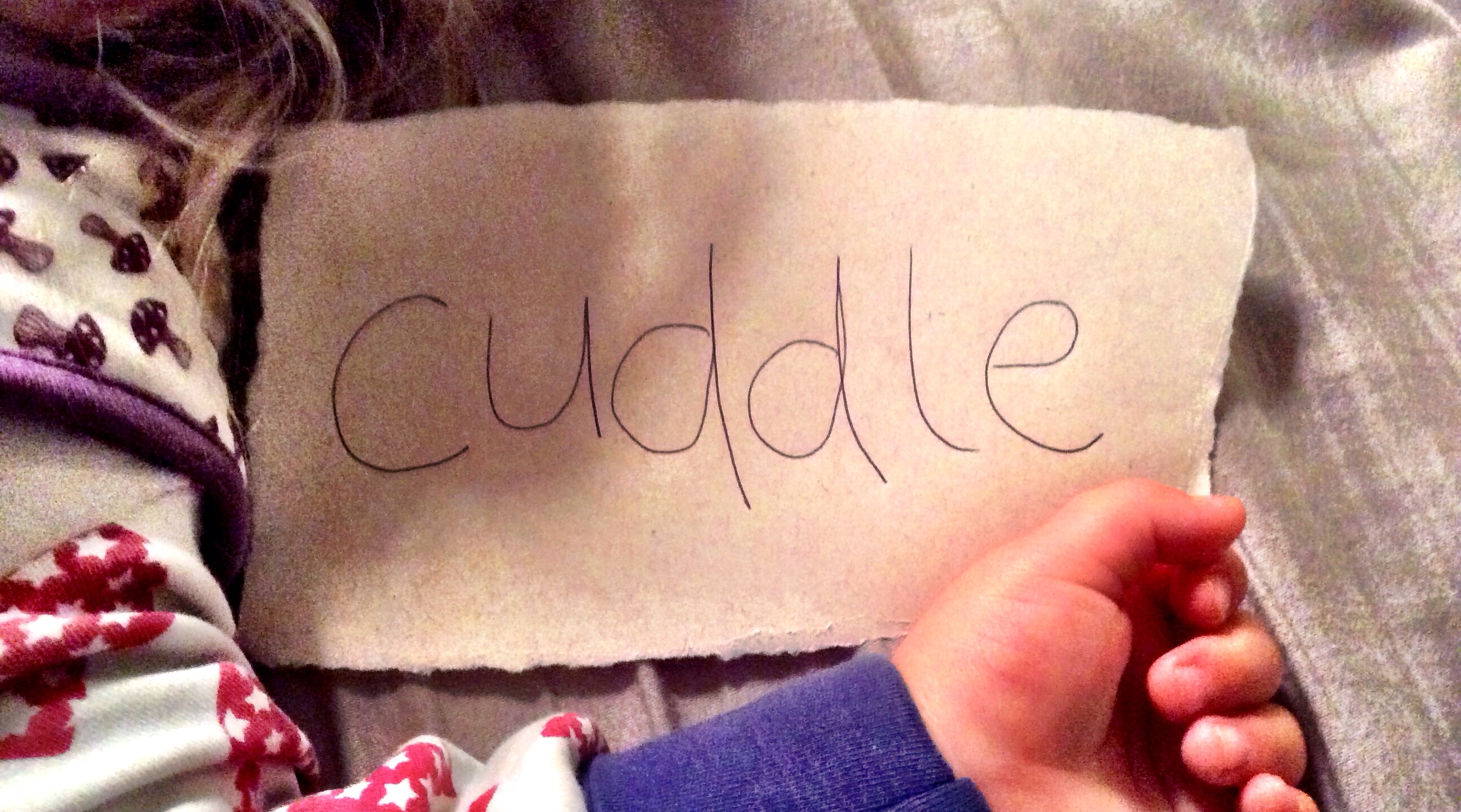
Arthur has been wanting lots of cuddles recently. Partly I think he’s needed the comfort: his teeth have been bothering him for sure – he has eight coming through at the moment – and he’s had a bit of a cold this week too. More than that though he’s worked out how to name them – they’re ‘duddles’ rather than ‘cuddles’, but now he can ask for them he wants them all the time.

It starts from the moment he wakes up in the morning: reaching out his arms for cuddles, not only from us but also from his bears.


As the day goes on he’ll keep checking in to recharge, making sure he gets his cuddle quota. If we’re hard to reach then anything will do – his water bottle, or perhaps a piece of roasted carrot.

Each expression of cuddly affection is accompanied by a cry of ‘duddle!’, full of urgency and enthusiasm. It is the cutest thing to watch, and to be on the receiving end of the duddles is even more adorable.
I hope that this isn’t entirely just a phase, that what we’re witnessing is the growth of our baby into a little boy fuelled by the exchange of such heartfelt affection. It might just be one of the best things about being a mum, and if I’m honest I’m not sure how I coped when I didn’t have so many cuddles in my life.

Before Arthur was born, I didn’t really have much of an idea about the kind of parent I wanted to be. I knew I wasn’t great at keeping to fixed routines, and my time as a teacher had taught me that nurturing young people generally works best when you take the cues from them. But it was one thing listening to teenagers communicate their needs and wants – how on earth was I supposed to do that with a tiny baby?
I knew I wanted to breastfeed, but I figured I’d want to express fairly regularly so that other people could feed the baby too and I could have a bit of freedom. It was losing my freedom, if I’m honest, that I was most nervous about. I was sure I’d want to make the most of my parents’ enthusiasm as new grandparents to get out for time alone with Leigh, to touch base with the me that I was before I became pregnant rather than letting this new little person take over everything.
We were given a pram by Leigh’s parents, having researched endlessly which one would be best for tackling the off-road paths and beaches near where we live. My mum helped me decorate the nursery, all decked out with the cot the baby would move into once he’d passed the six month stage and was ready to graduate to his own room. I knew there would be times when he would sleep with us, but I definitely didn’t want to encourage that on a regular basis.
And then when Arthur was born everything changed. He went from being an abstract baby to a real little human being – and I was surprised to find that I didn’t want to leave his side. I didn’t really get out of bed for the first two weeks after he was born. Partly because it was the middle of winter, and partly because it took all the focus and energy I could muster to overcome the problems we had getting breastfeeding established (you can read about that here). And during that time, when I wasn’t dozing, I read. I started by browsing internet forums looking for inspiration about how I was actually going to approach this business of parenting. I know people say that you should just trust your instincts, but I was terrified of getting it wrong – I did have an idea about how I wanted to do things, but it was so different to what I considered socially acceptable that I needed validation. And slowly I began to find it.
I realised that I identified with what people were calling attachment parenting – I’d never heard of it before, but keen to find out more I ordered several books – Dr Sears’ The Baby Book was great for day to day questions and concerns, but it was the work of Deborah Jackson that really inspired me. I read When Your Baby Cries and Three in a Bed, and as I journeyed with her through different times and cultures I realised that the status quo I had come to accept was far from the only option.
As Arthur and I began to face the world together, I began to put these ideas into practice. After nearly being put off by the first sling I tried I soon became a convert to babywearing – I wrote about the beginnings of that journey here. I found that I was so calm and focused when I was wearing my baby – I didn’t have to put him down alone to get things done, or worry about him as he napped elsewhere. Bizarrely by physically attaching Arthur to me I found I finally had the freedom to begin to live my life again, starting with beginning to write the novel that had been swimming around in my head for so long.
It was a long time before we asked my parents to babysit – they’ve still only done it a couple of times – because we decided we’d miss Arthur too much and would rather he just came with us. And so he did, to meals out, to parties, to gigs, to festivals. I was surprised again – though of course relieved – to find that Leigh shared my inclinations, and as a result the three of us have had so many fantastic adventures together.

The thing that has most surprised both Leigh and I though has been I think our attitudes to sleep. The sixth month point came and went long ago and Arthur is still sleeping in our room. We’ve talked about it, and both agree that it’s going to be a little while before we’re ready to give up co-sleeping. Arthur loves being close to us, and there is something quite magical about sharing the moments just before he goes to sleep and when he has just woken up as well as the groundswell of love that I still feel when I watch his sleeping form in the middle of the night or he snuggles up to me for a feed.
I know that we’ve been lucky, that there are certain freedoms that we’ve had that have meant I have been able to let Arthur set the pace. I haven’t had to go back to my job as a teacher, and as I muddle through in my attempts to forge a new career at home I can adjust how and when and where I do things to suit his rhythms.
And bizarrely, with all this talk of attachment and the warnings I’ve ignored from well meaning advisors, Arthur’s actually becoming a very confident and easy going little boy. He rarely cries, and as much as I try to follow his cues whenever I can he is proving himself to be highly adaptable when he has to fall in step with me.
I am just so glad I took the time to explore the alternative approaches to parenting that were out there, to find a way to meet the needs of both my baby and myself. I’m glad too that I accepted the changes that becoming a parent wrought within me – however surprising they were at first. I suppose you’ll never know what sort of a parent you’ll be until you are one – I’m not for a second suggesting that the approach we’ve taken would work for everyone, but for the time being at least it definitely seems to be working for us.
Thank you to Sara at Mum Turned Mom for inspiring this post with her prompt of ‘surprise’.

When I come to the section about ethnicity in a diversity monitoring form I tick the box ‘White British’. I’m not that white, especially in the summer. My olive skin has had me mistaken for many different nationalities – even Turkish and Nepalese when travelling in those countries. But my ethnic origins are not nearly so interesting: I am half Welsh, half English, and as far as the box tickers are concerned, well and truly white.
So you may think it strange that the protagonist in my first novel, Lili Badger, has a strong Bengali heritage, that though her father is White British like me much of the fabric of the novel is woven from a culture to which I am an outsider.
My awareness of and interest in the multicultural world we live in began when I was very young, even though the villages I grew up in were about as monocultural as you could get. My Welsh grandparents had lived in East Africa for over twenty years, and my dad spent a good portion of his childhood there. It was not until I was in my late twenties that I was to finally find myself in Tanzania, and when I did there was something strangely familiar about it – something that had seeped into my bones from the stories I’d heard and the artefacts that adorned my grandparents’ house.
For my own part, even though being born in Wales hardly made me an ethnic minority, I was made starkly aware of my otherness when we moved from there to Birmingham when I was eight years old. My accent was so alien that to my new schoolmates I might as well have been speaking another language at first. I did my best to disguise it, though always felt relief sweep over me when I returned to see my extended family in Cardiff and could relax back into my natural voice. I never did learn the language – it was not a part of the curriculum in Wales during my early primary years. When I moved from Birmingham to London aged sixteen I began to more openly reclaim my Welshness as part of my identity, much to the amusement of my new friends there. I investigated Welsh language courses I could do in the city but never committed – something I still regret.
I vividly remember a conversation I had in a run down classroom at the top of the first school I worked at in Tower Hamlets. I was a teaching assistant, and had been assigned to support a group of boys who had recently come to the country from Bangladesh. As we muddled through the beginnings of a conversation they asked me where I came from. When I named a place that was not England, they excitedly asked if I could speak to them in my language. The surprise and disappointment on their faces when I had to admit that I did not speak the language of my country has stayed with me.
It’s something I have in common with Lili, or rather I suppose she has in common with me. Being in the second generation of her family to have been born in England it is perhaps more understandable that she does not speak Bengali, but it bothers her sometimes – and is even more of an issue for some of the people she crosses paths with, Bengali and White British alike.
Lili is not defined by her ethnicity. It is a part of her of course, but her driving force is her creativity, her love of stories and her search for a voice of her own. There are other characters in the novel who have been shaped by their background quite differently – Lili’s brother Arun for one, who in his search for his own identity is drawn to the world of radical Islam – and I drew on the diversity I saw in the communities I lived and worked in for nearly ten years to develop those characters.
I was nervous at first. When the idea for the novel first came to me, several years ago when I was way too busy teaching to actually write it, I had no doubt that Lili’s family had their origins in Bangladesh. Over the time I had to think about it before I began to write I almost lost my nerve. Would people not think I was a fraud, writing about a culture different from my own? Could I really accurately represent the hopes and dreams, let alone the day to day life, of a British Bengali family living in the East End?
But then I decided I was being ridiculous. My research had been wide and deep. I had worked with many children and families during my time as a teacher, all of them different, all of them unique. I was not trying to write the ultimate story of the British Bengali experience, only one story. And to bring it to life, to enrich it, I had a wealth of material to draw on.
And though on one level Lili Badger is the story of a girl whose mother is Bengali and whose father is White British, on another more important level it is the story of a girl. A girl whose hopes and dreams and day to day experiences echo those of many other teenagers, whatever their ethnicity.
Because if those ten years working in Tower Hamlets and Newham taught me anything, it is that people of different backgrounds have more things in common than the things that tell them apart. It took working in a multicultural environment for me to really realise that, for me to become frustrated by rash generalisations about people from a particular culture and to become even more incensed by the people who aim to divide our multicultural Britain and to pitch people like me against everyone else.
You would have thought I might have realised this as a reader. I have devoured books all my life, though it is only really since having the privilege of working amongst people from so many different cultures that I have actively sought out books from different cultures myself. Previous to that, whilst I might have described my tastes as diverse, what was easily available was resolutely monocultural. It is this which is one of the many reasons why I believe writing diversity is so important – whatever the background of the author, there is a whole world of inspiration out there and we should not be afraid to use it.


Another day, another playground. This time we went to the Geoplay Park in Paignton which I’ve been meaning to check out for ages. It’d been a busy day already – in the morning we’d had baby gym and mummy trampolining, followed by lunch with friends and a swim. But then in the afternoon the sun came out and, impatiently waiting for a bus to take us back to Brixham, I figured it’d be a shame not to make the most of it.
We started with a snack, Arthur perusing the playground whilst he munched on a banana overlooked by a caveman and a woolly mammoth. The park is inspired by the English Riviera’s geological history, with separate areas from toddlers to teens representing different periods in time. There were lots of new things to explore, and it wasn’t long before Arthur went diving in.


The slide was of course familiar, and Arthur enjoyed climbing through the little house to get to it. Well, the first time anyway – after that he decided walking back up the slide itself would be much more efficient!
He toyed with the idea of going through the tunnel to the massive geodesic climbing frames on the other side but decided against it. I was quite glad actually as I’m not sure I’d’ve been able to follow…
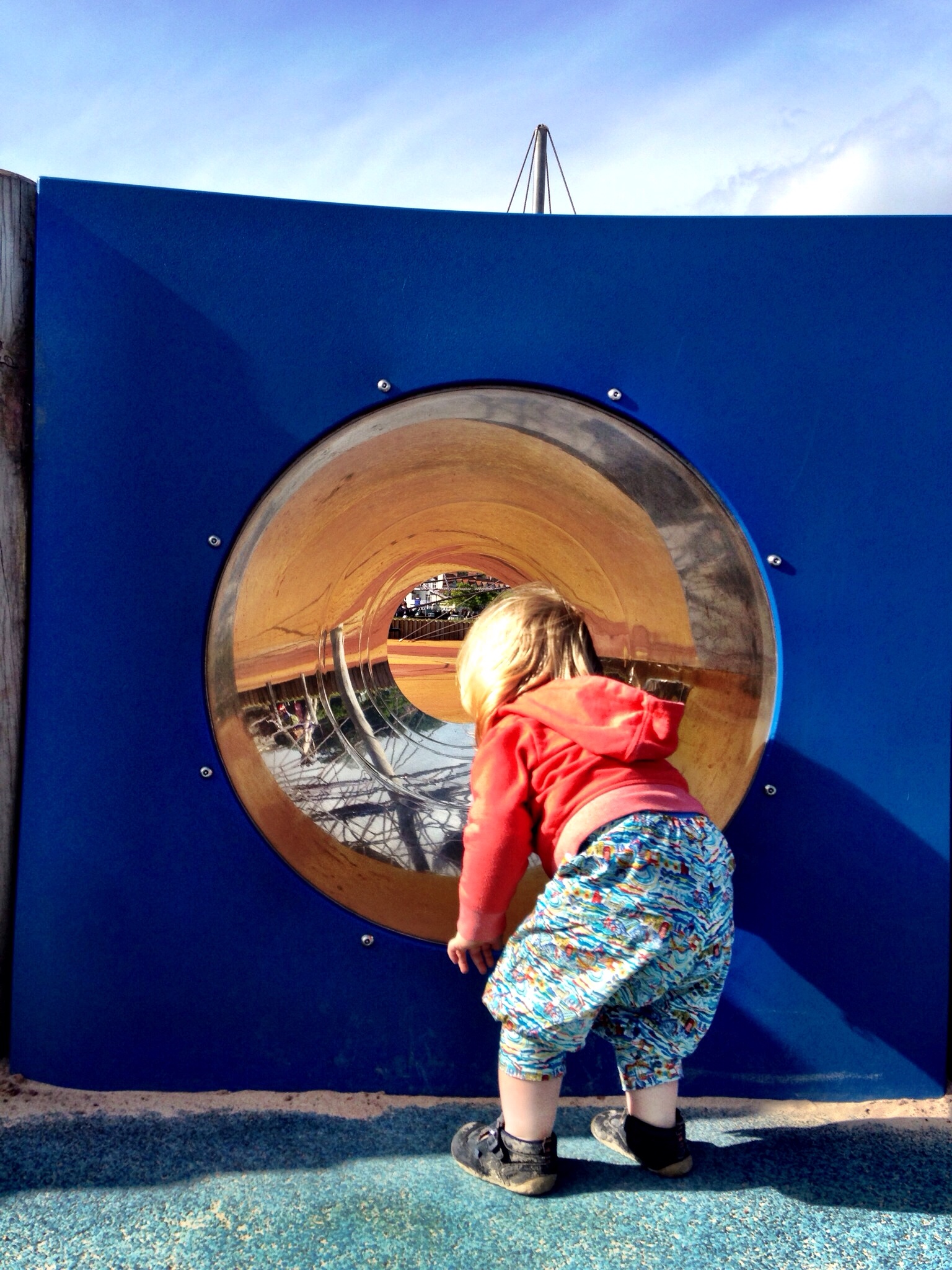
Instead he went over to the trampoline. He wasn’t quite sure what to make of it when I lifted him on, and was soon holding his hands out to be saved. I resisted though, pretty sure he’d manage to clamber off himself. He’s really into climbing at the moment and very nearly made it, but I did have to help him out at the final hurdle.

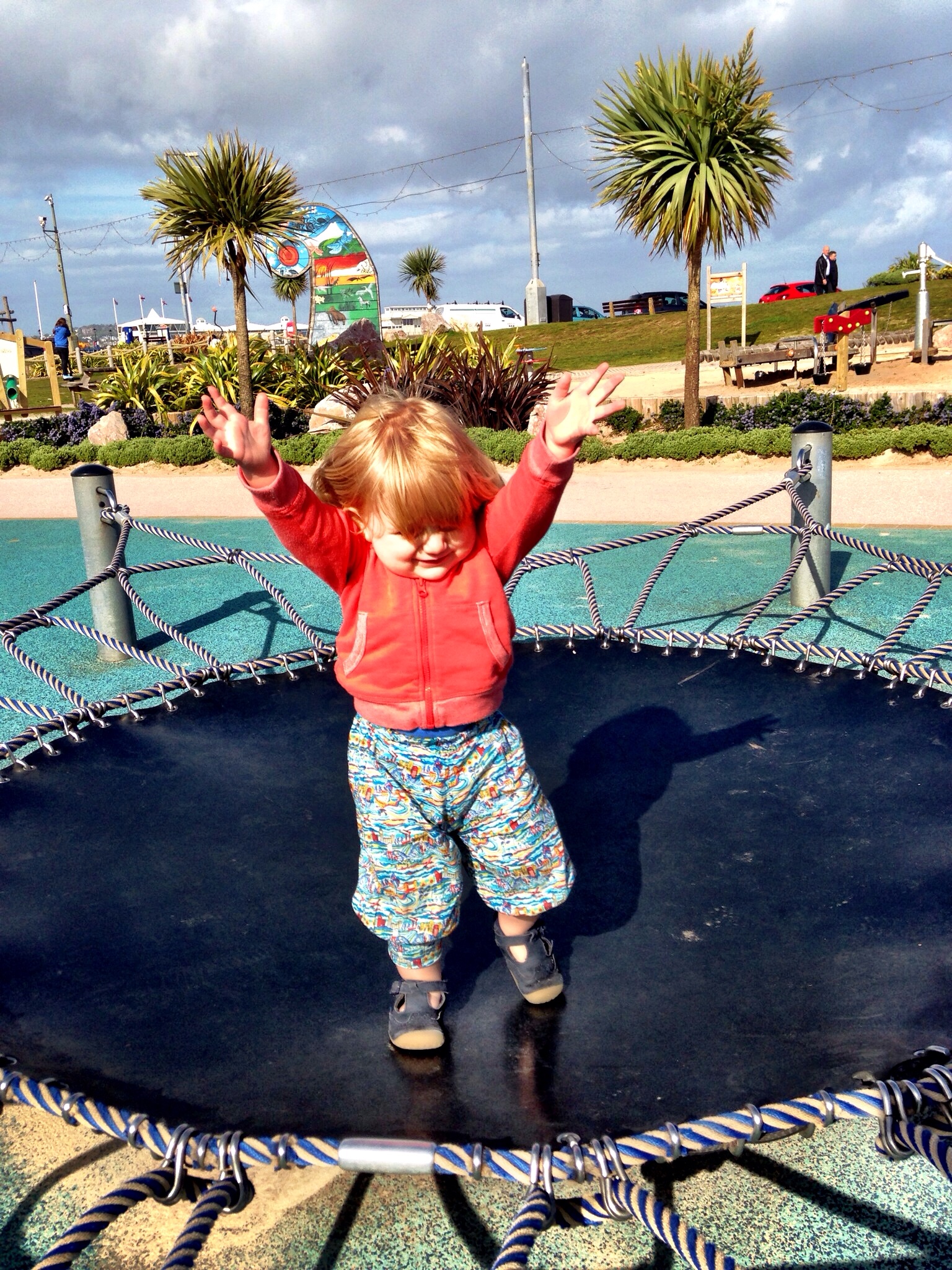

Then he noticed the sand and water play area and got properly excited. He was a little bit little to make the most of it really, beyond the obvious attraction of getting covered in both. But I think as he gets older the dams and balances and diggers will be fantastic for teaching him all sorts of physics in action as well as being good, messy fun.


As if the day hadn’t been exciting enough, just as Arthur was beginning to get tired his dada turned up having stopped by to pick us up on his way home from work. He was over the moon to see him, and settled in for some serious daddy cuddles whilst we took a stroll along the seafront and had a drink overlooking the bay before heading home.

It’s days like this that make me love where we live, and I love our new playground too. We will definitely be heading back soon – and we might even make it onto the beach next time!


Browsing through the education news this week, I came across this article. It reports on a study which seems to show that young people in the UK are being held back because their parents believe that their failure is inevitable – if they are not ‘born bright’, then no amount of hard work is going to change their futures.
This study has strong echoes of the beliefs of Dominic Cummings, a former special adviser to Gove who sparked outrage when he claimed that the fate of young people is determined by their genes, with neither them nor anyone else having the power to change that.
As a teacher, this notion certainly does not ring true for me – though there is no denying it permeates the attitudes of a good proportion of young people, parents and teachers alike. It was not uncommon to hear a year seven student declare they would never be any good at English for example, or a parent to respond to concerns about underachievement with the explanation that their child just wasn’t academic. Teachers too would sometimes fall into the trap of judging a new student by the prior performance of their siblings, or dismiss entire groups as unteachable. The practice of setting by ability, which in some schools begins when children are just five years old, is essentially dictating who will pass or fail – ask a pupil in a bottom set and they will rarely have much faith in their potential to succeed.
But for every young person who followed the seemingly inevitable path, leaving school at sixteen with minimal qualifications, there were others who were transformed by their time in education. The boy who at twelve was thrown out of most of his classes because of his inability to concentrate and went on to combine sixth form study with mentoring younger students who were struggling to focus. The girl who at fourteen believed she could aspire no further than vocational qualifications in childcare despite her dreams of university yet went on to complete the International Baccalaureate diploma and win a place on a degree course.
I am not saying here that academic success at school is the be all and end all – we all know stories of people who have broken the cycle of inevitability themselves, going on to build exciting careers in their adult lives despite the odds being stacked against them. But there is no denying that successfully jumping through the hoops of academic qualifications opens doors, giving people more choice over what to do with their lives rather than having their path dictated for them.
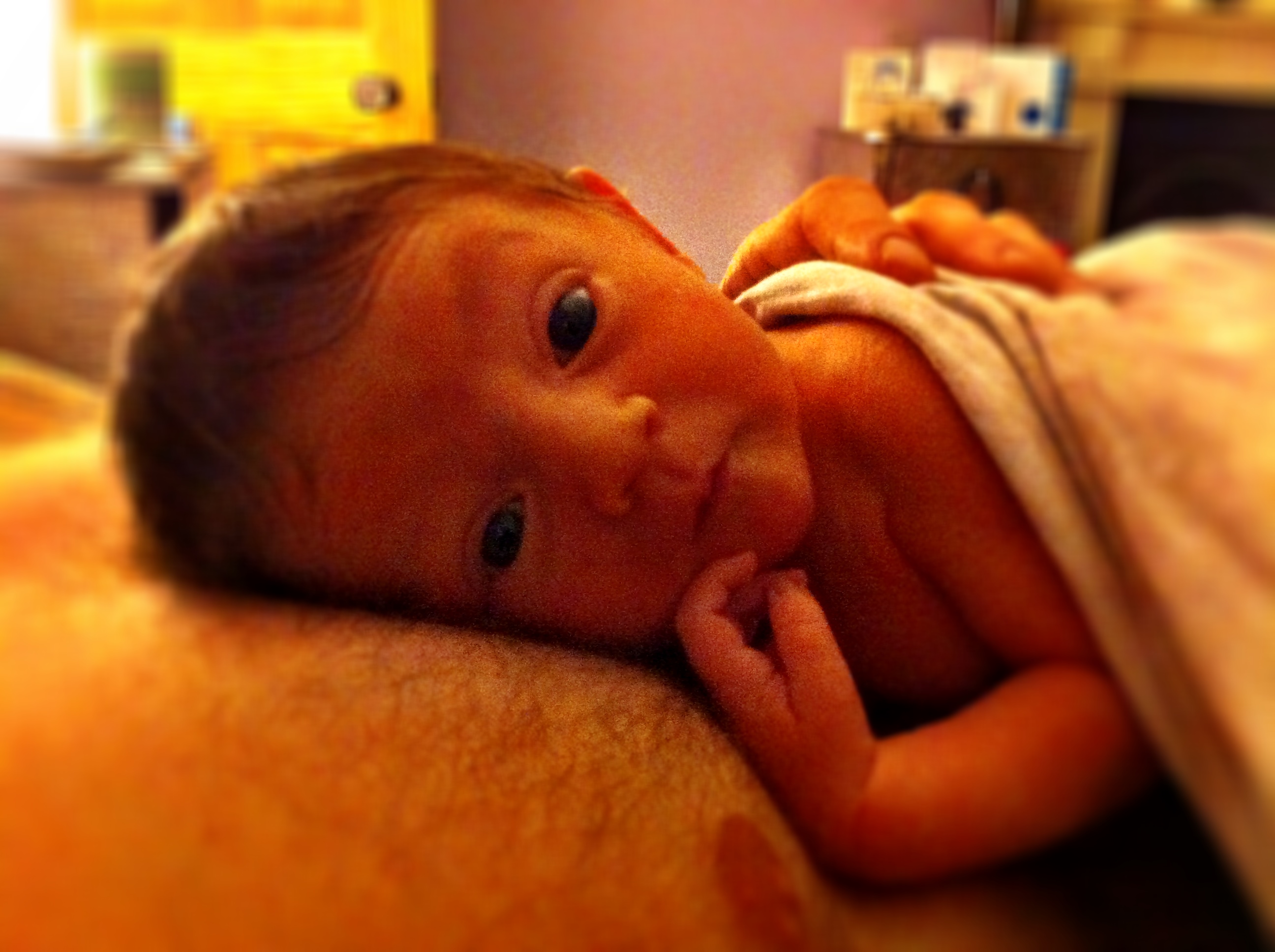
As a parent, my interest in resisting the inevitable has been revived with new vigour. I want my son to be able to be whoever and whatever he wants to be, to be happy in his choices and not to be held back by other people’s beliefs about what he is capable of. I’m sure that is the dream of all new parents – looking at that helpless bundle of newborn joy in their arms and imagining a future which is boundless and free.
And yet before long something begins to change. A girl who does not seem to take much interest in books at the age of one is destined never to be a reader. A boy of three who runs around like a whirlwind is declared unlikely to ever really be able to focus – but it’s ok because he’s a boy and that’s what boys do. As children grow up even seemingly positive statements can begin to close doors – in my family my brothers and I were labelled encouragingly as ‘the sporty one’, ‘the creative one’, ‘the academic one’ and ‘the musical one’. Actually my youngest brother chose that label for himself, not wanting to compete with what he perceived as our territories. It has served him well, though the rest of us took many years to realise that maybe we could be more than just one thing, that in fact we were all creative, sporty, musical and academic in our own ways and the choices we made in our lives could reflect that.
Of course it’s almost impossible to resist labelling to some degree, but young people are so impressionable that I think it’s vital that anyone with a stake in their upbringing empowers them to believe that their future is not inevitable. The more I watch my baby finding his place in the world the more I believe that his potential is unlimited – and the more I hope he can hold on to that belief as he follows his dreams.
Thank you to Sara at ‘Mum Turned Mom’ for inspiring this post with her prompt: ‘It was inevitable…’

Today the word that sums up the week that was is:

We only have a little one, with no lawn and lots of awkward angles. When we bought our house it was a mess of concrete, its potential limited by the hill that it’s built into, but we were willing to sacrifice anything more substantial for the fact that we’re so close to the sea. When I look outside now, although I’m actually quite proud with what we managed to do with it, I do wonder whether in our pre-child mindset we were underestimating the importance of space to run. Certainly if anything would make us consider moving again it would be that.
Fortunately Arthur’s not quite as picky as me. He loves our garden, and would spend every waking hour out there if he had his way. Over the winter it’s got progressively hazardous – rainwater filled pots, detritus from the work we had done on the roof, sludgy piles of rotting leaves, unruly brambles. But when the sun came out last weekend Leigh could hold himself back no longer and blitzed the worst of it. Arthur was delighted, determined to help as much as he could!

Once things were looking a little bit clearer we got the cushions out, and even managed the first barbecue of the season. The intimacy of the space is definitely going to present a challenge with that particular hazard, but Arthur seems to be learning the word (and concept) ‘hot’ – before long he was keeping his distance and blowing whilst waving his hand cautiously, an awareness which seems to have spread to the oven inside too.
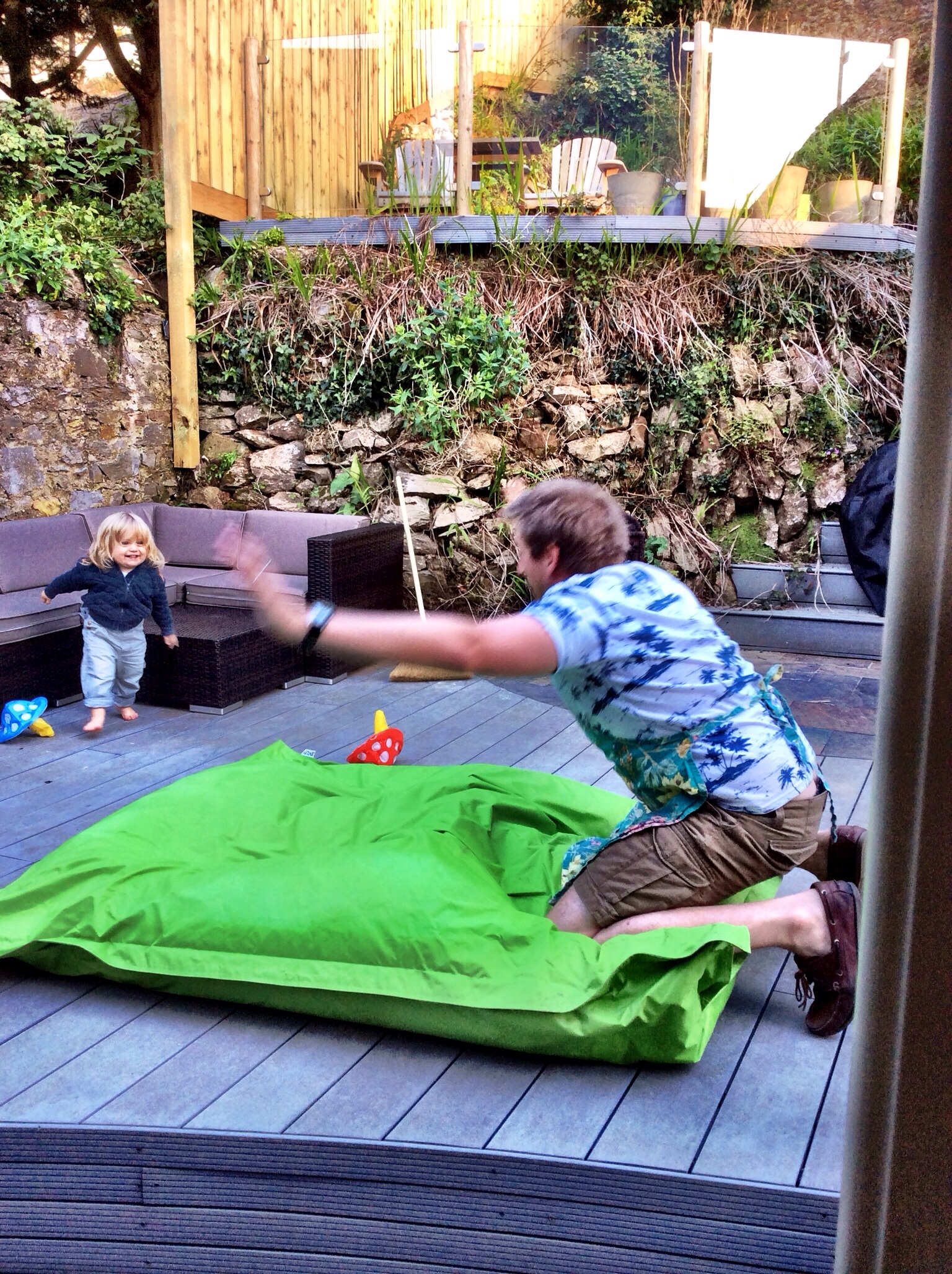

We found time to enjoy the garden during the week too, chilling and exploring after lunch. As my eyes become accustomed to the space again I’m becoming increasingly aware of all the jobs that still need doing – cutting back and planting, particularly our little raised veg patch which was fantastic for salads last year. I’m really not all that green fingered. In fact looking after a garden would probably rank somewhere near the bottom of the skills I’ve acquired over the years. But I’m sure that even I can manage to get our little garden looking its best – especially with such an eager little helper by my side.

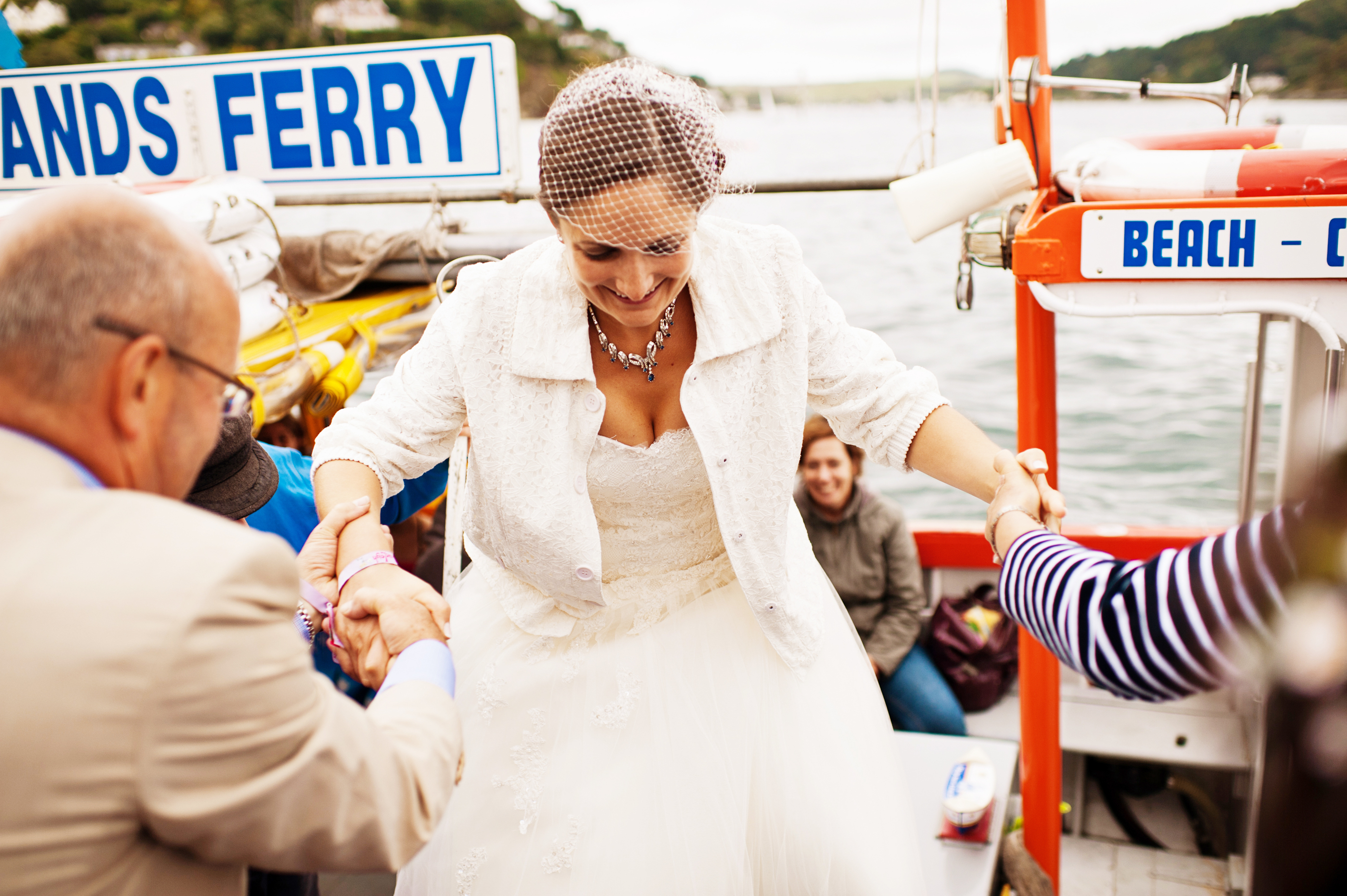
For all of my idiosyncratic views of the world, there was one convention I just couldn’t quite shake: ever since I was a little girl I had dreamt of my wedding day. Beyond knowing it would be magical, though, I’d never had a clear idea of exactly how I wanted it to be. With all the frogs who crossed my path it began to seem like it would never be more than just a dream anyway.
But then I met my prince – you can read about that here – and everything just fell into place. After months of preparation we had an incredible day, surrounded by friends and family. It’s a cliche I know, but it really was one of the best days of my life. So when Aby over at You Baby Me Mummy offered me the chance to relive it for her Share Your Wedding feature I jumped at the chance.
You can read more about the day here. Enjoy – and thanks to Aby for giving me the excuse to relive all those wonderful memories!


In a response to Gove’s demands for more rigorous A-Levels the exam board OCR seem to have thrown him a bit of a curve ball. They’ve worked closely with the brilliant English and Media Centre to create an English Language and Literature course which celebrates diversity in the texts it has chosen to examine – from Emily Dickinson to Dizzee Rascal, from William Blake to Russell Brand. Turns out this is not what Gove had in mind when he said he wanted to increase the potential for pupils’ ‘thinking skills and creative ability’ – at least not if we are to believe a DfE source who has dismissed the course, carefully constructed by education professionals, as ‘rubbish’.
This is yet another example of the narrow-minded approach that typifies all that is wrong with the people running our education system at the moment. They are stuck in the past, and have no understanding of how people learn or what constitutes good teaching. Worse, they appear to be afraid of innovation and change for how it might upset the status quo which they have relied on so heavily to gain – and keep – the power they enjoy.
Having taught English and Media in secondary schools for ten years, I know that there is nothing intrinsically dumbed down about the study of contemporary texts, whether they are literary fiction such as the work of Jhumpa Lahiri (also on the new OCR course) or come from the wide range of multi-modal communications that surround us in our daily lives. In fact I would argue that it can be more intellectually challenging to dissect a text that we are less culturally removed from – to unpick the assumptions that our media is laden with and see how language is being manipulated to create effects that we are usually just passive consumers of.
This is particularly important for young people, and gives them power in a world where they are surrounded by overt and hidden propaganda, where the written word has celebrated a resurgence in social media and where everyone now has a myriad of public platforms to choose from if they want to be heard. The ability to know how to use that voice and to interpret the cacophony around them has arguably never been more urgent than it is for our young people today.
There is, too, the question of diversity. Whilst the DfE dismisses it as ‘patronising’ to presume that young people can only be engaged in Literature through culturally relevant texts, I would argue that they have again missed the point. They have latched on to the headline grabbing names which are sure to make every self-respecting Daily Mail reader weep into their bran flakes and decided to ignore the fact that these texts are only part of a varied patchwork compiled to enable young people to see the power of language across boundaries of time and place. The OCR course in question has not done away with the canon – it still finds space for Shakespeare’s plays, for the works of Charlotte Bronte for example – but it tells students that language does not stop there, that other voices are just as relevant and worthy of discussion.
The urgent need for increased diversity in the books available to our young people has recently been highlighted by the We Need Diverse Books campaign. But until they are written, perhaps it is by exploring a range of different types of texts that the diversity that enriches our society can form part of an English education that truly reflects where we are – not just where we’ve come from.
Of course there’s nothing really new about what OCR are doing – for years teachers have used a range of texts in the classroom, and this has been reflected in source material provided by exam boards. So what is it about this new course that has sparked such derision from the DfE?
It all comes back to that lack of understanding, really. They don’t understand how an education different from their own could be as good – or better – for the young people of today. They don’t understand how contemporary texts they’ve never really engaged with could possibly stand up to a linguistic analysis worthy of A-Level study. They don’t understand how young people might learn from the words of people with similar origins to themselves, rather than by being indoctrinated by the status quo of white, male supremacy that has held such disproportionate power up until now.
And perhaps there’s another lack of understanding too, one of which people like Gove and Cameron are even more afraid. Perhaps they do not understand the world that people like Russell Brand and Dizzee Rascal speak of, perhaps they do not understand the new cultural norms which are sweeping the globe – perhaps they do not want to, but perhaps they are even more terrified by the thought of being surrounded by people that do.
Perhaps this is why their spokesperson resorted to such an immature and unsophisticated rebuke. To dismiss this new course as ‘rubbish’ is insulting on so many levels – and such a dismissal can only have come from someone who really doesn’t understand, and is afraid that in their lack of understanding the world is just going to start to pass them by.
We owe our young people more than that. We owe them an education which prepares them for the world they live in – this includes the opportunity to study the canon, but also to get their teeth into the complexities of multi-modal communication that surround them on a daily basis. OCR should be proud that they have used Gove’s cries for increased rigour to produce a course which is more rather than less innovative than what has come before, and Ofqual would be very wrong to miss the opportunity to add this level of diversity to the range of qualifications on offer.
 Sophie is...