Standing up for my community

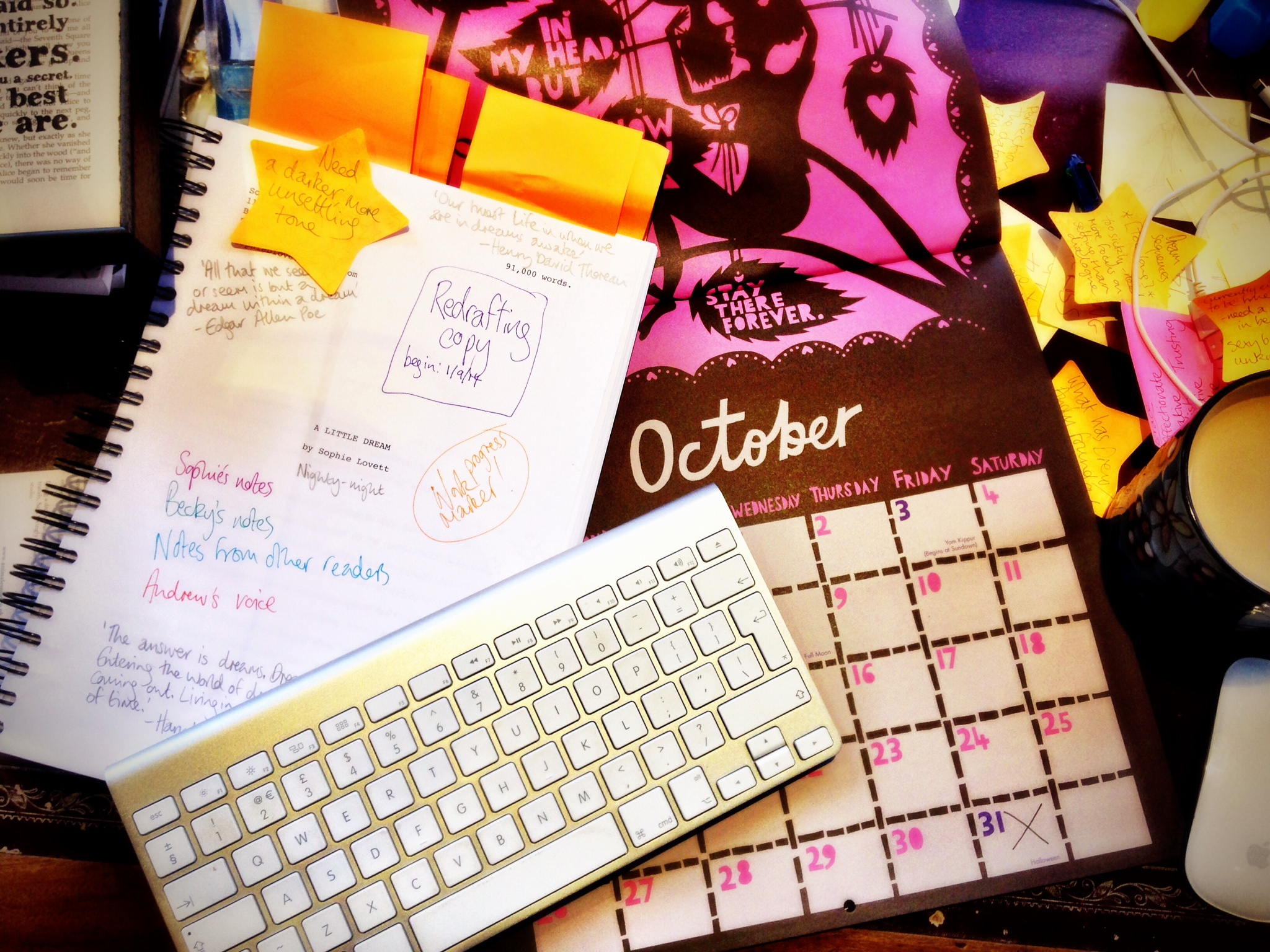
With the London Book Fair this week the latest draft of my novel is, I imagine, languishing somewhere near the bottom of my agent’s to do list. Which is fine by me – having been so deeply embroiled in the edit since the beginning of this year I’m happy to allow my brain to wander elsewhere.

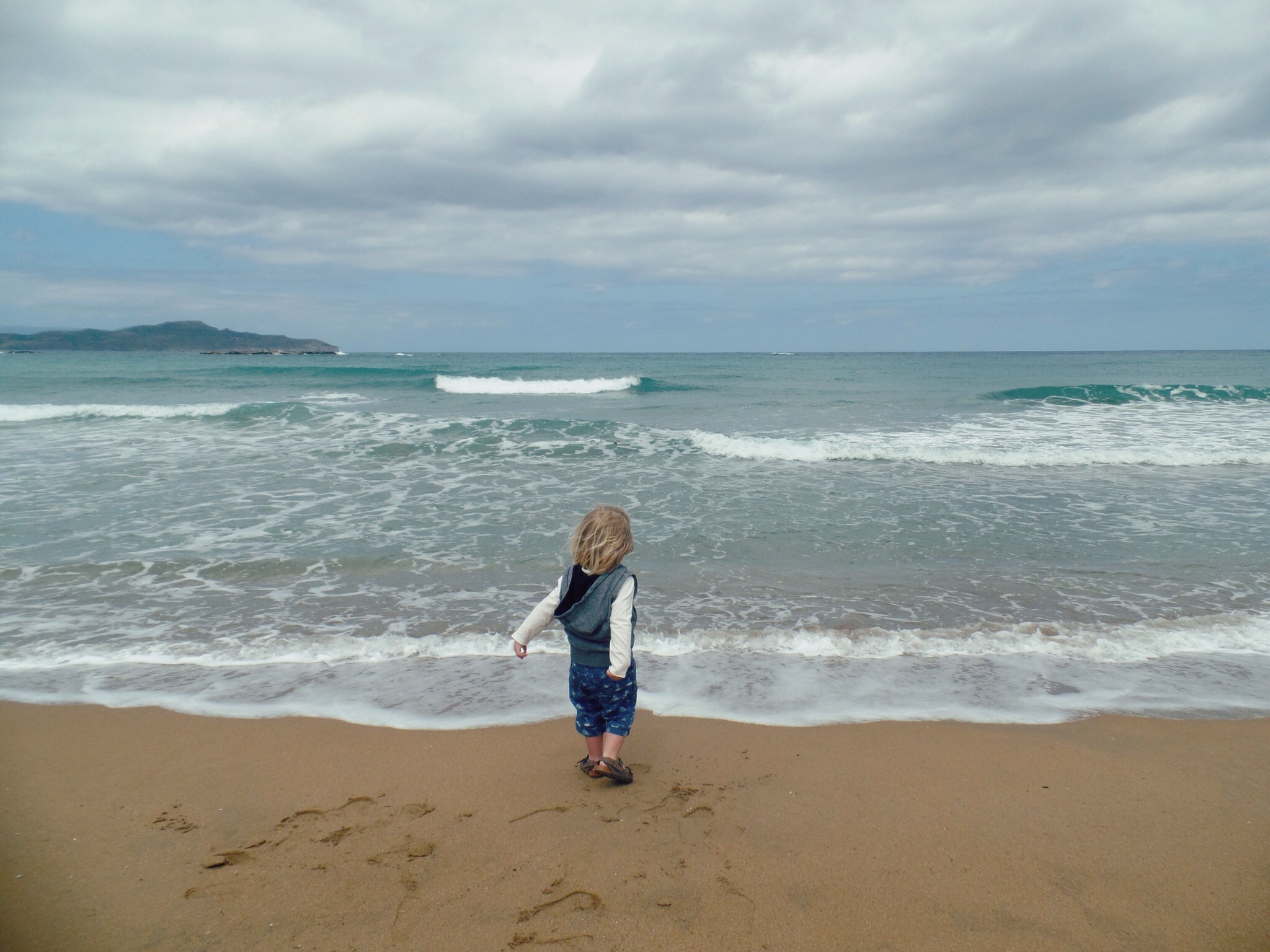
It has been dancing around the edges of my next project, one which I’m really excited about but can’t quite face throwing myself into when I don’t know where I’m at with the current one. It has also enjoyed a bit of a break, getting lost in other peoples’ novels with the gentle sound of waves lapping against a Cretan beach. But it is now time for some action – and what better than the adventure of standing as a candidate in my local town council elections?
IMG_0527

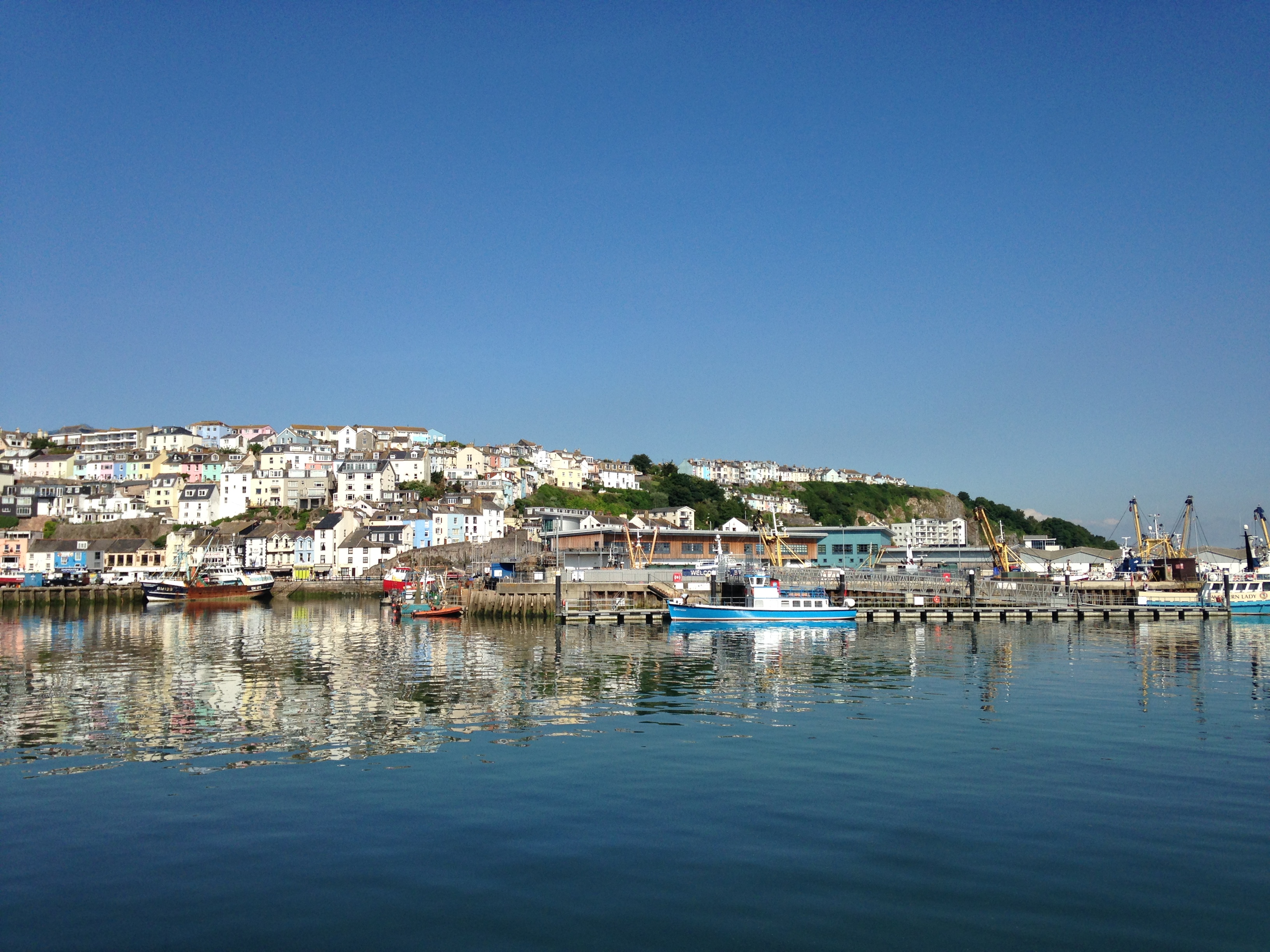
Regular readers of this blog will know that I love my town. Brixham has been my home for the past four years, the culmination of a lifelong dream to live by the sea. It is a vibrant, creative, complex and inspiring place to live, and the more people I get to know here the more happy I am that this is where we ended up.

There is a huge swathe of positivity at the moment, lots of people keen to make the most of the town with independent shops and new restaurants opening up and a real buzz from locals and tourists alike. But beneath this there is something more sinister simmering – a spat between longstanding members of the town council that threatens to undermine the sense of community and the growth that Brixham has enjoyed in the past few years.

A group has been set up with the sole purpose of abolishing Brixham Council. They claim it is a waste of money, that it doesn’t get anything done. But my experience of living in this town says different. I don’t believe that we can rely on Torbay Council to stand up for Brixham. We are smaller than Paignton and Torquay, and very different in character. Historically there have been issues with withheld funding and a lack of understanding of the needs of our town. I believe we need our own voice.

It is against this background that I have decided to stand with a group of independents as a candidate in the upcoming council elections. And with that decision has come a new type of writing for me – my election campaign leaflet.

IMG_0002

It is hard to convey on a single side of A5 everything that I would like to achieve for Brixham, let alone knowing how to present myself in a way that will persuade people I have never met that I am worth voting for. I am not an expert in local politics. I have had a keen interest for years in what it is that makes a community great, but I do not pretend to know the ins and outs of exactly what has gone on in the Brixham Council chambers that has led to such disgruntlement.

What I do know is that people find it tough to engage with democracy, and with every layer of that democracy that is stripped away they will find it even tougher. I would love the opportunity to speak up for the people of Brixham, to give them a voice within the town council and further afield, and to work to grow and celebrate everything that is great about our town.

So I may be a little preoccupied between now and May 7th. No doubt there will be updates here, and if you’re interested you can follow the Stand Up For Brixham election campaign on Twitter too. Wish me luck!

 

Writing Bubble


The joy of sandcastles

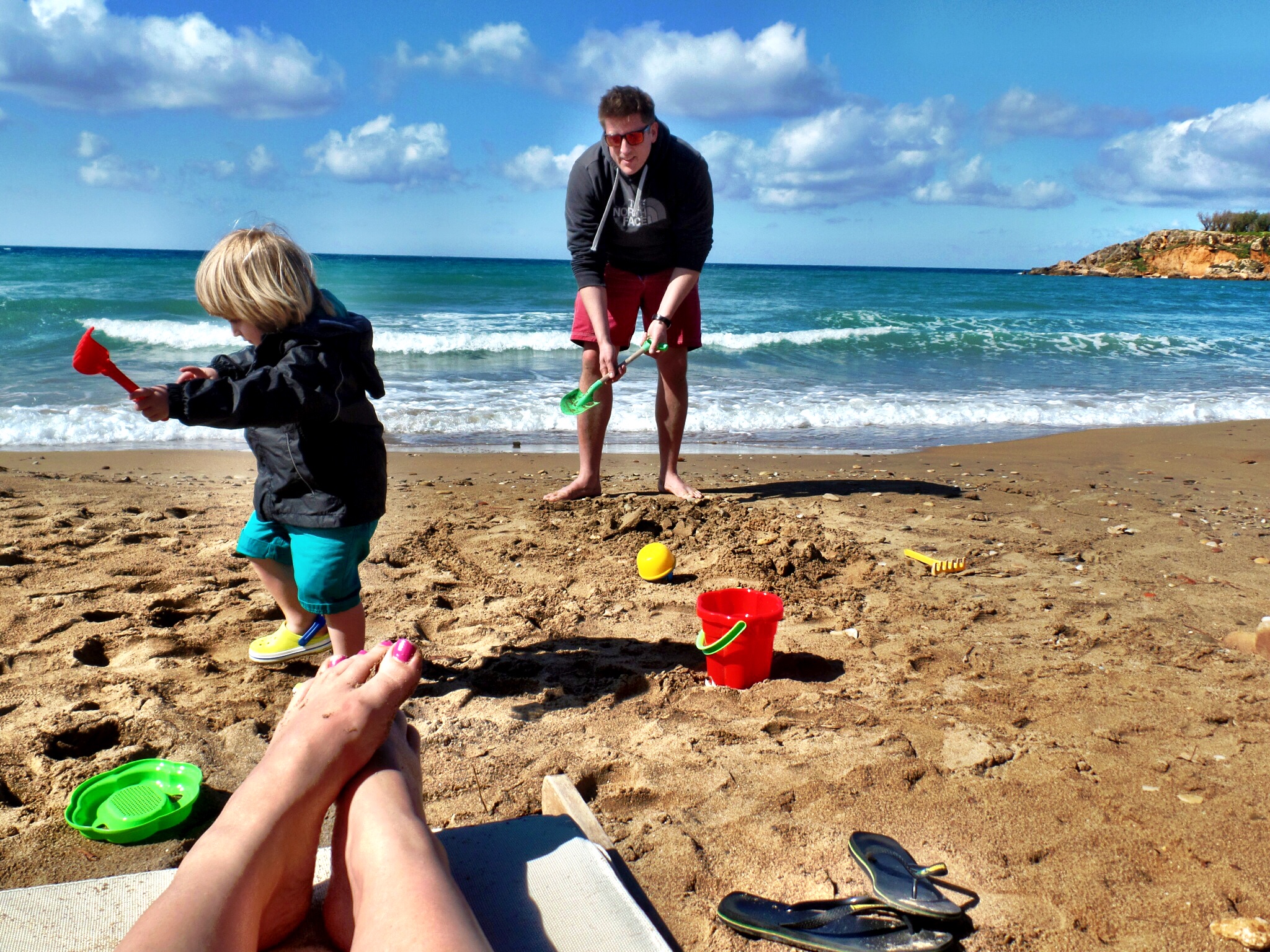
For the last two summers, Arthur’s interest in sand hasn’t extended much beyond eating it. So you can imagine my relief (and Leigh’s delight) when on our recent holiday to Crete he began to understand the pleasure to be had from building castles in the sand.

IMG_0896

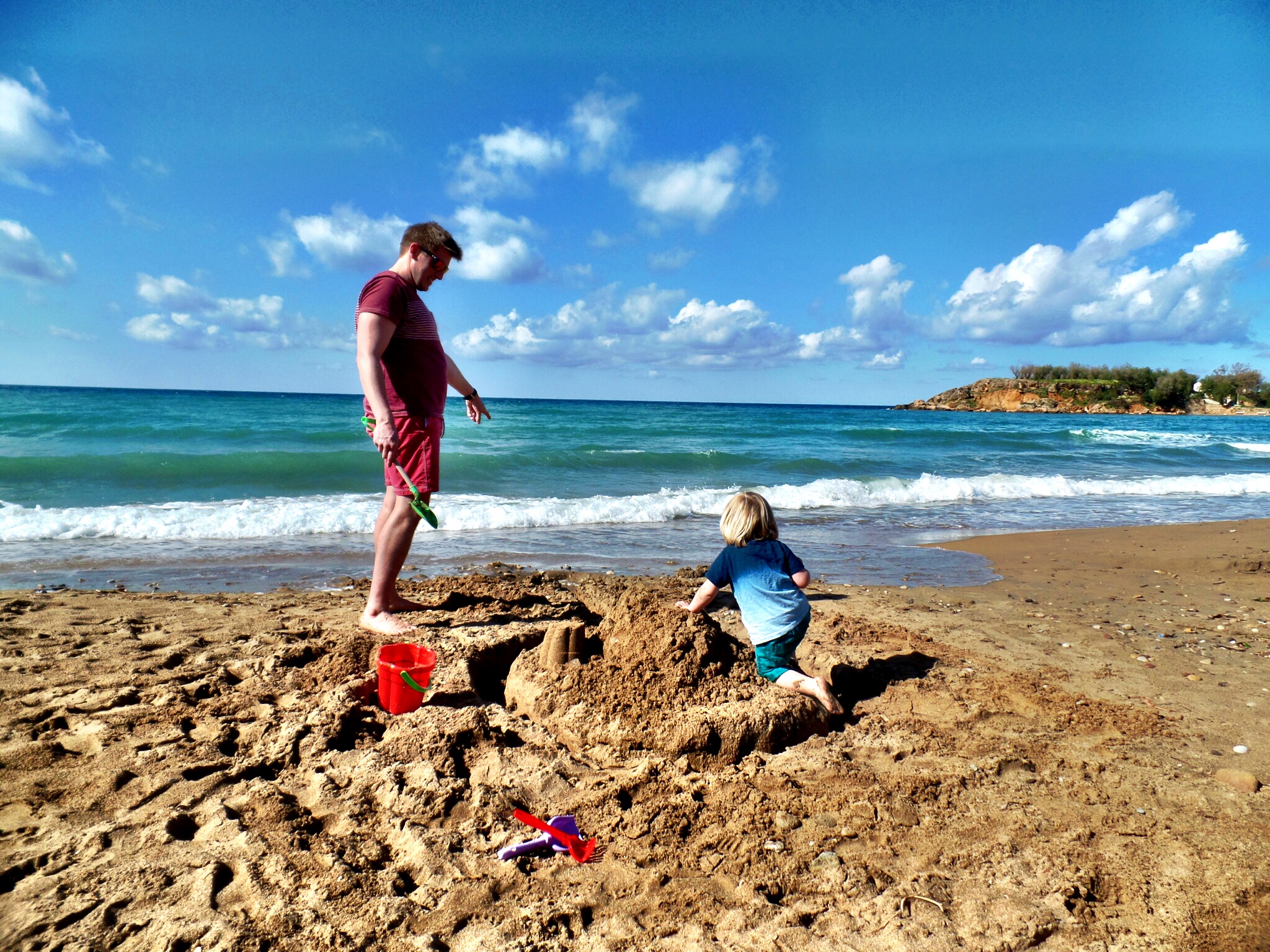
Many a day would begin with me lying back in the sun with a book (pretty much my idea of bliss) whilst my boys readied their tools and began the digging and water gathering and moulding that would culminate in a majestic castle.

IMG_0895

IMG_0894

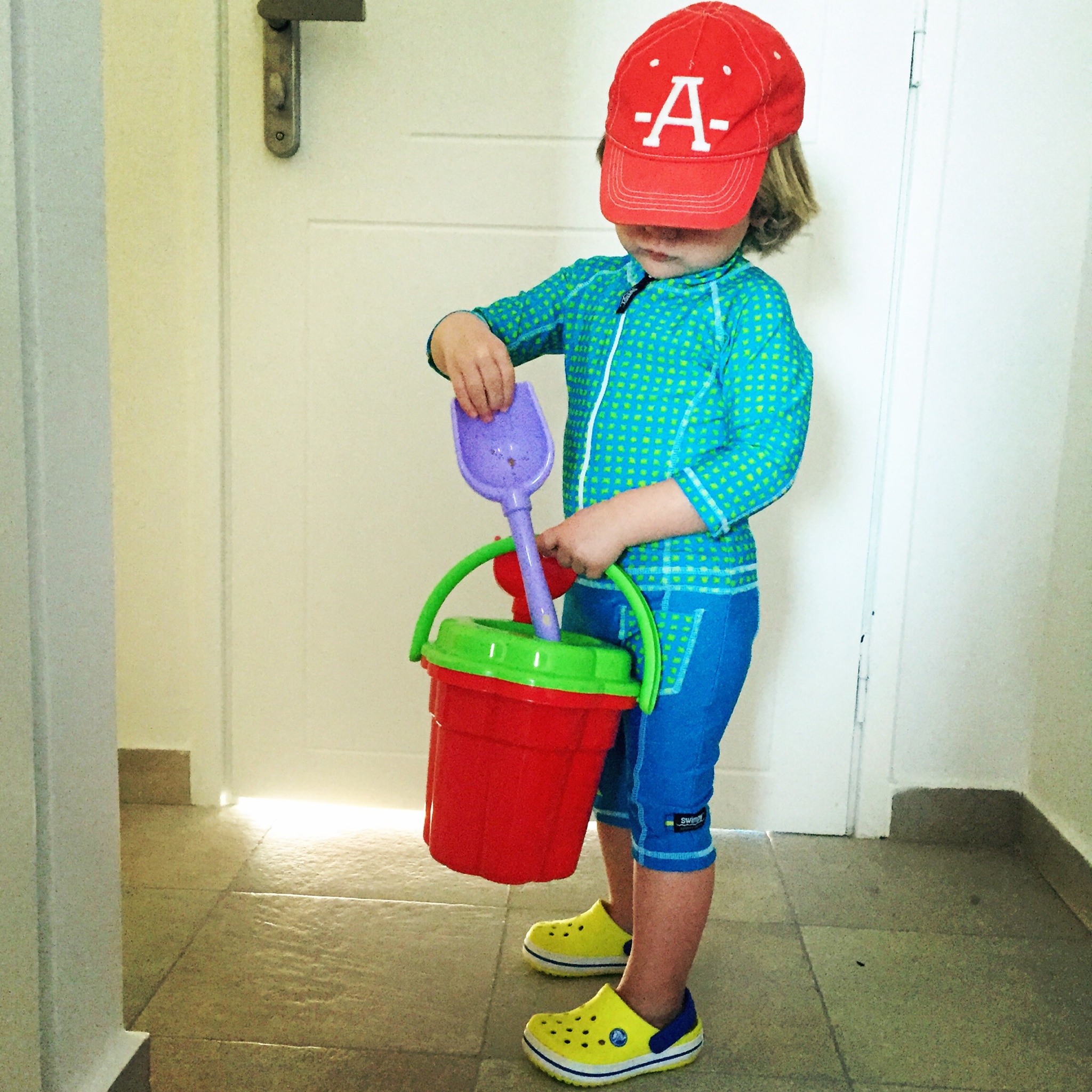
Arthur grew very attached to his little bucket and spade set, and would not go to the beach without it.

IMG_6172

He especially loved anything to do with water. He was fascinated by a little water wheel he found that became the mechanism for filling the channel to the moat, and very amusingly got attached to a broken bucket, not quite understanding why it was always empty when he returned from filling it up in the sea.

IMG_0889

I was not super keen on the whole getting covered in sand part, but I couldn’t resist getting involved at the exterior decoration stage. There’s something about moseying along at the water’s edge collecting pretty shells, stones and sea-worn glass that transports me right back to my childhood.

IMG_0892

And as for Leigh – he was there! Totally rapt in the task, enjoying the banter and admiration it invited from other dads. His piece de resistance was an Arthur-sized sand car, which drew quite a crowd of curious toddlers before being washed away by the sea.

IMG_0891

I think the inherent transience of sandcastles is a big part of their appeal – you’re working with what nature has to offer, albeit with the help of a few man-made tools, shaping it into structures that spark the imagination. And then before the next day comes the sea has reclaimed its wares, leaving behind a fresh slate for you to begin again.

IMG_0890

I have a feeling there will be many sandcastles in our lives this summer, and I’m looking forward to seeing what else Arthur and his daddy come up with…


Country Kids from Coombe Mill Family Farm Holidays Cornwall

Nuts on airplanes: what’s the big deal?

As our flight back to the UK prepared for take off on Tuesday, I was reassured by the now-familiar (to me) announcement that as there was a passenger on board with a severe nut allergy they would not be serving food containing nuts during the flight, and would appreciate it if other passengers refrained from opening any nut products they might have brought on board.

It’s the best I can possibly hope for when I have to fly, but I’m pretty sure most of my fellow passengers would have had no idea how important it was for me to hear those words. I can always sense a wave of incredulity pass over the cabin – sometimes people are vocal about it, calling the whole affair nonsense, but even when they stay silent I’m not convinced they really understand.

And why would they? If you (or someone you love) do not suffer from a severe food allergy then there is no reason for you to see why the prospect of being exposed to the allergen is quite so scary, or why that risk is amplified quite so much when flying. Making an announcement that impinges on the freedoms of other passengers might seem over the top, just health and safety gone mad. And that is why I have written this post.

IMG_0642

For me, there is nothing much more terrifying than the prospect of being trapped in a sealed metal box 40,000 feet in the air surrounded by several hundred people simultaneously opening packets of nuts. Because, like hundreds of thousands of other people in the UK, nuts are my Kryptonite: contact with just the smallest amount would put me at risk of becoming seriously ill or even dying as a result of anaphylactic shock.

Fortunately in the UK and Europe it is rare now for an airline to hand out free nuts to everyone on board. But nuts are still sold on most flights, and nuts are an increasingly popular snack option for health-conscious people to bring along themselves, so I don’t feel I can relax entirely.

Anaphylactic reactions to airborne nut particles are rare, but certainly not unheard of. There was a high profile case last summer where a four year old girl collapsed when a nearby passenger began eating a bag of nuts on their flight, and I have heard several similar anecdotes from people with nut allergies.

For my part, I have been in situations where I have been surrounded by nuts in a confined space and have begun to feel the tell-tale signs of the onset of a serious reaction: several times at bars or parties where bowls of peanuts sat on every table, and once on a ferry from Dar es Salaam to Zanzibar where the snack of choice for seemingly everyone on board was roasted cashews. On each of these occasions I have had a choice – to stand on the deck of the ferry, or to go to another bar – but if the tingling mouth and tightening throat began to set in on an aircraft there really wouldn’t be anywhere I could go.

So for me flying is about minimising risk. I try to only travel with airlines who will make the concessions that EasyJet did when we flew from the UK to Crete. For EasyJet, it is part of their policy, as it is for Flybe, WestJet and Icelandair, all people I have enjoyed flying with over the past couple of years. With many other airlines you are at the whim of the cabin crew as to whether they are prepared to take steps to make the flight safe. And with some, such as British Airways, their policy is the complete opposite: they categorically refuse to inform other passengers that there is someone with a severe allergy on board.

I had a particularly difficult experience four years ago, returning from honeymoon in Vietnam. We were travelling with Qatar Airways, and prior to our trip had gone through all the proper channels to ensure that I would not find myself in the nightmare situation I described above. Our outbound flight was perfect – a polite announcement was made, alternative snacks were served, and I filled in a glowing feedback form before leaving the plane. But in the two weeks we were away they changed their policy. On arriving at the airport in Ho Chi Minh we were told that it was now the decision of the crew whether or not to make concessions for my allergy, and that before I was allowed to board I would have to sign a disclaimer absolving them of any responsibility if I were to get ill or die on the flight. We didn’t have much choice at this point, so I figured I’d just have to hope the crew were understanding. As we boarded the plane I had the conversation, and they reassured me that they would not be serving nuts as snacks and would make the announcement to fellow passengers. Something was niggling at me, though, as we went to take our seats, and I asked what meal they were going to serve. Turns out it was Chicken Satay – so I would have to deal with the fragrance of warm, minced peanuts wafting through the cabin as everyone took the lid off their meal tray.

Needless to say we didn’t get that flight. There was of course no way they could have changed the meal at such late notice – though I had informed the airline of my allergy months before. So we booked into a hotel for another night, and tried to figure out some other way to get home. It was Eid, making getting hold of anyone at the Qatar head office almost impossible, but we eventually got reassurance that they would be able to fly us home the next day under the initial conditions we had agreed. Except when we were at the gate, just after the head of the cabin crew had sought me out and reassured me that he would be doing everything to make the flight safe, the pilot came over and told me that he wasn’t prepared to take the risk of transporting someone with a nut allergy and I was not allowed to board the plane.

We got home eventually, two days late for my new job, with another airline and at great expense. In the weeks that followed I tried to pursue compensation from Qatar, but they were unflinching in their conviction that they had done nothing wrong. I even looked into legal action, but was advised that any lawsuit would be very costly and due to the might of the airline’s legal team had little chance of success.

I was left feeling like I had been mistreated and ill-informed, and ultimately discriminated against because of my allergy. Recent rulings have decided that nut allergy can in fact be considered a disability, and thus discrimination against those who suffer from allergies should be treated as seriously as you would any disability discrimination. Yet a surprising number of airlines (and passengers) seem to feel that it is those who are asked if they could temporarily refrain from eating nuts that are being discriminated against – an attitude that the many similar stories from those with nut allergies attest to.

I don’t really understand why an airline would knowingly want to take the risk of someone going into anaphylactic shock on board one of their planes, or why they would want to make life more difficult for someone with a long-standing medical condition. In the States, where many airlines do still hand out free nuts to everyone on board, it is hard not to link the brick wall faced by passengers with allergies to the powerful lobbying groups attached to the multi-million dollar peanut industry.

I could never consider flying with an airline which still has nuts as an intrinsic part of its meal service. But even on airlines where my nightmare is less likely I have to be careful – after all, there is nothing to stop all of the passengers surrounding me deciding that they want to snack on nuts if there is nothing to indicate to them that this might be a bad idea. It is this situation that makes EasyJet’s approach so invaluable to me – I know they cannot guarantee me a completely nut-free flight, but I really appreciate the fact that they try their best to keep me safe.

I suppose ultimately for someone with a severe nut allergy, I really do have some cheek. Not only do I like to eat out from time to time, but I like to be able to travel to places that can only easily be reached by air. There are those who would say that, given my health condition, I should just avoid these experiences, but I beg to differ.

What do you reckon? Am I being unreasonable? Or do commercial airlines and their passengers have a responsibility to create an environment for travel that is safe for those with allergies? I’d love to hear your thoughts!

Postcards from Crete

Back in the days when meaningful communication was mainly written out by hand, I always managed to leave my postcards until the last day of the holiday. And even then they were lucky to escape without a UK stamp, sheepishly sliding onto the doormat a couple of days after I’d got home. In this digital age you’d have thought it might have been easier to stay in touch. I never actually meant to be quite so absent from the blog over this past week or so. But then I suppose that is the sign of a good holiday.

So here it is, our last night in Crete, and I find myself reflecting on the days we have spent here. On turquoise waters and dramatic clouds, on delicious food and wine and impeccable hospitality.

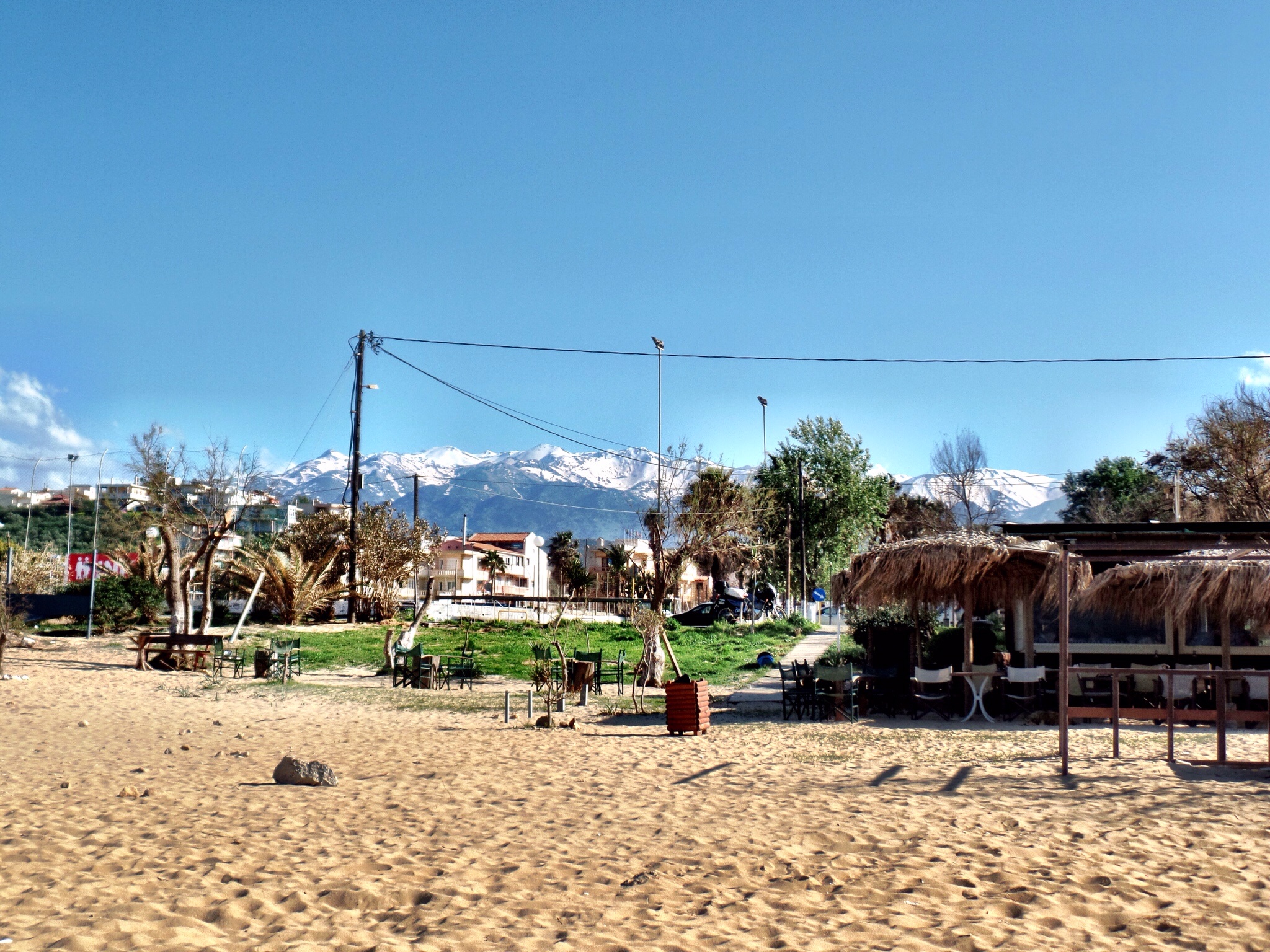
For me, the standout moments have been those when I have dived into the bracing sea, catching my breath after a few determined strokes to turn and gasp again at the snow capped mountains overlooking the beach.

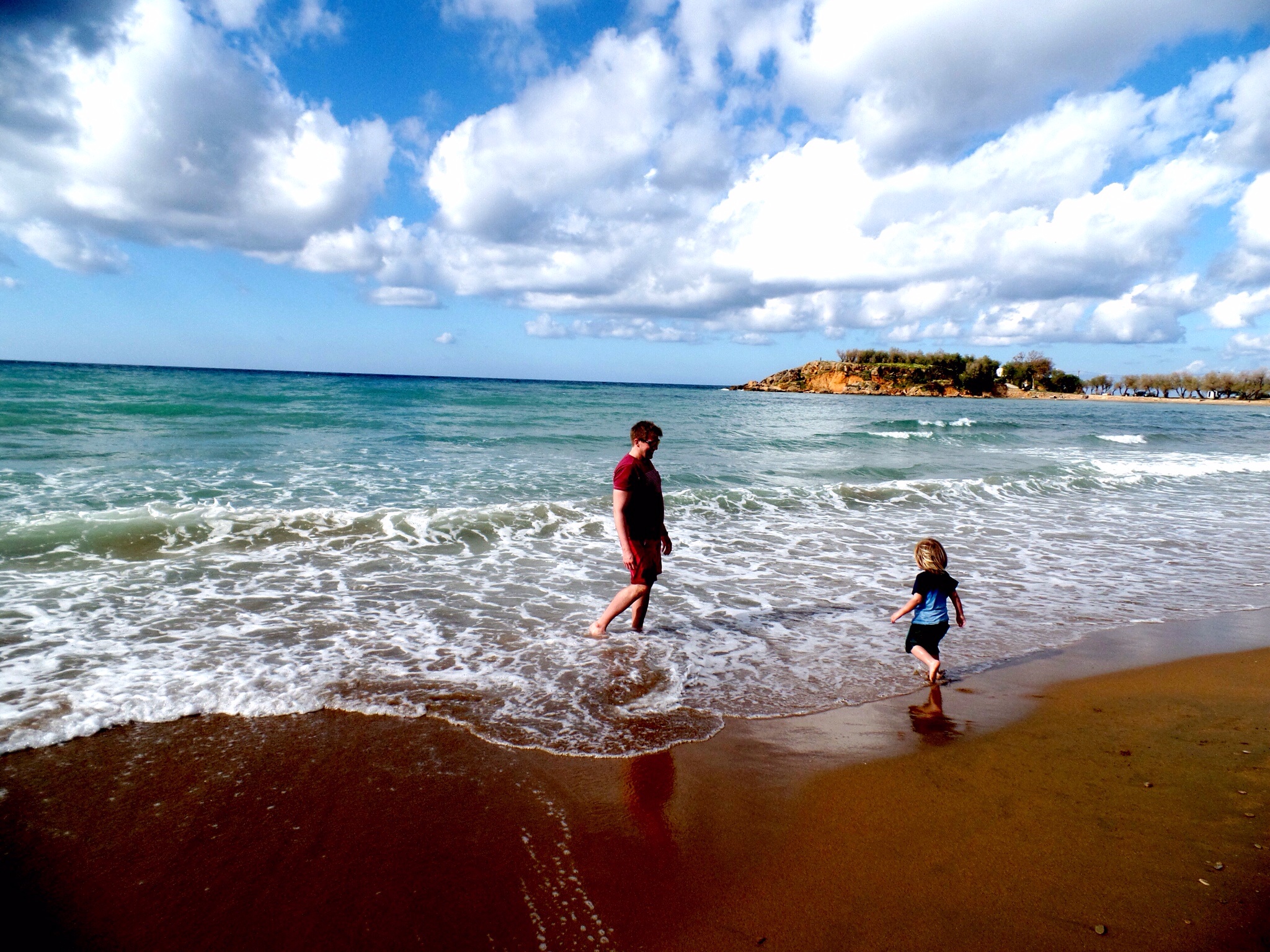
The weather has not always been perfect, but Arthur has been undeterred from his ongoing stone-throwing mission, the skills perfected on the Devon coast making him at home on Cretan beaches and providing the ideal topic of conversation to bond with his fellow toddler travellers.

Leigh has excelled in making sandcastles. A talent that has lain dormant for many years, but one which I think we will all enjoy this summer.

We all took to Chania, with it’s ancient harbour and winding streets spilling out delectable seafood – quite literally at one point when we had to pause to allow an octopus to cross our path en route from water to table.

The list we had compiled in late night chats and perusals of the guide book of places we wanted to explore lay almost entirely untouched, but whilst there’s much we didn’t get to see we loved what we saw.

There will be more posts to follow once I’m back and settled into reflective mode, but for now suffice to say that the little corner of Crete we have experienced was well worth the travels. Hopefully we’ll make it back some time to see some more, but in the meantime here are some of the many moments we have enjoyed this time round.

image

image

image

image

image

image

image

image

This week my word of the week is holiday.

(I might have been back for a few days now, but I’m still there in spirit)

The Reading Residence

Him

IMG_0831

Now that I’ve submitted the third draft of my second novel, I have once again found my mind meandering to novel number three.

The scene that follows flashed into my mind when I read Sara’s prompt this week. It’s really not very cheery, I apologise. But, as these things often do, just writing it has helped me tease out some more details of the story…

It’s rough and ready and might not even make it into the manuscript itself, but I thought I’d share it anyway.

***

This was always the night of the year that she sensed his presence most strongly, and it was almost too much for her to bear.

She thought of their son, of course. Of the pain he had caused her as he had fought his way into existence. They had all said that it would be easier for her to handle, being so young. Her mother had refused to even begin to discuss it with her, and that had suited her just fine, but she’d never quite understood why the midwives hadn’t told her the truth.

The contractions had coursed through her body again this afternoon as she’d struggled to engage Year 10 with the themes of Henry V. More than once she’d had to grip her desk as she’d watched the minutes tick closer to the time when he’d been found.

She knew that it was not the memory of childbirth that had overwhelmed her.

Her colleagues knew nothing of her pain: knew nothing of him. She preferred it that way. She was certain of that, even if something in the deepest reaches of her soul sometimes called out for recognition, for acknowledgement.

She had no idea how they would react if she told them the truth.

So instead she bowed her head and complained of a headache. Of the time of the month. No-one questioned her – they tried to distract her from her agony with stories of their own, pushed paracetamol into her palm as if it might actually do some good. She took it gratefully before secreting it into the bin when no-one was looking.

Even now, alone in her flat with her cat nestled at her feet, she would do nothing that might push him away. There was a bottle of wine in the kitchen. That might have helped. She could have even scored some weed if she’d wanted to, sat with her back against the wall, knees raised and feet flat on the floor as she rolled a joint between them. Her downstairs neighbours had offered often enough.

But she owed it to him to be here, to be present as he was. She owed it to him to feel every molecule of her being shrink, raisin-like. She owed it to him to fully inhabit the gaping holes between those molecules as she searched for him, again and again.

Tears ran freely down her cheeks as she carefully undressed, folding her clothes neatly on the chair by the window. Her pyjamas were waiting cautiously underneath the pillow and she slipped into those now, trying to ignore the silent dripping of saltwater against the wooden floor.

After plunging the room into darkness she scurried beneath the duvet, making herself as small as she could to disguise the shuddering sadness that consumed her.

***

If you’d like to read more about this story you will find further glimpses here:

Smoke

Thirty

Gratitude

mumturnedmom
Nikki Young Writes

Say it with a song

Arthur is having a very musical week this week. More specifically, he is immersing himself in the world of song: he appears to be a sponge for the lyrics he hears, and is managing to reproduce them pretty accurately with very cute (and sometimes very amusing) results.

image

He’s always been into music – unsurprisingly perhaps given the gigs and festivals we’ve taken him to and the fact we love to listen to music at home. But this love for lyrics – or the ability to remember them anyway – is a fairly recent thing.

It started when ‘The You and Me Song’ came on the radio. Now I love this song, but I’d almost forgotten about it when Jo Whiley used it to begin her show. She often does that to me – spins a tune that returns me to the recesses of my record collection and has me hunting for my old CDs. I started singing along, and Arthur was quite taken with it too. And before I knew it he was singing ‘you and me always, and forever’ over and over again. I’d like to think it could be our theme tune.

Then, with a bit of a cultural shift, came ‘Baa Baa Black Sheep’. This one’s obviously been on his radar for a while, but he surprised me last weekend with an almost word and note perfect rendition of it – right up to the little boy who lives down the lane. I’m still impressed when I hear him sing it – which is good, because he sings it a lot.

The other thing he’s been doing is singing songs from the movies he’s been watching, and this is where it gets especially entertaining.

Like (I hope) most toddlers, he likes to boss me around, often telling me to ‘move it!’ if there is something in his way or otherwise not in exactly the right place. But this week, whenever he’s given me that order, it’s been like a little lightbulb has gone off in his brain, flashing up his favourite scene from Madagascar. And then, with a grin on his face, he launches into ‘I like to move it, move it, I like to move it, move it’. Seriously funny, though I’m not sure I should be laughing quite so much at my little tyrant.

This morning he had me in hysterics again. We were walking down the stairs in our pyjamas, me holding his hand as I am wont to do, and he began to sing ‘Let it go! Let it go!’. I responded in my usual gushing, proud mummy way – and he stopped, looked me very seriously, and said ‘let go’. I guess he didn’t want me to hold his hand after all.

I’m finding the development of Arthur’s language skills such a joy, and his ability to reproduce what he hears – and twist it to fit new situations – particularly fascinating. The fact that his current propensity for singing is turning our lives into one big musical is just an added bonus!

I can’t wait to see what he comes up with next.


My word of the week this week is musical.

The Reading Residence

Seven top tips to help you edit your novel

Since I submitted the third draft of my novel last week, I’ve been pondering a lot about how I finally got there. It wasn’t easy, that’s for sure.

I was optimistic when I first got started on the whole redrafting process back in September, but it wasn’t long before I started to flounder. I got things back on track, and completed the second draft almost within my self-imposed deadline.

I knew there was still work to be done at that stage, so it was no surprise when I had to start work on draft number three in January. I had some great feedback to work with, and slowly but surely a third draft began to take shape.

I’m not saying that’s perfect either, but in getting to that stage I’ve learnt a lot about how to go about editing and redrafting a novel: and that is what I want to share with you here.

Tip One: Don’t rush it

It’s easy to get impatient when writing a novel. After the first flush of excitement even getting to the end of the first draft can feel like a slog at times, and that is absolutely nothing in comparison to the arduous process of getting your head round the edit.

Having said that I found that it all came much easier when I was ready. I think you have to trust that if it just doesn’t seem to be working when you’re explicitly focusing on it then maybe your brain just needs a bit more mulling time.

But having said THAT…

Tip Two: Set yourself deadlines – and stick to them

This might not be the way you work, but for me my procrastination skills are so finely tuned that unless I have some sense of urgency I could just drag a task out forever… Especially one as tricksy as this.

Editing deadlines

I found it really helpful to decide on an overall deadline (both times round I gave myself around two months to get the edit done), and then to break it down into daily goals. Those were a bit more flexible. I aimed for a chapter a day, and sometimes I did more, sometimes less. Sometimes I redid what I’d done the day before. Sometimes my brain had been whirring so effectively in between editing sessions that I whizzed through several chapters. But I generally had a sense of where I was at and could therefore balance things out to make sure I got to the end pretty when I wanted to.

And along the way, remember…

Tip Three: Listen to your characters

In my first draft, I think a lot of the details in the story were driven by what I thought the characters might think, or say, or do. But really I was just getting to know them – I had to make presumptions and fill in the gaps because there just wasn’t time to stop and focus and listen.

The bits where I’d just swanned on through were blatantly obvious when I came to look at them later – what was not so obvious was what to do about them. But then I remembered that I wasn’t actually doing this alone. In the process of writing the first draft I’d created several companions to my task – and now they were there, ready and waiting for me to breathe fresh life into their story, I really needed to listen more acutely to them and where they wanted to take things. Even if it wasn’t strictly where I’d thought I wanted to go.

Which brings me to…

Tip Four: Listen to your readers

It goes without saying that you need to find someone you trust to give you feedback at each step of the writing and redrafting process. Preferably more than one person, and preferably people who are avid readers – even better if they enjoy the particular genre that you’re writing in.

But once you’ve found those all-important beta-readers, it can be incredibly tempting to pick and choose what bits of feedback to listen to. It’s your novel after all, right? And if you don’t agree with what they say then it’s your prerogative to ignore it, right?

Except they are in a much better position than you to measure how your novel will be received. Because they are readers – and readers are what it is all about.

There is a big gulf from the novel in your head and the novel that people will read, and that gulf can only be crossed by getting the right words on the page. If you think you’re communicating something, but your readers are telling you that you’re not, then you need to ask yourself why.

Though you mustn’t forget the most important thing…

Tip Five: Trust yourself

This might seem to fly in the face of everything I’ve just said, but it really doesn’t. You may well receive conflicting feedback, or feedback that really doesn’t sit comfortably with what it is you’re trying to achieve. And if you do the you need to remind yourself that, ultimately, you are the author of this work.

As long as you don’t dismiss things out of hand, as long as you really consider how you might be able to make the changes people are proposing, then it’s ok to stick to your guns and find a way to make your way work.

Just remember…

Tip Six: It’s ok to get rid of stuff you like

Writing a good novel is not just about good writing. It’s about how all of your words and sentences and paragraphs and chapters sit together to create people and worlds that are meaningful to your reader.

Some of the bits you end up cutting might be pieces of writing you love. Keep them! Just don’t be afraid to recognise that they might not work in this manuscript, here and now.

Editing a novel

And whilst we’re on the subject of fear…

Tip Seven: Don’t be afraid to experiment

Once you’re past the relatively liberating stage of writing the first draft, you might find a desire for perfection creeping in around the edges. You might feel like you have to get your next draft just right – perfect, in fact. And that – I speak from experience here – can be pretty paralysing.

The only way I was able to move forwards was by freeing myself up to experiment. To try things out, even if I wasn’t entirely sure they worked. To take things in a different direction. For me this was especially true of the second draft. I got rid of lots of those experiments by the time I got to draft number three, but the residue they left behind had undoubtedly made the manuscript stronger.

And that’s it!

There are other things, too. I’ve already written about the more prosaic things that kept me going when the going got tough. But for me the thing that really helped me bring these edits to a conclusion was getting myself into the right mental state. And it is that I hope these tips will help with.


Writing Bubble


The List

Why chefs need to take responsibility for what is in their food

Two weeks ago, a group of ‘chefs, restaurateurs, hoteliers and caterers’ put their names to an open letter published in The Telegraph. In this letter, they rallied against the recent regulations introduced by the EU designed to make eating away from home an easier option for the many people, like myself, who suffer from a serious allergy.

IMG_0830

It was on my radar at the time, but it has taken me a little while to fully digest the implications between the lines of their sparsely worded letter and to formulate a response which is not merely an outpouring of fury at the ignorance and arrogance which underpins their declarations.

On one level, actually, they’ve done me a favour: I now have a clear and categorical list of the establishments and proprietors I need to ensure I avoid whenever I fancy a meal out. I enjoy good food, and I love eating in restaurants when the occasion arises, but it simply isn’t worth risking a life-threatening allergic reaction if the person preparing my food isn’t willing, or able, to tell me whether it might contain nuts.

It is for this reason that the publication of the letter strikes me as an extraordinarily bad business move – ironic, really, when its signatories are aligned behind an organisation called ‘Business for Britain‘. Clearly it is more important for them to take a swipe at the EU than to consider the needs of a significant portion of their customer base. Conservative estimations of people suffering from acute, severe food allergies in the UK put the number at around 500,000. Other studies indicate that 6-8% of children in the UK – that’s over 1 million – have a proven food allergy. Whichever way you look at it, there are an awful lot of people whose health – and life – relies on knowing what is in the food they eat. They all have families and friends whose dining habits will be influenced by the allergy sufferer. So why exclude so many potential customers from your business?

This issue of exclusion is at the heart of my anger towards the signatories of this letter. Allergy is not a lifestyle choice. It is not something that causes mild irritation to its sufferers. It can – and does – cause death if the allergen is inadvertently consumed: there are between five and fifteen fatalities each year directly caused by food allergy in the UK. Many of these are due to meals eaten outside the home – and, as with the 18 year old who tragically died in Manchester earlier this year after eating a burger, allergy sufferers tend to be very clear with restaurant staff about the food they need to avoid. I mean, you would be, wouldn’t you, if you knew that eating the wrong thing could kill you?

Far too many times when I have asked the necessary questions with regards to my allergy the response of the waiting staff is that they cannot guarantee that any of their food is nut free. This warning is so ubiquitous now on packaged food that at first glance it might not seem so extraordinary, but in the types of establishments I favour – ones which serve freshly made food cooked from scratch – I really do find it quite odd. If it were true, then what else that is lying around in the kitchen might have made it into the food? Bleach, perhaps? Or maybe rat poison? The implied lack of caution about cleanliness and cross-contamination astounds me. In the vast majority of cases, when I push further for a response from the chef, they are happy to reassure me that they can prepare me a meal that is safe. If they don’t, then I can’t eat there. Simple, really.

Putting the issue of cross-contamination to one side, the signatories of the letter decrying the improved regulations seem to take things one step further. In complaining that the rules will destroy ‘spontaneity, creativity and innovation’ they seem to be implying that, as chefs, they have a right to add ingredients on a whim without the irritating distraction of the consumer taking away from their art. They seem to have forgotten that they have a responsibility to the people who are paying them to prepare their meal – and that responsibility includes providing food that is not going to cause illness or death to someone suffering from an allergy.

They complain of the ‘bureaucratic nightmare’ these new regulations have caused, but in reality businesses can comply with the new regulations simply by being able to verbally communicate, if asked, whether dishes contain any of the top 14 allergens. Having taught in the state system for ten years I fully appreciate the frustration that comes with seemingly unnecessary paperwork, but is that really too much to ask?

After recent high-profile scandals around the food we eat not being quite what we thought it was (horsemeat, anyone?), I think we would all like to know what it is we are putting in our bodies. If you have an allergy, this concern becomes even more important.

If you are a chef, I do not believe you have the right to exclude someone from accessing the services at your establishment because they suffer from a chronic medical condition. In fact I would argue that to do so flies in the face of legislation surrounding equality and access – particularly as recent rulings have declared that severe allergy is capable of being a disability.

Of course it would be lovely if we did not need to worry about the needs of others as we went about our personal and professional lives, if we could all act as we wished without concerning ourselves with the repercussions our actions might have on others, but the fact is we cannot. And in fact the world would be a far sorrier place if we did.

We all have responsibilities to others – and that is something these ‘top chefs‘ would do well to bear in mind.