Tag Archives: creativity

21/52

IMG_1469.jpg

“A portrait of my child, once a week, every week, in 2016.”

We have had a day of ‘getting things done’ today, which has meant that for much of it Arthur has been left to his own devices.

Sometimes, that’s a disaster.

But today, with Leigh and I busying ourselves with organising and tidying and planting, he has been a little star.

I found him at one point this afternoon with his balance bike upside down, bits of twigs strewn around him. I asked what he was doing, and he told me he was using his bike as a stick cutter. Obviously.

I’m still not entirely sure what that meant, but he was clearly utterly absorbed in experimentation. And rocking quite a cool outfit too…

Linking up with Jodi at Practising Simplicity for The 52 Project. 

“What shall we make with this?”

The unschooling diaries: week sixteen

I think those six little words might be the ones that have made me the proudest yet in this motherhood journey.

It started just over a week ago, when we came downstairs one morning to a couple of empty cardboard boxes waiting to be flattened down for recycling. Arthur looked at me, gasped with delight, and said:

“What shall we make with this, mummy?”

We have had an awful lot of fun making things out of cardboard boxes over the past couple of years, but generally it’s been me or Leigh who’s initiated it. Arthur has happily chipped in as the creation develops, offering direction and issuing demands. But this latest development, where it is him looking at a piece of trash and using it to kickstart his imagination, is just awesome.

On that morning, I bounced the question back at him and he decided we were going to try to build a spaceship. It was a little ambitious, but we worked together and came up with something he was pretty happy with – it had controls and a light and everything.

A couple of days later, Arthur’s new blackout blinds arrived, in THE BEST cardboard tube ever. Again Arthur took one look at it and asked the question:

“What shall we make with this?”

We spent a while exploring ideas – he used it as a channel for balls, experimenting with different sizes, and then as a tunnel for his cars, raising one end up on our mini trampoline.

But then he decided it would make an even better train tunnel, and together we incorporated it into a super duper train set, with the track running up and over another box then all the way down the tube. It took a few goes to get it right – some trains ran better than others – but we got there.

IMG_1428

His other idea was on a smaller scale, but no less fun. He’d been picking up smaller boxes for a couple of days and insisting that we could turn them into a camera. He always managed to catch me at inopportune moment, and I couldn’t quite see how we were going to pull it off, but in the end we succeeded, and he took great pleasure in running around the house taking photos.

IMG_1427

It’s not just cardboard boxes either: as we explore this whole act of making together he is beginning to see potential in all sorts of other things around the house. He picked up a ribbon yesterday and asked his same question:

“What shall we make with this, mummy?”

I was initially stumped, but he jumped in with “A twirly thing! Let’s make a twirly thing!” whilst spinning the ribbon in circles around his head. I had actually been planning for a while to make him a twirly thing out of ribbons (not sure what the technical term for it would be) so dashed upstairs to find an old bangle and my ribbon stash, and together we picked out a selection of ribbons to add to the one we’d started with and tied them on.

IMG_1429

I love the extra injection of creativity it’s given to our everyday routine, and the sense of limitless possibility that Arthur exudes at the moment. He takes inspiration from everywhere – he declared on another morning that he would like to make a scarecrow, and it turned out that he had been fascinated by one in Curious George.

It sounded like a bit of a mission, but I didn’t want to let him down – and actually making a scarecrow wasn’t nearly as hard as I thought it was going to be – and we now have him ready for when we finally get round to planting up our veg patch!

It’s not just pride at Arthur’s enthusiasm that I’m loving about this particular phase. It is also, as so many things about parenting are, incredibly liberating: to look at trash and see potential, to have an idea and to keep going until you achieve it.

Lessons for life from a three year old.


How to grow a writer

It is easy to be negative at the moment when thinking about education. In fact it’s easy to be negative about most things to be honest – I’ve spent most of this week dwelling on the seemingly inevitable fate of the NHS, while intermittently wondering whether there is anything we can do to bring our schools back from the brink.

But of course there is.

Beneath all the doomsaying around the utterly depressing state of assessment – the unbelievably detrimental SATs exams, and ill-thought-out reforms to GCSEs – there are teachers just getting on with doing their jobs. Jobs which, incidentally, align the vast majority of them much more closely with the interests of the young people in their care than with the government and its dictats.

Much of what we have shared through the #THISislearning campaign so far has been rooted in the Early Years. And it is a relief to know that here the notion of play as a vehicle of learning still predominates; that our children, at least when they are very young, can follow their own path to creativity and fun.

But of course play does not become defunct as children grow older. In fact I would argue that its magic becomes all the more important.

IMG_1412.jpg

It was always one of my key goals as a secondary school teacher, to harness the power of play.

There is a tightrope of engagement when you are working with teenagers, hung tentatively between the towers of curriculum and assessment. My job, the way I saw it, was to enable my students to balance on that high wire – to give them the skills they needed to succeed whilst simultaneously not losing sight of the love of learning that motivated them all, once upon a time.

Of course inherent in this is the notion of success, and this is where my views diverge most from those of our our current government. For me, success (from an English teacher’s perspective) is a young person who can think, read, write and speak with confidence. I imagine what that looks like for me is very different to Nicky Morgan’s idea of a perfectly educated child. To be honest I seriously doubt whether confidence, and all of the dangerous individuality that goes with it, factors anywhere at all in this government’s vision for our children. But that’s a story for another post.

So back to my job, as a teacher.

I established very early on in my career that I was not a ‘filling empty pails’ kind of educator, but rather one more interested in kindling fires. I have never had much time for bare facts – knowledge without context leaves me cold, and I admit to finding myself so completely disengaged with the approach to learning about grammar intrinsic to the new KS2 SATs papers that I can hardly read to the end of a sample question without switching off.

That’s not to say grammar is not important, or fascinating – of course it is, given the right situation. It’s just that there are so many more interesting ways to understand it than by methodical categorisation and endless rules – especially given that our language is often not very interested in following the rules itself.

My goal in the classroom was to get my students interested in things. To get them asking questions, being genuinely curious – to get them to a place where the answers (where they existed) might just stick.

I remember sitting down with a colleague (and friend) to plan a scheme of learning for Year Eight which needed to get down to the nitty gritty of word and sentence level analysis, as well as improving students’ use of grammar and punctuation in their own writing. We wanted to use a multimodal approach to engage students in a dialogue about how texts were constructed, the similarities and differences in the way meaning is conveyed through images, film and the written word. It ended up being based around a range of texts including ‘Where the Wild Things Are’, ‘Persepolis’ and ‘Stand By Me’, weaving back and forward through the narratives in their different forms and inviting an intelligent discussion which did – inevitably – lead us to the technicalities of how language was being used, and how the students could manipulate it to their own ends. I can tell you now that at the end of it none of those kids would have been any closer to passing the exams that, according to our current government, they should have been sitting two years earlier. But they were more confident readers and writers, and could explain why they (and others) used words the way they did.

All of that aside, it was fun. Not easy – in fact arguably harder than going through the motions of learning by rote because of the degree of thinking involved. But it was interesting: informed by the personalities of myself and my friend, and inviting our students to engage with it on a personal level.

There are a couple of other schemes of learning that stand out to me from Year Nine – a notoriously tricky year where the emotions of puberty are in danger of taking over completely, but an exciting one too when the new level of maturity students are beginning to exhibit can take everything up to another level. One was inspired by a brilliant set of resources from BT, using an exploration of all forms of spoken language as the hook into learning more about how words work. Another took its starting point from an excellent study guide produced by the English and Media Centre to explore the Sherlock Holmes stories, and detective fiction in general. We encouraged students to go into role as detectives as they read and studied the texts, to look out for clues in the language to the meaning that was being created and then be able to apply the techniques themselves as they grew into more confident writers. My kids produced some fantastic stories as a result of what they learnt, with some exhibiting incredibly sophisticated and effective manipulation of language. Could they have told me exactly what grammatical devices they were using and why? I doubt it. Did they need to? No! Not back then anyway…

I could go on, but I imagine you get my point. The nurturing of a writer has very little to do with teaching them to identify fronted adverbials and subordinate clauses, to carefully construct expanded noun phrases and employ the correct balance of semi-colons and exclamation marks. It has everything to do with introducing them to a wide range of texts, with letting them discover for themselves the thrill that comes from reading words that truly speak to you, with giving them the tools and the confidence to be able to construct their own sentences and paragraphs and weave them into whole texts that they are proud of and that mean something.

I know that, in English classrooms up and down the country, that is exactly what is happening. But I fear that it is happening less and less. Because, in our overloaded education system, this sort of learning seems to no longer be valued. And I don’t mean by the teachers – they know what learning looks like, and how to inspire.

But they also have an obligation to get the children in their charge to pass the tests. And if this government remains insistent on testing the wrong things (and testing them way too often) then there will be no space for real learning left at all.


Writing Bubble


Building blocks

The unschooling diaries: week five

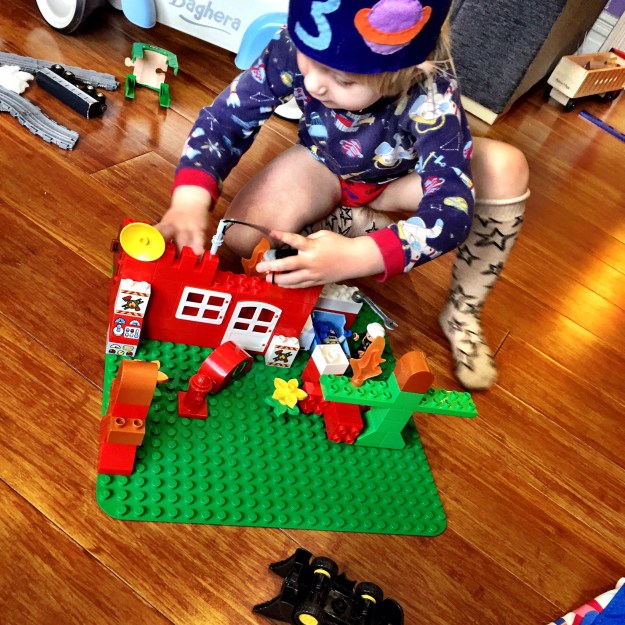
One of Arthur’s favourite activities at the moment is building things with Duplo. He was given a set for his second birthday, but it took a little while for him to see the appeal (beyond eating or throwing the bricks anyway). This year, with the addition of a fire station and Batman set, he is well and truly away.

He is sometimes quite happy to build on his own, but he especially loves to direct: sitting down with me or Leigh and getting us to help him create the structures in his mind. We had a great session this week, straight after breakfast one morning.

IMG_1302.jpg

I’d cleared my writing goals before he’d woken up so I was free to play without worrying about my to do list. And as we played, I was fascinated to see where the building blocks of his inspiration came from: not just the plastic bricks themselves, but the characters and narratives he was drawing from the stories he loves and the world around him to weave into the little world he was creating.

It started with a hospital – the red cross emerging from the pile of bricks and Arthur making connections about what it symbolised, and where his Daddy was working. He decided batman had an ouchy, and put him to bed to be made better by the doctor/fireman. Then he wanted a fire station next to the hospital. And then he decided maybe the hospital was on fire.

As the drama unfolded, more characters were drafted in. One of his favourite films at the moment is Toy Story, and he soon asked for Woody and Buzz Lightyear to come and play too.

IMG_1299.jpg

They were roughly approximated from duplo bricks, but even just the suggestion of his much-loved characters was enough to enhance his play.

IMG_1303.jpg

Sending Buzz flying through the air ‘to infinity and beyond’ got Arthur thinking about space and rockets, one of his other current obsessions (not that you’d ever have guessed form his outfit). The fire station/hospital was soon dismantled, and in its place we built a ‘Saturn V’. With some creative use of windows we managed to include some space for passengers, and that fired his imagination even further.

IMG_1298.jpg

He was quite particular with his directions for building the rocket itself. The books he’s read and the videos he’s watched have given him a clear idea of the parts needed to make up a spacecraft – he is already much more knowledgeable than me!

IMG_1296.jpg

We both had so much fun putting together those multi-coloured bricks, and with them cementing learning and weaving new stories. Once I’d helped him lay the foundations Arthur was happy to sit and play for ages whilst I watched, utterly engrossed in the imaginary world he was continuing to create from the building blocks around him.

IMG_1295.jpg


Give a boy a box…

The unschooling diaries: week four

I ordered a new pillow for Arthur this week, and predictably it came in a box that was far bigger than it needed to be. Predictably also the box caused considerably more excitement than its contents.

The delivery arrived on recycling day, but just as we were about to dismantle it accordingly Arthur leapt in protesting “No! My train!”

Cue distraction as Leigh grabbed a crayon and began drawing on a control panel whilst Arthur watched with glee, before picking up a rectangle of cardboard that had fallen onto the floor and trying unsuccessfully to attach it to the side: “The wheels! The wheels!”. We delved into his craft corner and found a roll of masking tape I’d bought him specially – he went through a phase of wanting to tape up everything a little while ago, and now it was just what he needed to complete this job.

Once it was stuck we had to draw on the wheels themselves, and on the other side too of course. He’d also noticed, whilst delving in said craft corner, some leftover halloween decorations that he had interpreted as characters from Hotel Transylvania, his then-favourite film. He insisted they had to come on the train too, and we used the masking tape to attach them to the sides. A blue flashing light toy made the perfect lever for operating his train, and he was done.

He sat happily in his box by the front door for a while, shouting “choo choo” and “all aboard”. Then before bed he asked for a ride down the hallway, me pushing his train along the wooden floor.

The next day he was playing in the lounge, his box-train looking on whilst he built a wooden track, when he suddenly leapt up proclaiming “The carriages! I need to get the carriages!” I presumed he meant the little carriages for his brio train which have a tendency to get scattered to the four corners of the house, but when he came came back downstairs he was dragging another box behind him.

This one had started life as a robot, then turned into a spaceship, and now was being refashioned as a carriage for his train. A “sleeping carriage” to be precise.

Dolly was his first passenger, and he looked very comfortable.

IMG_1289.jpg

I love love love watching this imaginative play unfold, hovering nearby to facilitate its development. The whole joy to be had from a cardboard box thing is such a cliche, but so gloriously true!

The train (and its carriage) are starting to look a little battered around the edges now after some very serious playing, so they may make it into the recycling this week. But I’m sure it won’t be long until we have another creation. I can’t wait to see what it might be!

On joy and freedom and making links

The unschooling diaries: week three

This past week has been super busy, with precious little time for stopping to reflect. Before I miss the window completely, though, here are three little moments that have stuck in my mind.

First up, there was Arthur’s unbridled joy and wonder at discovering the book ‘Mog and the Baby’.

image

He’s been listening to the story for the past few weeks: for his birthday we bought him an MP3 music player to feed his growing enjoyment of listening to stories. Almost every time he settled down to listen he would request ‘Mog and the Baby’. The way it works it would then scroll through the other Mog stories we’d saved for him, but he kept coming back to that one.

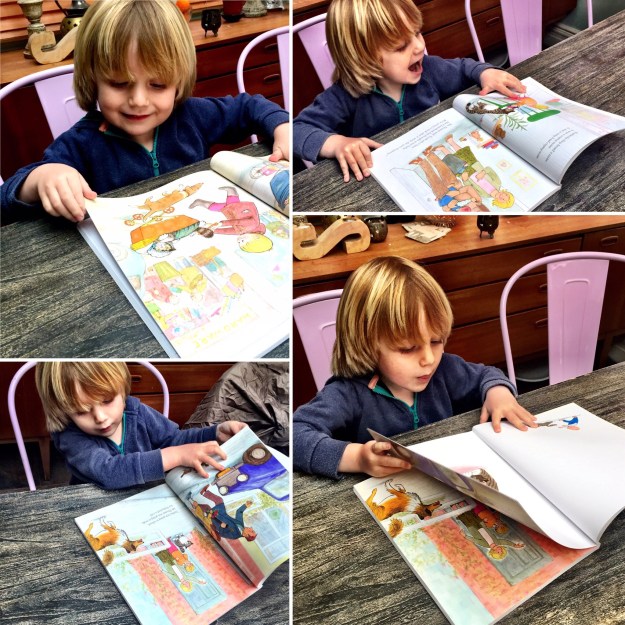
We’d intended these audiobooks to supplement our enjoyment of reading together rather than replace it, but I’d become increasingly aware that Leigh and I were reading to him less and less. So this week we’ve both made an effort to make physical books available whenever we can – not to force Arthur into engaging with them, but just to remind him that they exist. And he’s loved it.

More than anything, though, he loved discovering the book of the story he’s been listening to so often – seeing the pictures bring the characters to life, and sharing his favourite moments with me and his dad.

The second thing that sticks in my mind from this past week was a moment of learning for me more than Arthur.

I’d had a pang of doubt, fuelled as usual by comparing us to others, when I realised that Arthur had shown no interest at all in figurative drawing. He’d gone through the motions of copying lines and circles for his two year developmental check, but since then has not shown much interest in drawing beyond scribbles and swirls of paint – and we haven’t pushed it.

I’d found myself wondering whether we shouldn’t in fact be encouraging him to draw in a more structured way, accelerating his progress towards that fine motor control that will of course be so important for when he comes to write!

But then I checked myself. I read some more about unschooling, and the Montessori methods I find myself gravitating towards. And I remembered that of course there is no rush to begin to constrain his explorations into more easily recognisable forms. So instead I waited, and watched.

And then one day whilst I was preparing lunch I noticed Arthur rooting around by his easel, looking for something to paint with. Together we chose some colours, and I left him to it whilst I got on with making lunch. I glanced over from time to time, and freed from any concerns about whether he was drawing people or things that we could label, marvelled instead at the care he was taking about each seemingly abstract line and curve. I watched as he picked out his colours, stepped back from time to time to make decisions about where to go next, and waited until he had decided he was done before we sat down together for lunch.

image

He was so proud of his painting, and so was I. And I’m definitely not in any rush to put any constraints on his creative freedom any time soon – I have a feeling he’ll be able to come up with way more interesting ideas all by himself.

And on the topic of interesting ideas comes moment number three. We were having a chat in the car on Friday, and Arthur started telling me about how astronauts carry their air on their backs so they can breathe (something we’ve talked about before). Then he told me that divers were just like astronauts. I asked him why, trying to work out the connection, and he explained that they have to carry their air on their backs too. He’s been becoming increasingly interested in both space travel and underwater exploration, fuelled by inspiration from all sorts of stories, but it was fascinating to see him drawing links between them and getting to the core of understanding some of the processes behind them.

I’m curious to see where these interests will lead us in the next few weeks – it’s definitely uncharted territory for me, on all sorts of levels.


Encouraging creativity

One of my goals at the beginning of this year was to try to carve out the time and space in Arthur’s routine for him get creative – and for me to work out how to give him more opportunities to enjoy arts and crafts. My mum was brilliant at all that when I was growing up. She is an artist, so I suppose on one level it came naturally to her, but I remember always being surrounded by interesting ideas and projects and materials to just have a go.

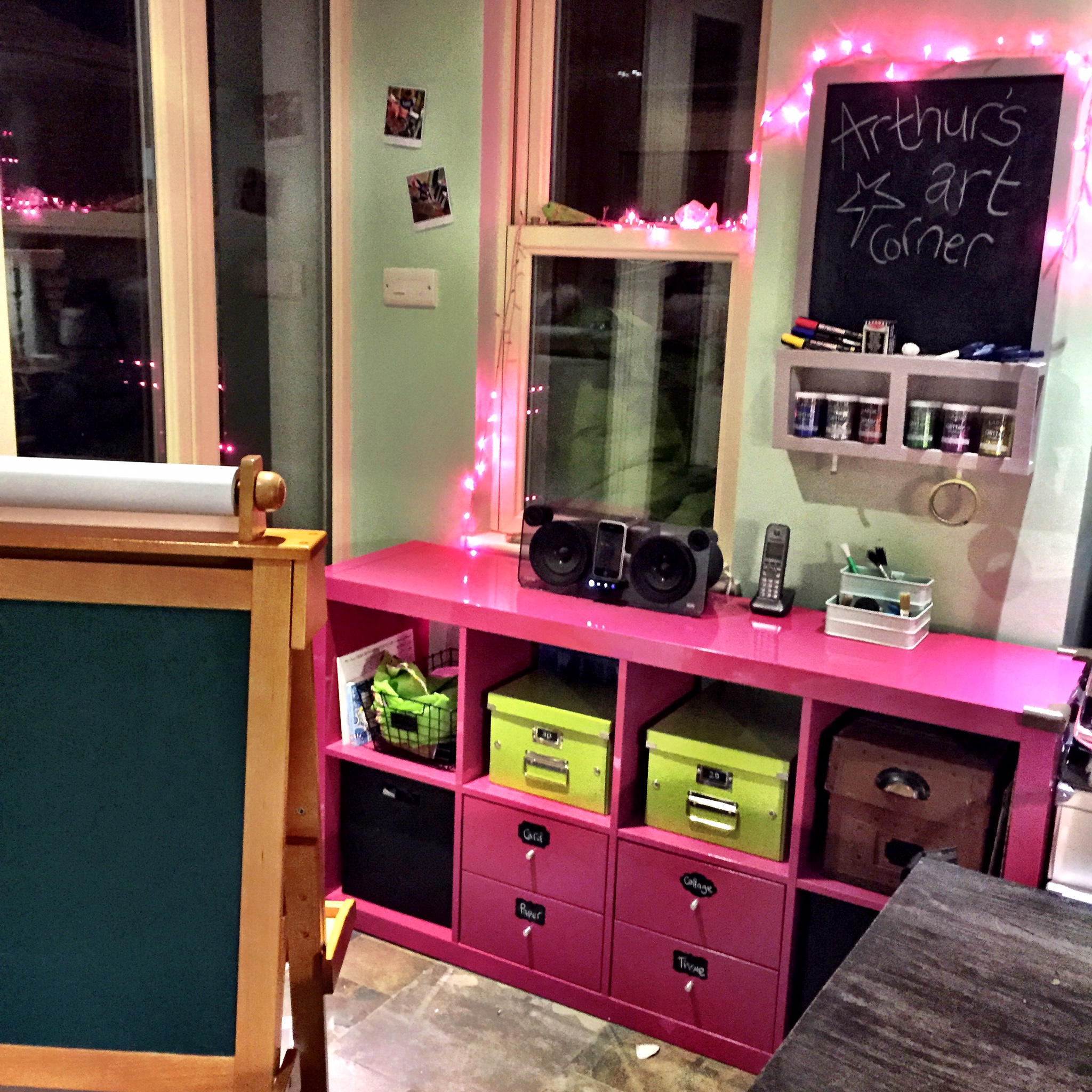
This week, I’ve finally got round to setting up a corner of the kitchen as a dedicated space for him to unleash his creativity – and to store the various bits and pieces I’ve been accumulating. My parents bought him an easel for Christmas which has centre stage, and with a bit of reorganising I’ve freed up a shelving unit. I’m certainly inspired – though I doubt I’ll be able to keep it looking this tidy!

IMG_0775

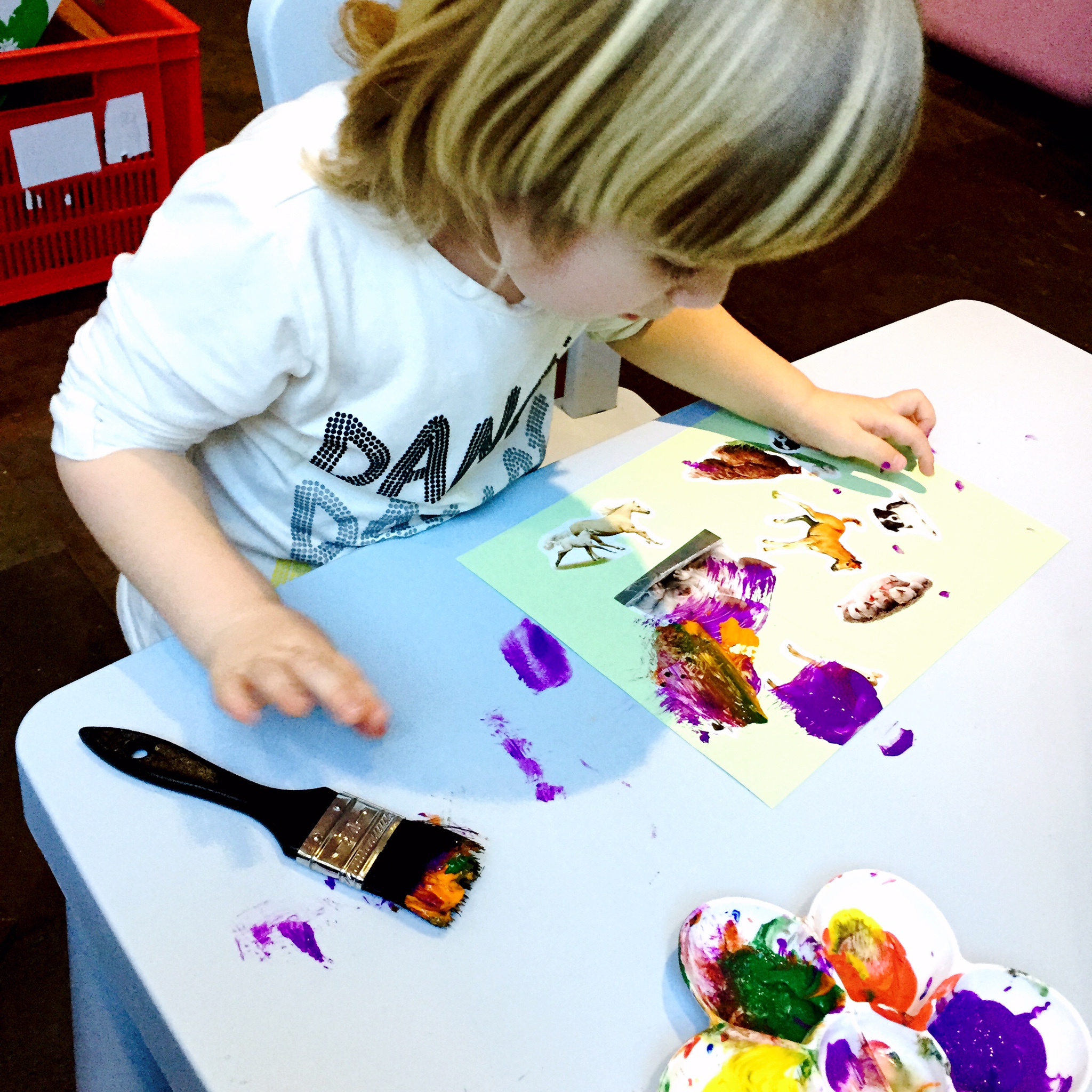
We’ve been making some tentative steps into exploring different materials over the past month or so. Stickers and glitter are definitely Arthur’s favourites, but I think he’s gradually starting to get over his fear of paint.

IMG_0779 IMG_0778

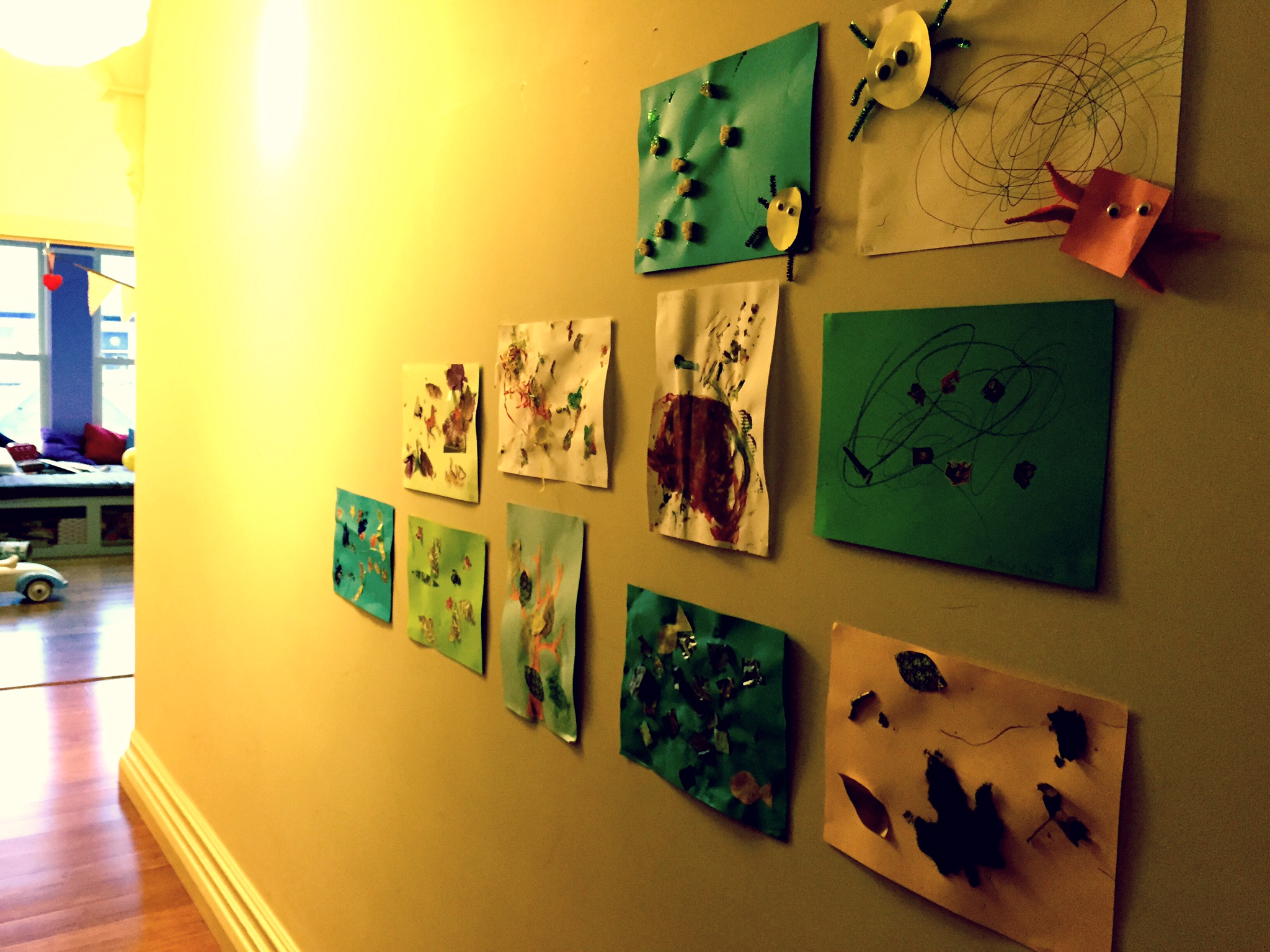
As he creates his little masterpieces, we’re adding them to a gallery in the hallway. He’s really enjoying seeing his creations on display, and he loves putting new pieces up when he finishes them!

IMG_0781

I’ve had the niggling feeling, though, that we’re only just scratching the surface of what we could be doing. I’ve been seeking out inspiration online and in a couple of great books I’ve found, but what I’ve really been hankering after is somewhere Arthur can go and get involved in creative play with other kids, where I can see some new ideas in action and discuss logistics with other mums, and where I don’t need to worry quite so much about the mess!

So when I heard a local mummy friend of mine was setting up science-inspired arts and craft workshops for toddlers and preschoolers in Brixham I couldn’t wait to go and have a look.

IMG_0771

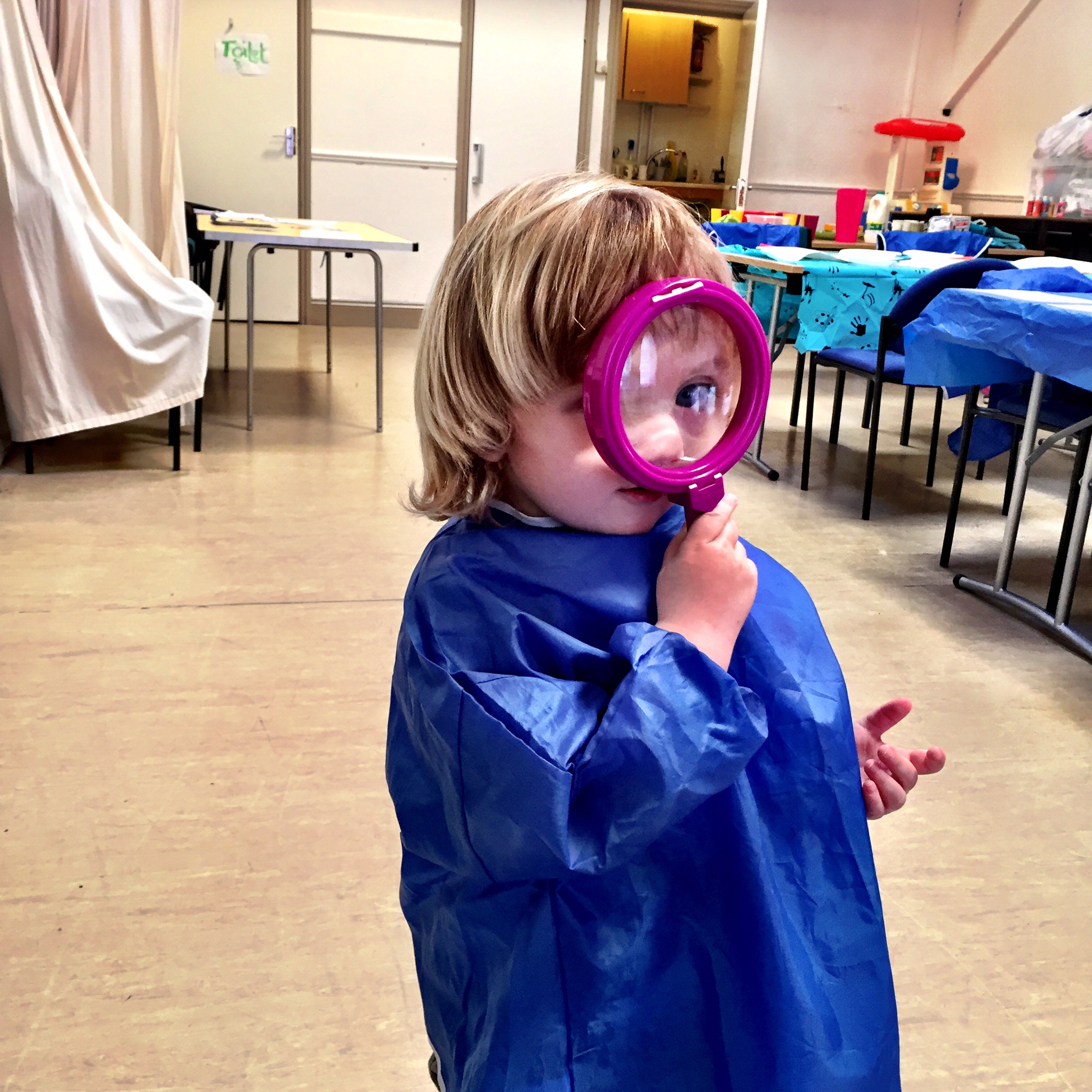
Our first visit to Craftivity Lab was on Wednesday, and we loved it. The workshop was held in a lovely bright, airy space split into different zones for exploring, experimenting and getting messy. Whilst everything had clearly been very carefully planned (this week around the theme of weather), Amanda was keen to let the children take the lead and interpret her activities as they saw fit – with guidance if they needed it of course.

IMG_0772

Arthur loved the sensory tray, and was especially keen on throwing the cotton ball clouds (or were they snowballs?) up into the air. I made a mental note to get some extra ones for home to satisfy his urge to throw – even he can’t cause any damage with cotton wool…

He was soon drawn towards the painting, and although he’s still not utterly convinced he hasn’t stopped talking about rainbows since.

IMG_0770 IMG_0769

He wasn’t so interested in the chromatography, but it took me right back to early science experiments at school! I reckon it’s definitely one to try again when he’s a bit older…

IMG_0764

What I think is particularly exciting about Craftivity Lab is how closely Amanda is observing the children playing and learning and creating to inform her planning for future sessions. She couldn’t help but notice Arthur’s love of throwing (to be fair, he wasn’t the only one…), and is going to build that in with some more physical activities next week. I’m already looking forward to it!

I feel like I’m finally making headway with encouraging Arthur’s creativity, and now that we’re a bit more organised I think there should be plenty more opportunities for arts and crafts fun. I’m definitely still on the look out for more ideas though – so if you can think of anything Arthur might enjoy then please let me know!


My word of the week this week is creativity.

The Reading Residence

The homemade Christmas gift experiment

IMG_3776

Last Christmas I got it into my head that it would be a really nice idea to make people’s presents. That was after I’d bought them of course, so it didn’t happen. And once the festive season began to fade my ambitions faded with it: I had a novel to focus on, and there simply wasn’t enough time for any serious crafting.

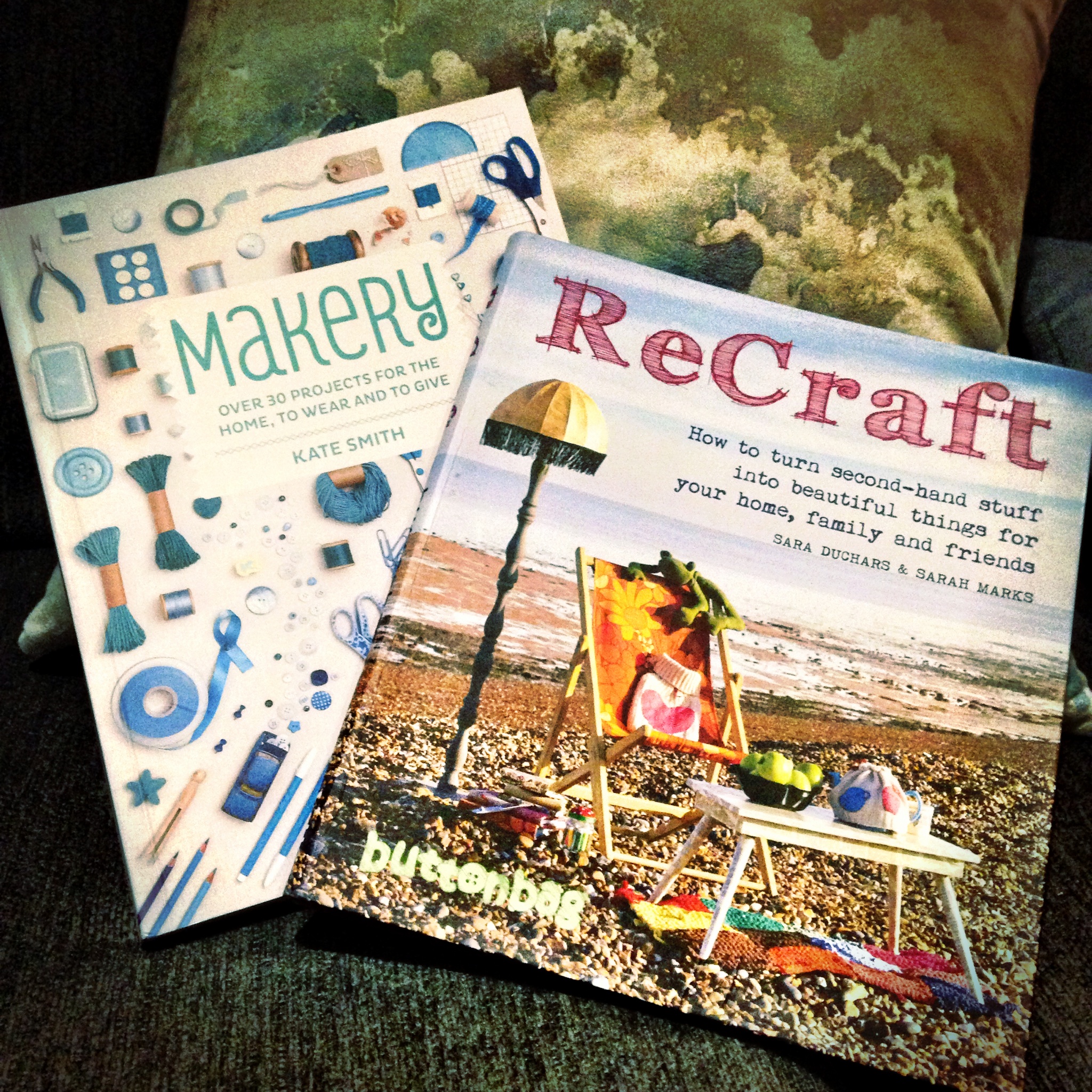
But then in mid-November the thought of a homemade Christmas fired up again. I started looking around for some inspiration, finding two books especially interesting: Makery and ReCraft, both using a combination of found and bought materials to create original and useful pieces.

IMG_1615

I honed my ideas, and over the following couple of weeks began to gather the materials I would need. I was starting from a pretty basic set of skills – in fact the amount I was going to have to learn to pull of my plan was a major motivating factor. I had a sewing machine: it had been gifted to me last Christmas, but apart from a length of birthday bunting I’d never actually used it. But in my mind I’d committed by this point so I wasn’t about to give up.

I started small, with some gold necklaces made from refashioned toy animals and personalised notebooks for selected friends. But as Christmas drew ever nearer I realised I was going to have to take the plunge and tackle some of my more complex ideas.

It was a massive learning curve – especially where the sewing machine was concerned. I’d actually made the first few gifts before I realised that I was using it without the UK adapter. It’s a vintage Bernina, and fortunately very forgiving, but that did explain why it had been running at a million miles per hour…

I got over that hurdle, taught myself a few other crafting skills, and with the help of the books, the internet and a healthy dose of imagination, completed my mission a couple of days before Christmas itself.

What follows is a list of my craftings, mainly with pictures (apart from where it seems I got so into the making I forgot to take any) and with links where appropriate. I haven’t included detailed tutorials but I do hope to get round to that in the future – for some of these at least. If there’s anything in particular you’d like to know more about then please let me know in the comments!

For the kids 

There were three children I wanted to make presents for: Arthur (nearly two) and his two cousins, aged three and five.

For Arthur I had decided months ago I wanted to make a doll. Having trawled the internet for ideas I decided on a Waldorf doll: I liked the principles behind it, and the fact that I could tailor it to suit him. There’s lots more I could – and will at some stage – say about this project, but I was generally pretty happy with how it turned out.
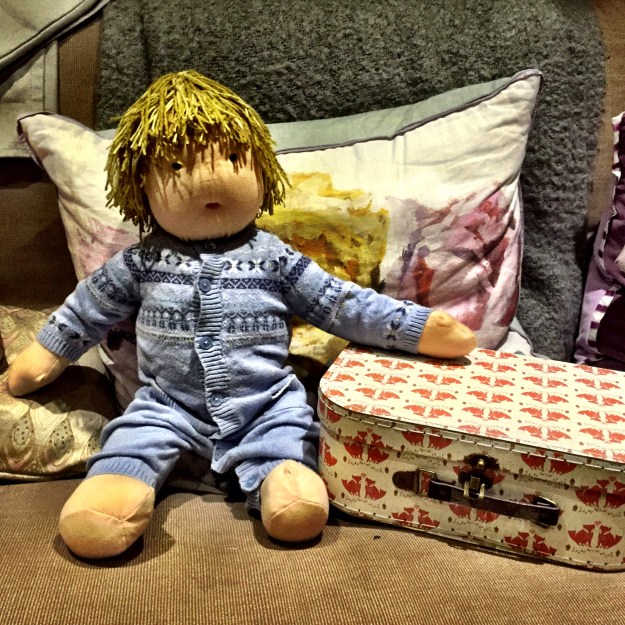
IMG_0673

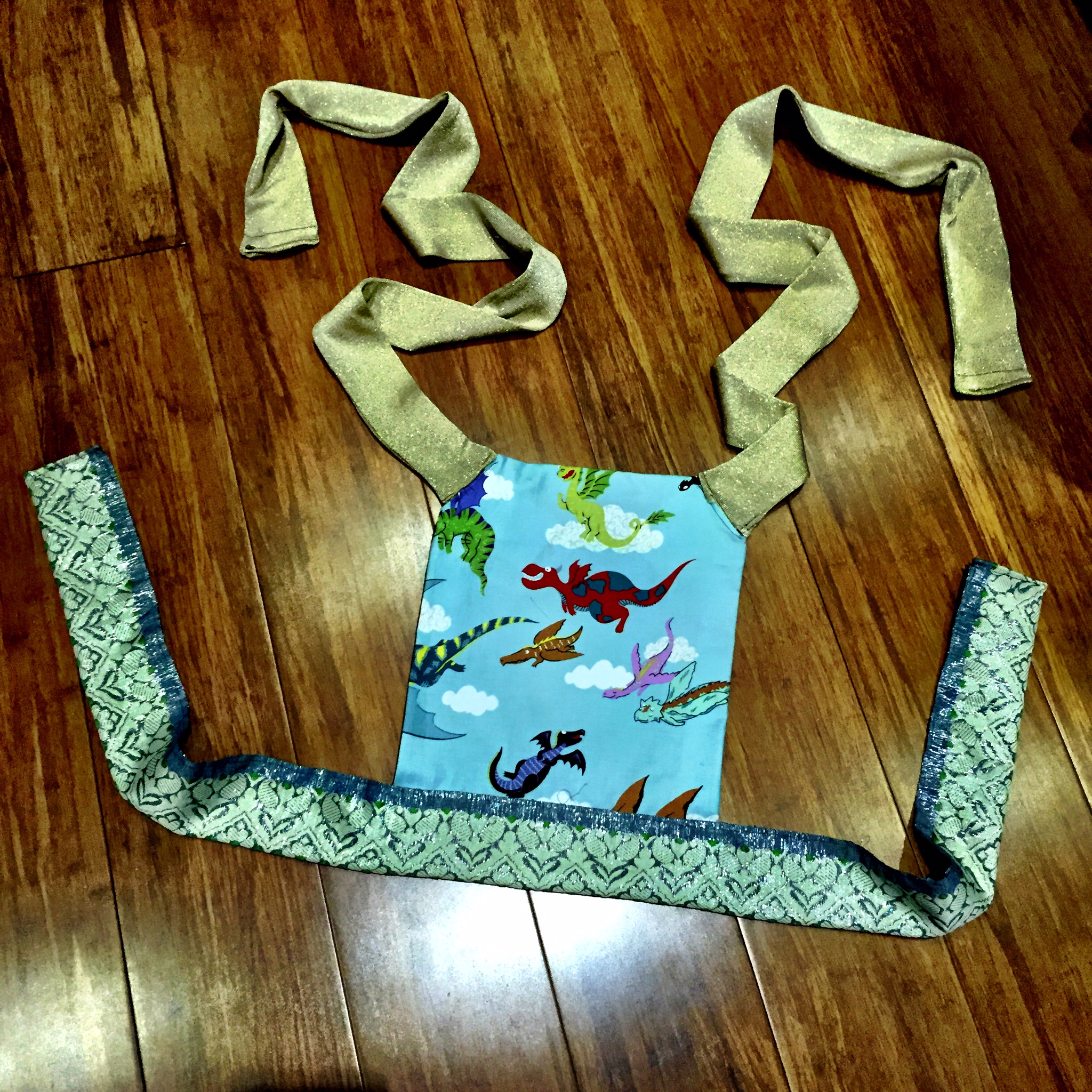
I came across a vintage pram in Oxfam to go with it, filled a couple of cardboard suitcases with a selection of clothes and accessories, and also made a doll-sized mei tai which only seemed appropriate for my little sling baby.

IMG_2370

IMG_0672

For Arthur’s cousins, I was keen to create things which would inspire imaginative play. For the three year old I decided on a hobby horse, inspired by one from Red Ted Art.

IMG_0674

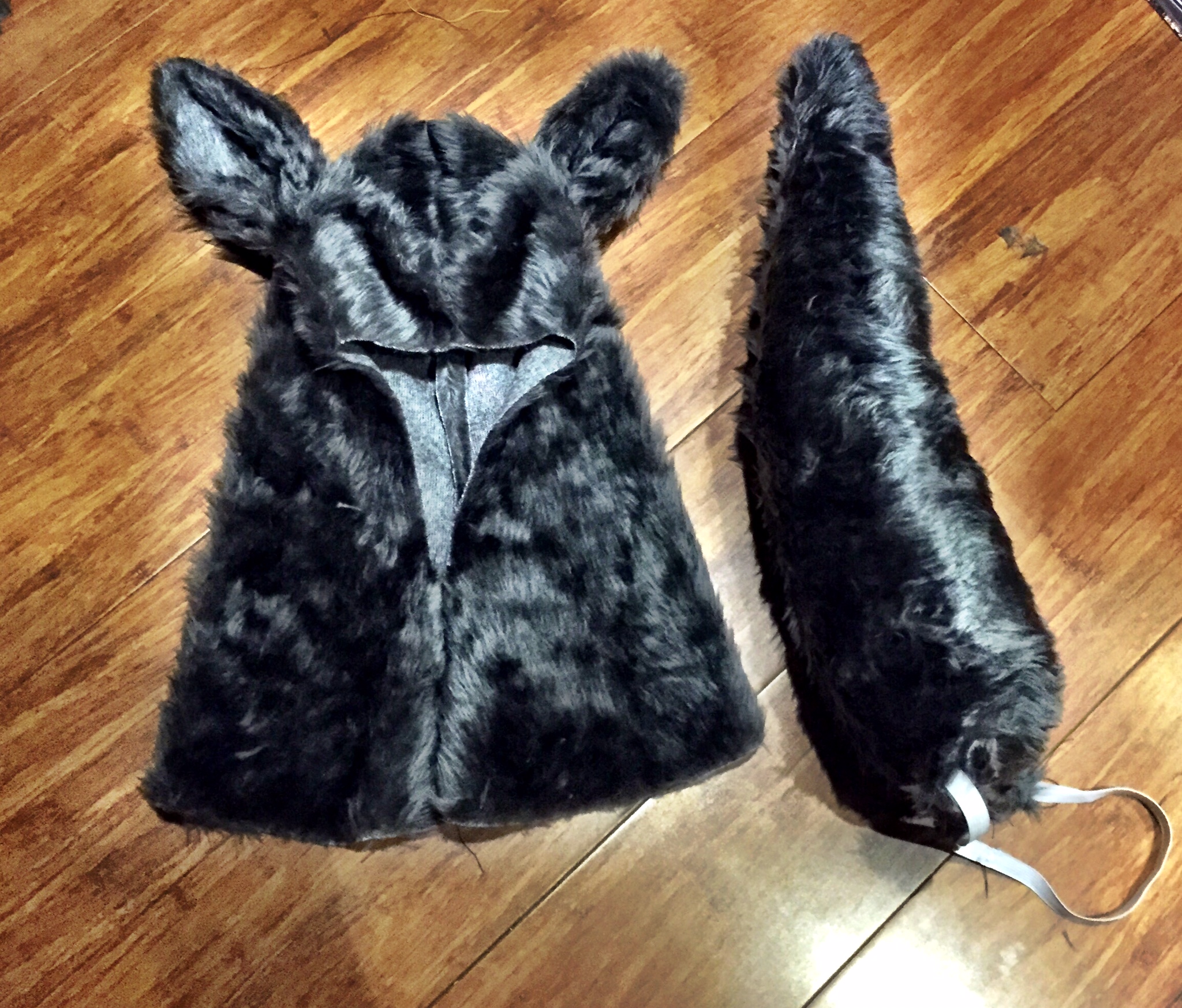
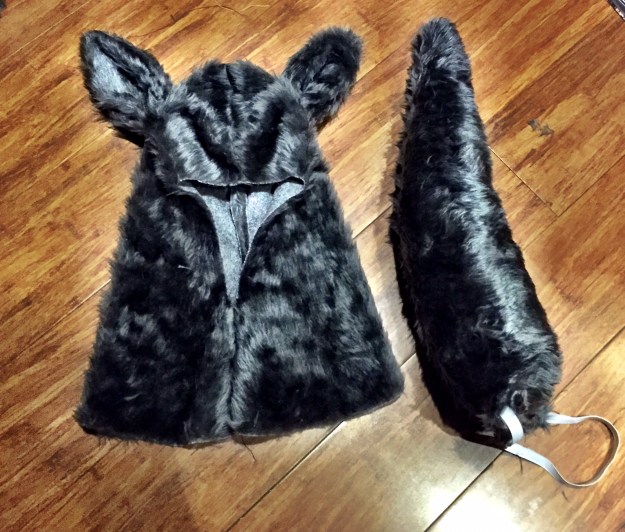
And for the five year old I made a wolf costume, loosely modelled on an idea in ReCraft.
IMG_0678

For the brothers

There were five grown-up boys to make presents for, and they were actually my most challenging at first. By focusing in on their interests and just generally where they’re at, though, I soon came up with ideas.

Leigh’s brother is very into comics and graphic novels, as is Leigh. So when I came across the comic book coasters in Makery I figured they would be perfect. In the end Leigh did the actual crafting – clearly I couldn’t be trusted to choose the right pictures…

My eldest brother was about to embark on an adventure across the pond, beginning a new job in New York in January. So I carefully chose some fabric to make a passport case, again following instructions from Makery – and made a matching one for his wife too.

IMG_0675

IMG_0677

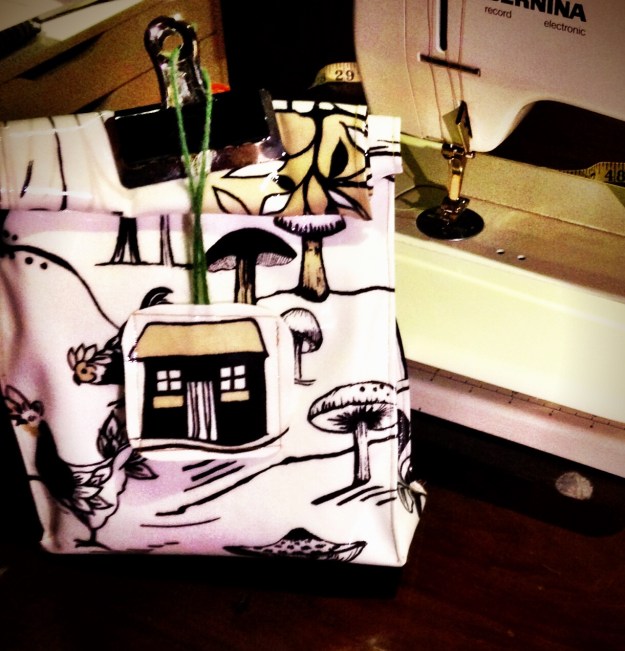
My middle brother is very into self-sufficiency and the environment, and has just finished a Masters degree in soil science. I made him a lunch pouch (another Makery idea), again choosing the fabric carefully, to help him on his eco-friendly path.
IMG_0689

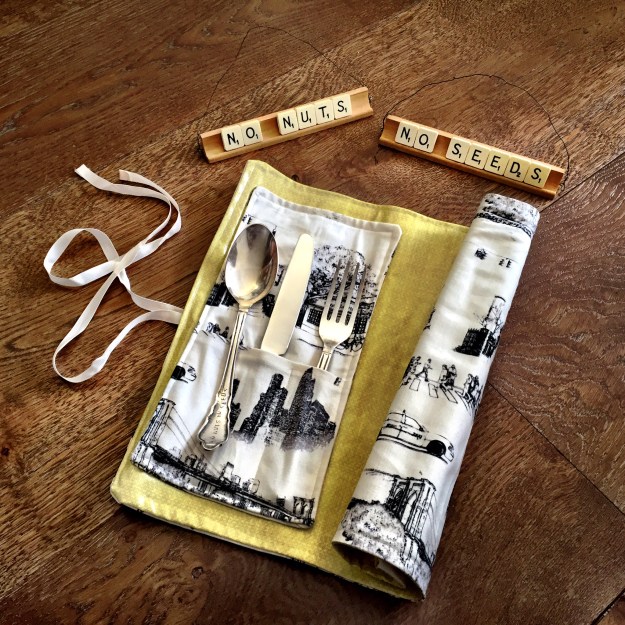
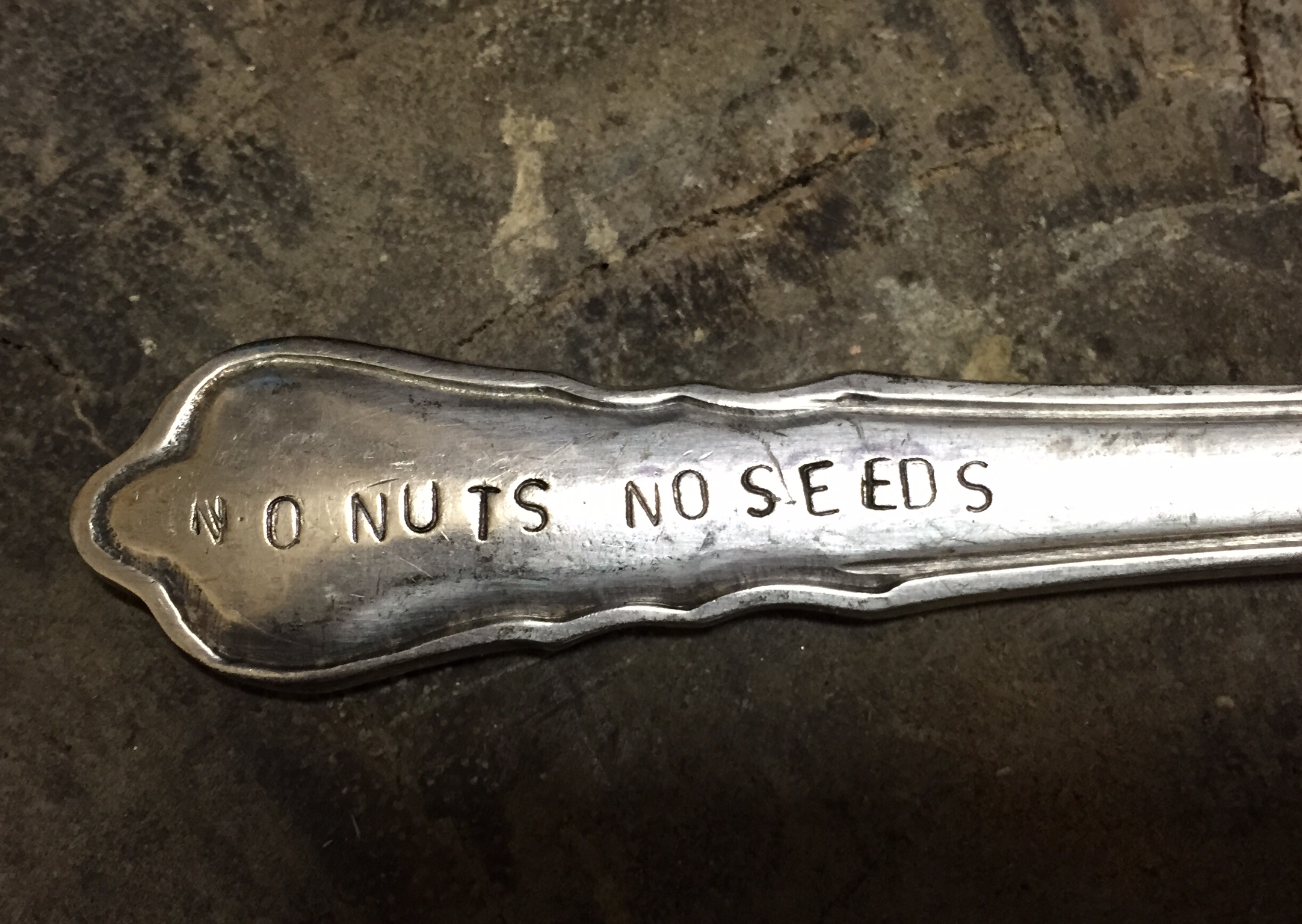
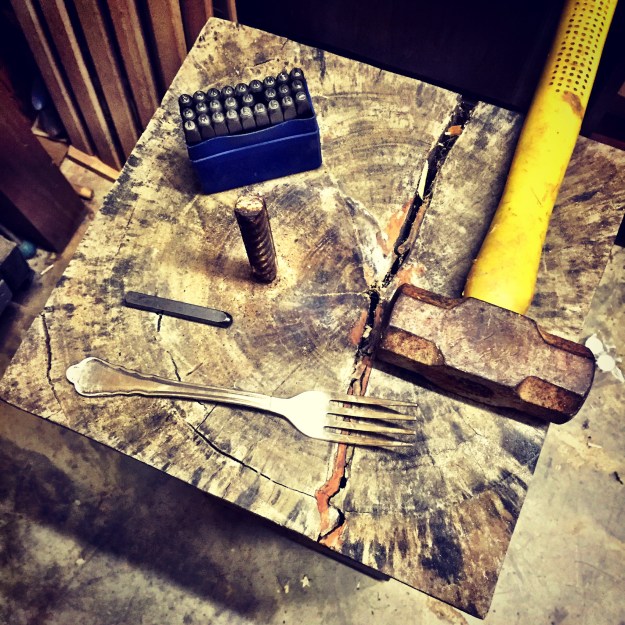
And the youngest… What exactly do you make an international rock star? I decided on something to make his life easier on the road, designing an allergy-friendly eating kit with stamped vintage cutlery and signs for the kitchens his food is prepared in. I might need to make a set for myself too!
IMG_0692

IMG_0691

IMG_0690

Ben’s fiancee’s brother was also joining us for Christmas, and with Leigh’s help I made a set of scrabble fridge magnets. He’s in his final year at Oxford and I figured they fitted with the student vibe – I’d actually quite like a set of those as well…

For the girls

The four grown-up girls were a little easier to come up with ideas for. There was the passport cover for Greg’s wife, and for Ashley’s fiancee I created a picture from framed vintage lexicon cards to celebrate her growing business, Queen Bee Cakes. I’ve seen these all over the place, but I quite liked the addition of the lace background to give it a vintage feel.

IMG_0670

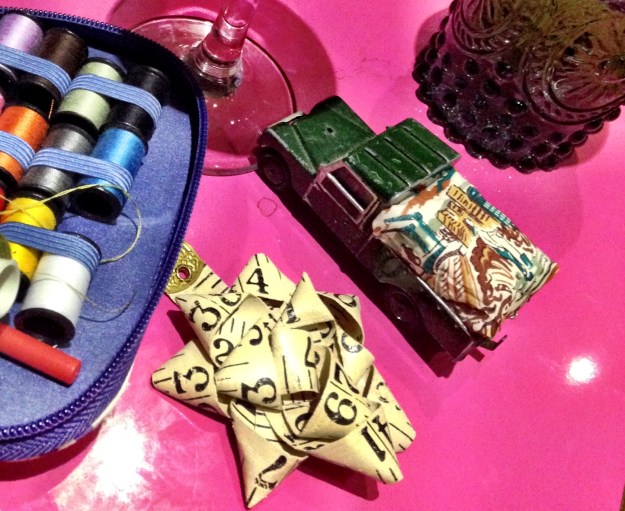
For my youngest almost-sister-in-law I had a raft of ideas – she’s a clothes designer, and I came across all sorts of crafty things I thought she might like. In the end though I settled on a vintage tape measure brooch and a toy truck pin cushion – once again inspired by Makery.
IMG_0688

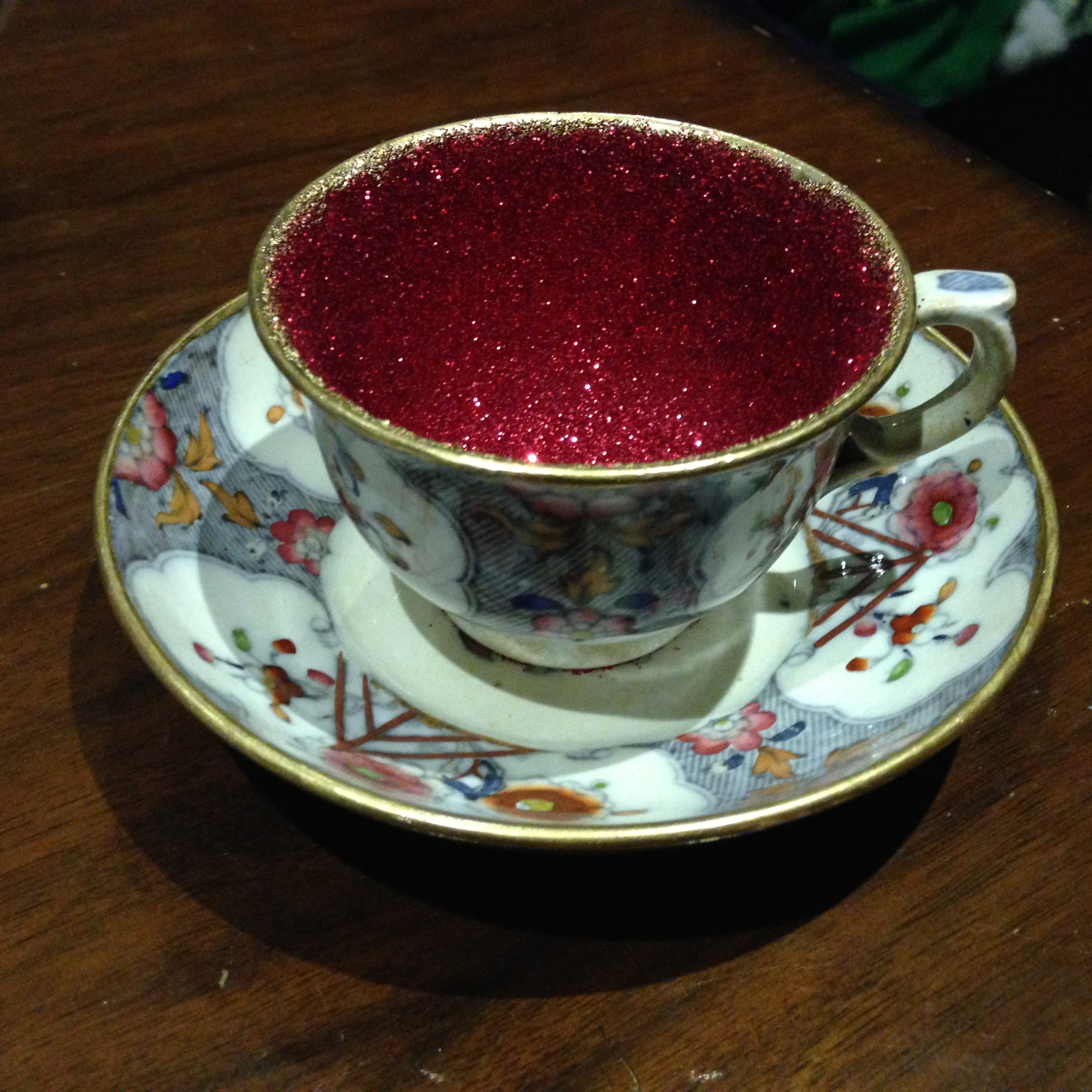
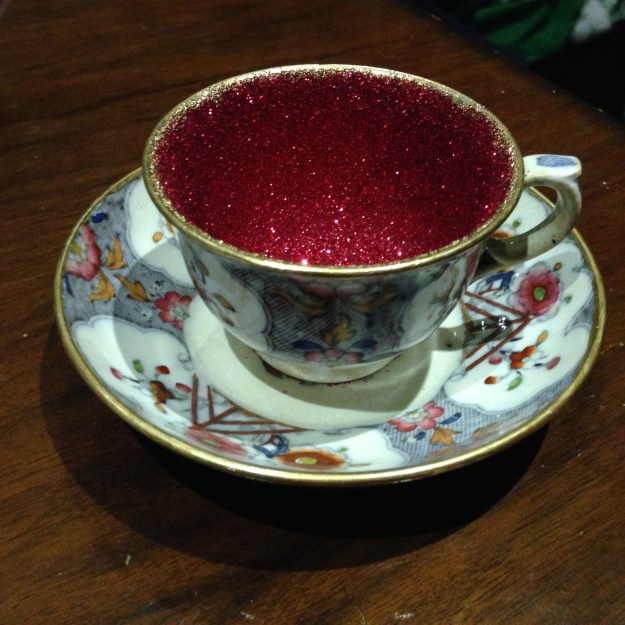
Leigh’s brother’s wife was a little trickier, being considerably more sophisticated than me. But then I fell in love with these glitter candle holders made from vintage crockery in ReCraft– easy to make, but surprisingly effective.
IMG_3858

For the parents

Neither of our dads are massive fans of stuff, so we decided to go down the route of photo gifts. For my dad I printed off an image I love of him with my Grampa from this summer, presenting it in a refurbished vintage frame.

For Leigh’s dad we cheated a little – we wanted to give him a jigsaw, and decided that one with the necessary complexity would be a little beyond my skills. So we created one with the help of photobox, and I made a little tin to keep it in from an old fairy light box.

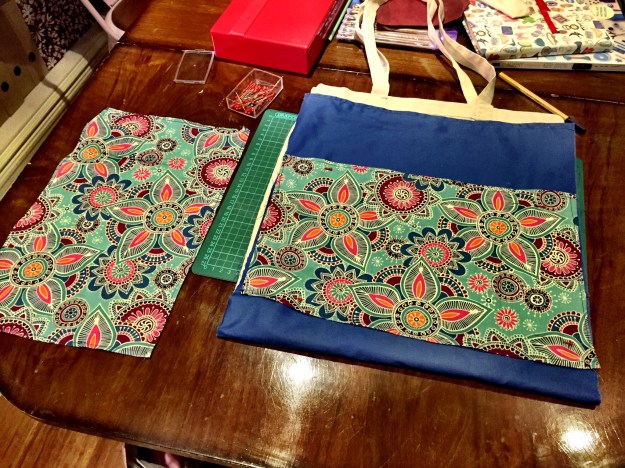
Our mums were a little easier. Leigh’s mum is an expert at crochet, so I made her a bag to keep her supplies in – along with a pouch of new bamboo crochet hooks and a book of adorable crocheted animals.
IMG_0693

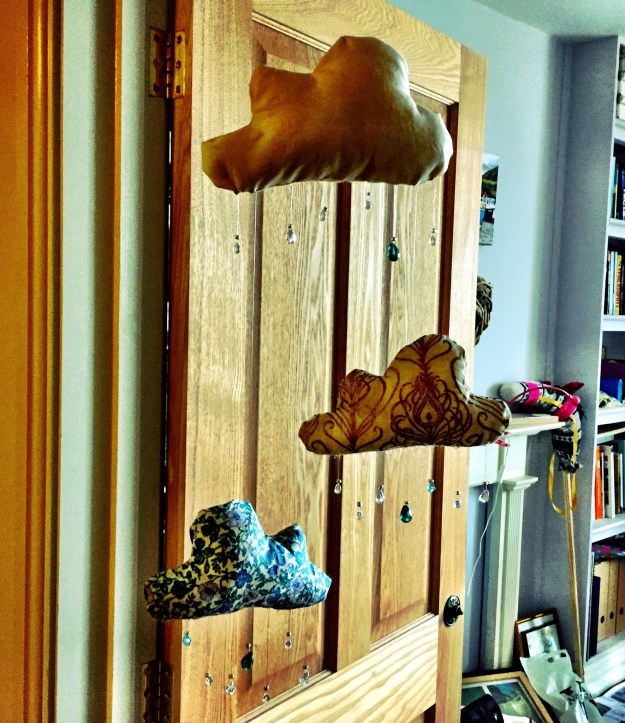
For my mum, I fell in love with this mobile, inspired by a Liberty creation. She embraces the changing seasons in her countryside home, and I loved how this design brought beauty to the rain to brighten up even the greyest day.
IMG_0680

For my Grampa

The final recipient of a homemade gift was to be my 96 year old grandfather. Again stuff was the last thing that he needed, but he’s been an invaluable support in reading the drafts of my novels and I thought he might like to sample some of my blog. He’s not online, but I found a brilliant company who turned a selection of posts from my blog into a beautiful book. Not quite homemade, but certainly with a lot of my creativity in it.

So there you have it! A selection of homemade gifts for all the family. There were moments when I’d regretted my decision – generally when it was three in the morning and I just had to finish one last thing – but it was immensely satisfying to give presents which I had made myself. Now I just need to get thinking about what I’m going to make next time round…

Linking up to The List with Hannah at Mums’ Days and Aby at You Baby Me Mummy.

Comprehensive, creative and democratic: my three wishes for education

With another national teacher’s strike looming next week, I’ve been pondering a lot about just what is wrong with our education system at the moment. As a former teacher, a governor and a parent, I fully support the difficult decision NUT members have made to strike. Of course a strike will cause disruption, but with the rhetoric often levelled against teachers in the press it’s easy to forget that ultimately the people who will suffer in a dysfunctional system are our children. Teachers who are overworked, undervalued and disillusioned will not be able to provide the education our children need and deserve. As the professionals at the frontline of Gove’s misguided reforms, society needs to trust teachers when they say that things are not OK in our nation’s schools – and to support them in the face of the bullies who are powering on regardless.

However as well as thinking about everything that is going wrong with the education system under the Tories’ guard, we mustn’t forget to hold on to our core beliefs about how our education system should be. It’s all too easy to get caught up in the minutae, particularly when any time to think is being eroded at an ever-increasing rate. Every teacher I know entered the profession with a philosophy that guides the choices they make in and beyond the classroom and keeps them focused on what’s really important. It would be a sad day indeed if, when teachers finally feel able to raise their heads above the parapet, they realise that the barrage Gove has unleashed upon the profession has eroded those core beliefs that led them into the classroom in the first place.

With this in mind, I’ve revisited my own philosophy of teaching and condensed it into three wishes for education: three core things which I believe if we could find a way to encompass would create a system fit for our young people and the futures they will carve for themselves and for society.

I wish our education system could be:

1) Comprehensive

I am a staunch supporter of comprehensive education: a system which rises above the divisions and inequalities in our society. As a teacher (and now as a governor), I gravitated towards schools that were called comprehensive, but the problem with our current system is that no school can truly call itself that.
Whilst we have a system that includes private schools and grammar schools – and increasingly a confusing patchwork of options which chip away at the comprehensive ideal in different ways – then the schools that are left are missing vital sectors of society. In order to have a system that everyone – particularly the most powerful and influential – is invested in, we need everyone to be a part of it.

I have made no secret of the fact that I went to private school – and have written about why I wish I hadn’t. Many people I speak to dismiss the idea that we could get rid of private schools in this country as naive. Perhaps it is, but it isn’t without precedent. The much-revered education system in Finland has no private schools – they were abolished in the 1970s – and its achievements come from a focus on equity rather than excellence. Public figures from Warren Buffett to Alan Bennett have called for the abolition of private schools to promote social justice. If Gove was really serious about the gap between rich and poor in this country being “morally indefensible”, then I would have thought private schools should be the first thing to go.

Personally I wouldn’t stop there though – in order for our system to be truly comprehensive I’d get rid of grammar schools too. There are only 164 of them anyway, against over 3000 secondary schools in total, and they are concentrated in particular geographic areas where they undermine the comprehensive system: heaping pressure on parents to try to do the right thing by their children and skewing the intake and results of schools that do not select by ability.

And whilst on the subject of ability, I’d actually go one step further in my quest for a truly comprehensive system and, as Finland has done, outlaw setting by ability even within schools. The damage it causes to the aspirations and self-esteem of children consigned to bottom sets is indefensible, and evidence collected over thirty years indicates that, counter to popular opinion, it actually damages pupils’ achievement.

Our schools should obviously be places of academic learning, but they are about so much more than that too: by making them truly comprehensive we could begin to build a better society from the outset.

2) Creative

The second foundation of my ideal education system would be creativity: not just in the curriculum, but underpinning the system as a whole.

Particularly at the moment, with the sidelining of arts subjects in the secondary curriculum as a result of the now-defunct EBacc, school seems to be a journey away from creativity for young people. As pre-school children their minds are open and alert to a multitude of ways of seeing and interacting with the world, but for many as they move through the exam factory their minds are narrowed. This is of concern not only for the creative industries: as the human race faces increasingly complex challenges, creative thinking is key to find solutions to the new problems we face.

So much of what Gove seems to want to do to the curriculum is backward looking: a return to a 1950s education stuffed with facts at the expense of learning. We need to encourage our young people to think, not just to regurgitate, if they are ever going to be well equipped for their futures: futures which in reality we know close to nothing about.

This space to think is a privilege that should be extended to our teachers and school leaders, too. No-one is saying that our schools were perfect before Gove came along, but education professionals need to be give the time and professional autonomy to creatively develop a system that really works. There is a wealth of research that can be drawn on to encourage this, and teachers should be encouraged to do their own research too to find out what helps their students in their classrooms. I was lucky enough to engage in such research whilst completing my Master of Teaching qualification, and it was incredibly powerful for my motivation and sense of pride in my work – something which all our teachers deserve.

Teachers don’t need to be told how to do their jobs by the government any more than young people need to be told what to think by their teachers. A system built on creativity would allow all stakeholders space to grow.

3) Democratic

The third thing that I believe should be at the heart of education is democracy – again both within and beyond the classroom, for pupils and teachers alike.

I believe in child-centred learning. Not in the unfocused, wishy washy way that has recently been denigrated in the media, but in a way that puts the child at the centre of their learning experience and structures an appropriate learning journey around them. There are a myriad of ways that this approach can manifest itself in schools: from getting students’ input into policies and procedures, from enlisting their help in planning schemes of learning, or simply by providing them with projects where the outcomes are not set in stone but can be crafted by their interests. Even better are approaches where young people’s learning can be rooted in projects whose impact is felt beyond the school gates, helping them see that their efforts really can bring about change in their communities.

For so many young people, there is so little about their lives they can control. In our schools we should teach them that what they do does matter, that they can have a positive impact on themselves and society by the choices they make.

Teachers and school leaders too need to feel that they are part of a democracy. There is not much worse for morale than feeling like your voice doesn’t count, and yet this is the reality for the majority of professionals in education under Gove’s regime.

Of course in all of this someone is going to have the final say: but everyone benefits from listening to the people who are really affected by what happens in our education system, and very few do if they are silenced.

So there you have it: I wish for an education system that is comprehensive, creative and democratic because I believe that is what is best for our young people and for our society. When you think about the teachers striking on Wednesday, remember that they too will have strongly held beliefs that are at the core of what they do, however much the government and the media may try to represent their actions as selfish and narrow minded. And if you are a teacher, or a parent, or in fact anyone with an interest in education, I’d love to hear your ideas too. What are your three wishes for education? How can we create a system that will work – now and for the future?

Thank you to Sara at ‘Mum turned Mom’ who inspired this post with her prompt: ‘If I had three wishes…”

mumturnedmom

Brilliant blog posts on HonestMum.com

Post Comment Love