Tag Archives: novel

A change of perspective

imageedit_3_3093644134

So. Back to the novel.

I’m trying not to think about quite how long it’s been since I’ve done any proper work on it, and am consoling myself instead with the fact that, in the midst of all the not-writing I’ve been doing this summer, I might just have had a teensy bit of a breakthrough.

There’s been something niggling away at me ever since I wrote the first draft – ever since, even, I came up with the concept. It’s the thing that, I think, has led to the inability of my agent to be entirely enthusiastic through all the various rewrites in the months and months that followed, and has led to me clamming up when asked to explain exactly what my novel is about.

Because it turns out that it might not be about what I thought it was at all.

The lightbulb began to flicker into life on a sunny afternoon in my garden when I was sat with a writer friend who had come to visit, discussing what she thought of my manuscript. She was effusively positive, loved the concept, was won over by its uniqueness and its potential for adaptation for the screen. I basked in the glow of her admiration until suddenly it became very apparent that she just hadn’t ‘got’ it. She had totally misinterpreted my main character, and as a result had completely missed the point of the novel I had written.

Or so I thought.

Over the course of the few days we spent together, as I reluctantly let go of the message I’d been trying to communicate and my friend convinced me that actually her reading had way more potential from both a literary and commercial standpoint, I realised that I had inadvertently told a completely different story from the one I thought I had. And actually the one I was left with might just have been what I was looking for all along.

I apologise if this is all coming across as excessively cryptic. I’d love to be able to fill you in on exactly what it is that’s been turned on its head to make me suddenly see the way forward. Unfortunately, though, it would completely spoil the story for you. And I very much hope that you will get to read it, one day.

I have been desperate to get on with editing since this little revelation, but things have been way too hectic. Even now I have a couple more weeks of adventuring before I can properly hunker down and set my story straight – but I do have a plan about what I’m going to do in the meantime.

Firstly, I am writing a synopsis. I started yesterday, and I am really, really hating the process, but it’s pretty essential that I get it done. I need to be able to express, confidently, what the novel I’m working on is all about – to myself, and anyone else who might be interested.

Secondly, I have a pile of inspirational reading that I need to make a bit of a dent in. The final phase of this summer’s adventures involves pootling around in a campervan, and I’m hoping that might go rather well with making my way through a book or five.

Then when we’re back I am diving straight on in to (yet) another edit. This time, though, I’m feeling much more confident about where it’s all going.

Just remember to remind me of that in a month or so!


Writing Bubble

The power of the narcissist

I’ve been grappling with a bit of a dilemma in the last few weeks. A figure from my past, who I worked hard to forget, has reappeared in a very public forum. He has been tasked by the government with a position of great responsibility, and that rankles with me. Because the person I knew ten years ago was far from deserving of such acclaim.

On several occasions I have come close to outing him – to sharing the details of his betrayal and asking, publicly, whether such a man should be trusted in this role. My decision not to was not an easy one to make: it does not come from a desire to protect him, or the feeling that he should be given the benefit of the doubt. It comes instead out of fear.

IMG_1158

Even as I type this I can feel my pulse quicken and a sour taste rise in my mouth. I am furious that, after all this time, he can have this hold over me: but such is the power of the narcissist.

This man did not abuse me, physically. What he did was way more insidious: undermined my self-esteem and worldview to the extent that I did not know which way was up any more, then pulled the rug from underneath me to reveal depths of deception that I had not even begun to imagine. He was an expert manipulator – to paraphrase his brother he was ‘a pathological liar who I would not trust with my own children’. And this is why, after much deliberation, I cannot bring myself to take him on. He has too much to lose, and I am sure he would have no qualms about destroying me in his quest to protect it.

Even at the time, it was hard to communicate to an outsider (or even to myself) what it was that was so toxic about our relationship. On the surface, I was holding it all together – a burgeoning teaching career, an active social life, the ability to turn on a smile whenever it was needed. But underneath it all I was slowly crumbling away. It took me many years to recover fully, and it’s just not a place I want to go back to.

It has got me thinking, though, about how strong women get taken down by manipulative men. I have met several women in the time that has passed who have escaped from similar situations, and each time my response has been similar: “But you’re so clever/pretty/funny/brilliant. How on earth could you let yourself get taken in by such a loser?”

And that’s from someone who’s been there. So how anyone who has not been subject to such skilled manipulation is expected to understand it is anyone’s guess.

This is in the forefront of my mind now as I begin to work on the latest draft of my second novel. Whilst it is not autobiographical, the dynamic of the central relationship definitely plays out along these lines. And the conversation I had with my agent about it last week mirrors my fears about trying to resurrect the injustices of the past. To her, it’s just not believable. The predicament my protagonist wanders haplessly into makes her look impossibly naive. It is the behaviour, she suggested, of a teenage girl rather than a confident woman in her twenties.

I wish I could go back and tell myself the same.

Of course, in the context of my novel, my agent is entirely right. Often events that are pulled directly from real life are incredibly difficult to translate into fiction. Without the anchor of incontrovertible fact the challenge of making someone buy into a story is all the harder. So I know I need to go back to the manuscript and work out how to do that, how to tweak and tease the details of my protagonist’s life and the way I tell her story to convince the reader that she really could be so vulnerable.

And against the backdrop of this ghost from my past being put on such a pedestal, my motivation to get it right is all the stronger.

I may not be brave (or stupid) enough to take this man to task on a public stage, but I can do my damnedest to expose the complex dance of mental disorder that unfolds in a narcissistic relationship. And maybe even, by holding a mirror sharpened by fiction up to the nightmare suffered by its victims, I can open up a dialogue which will enable others to be a little less afraid of confronting the demons in their past.


Muddled Manuscript


Him

IMG_0831

Now that I’ve submitted the third draft of my second novel, I have once again found my mind meandering to novel number three.

The scene that follows flashed into my mind when I read Sara’s prompt this week. It’s really not very cheery, I apologise. But, as these things often do, just writing it has helped me tease out some more details of the story…

It’s rough and ready and might not even make it into the manuscript itself, but I thought I’d share it anyway.

***

This was always the night of the year that she sensed his presence most strongly, and it was almost too much for her to bear.

She thought of their son, of course. Of the pain he had caused her as he had fought his way into existence. They had all said that it would be easier for her to handle, being so young. Her mother had refused to even begin to discuss it with her, and that had suited her just fine, but she’d never quite understood why the midwives hadn’t told her the truth.

The contractions had coursed through her body again this afternoon as she’d struggled to engage Year 10 with the themes of Henry V. More than once she’d had to grip her desk as she’d watched the minutes tick closer to the time when he’d been found.

She knew that it was not the memory of childbirth that had overwhelmed her.

Her colleagues knew nothing of her pain: knew nothing of him. She preferred it that way. She was certain of that, even if something in the deepest reaches of her soul sometimes called out for recognition, for acknowledgement.

She had no idea how they would react if she told them the truth.

So instead she bowed her head and complained of a headache. Of the time of the month. No-one questioned her – they tried to distract her from her agony with stories of their own, pushed paracetamol into her palm as if it might actually do some good. She took it gratefully before secreting it into the bin when no-one was looking.

Even now, alone in her flat with her cat nestled at her feet, she would do nothing that might push him away. There was a bottle of wine in the kitchen. That might have helped. She could have even scored some weed if she’d wanted to, sat with her back against the wall, knees raised and feet flat on the floor as she rolled a joint between them. Her downstairs neighbours had offered often enough.

But she owed it to him to be here, to be present as he was. She owed it to him to feel every molecule of her being shrink, raisin-like. She owed it to him to fully inhabit the gaping holes between those molecules as she searched for him, again and again.

Tears ran freely down her cheeks as she carefully undressed, folding her clothes neatly on the chair by the window. Her pyjamas were waiting cautiously underneath the pillow and she slipped into those now, trying to ignore the silent dripping of saltwater against the wooden floor.

After plunging the room into darkness she scurried beneath the duvet, making herself as small as she could to disguise the shuddering sadness that consumed her.

***

If you’d like to read more about this story you will find further glimpses here:

Smoke

Thirty

Gratitude

mumturnedmom
Nikki Young Writes

Seven top tips to help you edit your novel

Since I submitted the third draft of my novel last week, I’ve been pondering a lot about how I finally got there. It wasn’t easy, that’s for sure.

I was optimistic when I first got started on the whole redrafting process back in September, but it wasn’t long before I started to flounder. I got things back on track, and completed the second draft almost within my self-imposed deadline.

I knew there was still work to be done at that stage, so it was no surprise when I had to start work on draft number three in January. I had some great feedback to work with, and slowly but surely a third draft began to take shape.

I’m not saying that’s perfect either, but in getting to that stage I’ve learnt a lot about how to go about editing and redrafting a novel: and that is what I want to share with you here.

Tip One: Don’t rush it

It’s easy to get impatient when writing a novel. After the first flush of excitement even getting to the end of the first draft can feel like a slog at times, and that is absolutely nothing in comparison to the arduous process of getting your head round the edit.

Having said that I found that it all came much easier when I was ready. I think you have to trust that if it just doesn’t seem to be working when you’re explicitly focusing on it then maybe your brain just needs a bit more mulling time.

But having said THAT…

Tip Two: Set yourself deadlines – and stick to them

This might not be the way you work, but for me my procrastination skills are so finely tuned that unless I have some sense of urgency I could just drag a task out forever… Especially one as tricksy as this.

Editing deadlines

I found it really helpful to decide on an overall deadline (both times round I gave myself around two months to get the edit done), and then to break it down into daily goals. Those were a bit more flexible. I aimed for a chapter a day, and sometimes I did more, sometimes less. Sometimes I redid what I’d done the day before. Sometimes my brain had been whirring so effectively in between editing sessions that I whizzed through several chapters. But I generally had a sense of where I was at and could therefore balance things out to make sure I got to the end pretty when I wanted to.

And along the way, remember…

Tip Three: Listen to your characters

In my first draft, I think a lot of the details in the story were driven by what I thought the characters might think, or say, or do. But really I was just getting to know them – I had to make presumptions and fill in the gaps because there just wasn’t time to stop and focus and listen.

The bits where I’d just swanned on through were blatantly obvious when I came to look at them later – what was not so obvious was what to do about them. But then I remembered that I wasn’t actually doing this alone. In the process of writing the first draft I’d created several companions to my task – and now they were there, ready and waiting for me to breathe fresh life into their story, I really needed to listen more acutely to them and where they wanted to take things. Even if it wasn’t strictly where I’d thought I wanted to go.

Which brings me to…

Tip Four: Listen to your readers

It goes without saying that you need to find someone you trust to give you feedback at each step of the writing and redrafting process. Preferably more than one person, and preferably people who are avid readers – even better if they enjoy the particular genre that you’re writing in.

But once you’ve found those all-important beta-readers, it can be incredibly tempting to pick and choose what bits of feedback to listen to. It’s your novel after all, right? And if you don’t agree with what they say then it’s your prerogative to ignore it, right?

Except they are in a much better position than you to measure how your novel will be received. Because they are readers – and readers are what it is all about.

There is a big gulf from the novel in your head and the novel that people will read, and that gulf can only be crossed by getting the right words on the page. If you think you’re communicating something, but your readers are telling you that you’re not, then you need to ask yourself why.

Though you mustn’t forget the most important thing…

Tip Five: Trust yourself

This might seem to fly in the face of everything I’ve just said, but it really doesn’t. You may well receive conflicting feedback, or feedback that really doesn’t sit comfortably with what it is you’re trying to achieve. And if you do the you need to remind yourself that, ultimately, you are the author of this work.

As long as you don’t dismiss things out of hand, as long as you really consider how you might be able to make the changes people are proposing, then it’s ok to stick to your guns and find a way to make your way work.

Just remember…

Tip Six: It’s ok to get rid of stuff you like

Writing a good novel is not just about good writing. It’s about how all of your words and sentences and paragraphs and chapters sit together to create people and worlds that are meaningful to your reader.

Some of the bits you end up cutting might be pieces of writing you love. Keep them! Just don’t be afraid to recognise that they might not work in this manuscript, here and now.

Editing a novel

And whilst we’re on the subject of fear…

Tip Seven: Don’t be afraid to experiment

Once you’re past the relatively liberating stage of writing the first draft, you might find a desire for perfection creeping in around the edges. You might feel like you have to get your next draft just right – perfect, in fact. And that – I speak from experience here – can be pretty paralysing.

The only way I was able to move forwards was by freeing myself up to experiment. To try things out, even if I wasn’t entirely sure they worked. To take things in a different direction. For me this was especially true of the second draft. I got rid of lots of those experiments by the time I got to draft number three, but the residue they left behind had undoubtedly made the manuscript stronger.

And that’s it!

There are other things, too. I’ve already written about the more prosaic things that kept me going when the going got tough. But for me the thing that really helped me bring these edits to a conclusion was getting myself into the right mental state. And it is that I hope these tips will help with.


Writing Bubble


The List

The final chapter?

How long is a piece of string?

Despite a busy week of non-writing related things, including a trip to Brighton and some well-overdue catch-up time with old friends, the edit is continuing apace.

After getting to the end of the novel last week, I have now swept through it again – getting rid of continuity errors and unnecessary repetition, tightening up description and dialogue, adding in a few little layers of intrigue to the plot. Overall it is maturing nicely.

But as with so many of these things this ‘final’ sweep has thrown up more questions. Most significantly, have I organised it as effectively as I could?

I’m talking chapters here – how long, how many, where they begin and end. I thought I had that all figured out. I began the whole writing process with chapters after all – once I’d done my initial planning and a story had begun to take shape I neatly split it into 30-odd sections to structure the first draft. They weren’t all individual scenes, but they seemed to be the natural chapters – or so I thought. I gave all of these an identical word count target. I didn’t stick to it religiously, but they all turned out pretty uniform.

And I figured that was fine, until the bird’s eye view the latest read through afforded me made me doubt that.

I started to see chapter breaks elsewhere, and to link scenes in my mind that I’d previously separated. Some events seemed to warrant being surrounded by white space all of their own. And in general I found myself wanting to make the chapters shorter.

Ever the researcher, I did have a bit of a sniff around the internet to see what advice I could find. But the most common response to the question ‘how long is a chapter?’ seems to be ‘how long is a piece of string?’. There were a couple of sites that suggested readers prefer uniform chapter lengths so they can pace themselves more effectively and are more aware of what’s coming next. But then others that said a variety of chapter lengths was preferable, and these artificial divisions in the story should be governed only by the story itself.

The latter opinion definitely resonated more strongly with me. Everything I know about good writing from my years spent teaching it tells me that variety – as long as it’s not purely for the sake of it – is the way to go. This is borne out in the books I enjoy to read too, especially the ones that get me totally hooked. Thinking about it, I realised I like short chapters too. I hate the feeling of having pages and pages to go until I can easily take a break, and if I get to the end of a chapter then I’m more inclined to read on if it’s not going to be too epic.

I think this possibly makes me a bit of a lazy reader, but I figure I can’t be alone in that.

So there are considerably more chapters in my novel now. Most of them are shorter, some significantly so. And their length, and where they begin and end, is dictated by what the story and the characters need – and by default the things that are going to make the reader want to know what happens next.

There is one last thing I’m mulling over (well, for now anyway). And that is – how do I label these chapters? In the very beginning they had titles, but I ditched them fairly early on. Since then they’ve had numbers, but those are starting to feel a bit stilted as I navigate through the manuscript. I’m wondering if there is an alternative, or if in fact the chapters need any label at all. And then I’m wondering if I want to divide the novel into parts, to demarcate the different phases the story goes through.

What do you think? How do you like the novels you read to be organised? Or indeed what techniques have you used in your own writing?

I realise I’m possibly over-thinking things, and this is exactly the sort of detail that a publisher might decide to change if they ever get their hands on my novel, but in the meantime I may as well get things as close to perfect as I can, right?


Writing Bubble

So I think I’m nearly done…

IMG_0801

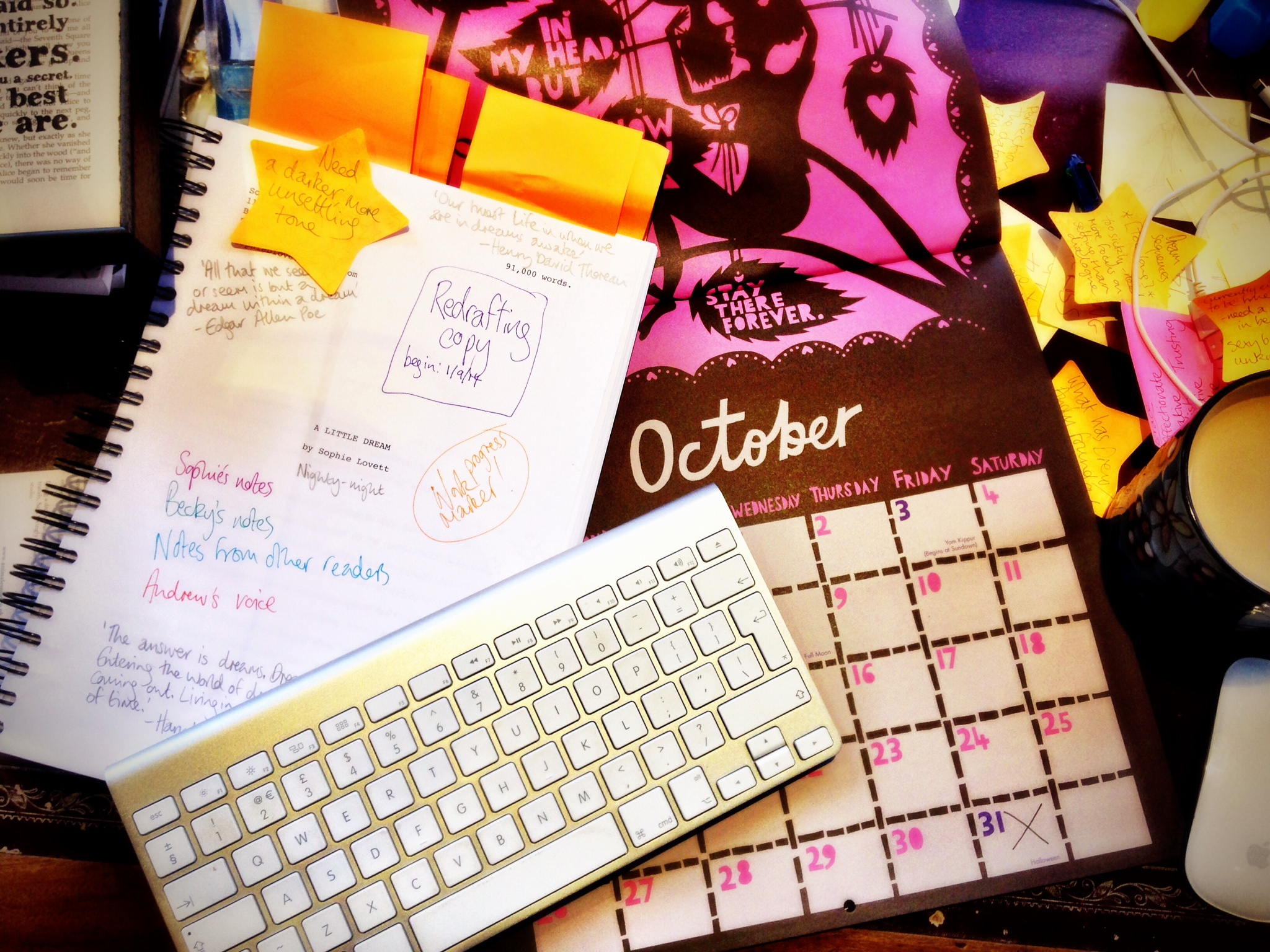
I reached an important milestone in the edit today. I made it to the end of the novel. Again.

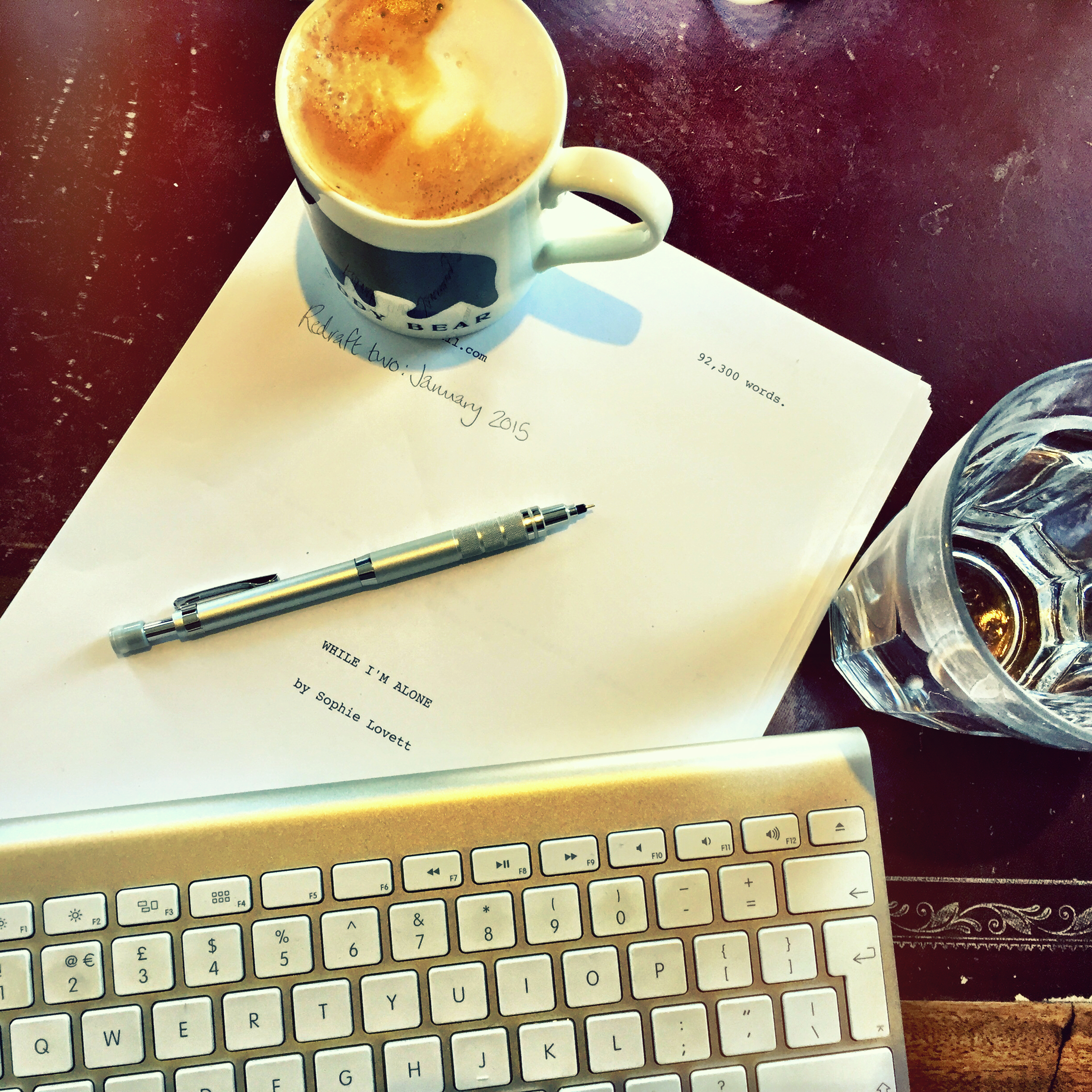
My manuscript now stands at 91,150 words, as opposed to 92,300, though rather more than 1,150 have been cut. I reckon at least 5,000 have been exchanged: unnecessary exposition for punchy dialogue, descriptions of actions for descriptions of emotions. I kind of wish I knew exactly how many, but I don’t suppose it really matters. It is interesting, though, how I find myself wanting to hang on to little things like word counts as a way of measuring progress.

The real progress has been in how much happier I am with the general mood of the novel. The first draft felt too cheesy, the second a strange combination of the banal and the melodramatic. I think I’m much closer to getting the vibe I’m after now – closer to knowing what that actually is. I think it’s darker, emotionally. And yet more hopeful too. Which makes the climax even harder to stomach.

It’s not 100% there yet. I had a bit of a breakthrough about halfway through this process, one where I gave myself permission to let go a bit with my description – to bring a bit more of myself into the world I was creating. That was important, because I’d abandoned some of the elements of the book that made it about me for the sake of making the characters more engaging. What I think I realised is that that uniqueness, that idiosyncratic way of seeing things, belongs more in the fabric of the prose itself than in the events in the story. I’d let go of that in a desire to make the story more accessible, but I think I’d got it all topsy turvy.

I have no idea if that makes sense, but it’s where I’m at.

Because that breakthrough happened relatively late, I want to go back to the beginning now – to look at the manuscript yet again through the new lens I have acquired. I jumped around a bit, adding things in and taking things out so I didn’t forget them, but I need to make sure I haven’t lost continuity in the process. And there are sections early on that might need more work too, just to make sure that I am saying all I want to say in the best possible way I can.

This is gong to be the hardest bit now I think. This final sweep through, attempting to keep every one of those 91,150 words in my mind as I make sure that each chapter, each scene, each exchange fits comfortably within them.

But I am nearly done.

I think.

With this edit anyway.

Wish me luck!


Muddled Manuscript

My editing essentials

This really isn’t the easiest time of year for keeping motivated and focused on an edit. The burst of enthusiasm that January brings has passed, and yet it’s still very much still winter. The cold, wet days are taking their toll and, whilst there’s a glimmer of hope in the lengthening hours of light, springtime – let alone summer – still feels a very long way away.

IMG_7748

At this point in the last two years I’ve been in the early stages of first drafts, when everything is exciting and new and I’ve just been able to write without fear of getting it wrong. But this year I’m attempting the third draft of my latest novel, and whilst it’s actually going pretty well I’m having to pull out all the stops to keep things that way.

So I thought I’d share my editing essentials: the crucial elements that have kept me going when the going’s got tough, the crutches I’ve turned to when I’ve been sorely tempted to curl up under the duvet (or at least under a blanket on the sofa whilst Arthur watches The Lion King for the umpteenth time).

First on the list is…

Coffee

No surprises there then. I have always really appreciated a decent cup of coffee, and since Leigh bought me a gorgeous DeLonghi coffee machine for my birthday last year it’s become something of a ritual.

IMG_0754

I like my coffee organic and strong, with a generous serving of frothy milk. One with breakfast, and another (with a large glass of water for good measure) when I sit down to write.

Almost as important for firing up the brain cells is…

Chocolate

I’m generally on a bit of a healthy eating tip at the moment, but decent dark chocolate is definitely one of my weaknesses. My brand of choice is Plamil – organic, nut free and delicious – and I will invariably enjoy a couple of squares of their ginger chocolate, or if we’re out of that a handful of chocolate drops, whilst I sit down and gather my thoughts.

For that of course I need a bit of peace and quiet, which is one of the many reasons why I love my…

Connecta

I have made no secret on this blog of my love for the Connecta baby carrier – and in fact you will find me extolling its virtues over on their blog too. But it really has been invaluable for the tricky business of writing whilst looking after a toddler.

IMG_9308

Arthur still naps in the sling, as he has ever since he was a tiny baby. I think the fact he enjoys his cuddles so much is one of the reasons why he still often has two naps a day. The design of the Connecta means that it is essentially supporting him to sit on my lap, so his (ever increasing) weight is spread evenly and unless he has a really monster sleep it’s pretty comfortable. And knowing that he is safe and close and happy means that I can focus all my attention on my work.

And for that I am still reliant on…

Scrivener

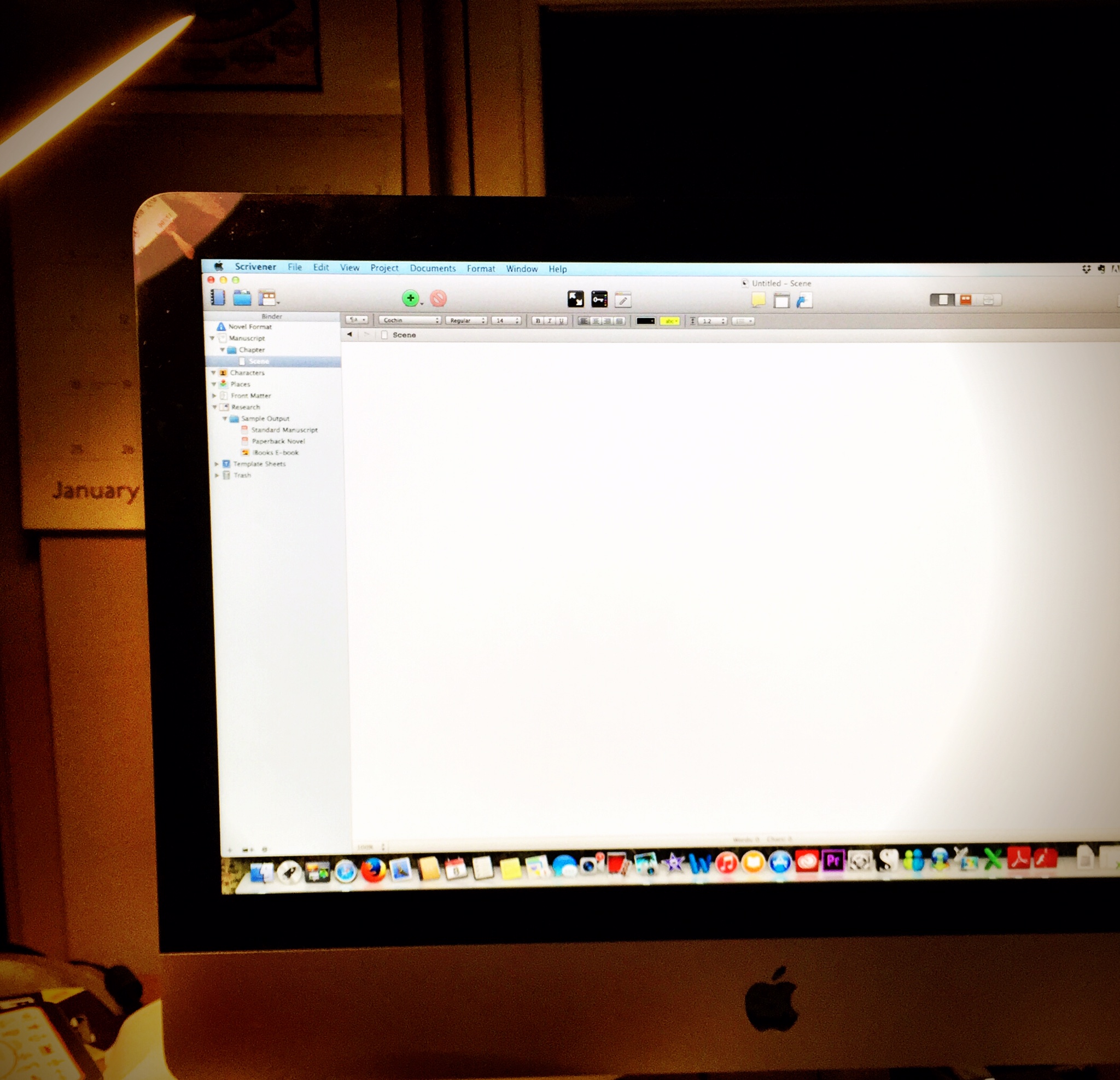
My discovery of this software has done wonders for my organisation. I found it great to write the first draft in, following my carefully planned structure and using the daily targets to keep me motivated, and now I’m deep into the edit it’s really coming into its own. I love how I can flit back and forth, move things around or cut them out completely safe in the knowledge that I can still get them back if I need them. I can keep an eye on my word count, and refer back to all the bank of research that I built up whilst I was writing the first draft. And all in one window.

Though when I’m tired of looking at that one, I can instantly refresh my soul by looking out of another at…

The view

I always dreamt of one day living by the sea, and more specifically having a place where I could write looking out over it. When that dream became a reality I was worried at first that the view might be a bit too beautiful and would distract me from getting anything done. As it happens though, that’s not a problem. I think my big computer screen helps – I have to consciously shift my gaze to get away from my manuscript. But there are times when I’m getting so frazzled that I really need something to give me a break from it all, and looking out at the big open sky and the ever-changing landscape of the sea is just the ticket.

IMG_0753

And that’s about it! Those five things have done a sterling job of keeping me on the straight and narrow so far, and I’m hoping I can continue to rely on them over the next few weeks as I bring this edit to a close.

How about you? What are the things that help you keep your focus when you’re writing (or editing)? I’d love to hear your thoughts in the comments.

Writing Bubble
Mama and More
Mums' Days

Reading

image

My most common lament over the past two years is how little time I’ve managed to set aside for reading. It’s been such an important part of my life – I’ve written before about some of the books and authors that shaped me, and obviously in my ten years as an English teacher it was at the very core of what I did.

But since becoming a mum books have taken on a somewhat soporific quality. The pile of things I want to read has been growing bigger and bigger, but no sooner have I got a few pages in than my eyelids have begun to close. That hasn’t been universally true – I have managed to finish some books – but certainly nowhere near as many as I would have liked.

This state of affairs is particularly ridiculous given my current ambitions to be a published novelist. I may not have read many novels since Arthur’s been born, but I have written two! In some ways this is part of the problem. I don’t really like to read fiction when I’m in the midst of working on a work of my own. I think I’m worried that too much of what I’m reading might seep into my words. But I can’t be a writer without being a reader, there’s just too much I still have to learn.

So this week I decided, whilst mulling over the feedback I’ve been given and my own ideas for the next edit of my novel, that I would make time to read. And it’s been awesome!

image

It’s been surprising how many moments I’ve actually been able to find to lose myself in a book. And also how long I’ve managed to read for without falling asleep when my reading time wasn’t relegated to when I was already tucked up in bed…

I’ve read two novels already since last weekend, and I’m just getting stuck into a third. The first two were thrillers I hadn’t read before – You Should Have Known and The Book of You, both fantastic and more than a little bit creepy. The third is an old favourite of mine, The Time Traveller’s Wife. All three have certain things in common with the novel I’m currently working on, and being immersed in their worlds has helped me realise things about the one I’m trying to create – an added bonus to what has generally been an immensely enjoyable week.

My reading certainly hasn’t gone unnoticed by Arthur either: he’s been increasingly curious about what I’ve been up to (when he’s been awake) and has often crawled into my lap to take a closer look. I think he’s been a bit miffed by the lack of pictures, but it’s inspired him to pick up his own books too.

image

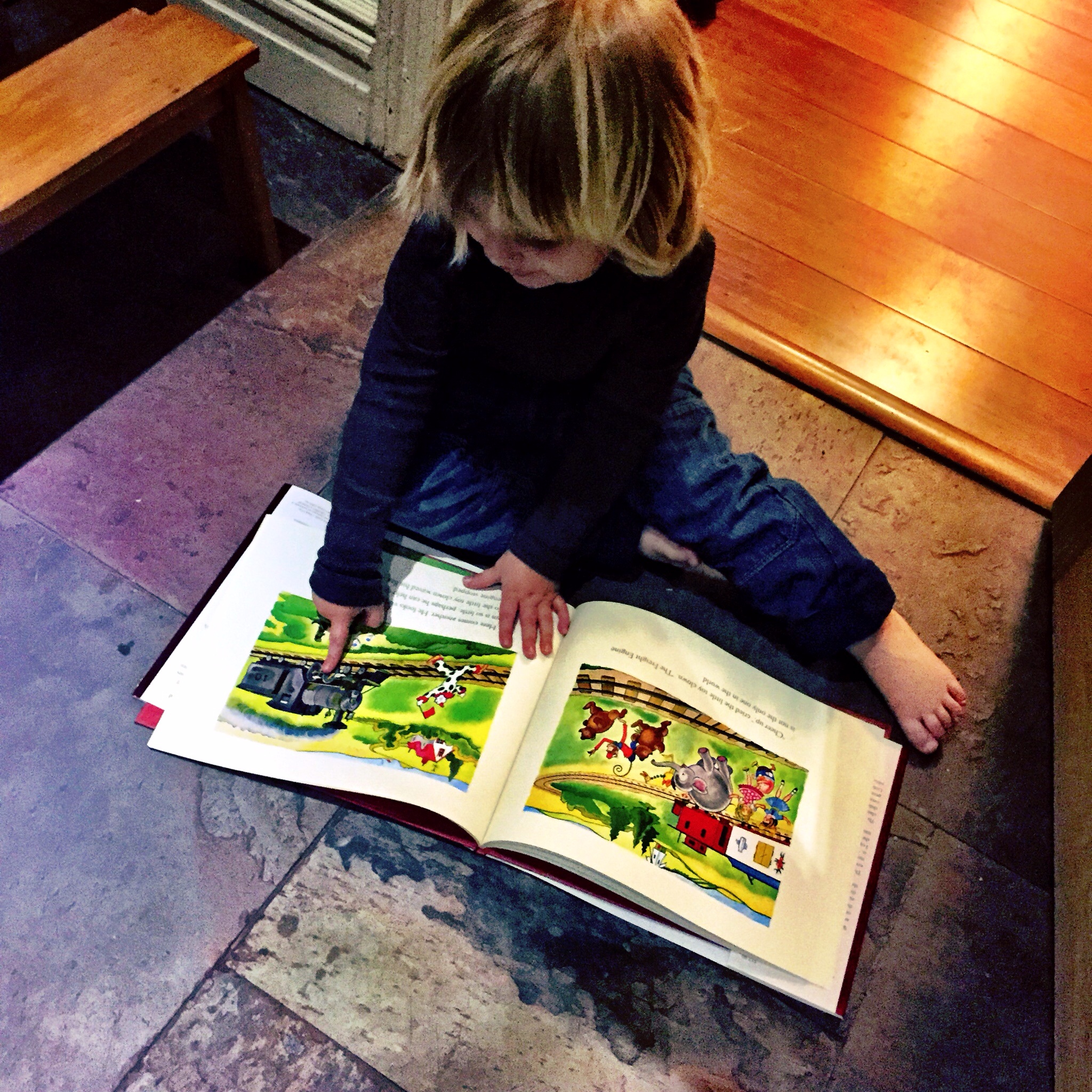
He loves books anyway, and adores being read to, but there’s been something very special about both sitting quietly reading. Arthur has actually discovered a new favourite book in The Little Engine That Could. We discovered the film a couple of weeks ago – it was kind of inevitable really given his general train obsession, and we’ve both really enjoyed it. He was thrilled to find the characters also existed in the pages of a book, albeit in a slightly different story.

image

It has been so brilliant to break through the barriers I’d put up for myself and sink into some really good books. I should do it more often I realise, though I think I’m pretty much ready now to get back into my own. In fact I’m really looking forward to it.


The Reading Residence


Where to start

IMG_0694

As regular readers will know, I’m currently embarking on another major edit of my second novel.

I’m cool with this – I really am. Although I was happy with most of the revisions I’d made in the last draft, something about it just isn’t sitting comfortably with me. One of the things I’m mulling over is just where the story should start. I have a few different options to play with, and one of them is below.

I would really appreciate some honest feedback on whether this, as the first few pages of a novel, would draw you in and make you want to read more. I’m particularly interested in the impression you get of the main character, Grace. Do you like her? Is she someone you could come to care about? Do you want to know what happens next?

Questions or suggestions or criticisms or ideas are all very welcome! I look forward to hearing your thoughts…

***

“He could’ve been so much hotter you know, with a bit of effort. That whole geek chic thing had a lot of promise…”

“Ah Cam! I didn’t dump him because he wasn’t hot enough.”

Cam looked at her over the rim of his glasses.

“I didn’t!”

Grace felt her jaw tense as she downed the rest of her mojito. Part of her wanted to admit how much she was missing him, but she hoped her smile would mask that from her friend. She got herself together and looked up to find the barman waiting for her.

“Yes please!” she said, “Cam?”

“It’s going to be one of those then huh?”

“Come on Cam. They’ll never keep me company, not on a school night.”

Molly and George were guarding a table, heads almost touching as they tried to hear each other above the din. Even at six the place was rammed, but then it was a Thursday.

“Fine, but just for you petal.”

“Love you,” Grace leant across to give him a hug as she motioned to the barman to bring another daiquiri, “you’ll grab our drinks yeah?”

Slipping off the stool in her high-waisted jeans, a glass in each hand balancing what remained of her mojito between them, Grace wove her way to her friends.

“One white wine spritzer with soda for the bride to be and one… ginger beer. What’s that about Moll?”

“I’ve got to swing by Mum’s later. Cheers!”

They clinked their glasses, and Grace tried to ignore the sadness hanging heavy in Molly’s face. It didn’t suit her. She knew she should talk to her about it all, but not tonight.

“So only a few weeks to go hey George? Best make the most of it.”

George smiled knowingly as she sipped her spritzer, “I guess.”

Her short dark hair framed her brown eyes perfectly, and that combined with the tailored jumpsuit gave her an air of eternal youth whilst at the same time she exuded a maturity beyond her years. At least Grace hoped it was beyond her years. At twenty-six, George was a year younger than her but seemed to have everything worked out. The job at the trendy gallery, the capacious flat in Farringdon, and of course the man. Barney was a few years older, devastatingly handsome if you liked that sort of thing, and on his way to becoming a Consultant at University College Hospital.

“So tell me again about the flowers,” intercepted Molly, leaving Grace once again standing on the sidelines.

Grace prodded at the mint leaves in the bottom of her glass with her straw, letting the excited chatter about peonies and petunias blend into the hubbub of the bar. She’d tried to be interested when talk had turned to bouquets before but failed miserably – it just wasn’t knowledge she wanted filling up her brain.

There was a time when George wouldn’t have know the difference between a daisy and a dahlia either. Grace remembered one Sunday at Columbia Road. It was early – they’d come straight from a club – and the stallholders were just setting up. It did look beautiful: colours bright against the grey of the tarmac, the freshness of the blooms contrasting with the weathered faces of those who sold them. Arm in arm, Grace and George had walked straight past the stalls and into The Royal Oak. Grace’s hair had been short then too, though she’d let it grow since. Two cropped heads bowed together, one black one red. They were still talking about Barney: George had turned up in tears the night before, worried he was having an affair with a nurse at the hospital. Grace knew they were destined to be together though; deep down she mourned for her comrade in arms but she couldn’t let that cloud her advice. When George eventually wove her way home a couple of hours later it was with a smile on her face, and a fortnight later Barney proposed.

Sucking the last of the rum out from the melting ice, Grace saw Cam looking apologetically at her from the other side of the room. His face was almost rubbery, and if you didn’t know better you’d think he was taking the piss. It was one of the things Grace loved about him though, how his expression transformed so completely with the slightest trigger.

A Latin looking guy had his hand on the pale skin of Cam’s arm, and now he was laughing at whatever it was Cam had just said. Grace almost didn’t want to interrupt – but she could seriously do with that drink. With a glance at the girls to confirm they wouldn’t miss her, she sidled over to Cam, plucking her drink out of his hand before he had time to notice she was there.

“Sorry darling!” he said effusively, “Do you remember Pedro? We met in Heaven back in January. He’s been away.”

The man leant and took her hand before kissing her on both cheeks. He was more than a little bit cute as it happened, but she was pretty sure she wasn’t his type.

“Please come and save me Cam. They’re talking about flowers again and I just don’t know how much more I can take.”

Cam turned to Pedro, “Our friend’s getting married.”

“Oh, amazing!” Pedro actually clapped his hands before turning to Grace, “You will make a beautiful bridesmaid.”

“I’m not… We’re just friends from work. Well college. I’m not really bridesmaid material.”

She’d been gutted when George had asked Molly to be a bridesmaid and not her. She’d asked her to do a reading, but it wasn’t the same.

“Shame. I think you’d look so pretty in a dress, with those flowers. You have the most incredible eyes. Like emeralds.”

He reached out and touched her cheek and Grace squirmed a little, fiddling with her fringe before stroking her auburn ponytail awkwardly. She really needed to meet someone: three months on her own and she’d fall for anything.

•••

Thank you to Sara at Mum Turned Mom for inspiring me to share this opening in response to her prompt, ‘Beginnings’. I am also joining in with Nikki Young‘s Friday Fiction. 

A little bit of time travel

glorious devon

As I’m muddling though with the research stage of novel number three, and characters and plot begin to swim into focus, it’s becoming increasingly clear that the scenes set forty-odd years ago are going to be both the easiest and the hardest to get right.

Easy because the young lovers I am portraying are so vivid in my mind. Every time I stop and think about them more aspects of their personalities and relationship become clear, and I have some very detailed character profiles shaping up.

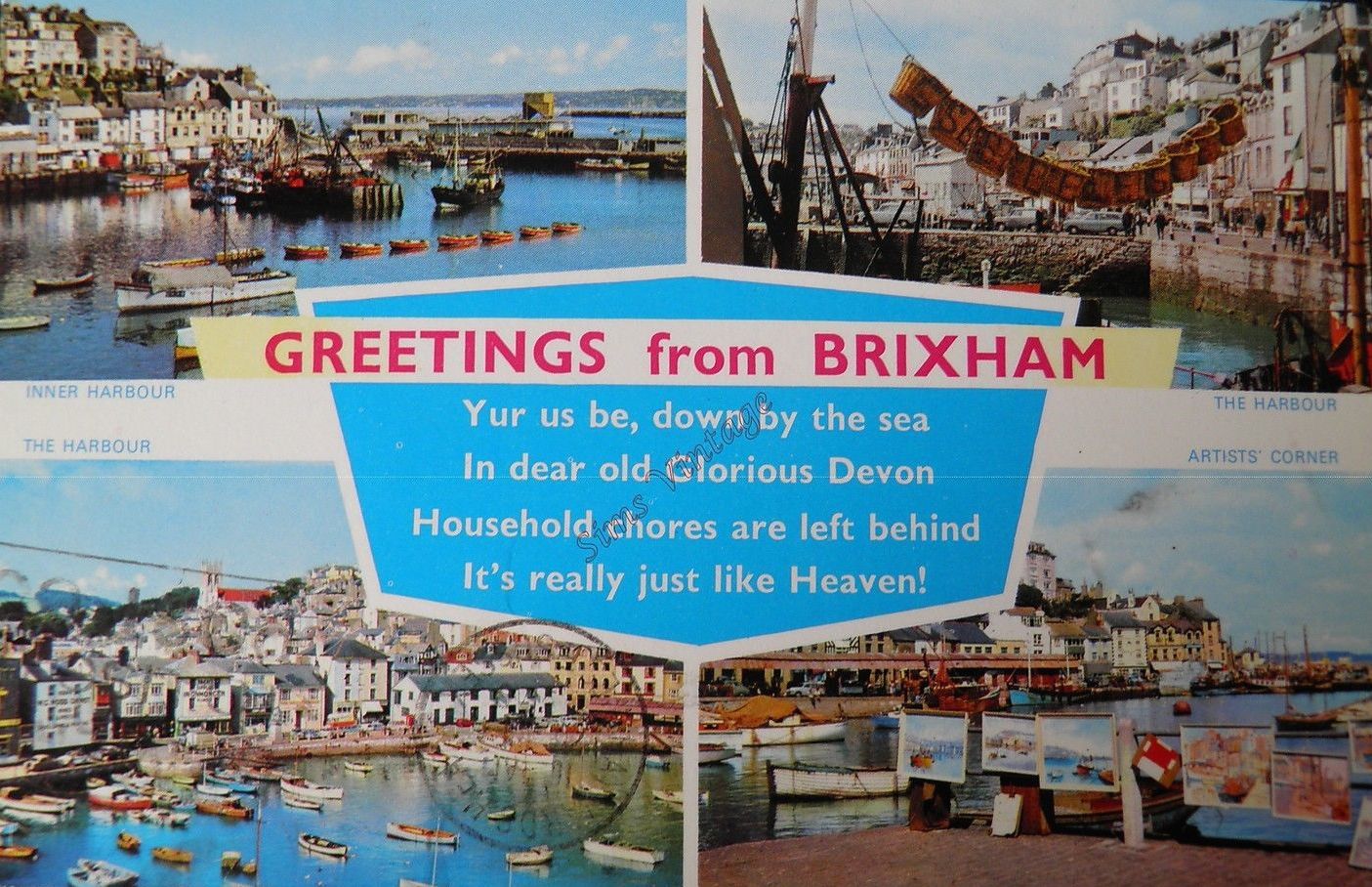
But hard because the world they live in isn’t this one – and isn’t one I’ve ever experienced first hand. I know there’s nothing unique in that: plenty of novelists set their stories in times and places much more distant than 1970s Brixham. And I know I’m not writing a factual piece – I don’t need to get every little detail spot on. But I still want it to be authentic, to have the air of travelling back in time.

One discovery I’ve made this week is going to help with that. As part of a general organising spree I found a box full of letters from my past – not quite as far back as the period in which the novel is set, I think the earliest ones date from the late 80s. But still reading them through served as a valuable reminder not only of what it really feels like to be a teenager, but also the very different way in which people communicated in a world before the internet. I’m looking forward to creating snippets of my characters’ correspondence, to seeing how their relationship develops when they’re apart as well as when they’re together.

I’m also looking forward to finding a bit more out about my town. I’ve been extending my internet research this week, searching for pictures and stories from the Brixham of 1973 to 1982 (or thereabouts). Actually much of what I’ve found so far suggests that an awful lot has actually stayed the same, though I’m sure were I to ask someone who has lived through the changes they would be able to give me a far more accurate impression of the time I’m travelling to.

So that’s my next step, really: to find some people who knew Brixham in the 70s and pick their brains. If you’re reading this and you think you might be able to help then please get in touch! You can comment below, or email me on sophieblovett@gmail.com. I can’t wait to find out what I might discover…


Muddled Manuscript